Kirjojen hintavertailu – 12 859 827 kirjaa ja 27 kauppaa

Kirjailija

Asim Roy

Kirjat ja teokset yhdessä paikassa: 4 kirjaa, julkaisuja vuosilta 2012–2016, suosituimpiin kuuluu The Islamic Syncretistic Tradition in Bengal. Vertaile teosten hintoja ja tarkista saatavuus suomalaisista kirjakaupoista.

4 kirjaa

Kirjojen julkaisuvuodet: 2012–2016.

The Islamic Syncretistic Tradition in Bengal

The Islamic Syncretistic Tradition in Bengal

Asim Roy

Princeton University Press
2016
sidottu
Asim Roy argues that Islam in Bengal was not a corruption of the "real" Middle Eastern Islam, as nineteenth-century reformers claimed, but a valid historical religion developed in an area totally different from the Middle East. Originally published in 1984. The Princeton Legacy Library uses the latest print-on-demand technology to again make available previously out-of-print books from the distinguished backlist of Princeton University Press. These editions preserve the original texts of these important books while presenting them in durable paperback and hardcover editions. The goal of the Princeton Legacy Library is to vastly increase access to the rich scholarly heritage found in the thousands of books published by Princeton University Press since its founding in 1905.
A History of State and Religion in India

A History of State and Religion in India

Ian Copland; Ian Mabbett; Asim Roy; Kate Brittlebank; Adam Bowles

Routledge
2014
nidottu
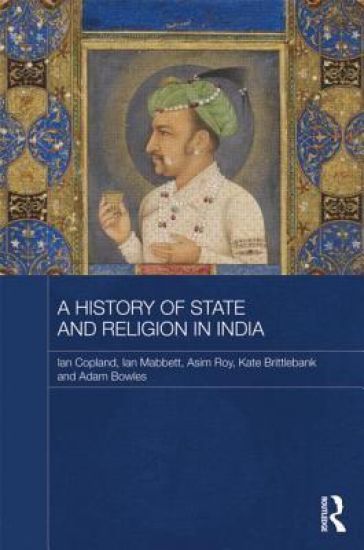
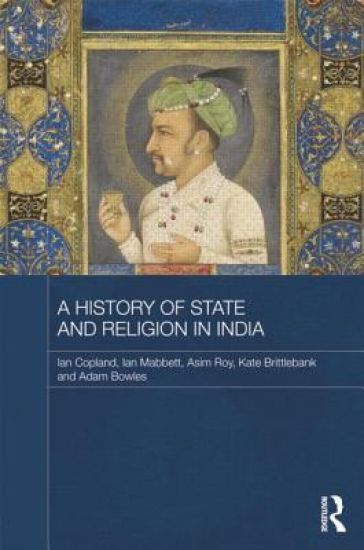
Offering the first long-duration analysis of the relationship between the state and religion in South Asia, this book looks at the nature and origins of Indian secularism. It interrogates the proposition that communalism in India is wholly a product of colonial policy and modernisation, questions whether the Indian state has generally been a benign, or disruptive, influence on public religious life, and evaluates the claim that the region has spawned a culture of practical toleration. The book is structured around six key arenas of interaction between state and religion: cow worship and sacrifice, control of temples and shrines, religious festivals and processions, proselytising and conversion, communal riots, and religious teaching/doctrine and family law. It offers a challenging argument about the role of the state in religious life in a historical continuum, and identifies points of similarity and contrast between periods and regimes. The book makes a significant contribution to the literature on South Asian History and Religion.
The Islamic Syncretistic Tradition in Bengal

The Islamic Syncretistic Tradition in Bengal

Asim Roy

Princeton University Press
2014
pokkari
Asim Roy argues that Islam in Bengal was not a corruption of the "real" Middle Eastern Islam, as nineteenth-century reformers claimed, but a valid historical religion developed in an area totally different from the Middle East. Originally published in 1984. The Princeton Legacy Library uses the latest print-on-demand technology to again make available previously out-of-print books from the distinguished backlist of Princeton University Press. These editions preserve the original texts of these important books while presenting them in durable paperback and hardcover editions. The goal of the Princeton Legacy Library is to vastly increase access to the rich scholarly heritage found in the thousands of books published by Princeton University Press since its founding in 1905.
A History of State and Religion in India

A History of State and Religion in India

Ian Copland; Ian Mabbett; Asim Roy; Kate Brittlebank; Adam Bowles

Routledge
2012
sidottu
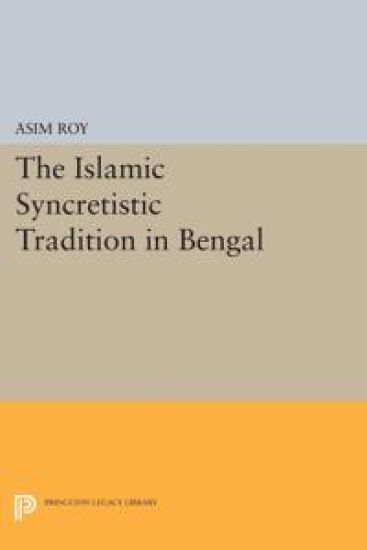
Offering the first long-duration analysis of the relationship between the state and religion in South Asia, this book looks at the nature and origins of Indian secularism. It interrogates the proposition that communalism in India is wholly a product of colonial policy and modernisation, questions whether the Indian state has generally been a benign, or disruptive, influence on public religious life, and evaluates the claim that the region has spawned a culture of practical toleration. The book is structured around six key arenas of interaction between state and religion: cow worship and sacrifice, control of temples and shrines, religious festivals and processions, proselytising and conversion, communal riots, and religious teaching/doctrine and family law. It offers a challenging argument about the role of the state in religious life in a historical continuum, and identifies points of similarity and contrast between periods and regimes. The book makes a significant contribution to the literature on South Asian History and Religion.