Kirjojen hintavertailu – 12 903 724 kirjaa ja 27 kauppaa

Kirjailija

Asit K. Biswas

Kirjat ja teokset yhdessä paikassa: 12 kirjaa, julkaisuja vuosilta 2009–2023, suosituimpiin kuuluu Off-Grid Water Supply. Vertaile teosten hintoja ja tarkista saatavuus suomalaisista kirjakaupoista.

Nimi esiintyy myös muodoissa: Asit K Biswas

12 kirjaa

Kirjojen julkaisuvuodet: 2009–2023.

Off-Grid Water Supply

Off-Grid Water Supply

Pawan K. Sachdeva; Asit K. Biswas; Cecilia Tortajada; Ojasvee Arora; Eva Leneveu; Rehan Adamjee; Anuj Sharma

SPRINGER VERLAG, SINGAPORE
2023
nidottu
This book highlights unique and deeper insights into the operations of off-grid water supply business models and the policy implications that they raise. The two key research questions of the report are as follows: 1) What is the efficacy and sustainability of the off-grid model of safe water availability and/or delivery to consumers who don’t have piped water supply? 2) What are the key policy considerations for planning a successful off-grid model of safe water delivery? Through the Four-Domain Framework, this book does the gap analysis of the physical, operational, financial, and institutional domains of the few off-grid water operators in cross-country case studies. It also includes a detailed financial analysis of the capital costs as well as operations and maintenance costs of the different off-grid water supply models compared to some of the piped water supply models. The final discusses the need to acknowledge off-grid water solutions in urban water policies, especially for the economically weaker sections. The universal coverage of all by the piped water is an ultimate goal of any water policy; however, in the interim, there is a need to put more emphasis on off-grid water solutions.
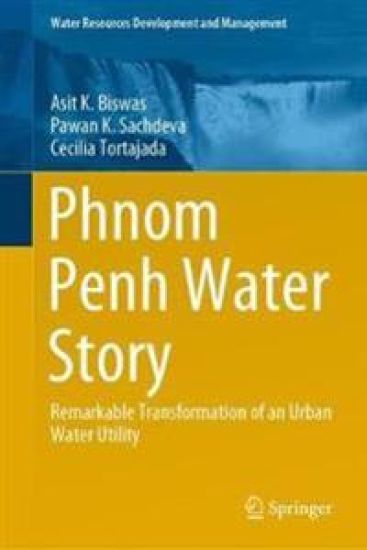
Phnom Penh Water Story

Phnom Penh Water Story

Asit K. Biswas; Pawan K. Sachdeva; Cecilia Tortajada

SPRINGER VERLAG, SINGAPORE
2021
nidottu
This book analyses how a water utility from a developing country, Phnom Penh Water Supply Authority, that was totally dysfunctional, corruption-ridden and literally bankrupt in 1993, became one of the most successful water utilities of the developing world in only about 15 years. By 2010, some of the performance indicators of this public sector utility were even better than London, Paris or Los Angeles. The book further analyses the enabling conditions that made this remarkable transformation possible. Based on this analysis, a framework is recommended for water utilities from developing countries so that they can also be transformed into functional, efficient, equitable and financially viable institutions on a sustainable basis.
Phnom Penh Water Story

Phnom Penh Water Story

Asit K. Biswas; Pawan K. Sachdeva; Cecilia Tortajada

Springer Verlag, Singapore
2020
sidottu
This book analyses how a water utility from a developing country, Phnom Penh Water Supply Authority, that was totally dysfunctional, corruption-ridden and literally bankrupt in 1993, became one of the most successful water utilities of the developing world in only about 15 years. By 2010, some of the performance indicators of this public sector utility were even better than London, Paris or Los Angeles. The book further analyses the enabling conditions that made this remarkable transformation possible. Based on this analysis, a framework is recommended for water utilities from developing countries so that they can also be transformed into functional, efficient, equitable and financially viable institutions on a sustainable basis.
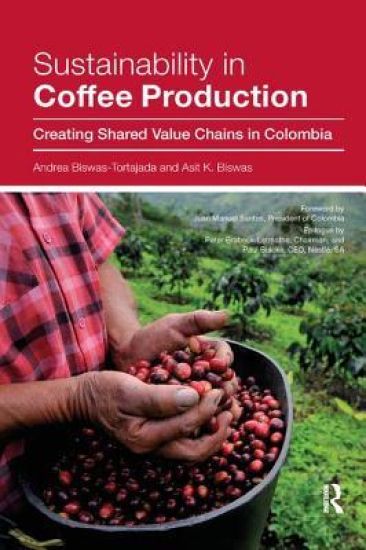
Sustainability in Coffee Production

Sustainability in Coffee Production

Andrea Biswas-Tortajada; Asit K. Biswas

CRC Press Inc
2018
nidottu
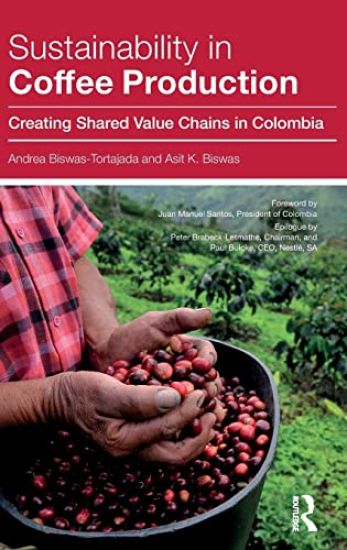
Coffee, as a commodity and through its global value chains, is the focus of much interest to achieve fair trade and equitable outcomes for producers, processors and consumers. It has iconic cultural and economic significance for Colombia, which is one of the world's major coffee producers for the global market. This book examines sustainable coffee production in Colombia, specifically the initiatives of Nestlé to create shared value. It describes the transformation of the coffee landscape by the development of economically, socially and environmentally viable and dedicated supply chains. Suppliers have been encouraged to shift production and quality paradigms, in order to develop long-term and sustainable strategies for higher value and premium quality products. This has been partially achieved by establishing a robust partnership with the Coffee Growers Federation and other public, private and social actors, thereby taking control of the institutional architecture and knowledge base that exists in the country. The book provides an important lesson of corporate social responsibility and the creation of shared value for the benefit of farmers, corporations and consumers.
Sustainability in Coffee Production

Sustainability in Coffee Production

Andrea Biswas-Tortajada; Asit K. Biswas

Routledge
2015
sidottu
Coffee, as a commodity and through its global value chains, is the focus of much interest to achieve fair trade and equitable outcomes for producers, processors and consumers. It has iconic cultural and economic significance for Colombia, which is one of the world's major coffee producers for the global market. This book examines sustainable coffee production in Colombia, specifically the initiatives of Nestlé to create shared value. It describes the transformation of the coffee landscape by the development of economically, socially and environmentally viable and dedicated supply chains. Suppliers have been encouraged to shift production and quality paradigms, in order to develop long-term and sustainable strategies for higher value and premium quality products. This has been partially achieved by establishing a robust partnership with the Coffee Growers Federation and other public, private and social actors, thereby taking control of the institutional architecture and knowledge base that exists in the country. The book provides an important lesson of corporate social responsibility and the creation of shared value for the benefit of farmers, corporations and consumers.
The Singapore Water Story

The Singapore Water Story

Cecilia Tortajada; Yugal Kishore Joshi; Asit K. Biswas

Routledge
2014
sidottu
Singapore´s journey during the past 45 years is an outstanding example that, in spite of multiple hardships, pragmatic policies, clear visions, long-term planning, forward-looking strategies and political will, as well as a relentless urge to improve, can result in strong foundations for sustainable development. This book describes the journey of Singapore´s development and the fundamental role that water has had in shaping it. What makes this case so unique is that the quest for self-sufficiency in terms of water availability in a fast-changing urban context has been crucial to the way development policies and agendas have been planned throughout the years. The authors analyse plans, policies, institutions, laws and regulations, water demand and water supply strategies, water quality and water conservation considerations, partnerships and importance of the media. They assess overall how all these issues have evolved in response to the dynamic needs of the city-state. The study of Singapore shows how a dynamic society can address development without losing its focus on the environment. In the city-state, environmental concerns in general, and water concerns in particular, have played a major role in its transformation from a third word to a first world country. How and why this transformation took place is the main focus of this authoritative book.
Creating Shared Value

Creating Shared Value

Asit K. Biswas; Cecilia Tortajada; Andrea Biswas-Tortajada; Yugal K. Joshi; Aishvarya Gupta

Springer International Publishing AG
2013
nidottu
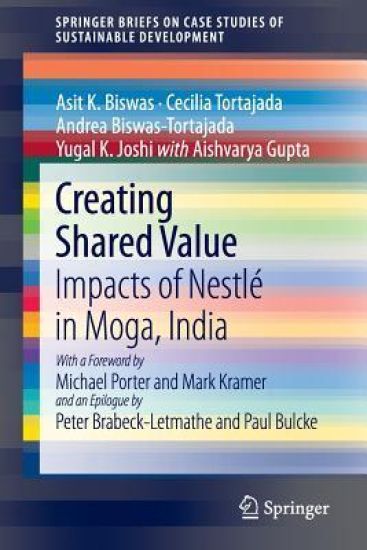
Nestlé’s Moga factory was set up in 1961 and comprises of the primary milk collection area for Nestlé‘s operations. Since its inception in Moga, Nestlé has been working with its milk farmers and ancillary suppliers towards improving quality and productivity. The study presented in this book (carried out by the Third World Centre for Water Management, Mexico) highlights Nestlé’s way of doing business through its philosophy of Creating Shared Value (CSV) and how it contributed to the development of the region over the past 50 years through direct and indirect employment, steady income for milk and other suppliers, and technology transfer. The main objective of the study is to learn to what extent has Nestlé contributed to fulfilling the societal aspirations and expectations of the people working in and around its factory in terms of employment generation, poverty alleviation, general improvements in the community’s standards of living and environmental conservation. The study also tried to determine to what extent has the company created shared value for itself, milk farmers, ancillary firms, and the community at large. This effort aims at encouraging more research to be carried out to comprehensively and authoritatively look into the impacts private sector can have on and around the area where their factories are located and that way, contribute to our understanding of social-corporate-government interdependency. An important aspect of this pioneering monograph is the methodology that could be used to study how Corporate Social Responsibility (CSR) or Creating Shared Value (CSV) of a large multinational company can be properly monitored and objectively evaluated at a region-specific scale, especially as very few studies of this nature have been carried out anywhere in the world. This definitive book is further enriched by a foreword by Prof. Michael Porter of Harvard Business School and an epilogue by Peter Brabeck-Letmatheand Paul Bulcke, Chairman of the Board and CEO of Nestlé respectively.
The Singapore Water Story

The Singapore Water Story

Cecilia Tortajada; Yugal Kishore Joshi; Asit K. Biswas

Routledge
2013
nidottu
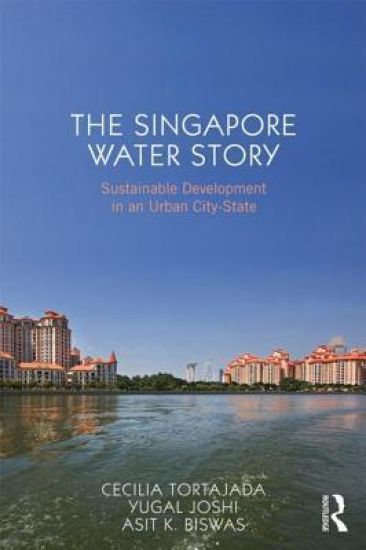
Singapore´s journey during the past 45 years is an outstanding example that, in spite of multiple hardships, pragmatic policies, clear visions, long-term planning, forward-looking strategies and political will, as well as a relentless urge to improve, can result in strong foundations for sustainable development. This book describes the journey of Singapore´s development and the fundamental role that water has had in shaping it. What makes this case so unique is that the quest for self-sufficiency in terms of water availability in a fast-changing urban context has been crucial to the way development policies and agendas have been planned throughout the years. The authors analyse plans, policies, institutions, laws and regulations, water demand and water supply strategies, water quality and water conservation considerations, partnerships and importance of the media. They assess overall how all these issues have evolved in response to the dynamic needs of the city-state. The study of Singapore shows how a dynamic society can address development without losing its focus on the environment. In the city-state, environmental concerns in general, and water concerns in particular, have played a major role in its transformation from a third word to a first world country. How and why this transformation took place is the main focus of this authoritative book.
Impacts of Megaconferences on the Water Sector

Impacts of Megaconferences on the Water Sector

Asit K. Biswas; Cecilia Tortajada

Springer-Verlag Berlin and Heidelberg GmbH Co. K
2010
nidottu
Since the late 1990s, megaconferences in the water-related sectors have become regular occurrences. The latest one, in Mexico City, in March 2006, is estimated to have cost a total of $205 million, and had 19,000+ participants. In spite of such huge costs and organizational efforts, not a single water megaconference has ever been seriously evaluated in terms of its overall impacts on the water sector. This book is the first pioneering study to assess the impacts of the megaconferences on water policies, programs and projects at global, regional and national levels. The results are bleak. The evaluation indicated that except for the UN Water Conference, held in Argentina in 1977, the impacts of the subsequent megaconferences have been at best marginal in terms of knowledge generation and application, poverty alleviation, environmental conservation and /or increasing availability of investments funds for the water sector.
Impacts of Megaconferences on the Water Sector

Impacts of Megaconferences on the Water Sector

Asit K. Biswas; Cecilia Tortajada

Springer-Verlag Berlin and Heidelberg GmbH Co. K
2009
sidottu
Since the late 1990s, megaconferences in the water-related sectors have become regular occurrences. The latest one, in Mexico City, in March 2006, is estimated to have cost a total of $205 million, and had 19,000+ participants. In spite of such huge costs and organizational efforts, not a single water megaconference has ever been seriously evaluated in terms of its overall impacts on the water sector. This book is the first pioneering study to assess the impacts of the megaconferences on water policies, programs and projects at global, regional and national levels. The results are bleak. The evaluation indicated that except for the UN Water Conference, held in Argentina in 1977, the impacts of the subsequent megaconferences have been at best marginal in terms of knowledge generation and application, poverty alleviation, environmental conservation and /or increasing availability of investments funds for the water sector.