Kirjojen hintavertailu – 12 859 829 kirjaa ja 27 kauppaa

Kirjailija

Asoke Kumar Datta

Kirjat ja teokset yhdessä paikassa: 9 kirjaa, julkaisuja vuosilta 2017–2018, suosituimpiin kuuluu Acoustical Analysis of the Tanpura. Vertaile teosten hintoja ja tarkista saatavuus suomalaisista kirjakaupoista.

9 kirjaa

Kirjojen julkaisuvuodet: 2017–2018.

Acoustical Analysis of the Tanpura

Acoustical Analysis of the Tanpura

Asoke Kumar Datta; Ranjan Sengupta; Kaushik Banerjee; Dipak Ghosh

Springer Verlag, Singapore
2018
nidottu
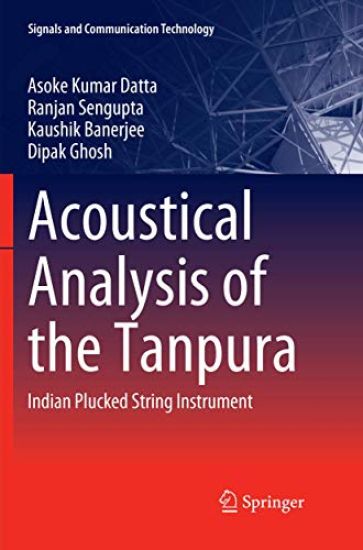
This book addresses the acoustic signal analysis and spectral dynamics of the tanpura, an Indian plucked string instrument. In addition, it strives to provide a logical and objective explanation of Indian classical musicians’ cognitive experience. Issues of relevance in this regard include the rich, mellifluous sound; the undulation of the loudness; the somewhat cyclical variation of the timbre, which is strongly related to these undulations; and the occasional perception of virtual notes to which no strings are tuned. The book analyses the materials used in the tanpura, the instrument’s simple structure, the intricacies of the lower bridge, and the theory of string vibration with variable string length. Cognitive experiments to provide the basis for perceptual quality assessment, as well as a methodology for ranking, are described. This is followed by acoustic analyses, both temporal and spectral, for sounds produced by male and female tanpuras, for each individual string and the combined one. An important aspect related to the naturalness of perceived sound, namely the intrinsically associated random perturbations, is also discussed. The apparent irregularities perceived in the acoustic signal produced by the tanpura reveal the importance of examining the signal from the perspective of non-linear analysis, an aspect that is also covered in the book. Given its scope, the book will appeal to students and researchers in the fields of music acoustics, artificial intelligence, and cognitive science, as well as musicians and musicologists around the world.
Signal Analysis of Hindustani Classical Music

Signal Analysis of Hindustani Classical Music

Asoke Kumar Datta; Sandeep Singh Solanki; Ranjan Sengupta; Soubhik Chakraborty; Kartik Mahto; Anirban Patranabis

Springer Verlag, Singapore
2018
nidottu
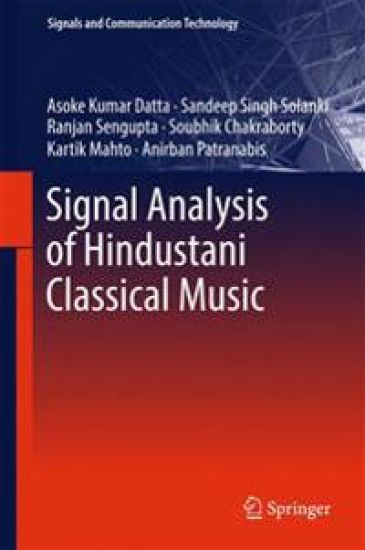
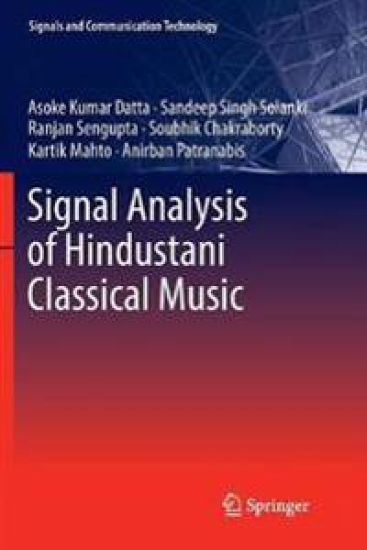
This book presents a comprehensive overview of the basics of Hindustani music and the associated signal analysis and technological developments. It begins with an in-depth introduction to musical signal analysis and its current applications, and then moves on to a detailed discussion of the features involved in understanding the musical meaning of the signal in the context of Hindustani music. The components consist of tones, shruti, scales, pitch duration and stability, raga, gharana and musical instruments. The book covers the various technological developments in this field, supplemented with a number of case studies and their analysis. The book offers new music researchers essential insights into the use the automatic concept for finding and testing the musical features for their applications. Intended primarily for postgraduate and PhD students working in the area of scientific research on Hindustani music, as well as other genres where the concepts are applicable, it is also a valuable resource for professionals and researchers in musical signal processing.
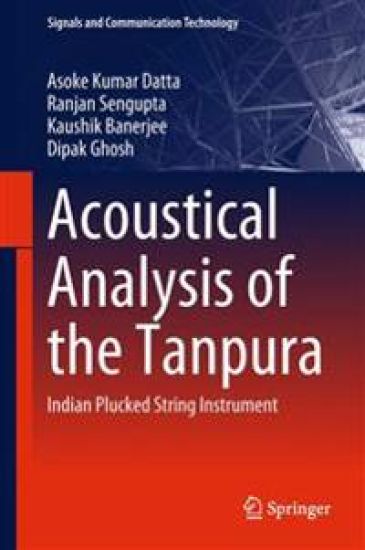
Acoustical Analysis of the Tanpura

Acoustical Analysis of the Tanpura

Asoke Kumar Datta; Ranjan Sengupta; Kaushik Banerjee; Dipak Ghosh

Springer Verlag, Singapore
2018
sidottu
This book addresses the acoustic signal analysis and spectral dynamics of the tanpura, an Indian plucked string instrument. In addition, it strives to provide a logical and objective explanation of Indian classical musicians’ cognitive experience. Issues of relevance in this regard include the rich, mellifluous sound; the undulation of the loudness; the somewhat cyclical variation of the timbre, which is strongly related to these undulations; and the occasional perception of virtual notes to which no strings are tuned. The book analyses the materials used in the tanpura, the instrument’s simple structure, the intricacies of the lower bridge, and the theory of string vibration with variable string length. Cognitive experiments to provide the basis for perceptual quality assessment, as well as a methodology for ranking, are described. This is followed by acoustic analyses, both temporal and spectral, for sounds produced by male and female tanpuras, for each individual string and the combined one. An important aspect related to the naturalness of perceived sound, namely the intrinsically associated random perturbations, is also discussed. The apparent irregularities perceived in the acoustic signal produced by the tanpura reveal the importance of examining the signal from the perspective of non-linear analysis, an aspect that is also covered in the book. Given its scope, the book will appeal to students and researchers in the fields of music acoustics, artificial intelligence, and cognitive science, as well as musicians and musicologists around the world.
Signal Analysis of Hindustani Classical Music

Signal Analysis of Hindustani Classical Music

Asoke Kumar Datta; Sandeep Singh Solanki; Ranjan Sengupta; Soubhik Chakraborty; Kartik Mahto; Anirban Patranabis

Springer Verlag, Singapore
2017
sidottu
This book presents a comprehensive overview of the basics of Hindustani music and the associated signal analysis and technological developments. It begins with an in-depth introduction to musical signal analysis and its current applications, and then moves on to a detailed discussion of the features involved in understanding the musical meaning of the signal in the context of Hindustani music. The components consist of tones, shruti, scales, pitch duration and stability, raga, gharana and musical instruments. The book covers the various technological developments in this field, supplemented with a number of case studies and their analysis. The book offers new music researchers essential insights into the use the automatic concept for finding and testing the musical features for their applications. Intended primarily for postgraduate and PhD students working in the area of scientific research on Hindustani music, as well as other genres where the concepts are applicable, it is also a valuable resource for professionals and researchers in musical signal processing.
Epoch Synchronous Overlap Add (ESOLA)

Epoch Synchronous Overlap Add (ESOLA)

Asoke Kumar Datta

Springer Verlag, Singapore
2018
nidottu
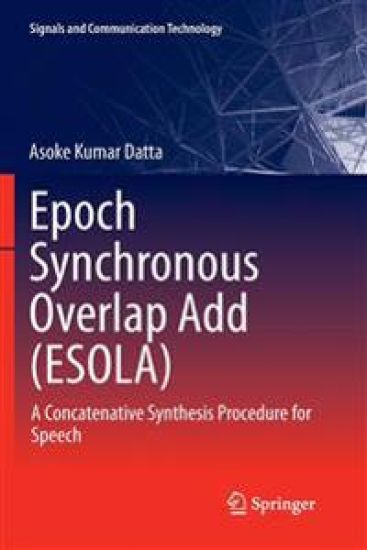
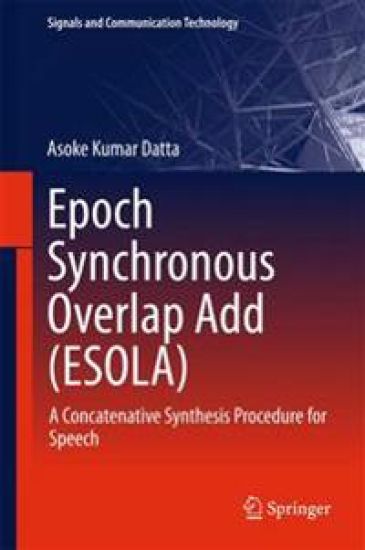
This book presents details of a text-to-speech synthesis procedure using epoch synchronous overlap add (ESOLA), and provides a solution for development of a text-to-speech system using minimum data resources compared to existing solutions. It also examines most natural speech signals including random perturbation in synthesis. The book is intended for students, researchers and industrial practitioners in the field of text-to-speech synthesis.
Acoustics of Bangla Speech Sounds

Acoustics of Bangla Speech Sounds

Asoke Kumar Datta

Springer Verlag, Singapore
2018
nidottu
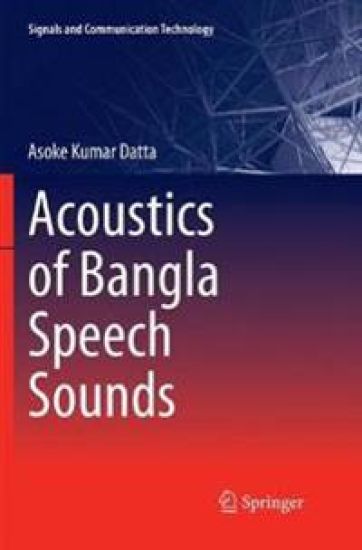
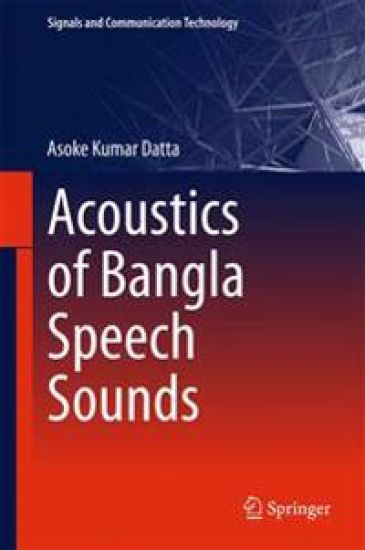
This book presents the consolidated acoustic data for all phones in Standard Colloquial Bengali (SCB), commonly known as Bangla, a Bengali language used by 350 million people in India, Bangladesh, and the Bengali diaspora. The book analyzes the real speech of selected native speakers of the Bangla dialect to ensure that a proper acoustical database is available for the development of speech technologies. The acoustic data presented consists of averages and their normal spread, represented by the standard deviations of necessary acoustic parameters including e.g. formant information for multiple native speakers of both sexes. The study employs two important speech technologies:(1) text to speech synthesis (TTS) and (2) automatic speech recognition (ASR). The procedures, particularly those related to the use of technologies, are described in sufficient detail to enable researchers to use them to create technical acoustic databases for any other Indian dialect. The book offers aunique resource for scientists and industrial practitioners who are interested in the acoustic analysis and processing of Indian dialects to develop similar dialect databases of their own.
Time Domain Representation of Speech Sounds

Time Domain Representation of Speech Sounds

Asoke Kumar Datta

Springer Verlag, Singapore
2018
sidottu
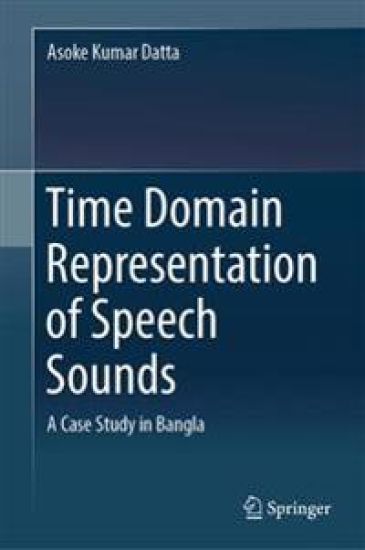
The book presents the history of time-domain representation and the extent of its development along with that of spectral domain representation in the cognitive and technology domains. It discusses all the cognitive experiments related to this development, along with details of technological developments related to both automatic speech recognition (ASR) and text to speech synthesis (TTS), and introduces a viable time-domain representation for both objective and subjective analysis, as an alternative to the well-known spectral representation. The book also includes a new cohort study on the use of lexical knowledge in ASR. India has numerous official dialects, and spoken-language technology development is a burgeoning area. In fact TTS and ASR taken together constitute the most important technology for empowering people. As such, the book describes time domain representation in such a way that it can be easily and seamlessly incorporated into ASR and TTS research and development. In short, it is a valuable guidebook for the development of ASR and TTS in all the Indian Standard Dialects using signal domain parameters.
Epoch Synchronous Overlap Add (ESOLA)

Epoch Synchronous Overlap Add (ESOLA)

Asoke Kumar Datta

Springer Verlag, Singapore
2018
sidottu
This book presents details of a text-to-speech synthesis procedure using epoch synchronous overlap add (ESOLA), and provides a solution for development of a text-to-speech system using minimum data resources compared to existing solutions. It also examines most natural speech signals including random perturbation in synthesis. The book is intended for students, researchers and industrial practitioners in the field of text-to-speech synthesis.
Acoustics of Bangla Speech Sounds

Acoustics of Bangla Speech Sounds

Asoke Kumar Datta

Springer Verlag, Singapore
2017
sidottu
This book presents the consolidated acoustic data for all phones in Standard Colloquial Bengali (SCB), commonly known as Bangla, a Bengali language used by 350 million people in India, Bangladesh, and the Bengali diaspora. The book analyzes the real speech of selected native speakers of the Bangla dialect to ensure that a proper acoustical database is available for the development of speech technologies. The acoustic data presented consists of averages and their normal spread, represented by the standard deviations of necessary acoustic parameters including e.g. formant information for multiple native speakers of both sexes. The study employs two important speech technologies:(1) text to speech synthesis (TTS) and (2) automatic speech recognition (ASR). The procedures, particularly those related to the use of technologies, are described in sufficient detail to enable researchers to use them to create technical acoustic databases for any other Indian dialect. The book offers aunique resource for scientists and industrial practitioners who are interested in the acoustic analysis and processing of Indian dialects to develop similar dialect databases of their own.