Kirjojen hintavertailu – 12 903 725 kirjaa ja 27 kauppaa

Kirjailija

Assa Doron

Kirjat ja teokset yhdessä paikassa: 6 kirjaa, julkaisuja vuosilta 2008–2026, suosituimpiin kuuluu A World of Resistance. Vertaile teosten hintoja ja tarkista saatavuus suomalaisista kirjakaupoista.

6 kirjaa

Kirjojen julkaisuvuodet: 2008–2026.

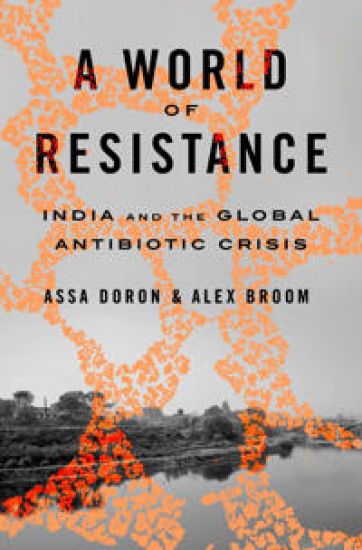
A World of Resistance

A World of Resistance

Assa Doron; Alex Broom

HARVARD UNIVERSITY PRESS
2026
sidottu
A sweeping analysis uncovers the causes of—and solutions to—one of the most daunting public health challenges facing the world today: antibiotic resistance exploding in India. The discovery of antibiotics was one of the most significant medical breakthroughs of the twentieth century, dramatically increasing human lifespans. Yet today, with antibiotic-resistant superbugs implicated in as many deaths as HIV/AIDS and malaria combined, the limits of these miracle drugs have become alarmingly clear. At ground zero of the growing crisis is India, one of the world’s largest consumers of antibiotics and a powerhouse in pharmaceutical manufacturing. In A World of Resistance, Assa Doron and Alex Broom draw on years of fieldwork in hospitals, in pharmacies, and on factory farms to examine the enormous social and environmental costs of overreliance on antibiotics. They show how an overtaxed healthcare system with limited oversight, widespread use of antibiotics in industrial agriculture, and the incessant dumping of pharmaceutical waste into waterways have created the ideal conditions for antibiotic-resistant microbes to grow. As resistance spreads across India and beyond, Doron and Broom argue that the solution isn’t to restrict access to antibiotics but to embrace culturally relevant forms of health education, indigenous practices, and policies grounded in social solidarity. Only then, the authors contend, is it possible to turn the page on India’s precarious relationship with antibiotics and to address resistance globally before it is too late.
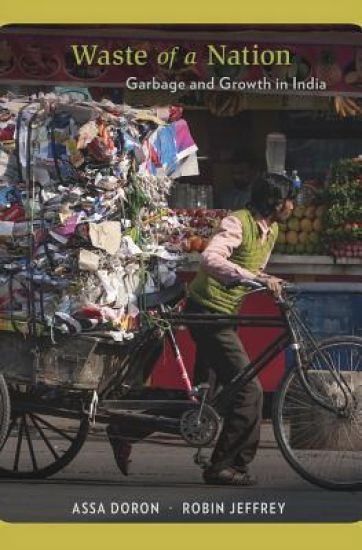
Waste of a Nation

Waste of a Nation

Assa Doron; Robin Jeffrey

Harvard University Press
2018
sidottu
In India, you can still find the kabaadiwala, the rag-and-bone man. He wanders from house to house buying old newspapers, broken utensils, plastic bottles—anything for which he can get a little cash. This custom persists and recreates itself alongside the new economies and ecologies of consumer capitalism. Waste of a Nation offers an anthropological and historical account of India’s complex relationship with garbage. Countries around the world struggle to achieve sustainable futures. Assa Doron and Robin Jeffrey argue that in India the removal of waste and efforts to reuse it also lay waste to the lives of human beings. At the bottom of the pyramid, people who work with waste are injured and stigmatized as they deal with sewage, toxic chemicals, and rotting garbage. Terrifying events, such as atmospheric pollution and childhood stunting, that touch even the wealthy and powerful may lead to substantial changes in practices and attitudes toward sanitation. And innovative technology along with more effective local government may bring about limited improvements. But if a clean new India is to emerge as a model for other parts of the world, a “binding morality” that reaches beyond the current environmental crisis will be required. Empathy for marginalized underclasses—Dalits, poor Muslims, landless migrants—who live, almost invisibly, amid waste produced predominantly for the comfort of the better-off will be the critical element in India’s relationship with waste. Solutions will arise at the intersection of the traditional and the cutting edge, policy and practice, science and spirituality.
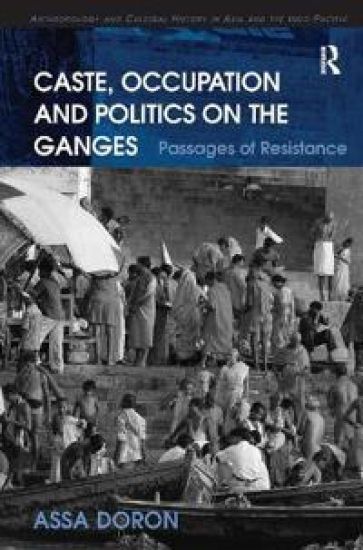
Caste, Occupation and Politics on the Ganges
This intriguing anthropological study investigates how the boatmen of Banaras have repositioned themselves within the traditional social organization and used their privileged position on the river to contest upper-caste and state domination. Assa Doron examines the evolution of the boatmen community, drawing on a variety of sources to illuminate the cultural politics of social and economic inequality in contemporary India. Caste, Occupation and Politics on the Ganges offers insight into recent debates about the cultural and historical forms of social practice and resistance at the juncture between tradition and the global economy, and will therefore appeal not only to anthropologists, but to anyone working in the field of development studies, globalization, religion, politics and cultural studies.
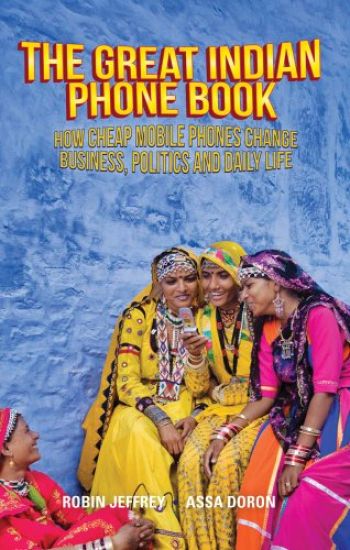
The Great Indian Phone Book

The Great Indian Phone Book

Robin Jeffrey; Assa Doron

C Hurst Co Publishers Ltd
2013
nidottu
The cheap mobile phone is arguably the most significant personal communications device in history. In India, where caste hierarchy has reinforced power for generations, the disruptive potential of the mobile phone is even more striking than elsewhere. In 2001, India had 35 million telephones, only four million of them mobiles. Ten years later, it had more than 800 million phone subscribers; more than 95 per cent were mobile phones. In a decade, communications in India have been transformed by a device that can be shared by fisherfolk in Kerala, boatmen in Banaras, great capitalists in Mumbai and power-wielding politicians and bureaucrats in New Delhi. Village councils banned unmarried girls from having mobile phones. Families debated whether new brides should surrender them. Cheap mobile phones became photo albums, music machines and radios. Religious images and uplifting messages flooded tens of millions of phones each day. Pornographers and criminals found a tantalising new tool. In politics, organisations with cadres of true believers exploited a resource infinitely more effective than telegrams, postcards and the printing press for carrying messages to workers, followers and voters. Jeffrey and Doron focus on three groups - controllers: the bureaucrats, politicians and capitalists who wrestle over control of radio frequency spectrum; servants: the marketers, agents, technicians, tower-builders, repairers and second-hand dealers who carry mobile phones to the masses; and users: the politicians, activists, businesses and households that adapt the mobile phone to their needs. The book probes the whole universe of the mobile phone - from the contests of great capitalists and governments to control radio frequency spectrum, to the ways ordinary people build the troublesome and addictive device into their daily lives.
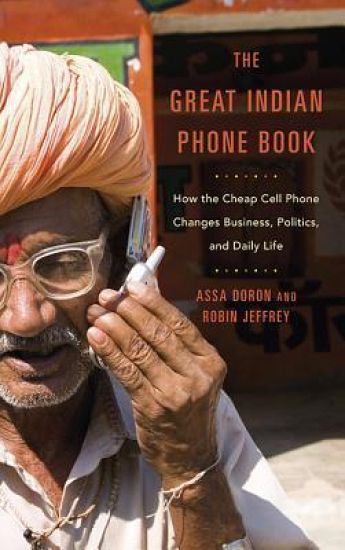
The Great Indian Phone Book: How the Cheap Cell Phone Changes Business, Politics, and Daily Life
In 2001, India had 4 million cell phone subscribers. Ten years later, that number had exploded to more than 750 million. Over just a decade, the mobile phone was transformed from a rare and unwieldy instrument to a palm-sized, affordable staple, taken for granted by poor fishermen in Kerala and affluent entrepreneurs in Mumbai alike. The Great Indian Phone Book investigates the social revolution ignited by what may be the most significant communications device in history, one which has disrupted more people and relationships than the printing press, wristwatch, automobile, or railways, though it has qualities of all four. In this fast-paced study, Assa Doron and Robin Jeffrey explore the whole ecosystem of the cheap mobile phone. Blending journalistic immediacy with years of field-research experience in India, they portray the capitalists and bureaucrats who control the cellular infrastructure and wrestle over bandwidth rights, the marketers and technicians who bring mobile phones to the masses, and the often poor, village-bound users who adapt these addictive and sometimes troublesome devices to their daily lives. Examining the challenges cell phones pose to a hierarchy-bound country, the authors argue that in India, where caste and gender restrictions have defined power for generations, the disruptive potential of mobile phones is even greater than elsewhere. The Great Indian Phone Book is a rigorously researched, multidimensional tale of what can happen when a powerful and readily available technology is placed in the hands of a large, still predominantly poor population.
Caste, Occupation and Politics on the Ganges

Caste, Occupation and Politics on the Ganges

Assa Doron

Ashgate Publishing Limited
2008
sidottu
This intriguing anthropological study investigates how the boatmen of Banaras have repositioned themselves within the traditional social organization and used their privileged position on the river to contest upper-caste and state domination. Assa Doron examines the evolution of the boatmen community, drawing on a variety of sources to illuminate the cultural politics of social and economic inequality in contemporary India. Caste, Occupation and Politics on the Ganges offers insight into recent debates about the cultural and historical forms of social practice and resistance at the juncture between tradition and the global economy, and will therefore appeal not only to anthropologists, but to anyone working in the field of development studies, globalization, religion, politics and cultural studies.