Kirjojen hintavertailu – 12 859 818 kirjaa ja 27 kauppaa

Kirjailija

Audra Simpson

Kirjat ja teokset yhdessä paikassa: 5 kirjaa, julkaisuja vuosilta 2014–2025, suosituimpiin kuuluu When the Pine Needles Fall. Vertaile teosten hintoja ja tarkista saatavuus suomalaisista kirjakaupoista.

5 kirjaa

Kirjojen julkaisuvuodet: 2014–2025.

When the Pine Needles Fall

When the Pine Needles Fall

Katsi’tsakwas Ellen Gabriel; Sean Carleton; Pamela Palmater; Audra Simpson

BETWEEN THE LINES
2025
nidottu
There have been many things written about Canada’s violent siege of Kanehsatà:ke and Kahnawà:ke in the summer of 1990, but When the Pine Needles Fall: Indigenous Acts of Resistance is the first book from the perspective of Katsi’tsakwas Ellen Gabriel, who was the Kanien’kehá:ka (Mohawk) spokesperson during the siege. When the Pine Needles Fall, written in a conversational style by Gabriel with historian Sean Carleton, offers an intimate look at Gabriel’s life leading up to the 1990 siege, her experiences as spokesperson for her community, and her work since then as an Indigenous land defender, human rights activist, and feminist leader. More than just the memoir of an extraordinary individual, When the Pine Needles Fall offers insight into Indigenous language, history, and philosophy, reflections on our relationship with the land, and calls to action against both colonialism and capitalism as we face the climate crisis. Gabriel’s hopes for a decolonial future make clear why protecting Indigenous homelands is vital not only for the survival of Indigenous peoples, but for all who live on this planet.
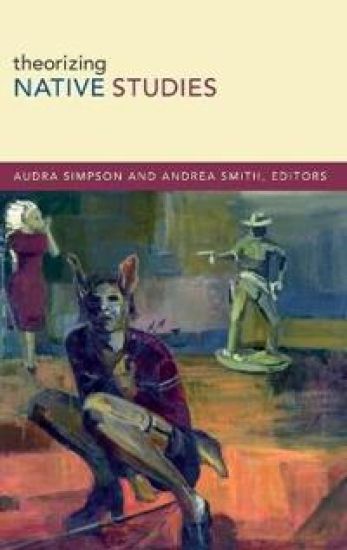
Theorizing Native Studies

Theorizing Native Studies

Audra Simpson

Duke University Press
2014
pokkari
This important collection makes a compelling argument for the importance of theory in Native studies. Within the field, there has been understandable suspicion of theory stemming both from concerns about urgent political issues needing to take precedence over theoretical speculations and from hostility toward theory as an inherently Western, imperialist epistemology. The editors of Theorizing Native Studies take these concerns as the ground for recasting theoretical endeavors as attempts to identify the larger institutional and political structures that enable racism, inequities, and the displacement of indigenous peoples. They emphasize the need for Native people to be recognized as legitimate theorists and for the theoretical work happening outside the academy, in Native activist groups and communities, to be acknowledged. Many of the essays demonstrate how Native studies can productively engage with others seeking to dismantle and decolonize the settler state, including scholars putting theory to use in critical ethnic studies, gender and sexuality studies, and postcolonial studies. Taken together, the essays demonstrate how theory can serve as a decolonizing practice. Contributors. Christopher Bracken, Glen Coulthard, Mishuana Goeman, Dian Million, Scott Morgensen, Robert Nichols, Vera Palmer, Mark Rifkin, Audra Simpson, Andrea Smith, Teresia Teaiwa
Theorizing Native Studies

Theorizing Native Studies

Audra Simpson

Duke University Press
2014
sidottu
This important collection makes a compelling argument for the importance of theory in Native studies. Within the field, there has been understandable suspicion of theory stemming both from concerns about urgent political issues needing to take precedence over theoretical speculations and from hostility toward theory as an inherently Western, imperialist epistemology. The editors of Theorizing Native Studies take these concerns as the ground for recasting theoretical endeavors as attempts to identify the larger institutional and political structures that enable racism, inequities, and the displacement of indigenous peoples. They emphasize the need for Native people to be recognized as legitimate theorists and for the theoretical work happening outside the academy, in Native activist groups and communities, to be acknowledged. Many of the essays demonstrate how Native studies can productively engage with others seeking to dismantle and decolonize the settler state, including scholars putting theory to use in critical ethnic studies, gender and sexuality studies, and postcolonial studies. Taken together, the essays demonstrate how theory can serve as a decolonizing practice. Contributors. Christopher Bracken, Glen Coulthard, Mishuana Goeman, Dian Million, Scott Morgensen, Robert Nichols, Vera Palmer, Mark Rifkin, Audra Simpson, Andrea Smith, Teresia Teaiwa
Mohawk Interruptus

Mohawk Interruptus

Audra Simpson

Duke University Press
2014
pokkari

Halvin toimitettuna 31,00 €

Mohawk Interruptus is a bold challenge to dominant thinking in the fields of Native studies and anthropology. Combining political theory with ethnographic research among the Mohawks of Kahnawà:ke, a reserve community in what is now southwestern Quebec, Audra Simpson examines their struggles to articulate and maintain political sovereignty through centuries of settler colonialism. The Kahnawà:ke Mohawks are part of the Haudenosaunee or Iroquois Confederacy. Like many Iroquois peoples, they insist on the integrity of Haudenosaunee governance and refuse American or Canadian citizenship. Audra Simpson thinks through this politics of refusal, which stands in stark contrast to the politics of cultural recognition. Tracing the implications of refusal, Simpson argues that one sovereign political order can exist nested within a sovereign state, albeit with enormous tension around issues of jurisdiction and legitimacy. Finally, Simpson critiques anthropologists and political scientists, whom, she argues, have too readily accepted the assumption that the colonial project is complete. Belying that notion, Mohawk Interruptus calls for and demonstrates more robust and evenhanded forms of inquiry into indigenous politics in the teeth of settler governance.
Mohawk Interruptus

Mohawk Interruptus

Audra Simpson

Duke University Press
2014
sidottu
Mohawk Interruptus is a bold challenge to dominant thinking in the fields of Native studies and anthropology. Combining political theory with ethnographic research among the Mohawks of Kahnawà:ke, a reserve community in what is now southwestern Quebec, Audra Simpson examines their struggles to articulate and maintain political sovereignty through centuries of settler colonialism. The Kahnawà:ke Mohawks are part of the Haudenosaunee or Iroquois Confederacy. Like many Iroquois peoples, they insist on the integrity of Haudenosaunee governance and refuse American or Canadian citizenship. Audra Simpson thinks through this politics of refusal, which stands in stark contrast to the politics of cultural recognition. Tracing the implications of refusal, Simpson argues that one sovereign political order can exist nested within a sovereign state, albeit with enormous tension around issues of jurisdiction and legitimacy. Finally, Simpson critiques anthropologists and political scientists, whom, she argues, have too readily accepted the assumption that the colonial project is complete. Belying that notion, Mohawk Interruptus calls for and demonstrates more robust and evenhanded forms of inquiry into indigenous politics in the teeth of settler governance.