Kirjojen hintavertailu – 12 859 829 kirjaa ja 27 kauppaa

Kirjailija

Audrey Richards

Kirjat ja teokset yhdessä paikassa: 5 kirjaa, julkaisuja vuosilta 2003–2021, suosituimpiin kuuluu Chisungu. Vertaile teosten hintoja ja tarkista saatavuus suomalaisista kirjakaupoista.

5 kirjaa

Kirjojen julkaisuvuodet: 2003–2021.

Chisungu

Chisungu

Audrey Richards

Routledge
2021
sidottu
Audrey Richards (1899-1984) was a leading British anthropologist of the twentieth century and the first woman president of the Royal Anthropological Institute. Based on fieldwork conducted at a time when the discipline was dominated by male anthropologists, Chisungu: A Girl’s Initiation Ceremony Among the Bemba of Zambia is widely hailed as a classic of anthropology and African and gender studies. Underpinned by painstaking research carried out by Richards among the Bemba people in northern Zambia in the 1930s, Chisungu focuses on the initiation ceremonies for young Bemba girls. Pioneering the study of women’s rituals and challenging the prevailing theory that rites of passage served merely to transfer individuals from one status to another, Richards writes about the incredibly rich and diverse aspects of ritual that characterised Chisungu: its concern with matriliny; deference to elders; sex and reproduction; the birth of children; ideas about the continuity between past, present and future; and the centrality of emotional conflict. On a deeper level, Chisungu is a crucial work for the role it accords to the meaning of symbolism in explaining the structure of society, paving the way for much subsequent understanding of the role of symbolic meaning and kinship. This Routledge Classics edition includes a new foreword by Jessica Johnson and an introduction by Jean La Fontaine.
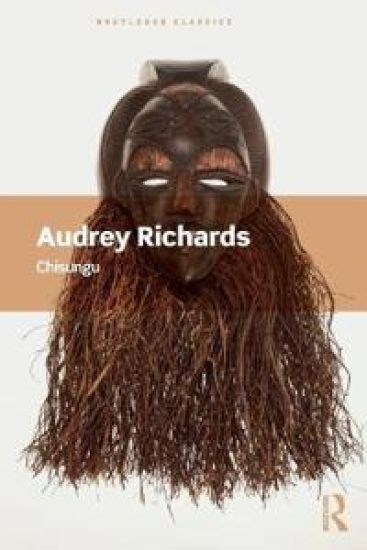
Chisungu

Chisungu

Audrey Richards

Routledge
2021
nidottu
Audrey Richards (1899-1984) was a leading British anthropologist of the twentieth century and the first woman president of the Royal Anthropological Institute. Based on fieldwork conducted at a time when the discipline was dominated by male anthropologists, Chisungu: A Girl’s Initiation Ceremony Among the Bemba of Zambia is widely hailed as a classic of anthropology and African and gender studies. Underpinned by painstaking research carried out by Richards among the Bemba people in northern Zambia in the 1930s, Chisungu focuses on the initiation ceremonies for young Bemba girls. Pioneering the study of women’s rituals and challenging the prevailing theory that rites of passage served merely to transfer individuals from one status to another, Richards writes about the incredibly rich and diverse aspects of ritual that characterised Chisungu: its concern with matriliny; deference to elders; sex and reproduction; the birth of children; ideas about the continuity between past, present and future; and the centrality of emotional conflict. On a deeper level, Chisungu is a crucial work for the role it accords to the meaning of symbolism in explaining the structure of society, paving the way for much subsequent understanding of the role of symbolic meaning and kinship. This Routledge Classics edition includes a new foreword by Jessica Johnson and an introduction by Jean La Fontaine.
Hunger and Work in a Savage Tribe

Hunger and Work in a Savage Tribe

Audrey Richards

Routledge
2016
sidottu
Hunger and Work in a Savage Tribe examines the cultural aspects of food and eating among the Southern Bantu, taking as its starting point the bold statement 'nutrition as a biological process is more fundamental than sex'. When it was first published in 1932, with a preface by Malinowski, it laid the groundwork for sociological theory of nutrition. Richards was also among the first anthropologists to establish women's lives and the social sphere as legitimate subjects for anthropological study.
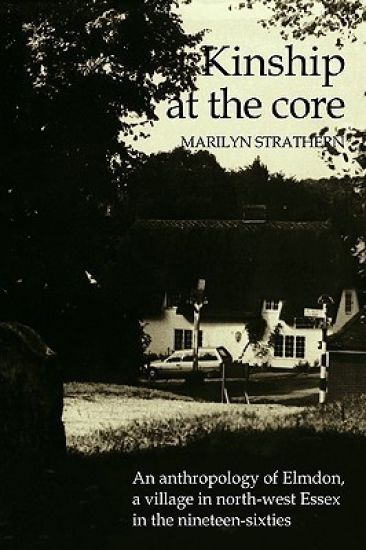
Kinship at the Core

Kinship at the Core

Marilyn Strathern; Audrey Richards

Cambridge University Press
2009
pokkari
In the village of Elmdon in north-west Essex, members of certain families are distinguished from other residents as being `real Elmdon'. Through a detailed ethnography of the structure of the village, and the interrelationships between its various families, work patterns and community activities, Marilyn Strathern provides an understanding of the characteristics of those who most vehemently claim to be 'real' village people. Yet this account goes far beyond ethnographic description. Its inspiration lies with Dr Audrey Richards, a distinguished anthropologist whose most substantial contribution has been in Africa, while Dr Strathern herself has had many years' field experience in Papua New Guinea. As 'outsiders' they bring a fresh approach to English village studies. The book takes the idea of 'village' not for granted, but as a dogma to be accounted for. Dr Strathern argues that in order to appreciate why the village should be so salient a reference point in people's self-classifications, it is necessary to understand what the village stands for in their ideas of the world.
Hunger and Work in a Savage Tribe

Hunger and Work in a Savage Tribe

Audrey Richards

Routledge
2003
nidottu
Hunger and Work in a Savage Tribe examines the cultural aspects of food and eating among the Southern Bantu, taking as its starting point the bold statement 'nutrition as a biological process is more fundamental than sex'. When it was first published in 1932, with a preface by Malinowski, it laid the groundwork for sociological theory of nutrition. Richards was also among the first anthropologists to establish women's lives and the social sphere as legitimate subjects for anthropological study.