

Kirjailija
Auguste Comte
Kirjat ja teokset yhdessä paikassa: 183 kirjaa, julkaisuja vuosilta 1970–2026, suosituimpiin kuuluu Lettres Ã? M. Valat. Vertaile teosten hintoja ja tarkista saatavuus suomalaisista kirjakaupoista.
183 kirjaa
Kirjojen julkaisuvuodet: 1970–2026.

Avec le positivisme, pense Auguste Comte, s'ouvre une nouvelle re: celle o l'esprit, d laissant les vaines sp culations th ologiques et m taphysiques, s'ancre dans le relatif, hauteur d'homme et de connaissance humaine, c'est- -dire dans le positif. Sur ce renversement d cisif, s'articulent toute une philosophie des sciences, une morale, une religion m me. Con u l'usage des "prol taires", ce texte capital condense, avec rigueur, toutes les th ses de la nouvelle cole.

PLAN DES TRAVAUX SCIENTIFIQUES NÉCESSAIRES POUR RÉORGANISER LA SOCIÉTÉ
Auguste Comte
Commentaires philosophiques
2022
nidottu

Sommaire appréciation de l'ensemble du passé moderne
Auguste Comte
Commentaires philosophiques
2022
nidottu


A General View of Positivism; Or, Summary exposition of the System of Thought and Life
Auguste Comte
ALPHA EDITION
2021
pokkari

Cours de Philosophie Positive. Tome II: Discours Sur l'Esprit Positif
Auguste Comte
Classiques Garnier
2021
nidottu



In A General View of Positivism French philosopher Auguste Comte gives an overview of his social philosophy known as Positivism. Comte, credited with coining the term 'sociology' and one of the first to argue for it as a science, is concerned with reform, progress and the problem of social order in society. In this English edition of the work, published in 1865, he addresses the practical problems of implementing his philosophy or doctrine, as he also refers to Positivism, into society. He believes that society evolves through a series of stages that are ruled by social laws and culminate in a superior form of social life. During this reorganisation of society, which will find its greatest supporters among women and the working class, a 'new moral power' will emerge. Under the motto 'love, order and progress' Comte wishes humanism to replace organised religion as the object of spiritual worship. Auguste Comte, considered by some to be the first "philosopher of science," was perhaps most famous for founding the theory of Positivism: a framework of thinking and living meant to engdender unity across humanity, backed by love, science, and intellect. Positivism itself is a combination philosophy and way of life. Here Comte lays down the various tenents of the philosophy, describing what he views as the six major characteristics of the system. Comte goes into surprising detail, going so far as to describe minutae like how children should be educated, the structure of a unified global committee of nations, new flags, calendars, the role of the arts, and so on. He ends the book with what he calls the "Religion of Humanity," a secular religion meant to replace the traditional religions that people of the time were becoming disillusioned with. The book and the theory are both very much products of the time. Comte was born around the end of the French Revolution, and lived in Paris during that time when republican ideas, respect for science, and a revolutionary and forward-thinking spirit made fertile ground for change. He viewed Positivism as the single solution to most of the problems of the day, including Communism, the plight of the working class, the shift away from traditional religion, and the constant war and strife that had plagued humanity. Comte's theories gained a huge following: you might even recognize the Positivist motto, "Order and Progress," inscribed on Brazil's national flag. While Positivism and its executive arm, the Church of Humanity, today only seem to survive in any significant number in Brazil-and even there in a greatly declined state-its theories were hugely influential in the emergence of many "ethical societies" and secular church movements around the globe.

In A General View of Positivism French philosopher Auguste Comte gives an overview of his social philosophy known as Positivism. Comte, credited with coining the term 'sociology' and one of the first to argue for it as a science, is concerned with reform, progress and the problem of social order in society. In this English edition of the work, published in 1865, he addresses the practical problems of implementing his philosophy or doctrine, as he also refers to Positivism, into society. He believes that society evolves through a series of stages that are ruled by social laws and culminate in a superior form of social life. During this reorganisation of society, which will find its greatest supporters among women and the working class, a 'new moral power' will emerge. Under the motto 'love, order and progress' Comte wishes humanism to replace organised religion as the object of spiritual worship. Auguste Comte, considered by some to be the first "philosopher of science," was perhaps


Lettres, 1850-1857. Tome II. Lettres Antérieures À 1850
Auguste Comte
Hachette Livre - BNF
2020
pokkari

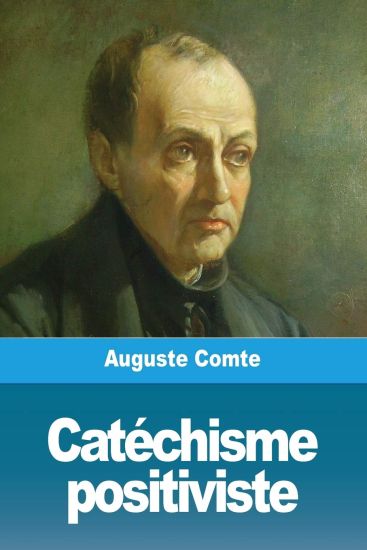
Apres avoir pleinement satisfait l'intelligence et l'activite, la religion positive, toujours poussee par sa realite caracteristique, s'est convenablement etendue jusqu'au sentiment, qui desormais forme son principal domaine et devient la base de son unite...

Reproduction of the original: The Philosophy of Mathematics by Auguste Comte

Reproduction of the original: The Philosophy of Mathematics by Auguste Comte