Kirjojen hintavertailu – 12 859 818 kirjaa ja 27 kauppaa

Kirjailija

Auke de Haan

Kirjat ja teokset yhdessä paikassa: 212 kirjaa, julkaisuja vuosilta 2023–2026, suosituimpiin kuuluu The Dark History of Science. Vertaile teosten hintoja ja tarkista saatavuus suomalaisista kirjakaupoista.

212 kirjaa

Kirjojen julkaisuvuodet: 2023–2026.

Scary American History Facts

Scary American History Facts

Auke de Haan; Jennifer Joseph

de Fryske Wrald
2025
pokkari
America's Hidden Horrors: Gruesome Facts from Colonial Shadows to Modern Echoes "Scary American History Facts" pulls back the curtain on the nation's darkest chapters, where dreams of freedom often masked brutal realities of persecution, exploitation, and terror. From colonial witch hunts fueled by paranoia to industrial disasters exposing corporate indifference, this book evokes the chilling fear that gripped generations, reminding us of the high stakes in building a land of liberty amid cycles of violence and moral compromise. It opens with colonial anxieties, where survival in unfamiliar wilderness clashed with religious strictness and community pressures. New England witch trials unleash mass hysteria, with Puritan beliefs driving accusations and executions that tore families apart. Frontier conflicts bring raids and broken treaties, as expansion pits settlers against Native resistance in cycles of vengeance. Revolutionary struggles divide patriots and loyalists, with scorched-earth tactics and civilian suffering testing ideals. Nation-building rests on slavery's horrors, with daily bondage, family separations, and revolts met by retaliation. Civil War carnage in battlefields and prison camps devastates, with emancipation transforming yet not ending strife. Reconstruction's promise yields to racial terror through lynchings and Jim Crow oppression. Western outlaws and gunfighters lawless towns, while Gilded Age factories trap workers in deadly conditions like Triangle Fire tragedies. Unethical experiments exploit vulnerable groups, from eugenics to medical trials. Urban nightmares breed crime and poverty in overcrowded tenements, with political corruption fueling backroom deals. Forgotten wars and conquests reveal imperial shadows, as catastrophes like famines and pogroms expose societal fractures. The legacy examines intergenerational trauma and ongoing reckonings with inequality. Comparable to Howard Zinn's "A People's History of the United States," which uncovers overlooked struggles with unflinching detail, this volume aligns with 2025 trends in dark American histories blending true crime appeal with social reflection. Its broad marketability draws true crime fans, students, and social justice readers, promising strong sales for bookstores in U. S. history sections. By weaving emotional stakes like terror's grip on communities and resilience amid oppression, it connects readers to America's shadowed past, inspiring reflection on how hidden horrors shape today's society.

How to Pray for Healing

How to Pray for Healing

Auke de Haan

de Fryske Wrald
2025
pokkari
What if the healing you long for is already waiting in the quiet space between your words and God's heart? How to Pray for Healing offers a compassionate, Scripture-soaked guide that moves beyond theory into everyday practice. Rooted in biblical promises and real-life experience, this book equips ordinary believers to pray with confidence for physical restoration, emotional wholeness, relational repair, and spiritual renewal. Discover a clear five-step framework for praying for yourself, a gentle L. I. S. T. E. N. model for interceding for others, and practical ways to lead small groups in united prayer. Learn how to feed faith with God's Word, clear heart clutter through forgiveness, and partner wisely with medical care while trusting divine timing. Each chapter blends teaching, personal stories, simple exercises, and memorable tools like verse mapping, Scripture sandwiches, and daily heart checks. From overcoming doubt and bitterness to building sustainable spiritual habits and sharing your testimony with humility, the book addresses the full spectrum of healing needs. Special sections explore mental health, trauma recovery, healthy lifestyle choices, and what to do when answers feel slow in coming. For readers who appreciate approachable yet deeply biblical works like The Prayer That Turns the World Upside Down by Albert Mohler, Praying the Scriptures for Your Life by Jodie Berndt, or It's Not Supposed to Be This Way by Lysa TerKeurst, How to Pray for Healing provides a warm, encouraging companion that turns uncertainty into hopeful, expectant prayer. Whether you are seeking healing yourself, longing to stand with loved ones, or eager to help others encounter God's restoring touch, these pages offer gentle guidance and proven steps to pray boldly, listen patiently, and receive gracefully.
A Book on How to win at Travel

A Book on How to win at Travel

Auke de Haan

de Fryske Wrald
2025
pokkari
Imagine stepping off a plane in a dream destination without breaking the bank, without stress, and with total confidence that every moment will be richer than the last. A Book on How to Win at Travel transforms ordinary trips into extraordinary victories. This practical guide reveals the strategies that seasoned explorers use to travel farther, cheaper, and more joyfully than seems possible in an era of rising costs and endless complications. Discover how to set meaningful travel goals that align with your deepest desires, craft budgets that stretch further than you thought feasible, and hunt down deals that make luxury feel affordable. Learn the art of packing light yet prepared, choosing accommodations that delight rather than disappoint, and navigating foreign streets like a local from day one. Whether you dream of solo adventures that build unbreakable confidence, family vacations everyone actually enjoys, or cultural immersions that leave you forever changed, these pages deliver clear, actionable steps. Master safety without paranoia, embrace new foods without fear, bridge language gaps with ease, and turn potential disasters into memorable stories. From securing the best flights and mastering loyalty programs to staying healthy on the road and preserving memories that last a lifetime, every chapter equips you with tools to outsmart common pitfalls and amplify every reward. For readers who love The Art of Travel by Alain de Botton, Vagabonding by Rolf Potts, or How to Travel the World on $50 a Day by Matt Kepnes, this book offers a fresh, comprehensive playbook for making travel not just possible, but triumphant. In a world that feels smaller yet more overwhelming than ever, winning at travel means claiming the freedom, growth, and wonder that only the open road can provide. This is your blueprint.
Crazy History Facts About Money

Crazy History Facts About Money

Auke de Haan

de Fryske Wrald
2025
pokkari
What if salt was once worth more than gold, cocoa beans paid taxes, and a single tulip bulb could buy a mansion? Crazy History Facts About Money uncovers the wild, weird, and often unbelievable stories behind the cash that has shaped human civilization for thousands of years. From prehistoric shells to pirate treasures, from witch-trial fines to revolutionary currencies that became worthless overnight, this captivating journey reveals how money has started wars, toppled empires, sparked manias, and changed lives in the strangest ways imaginable. Travel back to the dusty markets of ancient Mesopotamia where the first receipts were carved in clay, stand in awe as Lydia mints the world's earliest coins, and watch Chinese merchants gamble on the radical new idea of paper notes centuries before Europe caught on. Discover African kingdoms where gold dust flowed like rivers, Aztec tribute counted in feathers and cocoa, and colonial outposts forced to use wampum beads when coins ran short. The adventure continues through debased Roman silver that triggered inflation across an empire, medieval lords demanding rent in eels or peppercorns, and Renaissance bankers inventing modern finance amid whispers of dark conspiracies. Relive the frenzy of Tulip Mania, the despair of hyperinflated Continentals during the American Revolution, the glittering chaos of global gold rushes, and the shadowy financial networks that fueled the transatlantic slave trade. Filled with jaw-dropping anecdotes, forgotten scandals, and larger-than-life characters, Crazy History Facts About Money transforms dry economic history into a rollercoaster of human ambition, ingenuity, and folly. Perfect for fans of quirky nonfiction hits like A History of the World in 100 Objects, Salt: A World History, or Bill Bryson's At Home, this book delivers bite-sized chapters bursting with surprises that make the past feel vividly, outrageously alive. Whether you love odd facts to share at parties, crave entertaining lessons on wealth and power, or simply wonder why money makes the world spin the way it does, these pages will forever change how you see every coin, bill, and digital ping in your pocket.
The History of Turkey

The History of Turkey

Auke de Haan

de Fryske Wrald
2025
pokkari
Turkey's Timeless Crossroads: From Ancient Empires to Modern Legacy "The History of Turkey" invites readers to explore a land where continents converge and civilizations clash, evoking the awe of Hittite chariots thundering across plains and the resilience of peoples blending traditions amid conquests and rebirths. From prehistoric settlements at G bekli Tepe to Ottoman grandeur and 20th-century transitions, this book captures the emotional journey of a region that bridged East and West, highlighting the high stakes of power, faith, and identity in shaping a nation's soul. It opens with prehistoric beginnings, tracing early communities and monumental sites like atalh y k that reveal social complexities. Bronze Age Hittites rise with Hattusa's might, forging diplomacy and warfare in Indo-European contexts. Iron Age kingdoms emerge amid collapses, with Phrygian wealth under Midas and Lydian coinage innovations. Persian satrapies administer vast territories, facing revolts like Ionian. Alexander's campaigns Hellenize Anatolia, dividing among Diadochi successors. Roman integration brings infrastructure, transitioning to Byzantine continuity with Justinian's code. Early Byzantine eras defend against threats, with Christianity's spread. Later periods see Seljuk migrations after Manzikert, establishing Turkic roots. Anatolian beyliks compete, leading to Ottoman origins under Osman. Expansion consolidates with Bursa captures and Janissary forces. Classical Ottoman period refines administration and arts, as 17th-century shifts address challenges. Tulip Period introduces European influences amid courtly renaissance. 19th-century Tanzimat reforms modernize amid pressures, with late crises fueling nationalism. World War I brings empire's twilight, reflecting on layered legacies. Comparable to Jason Goodwin's "Lords of the Horizons," which vividly chronicles Ottoman splendor, this volume aligns with 2025 trends in Eurasian heritage books emphasizing crossroads cultures. Its broad marketability appeals to travelers, students, and history enthusiasts, promising steady sales for bookstores in Middle Eastern sections. By highlighting emotional stakes like adaptation amid invasion and unity through diversity, it connects readers to Turkey's enduring spirit, inspiring reflection on how ancient fusions influence today's world.
Norse Mythology Book For Teens

Norse Mythology Book For Teens

Auke de Haan

de Fryske Wrald
2025
pokkari
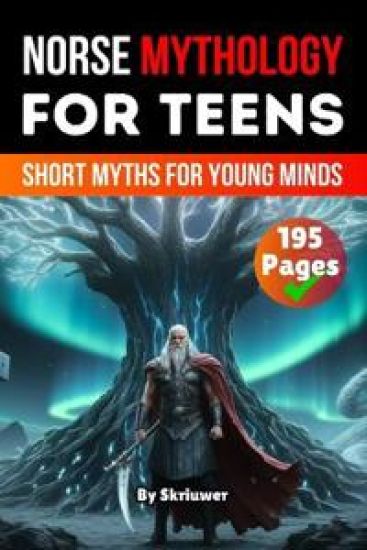
Epic Norse Adventures: Gods, Heroes, and Myths for Teens "Norse Mythology Book For Teens" immerses young readers in the thrilling world of Viking legends, where mighty gods battle fate, cunning tricksters weave chaos, and brave heroes face monstrous foes under Yggdrasil's branches. From Odin's wisdom quests to Thor's thunderous hammer strikes, this book captures the raw excitement of a mythology filled with courage, betrayal, and rebirth, inspiring teens to discover timeless lessons of honor and resilience in a universe of cosmic drama. It opens with Norse mythology's vibrant roots in Viking Age culture, where skalds preserved tales through oral tradition. Yggdrasil anchors the Nine Realms, each alive with unique inhabitants and balances of power. Giants challenge divine order, from frost to fire types clashing with gods. Odin, the All-Father, sacrifices for knowledge, gathering warriors in Valhalla for Ragnarok's stakes. Thor protects Midgard with Mjolnir's might, embodying strength against chaos. Loki's shape-shifting pranks bring laughter and tragedy, disrupting harmony. Freya's beauty and magic blend love with war, while Freyr gifts prosperity from Vanir heritage. Valkyries choose fallen heroes, linking battlefields to eternal halls. Magical creatures like dragons and wolves threaten cosmic stability, as dwarfs forge legendary items and elves radiate light. First humans Ask and Embla inhabit Midgard, with heroes bridging mortal and divine. Balder's fate foreshadows doom, while Sigurd slays dragons amid curses. Heroic sagas feature figures defying destiny. Ragnarok's twilight unleashes final battles and rebirth promises. Myths' historical influence spans Christian scribes to modern revivals, with reflections on values like loyalty and fate. Comparable to Rick Riordan's "Magnus Chase" series, which brings Norse gods to teen adventures with humor and heart, this volume aligns with 2025 trends in YA mythology retellings blending ancient lore with relatable themes. Its broad marketability appeals to fantasy fans, students, and families, promising strong sales for bookstores in teen mythology sections. By weaving emotional stakes like bravery against doom and wisdom through sacrifice, it connects young readers to Norse wonders, inspiring imagination and personal growth through epic tales.
Scary Ancient Greek History Facts

Scary Ancient Greek History Facts

Auke de Haan

de Fryske Wrald
2025
pokkari
Ancient Greece's Hidden Horrors: Brutal Facts Behind the Glory "Scary Ancient Greek History Facts" strips away the marble myths to reveal the blood-soaked realities of a civilization that birthed democracy yet thrived on terror, evoking the chilling dread of a world where gods demanded sacrifice and tyrants crushed dissent. From Minoan palaces hiding ritual killings to Spartan agoge's merciless training, this book captures the emotional rawness of lives lived under constant threat, reminding us of the high stakes in forging ideas that still echo today. It opens with Minoan mysteries, where palace grandeur masked possible human sacrifices and volcanic cataclysms. Mycenaean warfare culture emerges with brutal conquests reflected in epic legends, lavish tombs enforcing fear-based hierarchies. Greek Dark Ages bring collapse and uncertainty, with raids and famine shaping resilient identities. Archaic tyrants impose harsh laws and public punishments to maintain control amid economic strains. Spartan rigor exposes severe upbringing and helot terror through Krypteia hunts. Athenian plague ravages during wartime, breaking social norms under death's shadow. Peloponnesian War unleashes massacres and betrayals, devastating city-states. Macedonian rise under Philip crushes Greece with cunning tactics, as Alexander's sieges employ terror for vast territories. Diadochi struggles drown successors in bloody wars and assassinations. Hellenistic culture forces assimilation with heavy taxation and enslavement. Delphic oracles manipulate through cryptic prophecies and trances, while secret cults like Eleusinian rites fuel moral panic with rumored blood rites. Warfare tactics demand hoplite discipline amid carnage and trauma. Roman influence grows through interventions and reprisals, eroding autonomy. Everyday horrors oppress women, slaves, and metics with debt slavery and insecurity. Maritime dangers from storms and piracy add coastal terror, with spectacles blending festivals and executions for control. The legacy reflects on terror coexisting with brilliance, raising moral questions from cruelty and survival. Comparable to Terry Deary's "Horrible Histories" series, which thrills with gruesome ancient facts, this volume aligns with 2025 trends in dark history books blending education with macabre appeal for young adults. Its broad marketability draws teens, trivia lovers, and classics fans, promising strong sales for bookstores in ancient history sections. By weaving emotional stakes like fear's role in society and resilience amid brutality, it connects readers to Greece's haunting past, inspiring reflection on how ancient shadows influence modern times.
The History of New Zealand

The History of New Zealand

Auke de Haan; Jennifer Joseph

de Fryske Wrald
2025
pokkari
Volcanoes forged Aotearoa-but blood forged its nation. ���� This raw saga reveals New Zealand's torn history between Māori warriors and British invaders. Uncover brutal truths: Māori hunters driving 12-foot moa to extinction The Treaty of Waitangi's betrayal: partnership promised, sovereignty stolen 1.2 million hectares of land confiscated after the New Zealand Wars Gold rush destruction poisoning sacred rivers Witness defiance: "I shall fight against you forever " - Chief Rewi Maniapoto, whose warriors held Ōrākau for 3 days without water Large print exposes: Battlefield genius at Gate Pā where bunkers outsmarted British cannons How sheep farms and gold mines built prosperity on stolen land Mass graves and urban slums erased from postcard perfection ���� CLICK "ADD TO CART" - own the story that shattered a paradise myth
The History of the Netherlands

The History of the Netherlands

Auke de Haan

de Fryske Wrald
2025
pokkari
The Netherlands' Remarkable Journey: From Ancient Lowlands to Global Power "The History of the Netherlands" invites readers to explore a nation's extraordinary story of adaptation and ambition, where flat lands defied seas and empires to forge a legacy of trade, tolerance, and innovation. From prehistoric hunter-gatherers battling floods to Golden Age merchants dominating oceans, this book evokes the resilient spirit of a people who turned geographic challenges into strengths, highlighting the high stakes of independence won through ingenuity and unity. It opens with prehistoric origins, tracing early settlements and Celtic influences amid shifting climates. Roman conquest along the Rhine introduces frontier life and Batavian alliances, blending local customs with imperial structures. Early Middle Ages see Frankish expansion and Christian conversion, with Frisian maritime culture persisting. Regional counties and duchies emerge, fostering trade and urban centers under feudal ties. Burgundian unification centralizes power with courtly arts, transitioning to Habsburg rule amid religious tensions. Reformation strife ignites revolts, leading to the Eighty Years' War and Dutch Republic's birth. Golden Age flourishes in society with scientific advances and artistic masters, while trade through VOC builds global networks. Anglo-Dutch wars test naval dominance, as late centuries navigate Enlightenment ideas and economic adjustments. Batavian Republic and Napoleonic influences reshape governance, founding the Kingdom post-1815. Belgian Revolution splits the union, spurring industrial growth and social reforms. Late 19th-century colonial expansions and modernization lay modern foundations, reflecting on evolving identity. Comparable to Simon Schama's "The Embarrassment of Riches," which vividly captures Dutch Golden Age culture, this volume aligns with 2025 trends in European heritage histories emphasizing resilience and innovation. Its broad marketability appeals to travelers, students, and culture enthusiasts, promising steady sales for bookstores in history sections. By highlighting emotional stakes like freedom amid division and prosperity through trade, it connects readers to the Netherlands' enduring spirit, inspiring reflection on how past adaptations influence today's world.
The History of Antarctica

The History of Antarctica

Auke de Haan

de Fryske Wrald
2025
pokkari
Uncover Antarctica's Frozen Mysteries: From Ancient Myths to Heroic Expeditions "The History of Antarctica" invites readers to the world's most remote continent, where ice preserves secrets of prehistoric supercontinents and human courage tested limits against nature's extremes. From Gondwana's warm past to Shackleton's legendary survival, this book evokes the awe of explorers facing isolation and the high stakes of discovery in a land that humbled empires and inspired generations. It opens with Antarctica's ancient formation as part of Gondwana, shifting from lush climates to colossal ice sheets shaping a barren wilderness. Myths of Terra Australis fuel centuries of speculation, with Greek philosophers and medieval maps imagining a balancing southern landmass. 16th-17th century voyages hint at frozen realms through accidental sightings and growing curiosity. Captain Cook crosses the Antarctic Circle, disproving lush continent legends while charting icy barriers. 19th-century sealers and whalers drive exploration, with first mainland claims amid commercial rushes. Scientific expeditions follow, blending national pride with research in harsh conditions. The Heroic Age dawns with overwintering attempts and pole races, where Amundsen and Scott embody triumph and tragedy. Shackleton's Endurance saga highlights miraculous rescues against pack ice. Quiet years and territorial claims give way to aviation mapping and wartime pauses. Reflections tie myths to modern science, showing how early endeavors laid foundations for collaborative research. Comparable to Roland Huntford's "The Last Place on Earth," which dramatically recounts polar races, this volume aligns with 2025 trends in exploration histories emphasizing environmental wonder and human endurance. Its broad marketability appeals to adventure readers, students, and eco-conscious audiences, promising steady sales for bookstores in travel and science sections. By highlighting emotional stakes like isolation's terror and discovery's thrill, it connects readers to Antarctica's timeless allure, inspiring reflection on humanity's place in extreme worlds.
The History of the UK

The History of the UK

Auke de Haan

de Fryske Wrald
2025
pokkari
Discover Britain's Epic Saga: From Ancient Stones to Global Empire "The History of the UK" invites readers to trace the resilient spirit of a nation forged through invasions, revolutions, and innovations that shaped the modern world. From prehistoric megaliths standing sentinel on windswept plains to 20th-century transformations amid global wars, this book evokes the emotional pull of a people's unyielding quest for identity and freedom, highlighting the high stakes of unity built across diverse lands and turbulent times. It opens with early settlers, exploring Paleolithic communities and Neolithic farming that erected monuments like Stonehenge. Celtic tribes and Iron Age societies lay cultural foundations amid tribal dynamics. Roman conquest brings Claudian invasion and Boudica's revolt, transforming Britain with towns, roads, and baths. Post-Roman collapse ushers Anglo-Saxon kingdoms and Christianity's resurgence. Viking raids establish the Danelaw, met by Alfred the Great's resistance blending cultures. The Norman Conquest at Hastings reorganizes feudal society under William, with Domesday Book centralizing control. Plantagenets expand royal power through legal reforms and church conflicts, while Hundred Years' War and Black Death reshape society. Late Middle Ages see Wars of the Roses yield Tudor stability. Tudor era breaks with Rome under Henry VIII, dissolving monasteries amid religious shifts. Elizabethan age defeats the Armada, flourishing in Renaissance literature and maritime power. Stuarts ignite Civil War over divine right, leading to Cromwell's Commonwealth and Restoration. Glorious Revolution and Bill of Rights curb monarchy, with Union acts forming Great Britain. Georgian society advances industry and colonies, losing America yet gaining global trade. Napoleonic wars crown naval supremacy at Trafalgar. Early 19th-century reforms combat unrest with electoral changes and free trade. Victorian transformations bring welfare, imperial height, and cultural accomplishments. Edwardian tensions precede World War I's toll, expanding franchise and Labour's rise. Irish independence partitions the realm, transitioning to a challenged empire. Comparable to Simon Schama's "A History of Britain," which weaves vivid narratives across eras, this volume aligns with 2025 trends in national heritage books emphasizing resilience and diversity. Its broad marketability appeals to history enthusiasts, students, and travelers, promising steady sales for bookstores in British history sections. By highlighting emotional stakes like liberty amid conflict and innovation through adversity, it connects readers to the UK's enduring spirit, inspiring reflection on how past struggles influence today's world.
The History of the Bible

The History of the Bible

Auke de Haan

de Fryske Wrald
2025
pokkari
Trace the Bible's Epic Journey: From Ancient Roots to Sacred Canon "The History of the Bible" invites readers to explore the profound story of how sacred texts emerged from oral traditions amid ancient empires, evoking the emotional depth of faith forged in exile and triumph. From Mesopotamian influences on Hebrew narratives to the canonization of Christian scriptures in a Roman world, this book captures the high stakes of preserving divine words through crises, invasions, and cultural shifts, reminding us of the timeless quest for meaning that continues to shape billions. It opens with the Bible's ancient Near Eastern roots, where mythological frameworks from Mesopotamia and Egypt paved the way for reason-based inquiry in Hebrew thought. Early chapters trace the formation of Hebrew Scriptures, from oral traditions to written Torah, Prophets, and Writings, blending storytelling with memory techniques. Patriarchal narratives establish covenant themes, while Moses and Exodus deliver from bondage, forming Israel's identity around law and worship. Settlement in Canaan and Judges' cycles highlight deliverance amid oppression, transitioning to united monarchy under David and Solomon's Temple. Divided kingdom brings prophetic voices confronting idolatry, leading to Babylonian exile's theological reflections. Persian return rebuilds the Temple under Ezra and Nehemiah, reestablishing Torah observance. Hellenistic influences prompt the Septuagint translation, as Maccabean revolt resists forced assimilation. Roman era sets Jesus's ministry in Judea, with teachings on the Kingdom and resurrection claims. Early Christianity spreads through Pentecost and Paul's missions, including Gentiles. Canonization counters heresies, solidifying the New Testament. Comparable to Karen Armstrong's "The Bible: A Biography," which narrates sacred texts' evolution with insightful depth, this volume aligns with 2025 trends in religious history books emphasizing origins and cultural resonance. Its broad marketability appeals to faith communities, students, and seekers, positioning it as a steady seller for bookstores in religion and history sections. By highlighting emotional stakes like hope amid exile and unity through revelation, it connects readers to the Bible's enduring spirit, inspiring reflection on how ancient words illuminate modern lives.
The History of the Book

The History of the Book

Auke de Haan

de Fryske Wrald
2025
pokkari
Trace the Book's Epic Evolution: From Cave Markings to Printed Wonders "The History of the Book" invites readers to journey through humanity's most transformative invention, evoking the awe of ancient scribes preserving knowledge and the thrill of Gutenberg's press democratizing ideas. From clay tablets etched in Mesopotamian archives to Renaissance volumes blending art and scholarship, this book captures the emotional stakes of safeguarding wisdom amid empires' rise and fall, reminding us how the book has shaped thought, faith, and society across millennia. It opens with writing's dawn, where cave paintings and tallies transitioned from oral myths to inscribed records in Mesopotamia and Egypt. Early clay and stone records detail bitumen use and carving techniques, with preservation challenges highlighting knowledge's fragility. Papyrus and parchment chapters explore Egypt's river reeds spreading Mediterranean-wide, evolving to durable animal skins and the codex's advantages over scrolls in Christian communities. Medieval manuscripts reveal monastic scriptoria's labor, preserving classics through regional scripts. Libraries and trade grow under Cluniac reforms, with paper's westward diffusion from China revolutionizing affordability. Asian printing pioneers woodblock and movable type, while Europe's precursors lead to Gutenberg's press. Gutenberg's Bible and legal battles spark the printing revolution, spreading to cities via fairs. Renaissance bookmaking refines type and layout under humanists like Aldus Manutius. Early modern culture navigates religious conflicts and censorship, with lay literacy and private libraries emerging. Exploration fuels travel literature and maps, while scientific works challenge authorities. Production approaches detail hand presses and engravings, with artisanal ethos crafting volumes. Comparable to Alberto Manguel's "A History of Reading," which explores books' intimate role in human experience, this volume aligns with 2025 trends in bibliophile histories celebrating knowledge's preservation amid digital shifts. Its broad marketability appeals to book lovers, historians, and educators, positioning it as a steady seller for bookstores in literature and cultural studies sections. By highlighting emotional stakes like discovery's joy amid loss and innovation through adversity, it connects readers to the book's enduring spirit, inspiring reflection on how past formats influence today's reading world.
The History of Greenland

The History of Greenland

Auke de Haan

de Fryske Wrald
2025
pokkari
Greenland's Frozen Legacy: From Ancient Migrations to Colonial Frontiers "The History of Greenland" invites readers into a land of stark beauty and unyielding challenges, where indigenous cultures and European settlers forged resilient societies amid ice and isolation. From prehistoric ice sheets teeming with wildlife to Norse voyages braving Atlantic perils, this book evokes the emotional grit of adaptation and the high stakes of survival that defined a remote world's history. It opens with Greenland's ancient formation, exploring climate shifts and natural environments before human arrival. Early chapters trace Paleo-Eskimo migrations from Arctic North America, detailing tools and hunting strategies against icy hardships. Saqqaq culture emerges with stone blades and seasonal movements, while Independence I and II groups adapt to High Arctic extremes. Dorset legacies transition to Thule people's advanced methods, using sleds and umiaks to expand and lay Inuit foundations. Norse eras begin with Eric the Red's discovery, establishing farms tied to European trade. Daily life revolves around livestock and churches, with walrus ivory sustaining connections despite navigation dangers. Challenges mount as climate cools, isolating settlements and leading to their decline. Inuit communities persist with kayaks and spiritual traditions, encountering European whalers in fleeting trades. Missionaries like Hans Egede introduce Lutheranism, blending with local ways through stations. Danish influence grows via trading companies, formalizing authority amid Inuit adaptations. Eighteenth-century missions expand settlements, with hunting and trade shaping routines under monopolies. Nineteenth-century whaling and explorations intensify, as scientific expeditions map the unknown. Daily social structures highlight family roles in subsistence, with education hinting at governance shifts. By century's end, debates over trade and councils signal emerging voices, balancing tradition with outside ideas. Comparable to Finn Gad's "The History of Greenland," which weaves indigenous and colonial threads into a scholarly narrative, this volume aligns with 2025 trends in polar histories emphasizing environmental resilience and cultural heritage. Its broad marketability appeals to adventurers, students, and eco-conscious readers, promising steady sales for bookstores in history and exploration sections. By highlighting stakes like harmony with nature amid isolation and innovation through hardship, it connects readers to Greenland's enduring spirit, inspiring reflection on how ancient adaptations echo in today's changing climate.
American Civil War History Book

American Civil War History Book

Auke de Haan

de Fryske Wrald
2025
pokkari
Relive America's Defining Conflict: From Division to Reconstruction "American Civil War Book" immerses readers in the epic struggle that reshaped a nation, evoking the passion of freedom fighters and the high stakes of a country torn by ideology and economy. From colonial roots fueling sectional tensions to the hard-won path of Reconstruction, this volume captures the emotional turmoil of a divided people striving for unity and justice. It begins with an overview of causes, contrasting North-South roots in economy and culture. Chapters trace colonial slavery's origins, early compromises, and abolitionism's growth, building to crises like Nullification and the Mexican War's fallout. The 1850s ignite with Bleeding Kansas, Dred Scott's reverberations, and John Brown's raid, leading to Lincoln's election and Southern secession. War erupts at Fort Sumter, mobilizing armies with initial strategies clashing in early battles. Eastern campaigns from Bull Run to Peninsula unfold alongside Western victories at Henry, Donelson, and Shiloh. Naval strategies feature blockades and ironclad clashes, while emancipation transforms the conflict through contraband policies and the Proclamation. Home front realities reveal industrial contrasts, women's roles, and civil tensions like draft riots. African Americans shift from contrabands to soldiers in regiments like the 54th Massachusetts, while Native Americans face divided loyalties in Indian Territory. Turning points at Antietam pave for decisive 1863 victories at Gettysburg and Vicksburg. Grant's 1864 Overland Campaign and Sherman's Atlanta capture lead to the March to the Sea, devastating Confederate morale. The final phase sieges Petersburg, falls Richmond, and ends at Appomattox, with Lincoln's assassination shocking the nation. Reconstruction brings amendments, civil rights acts, and challenges in race relations, birthing a new Union. Comparable to James M. McPherson's "Battle Cry of Freedom," which masterfully narrates the era's drama, this book aligns with 2025 trends in inclusive historical accounts emphasizing diverse voices and moral stakes. Its broad marketability appeals to students, history buffs, and educators, promising steady sales for bookstores in American history sections. By weaving emotional stakes like liberty amid division and resilience through adversity, it connects readers to the Civil War's enduring spirit, inspiring reflection on how past conflicts shape today's America.
The History of Belgium

The History of Belgium

Auke de Haan

de Fryske Wrald
2025
pokkari
Discover Belgium's Resilient Spirit: From Ancient Tribes to Modern Nation "The History of Belgium" invites readers to explore a land where diverse peoples forged a unique identity amid empires, revolutions, and cultural crossroads, evoking the passion of independence fighters and the stakes of unity in a region long contested by greater powers. From prehistoric settlements along rivers to 19th-century industrial booms, this book captures the emotional journey of resilience that turned a geographic crossroads into a symbol of compromise and progress. It opens with prehistoric beginnings, tracing early human presence and Celtic tribes like the Parisii, shaped by geography's fertile plains and forests. Roman conquest transforms the area with administration and infrastructure, blending local traditions in Gallo-Roman culture. Early Middle Ages see Roman collapse yield Merovingian and Carolingian influences, with Christianity spreading under kings like Clovis. Capetian rise expands Paris as a center, though the region remains fragmented under feudal lords. Medieval growth sees universities and Gothic architecture flourish, while Hundred Years' War brings unrest and social shifts from plagues. Renaissance patronage and religious wars ignite Catholic-Huguenot conflicts, with massacres leading to Bourbon stability. Bourbon kings restore order through infrastructure, as Enlightenment ideas spark debates challenging authority. French Revolution collapses the old order, with Bastille storms ushering radical governance and terror. Revolutionary aftermath features Napoleon's rise and reforms, with Restoration balancing ideals. July Monarchy ignites protests, leading to Second Empire's Haussmann modernizations. 1870 siege and Commune devastate, with late 19th-century rebuilds fostering arts and industries. Comparable to David Nicholas's "Medieval Flanders," which details regional dynamics with scholarly depth, this volume aligns with 2025 trends in European heritage histories emphasizing local resilience. Its broad marketability appeals to travelers, students, and enthusiasts, promising steady sales for bookstores in history sections. By highlighting emotional stakes like freedom amid division and innovation through adversity, it connects readers to Belgium's enduring spirit, inspiring reflection on how contested lands build lasting identities.
Scary European History Facts

Scary European History Facts

Auke de Haan

de Fryske Wrald
2025
pokkari
Europe's Hidden Horrors: Gruesome Facts from Ancient Times to the 19th Century "Scary European History Facts" plunges readers into the chilling underbelly of a continent's past, where grand empires and enlightened ideals often masked brutal realities of plague, persecution, and power. From prehistoric rituals hinting at dark rites to 19th-century famines claiming millions, this book evokes the raw fear that gripped generations, reminding us of the high stakes in survival, faith, and control that forged modern Europe. It opens with prehistoric beginnings, exploring early settlements and megalithic tombs amid hunter-gatherer struggles. Celtic migrations blend with Iron Age hierarchies, as Roman conquests introduce structured terror in arenas and crucifixions. Early Middle Ages see barbarian kingdoms rise from Roman collapse, with Viking raids sowing coastal dread. Feudalism binds societies in hierarchies, while Crusades blend zeal with massacres in distant lands. Inquisitions and witch hunts fuel superstition's flames, with torture devices enforcing orthodoxy. Black Death ravages, scapegoating and despair reshaping demographics. Hundred Years' War tests endurance through sieges, as religious wars ignite Catholic-Protestant divides. Thirty Years' War devastates with looting and famine. Exploration's shadows reveal colonial brutality, while revolutions unleash guillotine terror. Napoleonic campaigns burn across borders, with 19th-century upheavals like Irish famine exposing systemic failures. Comparable to Terry Deary's "Horrible Histories" series, which thrills with gruesome facts from the past, this volume aligns with 2025 trends in dark history books blending education with macabre appeal for young adults. Its broad marketability draws teens, trivia lovers, and history fans, promising strong sales for bookstores in European history sections. By weaving emotional stakes like terror's grip on societies and resilience amid cruelty, it connects readers to Europe's haunting past, inspiring reflection on how ancient shadows influence modern times.
Scary Medieval History Facts

Scary Medieval History Facts

Auke de Haan

de Fryske Wrald
2025
pokkari
Medieval World's Dark Secrets: Gruesome Facts from Plagues to Punishments "Scary Medieval History Facts" plunges readers into the chilling underbelly of the Middle Ages, where everyday life teetered between survival and terror amid crumbling empires and shadowy superstitions. From the post-Roman chaos birthing barbarian kingdoms to the grim spectacles of public executions, this book evokes the raw emotion of an era defined by fear, faith, and ferocity, reminding us of the high stakes that forged modern society. It opens with the medieval world's harsh realities, where post-Roman collapse ushered in unstable powers and the Church's grip shaped daily dread. Early eras reveal barbarian kingdoms blending Roman remnants with tribal warfare, fostering a volatile mix of cultures. Monastic life hides strict disciplines and hidden sins, clashing holiness with human frailty. The feudal system's rigid hierarchies bound serfs in burdensome toil, enforcing loyalty through intimidation. Warfare's horrors unfold with brutal tactics and mercenary economics, while diseases ravaged overcrowded towns lacking hygiene. Witchcraft beliefs fueled curses and Church-folklore clashes, amplifying societal anxieties. Punishments terrify with torture devices and inquisitorial trials pitting state against heretics. Castles loom as fortresses hiding dungeon miseries, where knights' chivalry masked underlying violence. Crusades blend zeal with devastation, as famines spurred desperation and plague doctors faced unimaginable outbreaks. Medicine relied on painful remedies, while hauntings and folklore stirred nighttime fears. Urban growth brought crime and tensions, with entertainers' satire risking offense. The era's end reflects lingering shadows of power shifts and cultural changes. Comparable to Terry Deary's "Horrible Histories" series, which thrills young readers with gruesome facts, this volume aligns with 2025 trends in educational horror blending dark themes with learning. Its broad marketability appeals to teens and history fans, promising strong sales for bookstores targeting YA sections. By weaving emotional stakes like resilience amid brutality and curiosity through fear, it connects readers to the medieval spirit, inspiring reflection on how past terrors echo today.