Kirjojen hintavertailu – 12 903 725 kirjaa ja 27 kauppaa

Kirjailija

Aurora Wolfgang

Kirjat ja teokset yhdessä paikassa: 4 kirjaa, julkaisuja vuosilta 2004–2020, suosituimpiin kuuluu Beauty and the Beast – The Original Story. Vertaile teosten hintoja ja tarkista saatavuus suomalaisista kirjakaupoista.

4 kirjaa

Kirjojen julkaisuvuodet: 2004–2020.

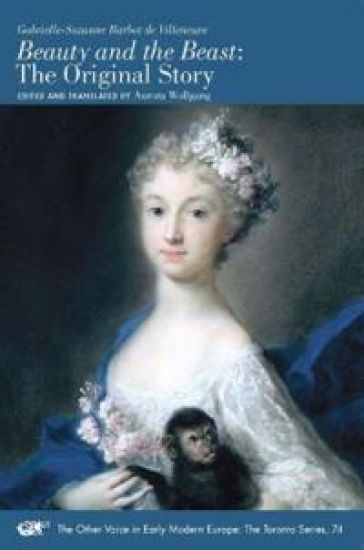
Beauty and the Beast – The Original Story

Beauty and the Beast – The Original Story

Gabrielle–suzan Barbot De Ville; Aurora Wolfgang

Arizona Center for Medieval Renaissance Studies,US
2020
nidottu
Gabrielle-Suzanne Barbot de Villeneuve, the little-known author of Beauty and the Beast, was a successful novelist and fairytale writer in mid eighteenth-century France. While her novels are rarely read today, her compelling fairytale has become universally recognized. This edition is the first integral English translation of Villeneuve’s original tale. The introduction seeks to illuminate the publication of Beauty and the Beast in its historical and literary context, and brings to life the dynamic female characters that first populated this enchanting tale: the courageous Beauty, the Fairy Queen, the Amazon Queen, the Lady Fairy, and the powerful, but mischievous elderly fairy. The Other Voice in Early Modern Europe: The Toronto Series volume 74
Gender and Voice in the French Novel, 1730–1782
Analyzing four best-selling novels - by both women and men - written in the feminine voice, this book traces how the creation of women-centered salons and the emergence of a feminine poetic style engendered a new type of literature in eighteenth-century France. The author argues that writing in a female voice allowed writers of both sexes to break with classical notions of literature and style, so that they could create a modern sensibility that appealed to a larger reading public, and gave them scope to innovate with style and form. Wolfgang brings to light how the 'female voice' in literature came to embody the language of sociability, but also allowed writers to explore the domain of inter-subjectivity, while creating new bonds between writers and the reading public. Through examination of Marivaux's La Vie de Marianne, Graffigny's Lettres d'une Péruvienne, Riccoboni's Lettres de Mistriss Fanni Butlerd, and Laclos's Les Liaisons dangereuses, she shows that in France, this modern 'feminine' sensibility turned the least prestigious of literary genres - the novel - into the most compelling and innovative literary form of the eighteenth century. Emphasizing how the narratives analyzed here refashioned the French literary world through their linguistic innovation and expression of new forms of subjectivity, this study claims an important role for feminine-voice narratives in shaping the field of eighteenth-century literature.
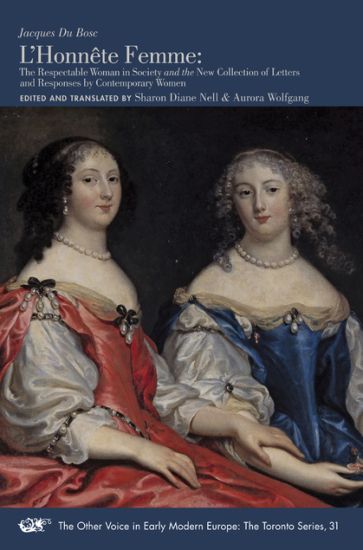
L'Honnête Femme – The Respectable Woman in Society and the New Collection of Letters and Responses by Contemporary Women
I heartily recommend this translation and edition of the two works by Jacques Du Bosc. The introduction provides a solid, erudite entry to Du Bosc and his world, with a clear emphasis on the gender issues central to the Other Voice. Especially good is the detailed study ofthe reception of these works. Moreover, the translation is clear and readable. A great deal of work was required to transform the periodic sentences and paragraphs of seventeenthcentury French prose into an English work that is so readable and lucid for a contemporary reader who is not a specialist in the field. The long, informative titles to the essays and letters (already transparent in the table of contents) further situate material that can seem obscure to a contemporary reader. The informative notes, especially the biographical tags and the excellent use of Furetière to explore ambiguous or archaic phrases, illuminate a world that would otherwise seem opaque to many contemporary readers.—Reverend John J. Conley, SJKnott Professor of Philosophy, Loyola University Maryland
Gender and Voice in the French Novel, 1730–1782

Gender and Voice in the French Novel, 1730–1782

Aurora Wolfgang

Ashgate Publishing Limited
2004
sidottu
Analyzing four best-selling novels - by both women and men - written in the feminine voice, this book traces how the creation of women-centered salons and the emergence of a feminine poetic style engendered a new type of literature in eighteenth-century France. The author argues that writing in a female voice allowed writers of both sexes to break with classical notions of literature and style, so that they could create a modern sensibility that appealed to a larger reading public, and gave them scope to innovate with style and form. Wolfgang brings to light how the 'female voice' in literature came to embody the language of sociability, but also allowed writers to explore the domain of inter-subjectivity, while creating new bonds between writers and the reading public. Through examination of Marivaux's La Vie de Marianne, Graffigny's Lettres d'une Péruvienne, Riccoboni's Lettres de Mistriss Fanni Butlerd, and Laclos's Les Liaisons dangereuses, she shows that in France, this modern 'feminine' sensibility turned the least prestigious of literary genres - the novel - into the most compelling and innovative literary form of the eighteenth century. Emphasizing how the narratives analyzed here refashioned the French literary world through their linguistic innovation and expression of new forms of subjectivity, this study claims an important role for feminine-voice narratives in shaping the field of eighteenth-century literature.