Kirjojen hintavertailu – 12 859 829 kirjaa ja 27 kauppaa

Kirjailija

Avishek Ray

Kirjat ja teokset yhdessä paikassa: 6 kirjaa, julkaisuja vuosilta 2021–2025, suosituimpiin kuuluu State, Nation, Religion. Vertaile teosten hintoja ja tarkista saatavuus suomalaisista kirjakaupoista.

6 kirjaa

Kirjojen julkaisuvuodet: 2021–2025.

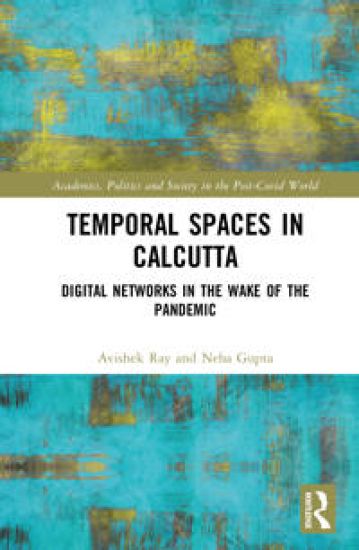
Temporal Spaces in Calcutta

Temporal Spaces in Calcutta

Avishek Ray; Neha Gupta

TAYLOR FRANCIS LTD
2025
sidottu
This book explores how the COVID-19 pandemic has reshaped urban spatialities through the rise of digitally mediated “temporal spaces” in Calcutta. Focusing on Uber-enabled mobility, cycling pathways, and cafés, it examines how digital infrastructures and human practices intersect to create fluid, dynamic urban experiences. Challenging fixed notions of place-making, the book interrogates what it means to “return to normal” and how digitality reconfigures urban life, sociality, and imagination. By foregrounding the entanglement of digital and material realms, it offers a critical framework for understanding contemporary urban transformations in the wake of crisis and technological mediation. Part of the Academics, Politics and Society in the Post-Covid World series, this book will be useful for scholars and researchers of sociology, social anthropology, media and cultural studies, digital humanities, human geography, political sociology and post-colonial studies, and those interested in the coronavirus pandemic.
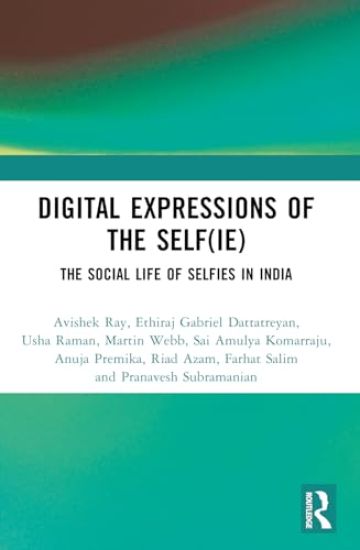
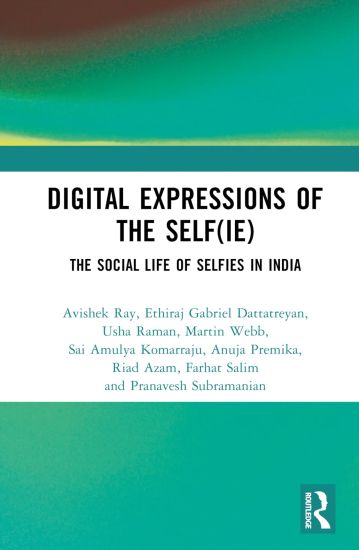
Digital Expressions of the Self(ie)

Digital Expressions of the Self(ie)

Avishek Ray; Ethiraj Gabriel Dattatreyan; Usha Raman; Martin Web; Neha Gupta; Sai Amulya Komarraju; Anuja Premika; Riad Azam; Farhat Salim; Pranavesh Subramanian

TAYLOR FRANCIS LTD
2025
nidottu
The book examines the social and cultural role of selfies in India. It looks at how the selfie, unlike the photograph, which was a gesture towards an external reality, remains intimately self-referential, yet reconfigures social ordering, identity formation, agency, and spaces in curious ways. This volume approaches questions about the construction and performance of the self through the digital selfie and uses this situated, contextualized, and culturally specific phenomenon as a site to explore the themes of self-making, place-making, gender, subjectivity, and power. Highlighting the specific contexts of production, the authors examine the array of self-expressive capabilities realized in a multitude of uses of the selfie that simultaneously reconfigure the self, the space, and the world. An important study of visual social media culture, the volume will be useful for interpreting everyday media experiences and will be of interest to students and researchers of image studies, visual studies, photography studies, visual culture, media studies, culture studies, cultural anthropology, digital humanities, popular culture, sociology of technology, and South Asian studies.
Digital Expressions of the Self(ie)

Digital Expressions of the Self(ie)

Avishek Ray; Ethiraj Gabriel Dattatreyan; Usha Raman; Martin Web; Neha Gupta; Sai Amulya Komarraju; Anuja Premika; Riad Azam; Farhat Salim; Pranavesh Subramanian

TAYLOR FRANCIS LTD
2024
sidottu
The book examines the social and cultural role of selfies in India. It looks at how the selfie, unlike the photograph, which was a gesture towards an external reality, remains intimately self-referential, yet reconfigures social ordering, identity formation, agency, and spaces in curious ways. This volume approaches questions about the construction and performance of the self through the digital selfie and uses this situated, contextualized, and culturally specific phenomenon as a site to explore the themes of self-making, place-making, gender, subjectivity, and power. Highlighting the specific contexts of production, the authors examine the array of self-expressive capabilities realized in a multitude of uses of the selfie that simultaneously reconfigure the self, the space, and the world. An important study of visual social media culture, the volume will be useful for interpreting everyday media experiences and will be of interest to students and researchers of image studies, visual studies, photography studies, visual culture, media studies, culture studies, cultural anthropology, digital humanities, popular culture, sociology of technology, and South Asian studies.
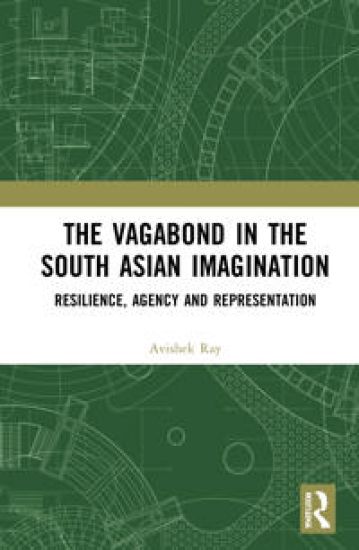
The Vagabond in the South Asian Imagination

The Vagabond in the South Asian Imagination

Avishek Ray

TAYLOR FRANCIS LTD
2023
nidottu
This book discusses the epistemic foundation of the heuristic construct ‘vagabond’ and the convergence between the politics of itinerancy and that of dissent in the context of South Asia. It describes the fraught relationship between ‘native’ itinerant practices and techniques of governmentality which have furnished different categorizations and taxonomies of mobility. The book demonstrates the historical seismic breaks – from the Orientalist to the post-Orientalist, from the premodern to the modern, and from the colonial to the post-colonial – in the representation of the vagabond in the juridico-political imagination, in historiography and cultural articulation. For instance, the drunk European sailor, the quasi-religious mendicant, and the helpless famine refugee have all been referred to as ‘vagabonds’ in the colonial archive. This book examines the histories and conditions behind these conceptual overlaps, as well as the uncanny associations among categories that uneasily coexist and mirror each other as subsets of a vast range of phenomena, which may loosely be called ‘vagabond(age)’. This volume will be of interest to students and researchers of literature, cultural studies, colonial and post-colonial studies, history, migration studies, sociology, and South Asia studies.
The Vagabond in the South Asian Imagination
This book discusses the epistemic foundation of the heuristic construct ‘vagabond’ and the convergence between the politics of itinerancy and that of dissent in the context of South Asia. It describes the fraught relationship between ‘native’ itinerant practices and techniques of governmentality which have furnished different categorizations and taxonomies of mobility. The book demonstrates the historical seismic breaks – from the Orientalist to the post-Orientalist, from the premodern to the modern, and from the colonial to the post-colonial – in the representation of the vagabond in the juridico-political imagination, in historiography and cultural articulation. For instance, the drunk European sailor, the quasi-religious mendicant, and the helpless famine refugee have all been referred to as ‘vagabonds’ in the colonial archive. This book examines the histories and conditions behind these conceptual overlaps, as well as the uncanny associations among categories that uneasily coexist and mirror each other as subsets of a vast range of phenomena, which may loosely be called ‘vagabond(age)’. This volume will be of interest to students and researchers of literature, cultural studies, colonial and post-colonial studies, history, migration studies, sociology, and South Asia studies.