Kirjojen hintavertailu – 12 859 828 kirjaa ja 27 kauppaa

Kirjailija

Ayodeji Oke

Kirjat ja teokset yhdessä paikassa: 6 kirjaa, julkaisuja vuosilta 2021–2026, suosituimpiin kuuluu Sustainability-Driven Risk Management in Infrastructure Projects. Vertaile teosten hintoja ja tarkista saatavuus suomalaisista kirjakaupoista.

6 kirjaa

Kirjojen julkaisuvuodet: 2021–2026.

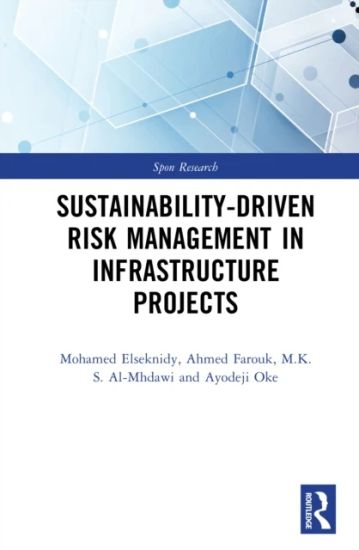
Sustainability-Driven Risk Management in Infrastructure Projects

Sustainability-Driven Risk Management in Infrastructure Projects

Mohamed Elseknidy; Ahmed Farouk; M.K.S. Al-Mhdawi; Ayodeji Oke

Taylor & Francis
2026
Sidottu
Sustainability-Driven Risk Management in Infrastructure Projects addresses need to integrate sustainability into risk management practices for infrastructure development. It emphasizes the importance of embedding environmental, social, governance (ESG), and resilience considerations early in project planning and decision-making processes, rather than treating them as late-stage add-ons. The book is structured into five parts, each addressing key aspects of sustainability-driven risk management. Part I establishes foundational concepts and defines the approach. Part II maps the sustainability risk landscape, exploring stakeholders, governance, and risk processes. Part III rethinks project success, demonstrating practical applications of sustainability-driven risk management. Part IV introduces digital tools and advanced methods, such as option appraisal, design review, and resilience planning, to support infrastructure decisions. Part V examines barriers to adoption, enabling conditions, and future directions, culminating in an integrated framework for sustainable risk management. Throughout, strategically selected examples illustrate concepts, trade-offs, and sector-specific applications, ensuring relevance across diverse infrastructure contexts. The book provides a key source of guidance for infrastructure practitioners seeking to achieve sustainable and resilient outcomes and is designed for advanced professionals and academics, including postgraduate students, doctoral researchers, and practitioners in infrastructure-related roles. It targets engineers, project managers, risk managers, and sustainability professionals, as well as consultants, financiers, and insurers involved in infrastructure projects. With its global perspective, the book is suitable for readers across regions, offering actionable insights for infrastructure owners, regulators, and policymakers navigating the challenges of climate resilience, ESG integration, and sustainable development.
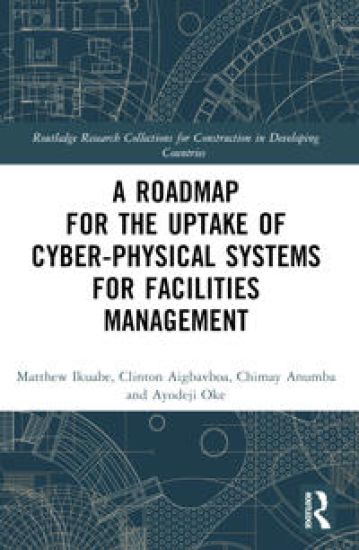
A Roadmap for the Uptake of Cyber-Physical Systems for Facilities Management

A Roadmap for the Uptake of Cyber-Physical Systems for Facilities Management

Matthew Ikuabe; Clinton Aigbavboa; Chimay J Anumba; Ayodeji Oke

TAYLOR FRANCIS LTD
2025
nidottu
This is the first book to conceptualise and develop a roadmap for the adoption of cyber-physical systems (CPS) for facilities management (FM) in developing countries. It is argued that effective use of CPS can help to significantly improve issues such as extended processing time, poor data acquisition, ineffective coverage of facility maintenance history, and poor-quality control within the facilities management sector. Through a theoretical review of relevant technology adoption models and frameworks, A Roadmap for the Uptake of Cyber-Physical Systems for Facilities Management provides a clear insight into the required parameters for integrating CPS into facilities management. The book will be beneficial to relevant stakeholders who face the responsibility of facilities and construction management as it contributes to the growing demand for the adoption of digital technologies in the delivery and management of built infrastructure. Furthermore, it serves as a solid theoretical base for researchers and academics in the quest to expand the existing borderline on construction digitalisation, especially in the post-occupancy stage.
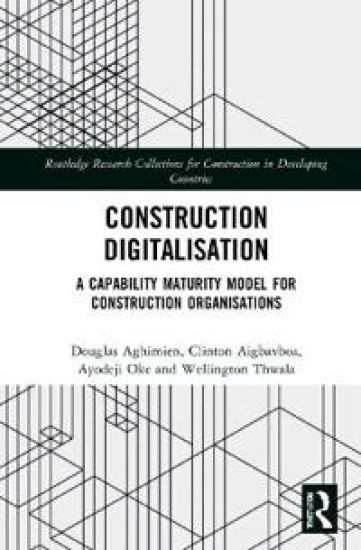
Construction Digitalisation

Construction Digitalisation

Douglas Aghimien; Clinton Aigbavboa; Ayodeji Oke; Wellington Thwala

TAYLOR FRANCIS LTD
2024
nidottu
This book explores construction digitalisation, particularly in developing countries. The book conceptualises a digitalisation capability maturity model that will enable construction organisations to self-assess and benchmark their digital capabilities in their quest for digital transformation. Digitalisation offers a significant solution to the age-long problems of the construction industry. Research shows that when construction organisations transform from a traditional service delivery approach to a more digitalised approach, significant improvement in project delivery and better competitive advantage for these organisations will be attained. The attainment of these benefits is evident in developed countries where the digitalisation of construction activities continues apace. Unfortunately, the story is not the same for construction organisations in developing economies. While some organisations might be willing to be digitally transformed, most have no clue how to go about it. To this end, this book provides guidelines for construction organisations seeking to transform their entities digitally. Its content is a valuable read for construction company owners as it provides a model which they can use in the digitalisation of their activities. Also, regulatory bodies in the construction industry can adopt the capabilities identified in the book as essential prerequisites for their members. Furthermore, the book serves as excellent theoretical background reading for management researchers seeking to expand their knowledge on the digitalisation of the construction industry and other associated industries.
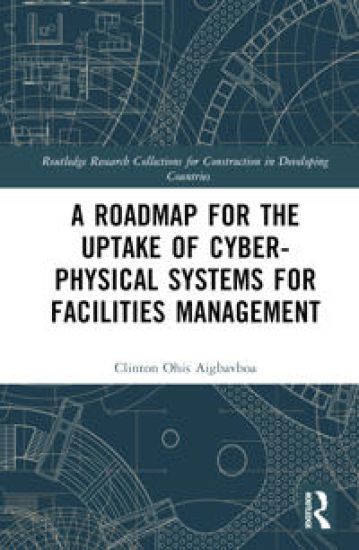
A Roadmap for the Uptake of Cyber-Physical Systems for Facilities Management

A Roadmap for the Uptake of Cyber-Physical Systems for Facilities Management

Matthew Ikuabe; Clinton Aigbavboa; Chimay J Anumba; Ayodeji Oke

TAYLOR FRANCIS LTD
2023
sidottu
This is the first book to conceptualise and develop a roadmap for the adoption of cyber-physical systems (CPS) for facilities management (FM) in developing countries. It is argued that effective use of CPS can help to significantly improve issues such as extended processing time, poor data acquisition, ineffective coverage of facility maintenance history, and poor-quality control within the facilities management sector. Through a theoretical review of relevant technology adoption models and frameworks, A Roadmap for the Uptake of Cyber-Physical Systems for Facilities Management provides a clear insight into the required parameters for integrating CPS into facilities management. The book will be beneficial to relevant stakeholders who face the responsibility of facilities and construction management as it contributes to the growing demand for the adoption of digital technologies in the delivery and management of built infrastructure. Furthermore, it serves as a solid theoretical base for researchers and academics in the quest to expand the existing borderline on construction digitalisation, especially in the post-occupancy stage.
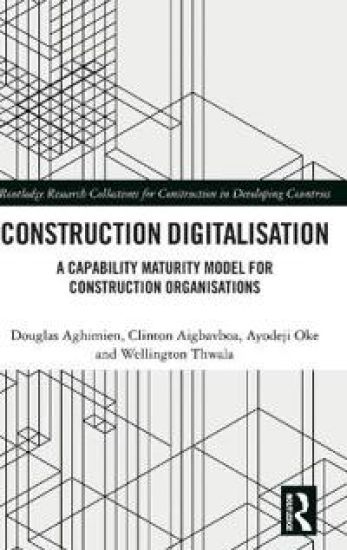
Construction Digitalisation

Construction Digitalisation

Douglas Aghimien; Clinton Aigbavboa; Ayodeji Oke; Wellington Thwala

Routledge
2021
sidottu
This book explores construction digitalisation, particularly in developing countries. The book conceptualises a digitalisation capability maturity model that will enable construction organisations to self-assess and benchmark their digital capabilities in their quest for digital transformation. Digitalisation offers a significant solution to the age-long problems of the construction industry. Research shows that when construction organisations transform from a traditional service delivery approach to a more digitalised approach, significant improvement in project delivery and better competitive advantage for these organisations will be attained. The attainment of these benefits is evident in developed countries where the digitalisation of construction activities continues apace. Unfortunately, the story is not the same for construction organisations in developing economies. While some organisations might be willing to be digitally transformed, most have no clue how to go about it. To this end, this book provides guidelines for construction organisations seeking to transform their entities digitally. Its content is a valuable read for construction company owners as it provides a model which they can use in the digitalisation of their activities. Also, regulatory bodies in the construction industry can adopt the capabilities identified in the book as essential prerequisites for their members. Furthermore, the book serves as excellent theoretical background reading for management researchers seeking to expand their knowledge on the digitalisation of the construction industry and other associated industries.