Kirjojen hintavertailu – 12 903 724 kirjaa ja 27 kauppaa

Kirjailija

Aziz Z. Huq

Kirjat ja teokset yhdessä paikassa: 4 kirjaa, julkaisuja vuosilta 2020–2026, suosituimpiin kuuluu How to Save a Constitutional Democracy. Vertaile teosten hintoja ja tarkista saatavuus suomalaisista kirjakaupoista.

Nimi esiintyy myös muodoissa: Aziz Z Huq

4 kirjaa

Kirjojen julkaisuvuodet: 2020–2026.

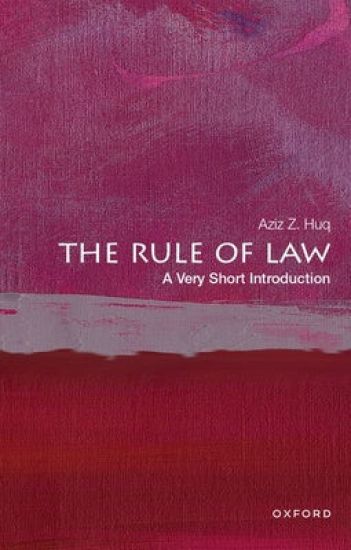
The Rule of Law

The Rule of Law

Aziz Z. Huq

OXFORD UNIVERSITY PRESS INC
2024
nidottu

Halvin toimitettuna 18,90 €

Politicians, judges, and citizens commonly use the phrase "rule of law" to describe some good that flows from a legal system. But what precisely is that good? Even in Aristotle's time, there was no agreement on either its nature, and on whether it counted as an unqualified good. Even now, a core rule-of-law aspiration is that law can constrain how power is flexed. But how or when? Disagreement persists as to whether the rule of law is a matter of how law is used or why it is deployed. In consequence, the World Bank, the leaders of Singapore's one-party state, and the Communist Party in China can all offer their own spins on the concept. By charting these disagreements and showing the overlap and the conflicts between different understandings of the concept, Aziz Z. Huq shows how the rule of law can still be used as an important tool for framing and evaluating the goals and functions of a legal system. He traces the idea's historical origins from ancient Greece to the constitutional theorist Albert Venn Dicey to the economist and political philosopher Friedrich Hayek. And he explores how that value is coming under pressure from terrorist threats, macroeconomic crisis, pandemics, autocratic populism, and climate change.
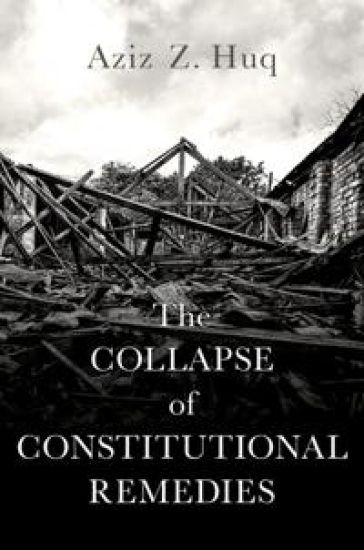
The Collapse of Constitutional Remedies

The Collapse of Constitutional Remedies

Aziz Z. Huq

Oxford University Press Inc
2022
sidottu
An exploration of how and why the Constitution's plan for independent courts has failed to protect individuals' constitutional rights, while advancing regressive and reactionary barriers to progressive regulation. Just recently, the Supreme Court rejected an argument by plaintiffs that police officers should no longer be protected by the doctrine of "qualified immunity" when they shoot or brutalize an innocent civilian. "Qualified immunity" is but one of several judicial inventions that shields state violence and thwarts the vindication of our rights. But aren't courts supposed to be protectors of individual rights? As Aziz Huq shows in The Collapse of Constitutional Remedies, history reveals a much more tangled relationship between the Constitution's system of independent courts and the protection of constitutional rights. While doctrines such as "qualified immunity" may seem abstract, their real-world harms are anything but. A highway patrol officer stops a person's car in violation of the Fourth Amendment, violently yanked the person out and threw him to the ground, causing brain damage. A municipal agency fires a person for testifying in a legal proceeding involving her boss's family-and then laughed in her face when she demanded her job back. In all these cases, state defendants walked away with the most minor of penalties (if any at all). Ultimately, we may have rights when challenging the state, but no remedies. In fact, federal courts have long been fickle and unreliable guardians of individual rights. To be sure, through the mid-twentieth century, the courts positioned themselves as the ultimate protector of citizens suffering the state's infringement of their rights. But they have more recently abandoned, and even aggressively repudiated, a role as the protector of individual rights in the face of abuses by the state. Ironically, this collapse highlights the position that the Framers took when setting up federal courts in the first place. A powerful historical account of the how the expansion of the immunity principle generated yawning gap between rights and remedies in contemporary America, The Collapse of Constitutional Remedies will reshape our understanding of why it has become so difficult to effectively challenge crimes committed by the state.

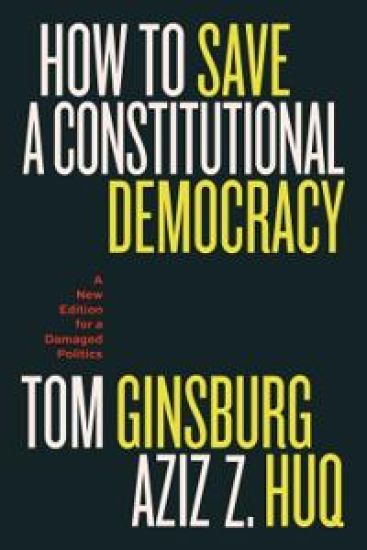
How to Save a Constitutional Democracy

How to Save a Constitutional Democracy

Tom Ginsburg; Aziz Z Huq

University of Chicago Press
2020
pokkari
Democracies are in danger. Around the world, a rising wave of populist leaders threatens to erode the core structures of democratic self-rule. In the United States, the tenure of Donald Trump has seemed decisive turning point for many. What kind of president intimidates jurors, calls the news media the "enemy of the American people," and seeks foreign assistance investigating domestic political rivals? Whatever one thinks of President Trump, many think the Constitution will safeguard us from lasting damage. But is that assumption justified? How to Save a Constitutional Democracy mounts an urgent argument that we can no longer afford to be complacent. Drawing on a rich array of other countries' experiences with democratic backsliding, Tom Ginsburg and Aziz Z. Huq show how constitutional rules can both hinder and hasten the decline of democratic institutions. The checks and balances of the federal government, a robust civil society and media, and individual rights--such as those enshrined in the First Amendment--often fail as bulwarks against democratic decline. The sobering reality for the United States, Ginsburg and Huq contend, is that the Constitution's design makes democratic erosion more, not less, likely. Its structural rigidity has had unforeseen consequence--leaving the presidency weakly regulated and empowering the Supreme Court conjure up doctrines that ultimately facilitate rather than inhibit rights violations. Even the bright spots in the Constitution--the First Amendment, for example--may have perverse consequences in the hands of a deft communicator who can degrade the public sphere by wielding hateful language banned in many other democracies. We--and the rest of the world--can do better. The authors conclude by laying out practical steps for how laws and constitutional design can play a more positive role in managing the risk of democratic decline.