Kirjojen hintavertailu – 12 859 819 kirjaa ja 27 kauppaa
Kirjailija
B. Alan Wallace
Kirjat ja teokset yhdessä paikassa: 28 kirjaa, julkaisuja vuosilta 1998–2025, suosituimpiin kuuluu Buddhahood Without Meditation. Vertaile teosten hintoja ja tarkista saatavuus suomalaisista kirjakaupoista.
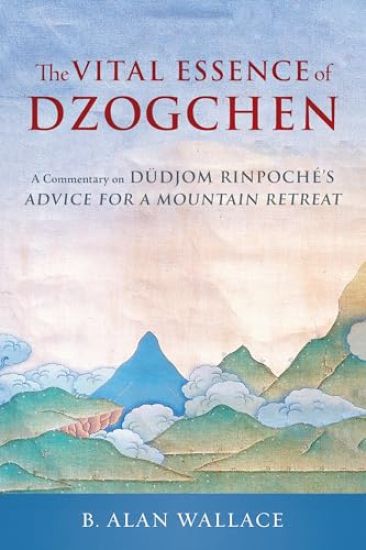
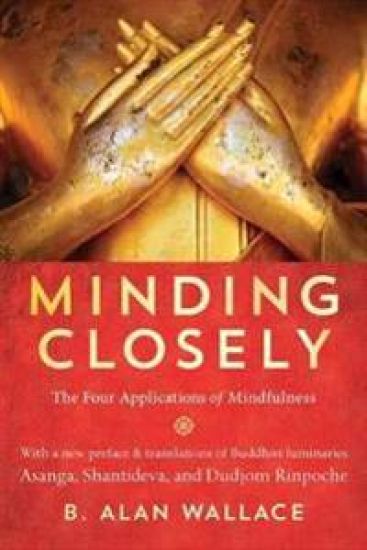
A modern commentary on a classic Tibetan text of instructions for practitioners of the Dzogchen tradition of Tibetan Buddhism, with practical step-by-step instructions for advanced Nyingma teachings on realizing the nature of mind. B. Alan Wallace translates and comments on the text Extracting the Vital Essence of Accomplishment: Concise and Clear Advice for Practice in a Mountain Retreat by twentieth-century Nyingma master, D djom Rinpoch , Jigdral Yesh Dorj . D djom Rinpoch is considered one of greatest tert ns of the twentieth century and also served as the first head of the Nyingma school of Tibetan Buddhism. Wallace elucidates the Great Perfection path, with its central object of meditation being the sustained recognition of the ultimate ground of existence. Six concise and powerful practices composed by Wallace appear throughout the commentary, and there are several robust appendixes of additional commentarial and translated material. This volume is a manual usable for seasoned Dzogchen practitioners as well as a clear representation of the Nyingma Buddhist path for those interested in broader questions about direct and unmediated spiritual realization. "By extracting the essence of all meditative accomplishment through the practice of Dzogchen," Wallace states, "you draw forth the vital essence of consciousness itself."
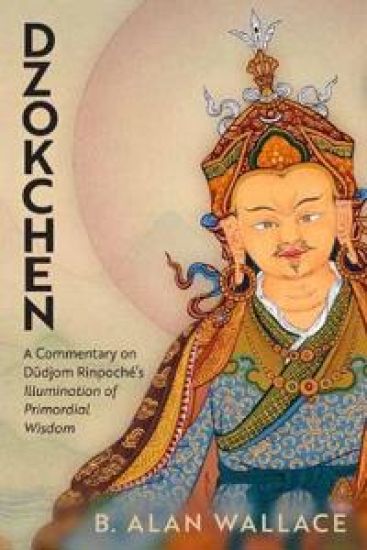
Pith Instructions for Realizing the Great Perfection, from One of the Greatest Tibetan Yogis of the Twentieth Century, H. H. Dudjom Rinpoche. In the concise yet comprehensive practice manual entitled The Illumination of Primordial Consciousness, the great twentieth-century Tibetan Nyingma master Dudjom Rinpoche lays out a sequential path to spiritual freedom according to the teachings of the Great Perfection (Dzokchen): First, we refine our awareness by training in meditative quiescence (shamatha) and then proceed to the cultivation of contemplative insight (vipashyana), by which our mind's basic nature of luminosity and emptiness is revealed. Then, having recognized that the ordinary, deluded mind is actually without any intrinsic essence, we are primed to cut through this conditioned mind into unborn, timeless pristine awareness, which has never been contaminated by mental afflictions or other obscurations. Finally, we realize that our own awareness has never been other than the dharmakaya, the mind of a buddha, and perfect enlightenment is realized spontaneously and effortlessly. Beloved teacher and renowned scholar Lama B. Alan Wallace guides the reader through Dudjom Rinpoche's remarkable text, sharing insights gained over years of study and practice. He provides line-by-line commentary, enhanced with teachings from other revered Dzokchen masters such as Padmasambhava, Dudjom Lingpa, and Gyatrul Rinpoche. Also included are a set of fifteen guided meditations, with links to audio tracks of Lama Alan giving the instructions himself.
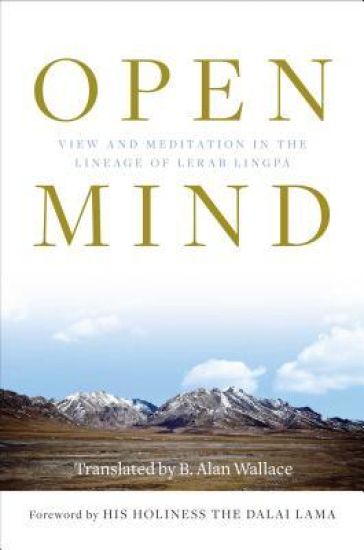
Study the Great Perfection with the celebrated Lerab Lingpa, who imparted teachings to the Thirteenth Dalai Lama, and discover the common ground of Tibetan Buddhism's many schools in essays by his disciples. Lerab Lingpa (1856-1926), also known as Tert n Sogyal, was one of the great Dzogchen (Great Perfection) masters of the nineteenth and early-twentieth centuries and a close confidant and guru of the Thirteenth Dalai Lama. This volume contains translations by B. Alan Wallace of two works that are representative of the lineage of this great "treasure revealer," or tert n. The first work, composed by Lerab Lingpa himself, is The Vital Essence of Primordial Consciousness. It presents pith instructions on all the stages of the Great Perfection, which is the highest form of meditation and practice in the Nyingma school of Tibetan Buddhism. In this practice, the meditator comes to see directly the ultimate nature of consciousness itself. The work guides the reader from the common preliminaries through to the highest practices of the Great Perfection--the direct crossing over and the achievement of the rainbow body. The second work, Selected Essays on Old and New Views of the Secret Mantrayana, is a collection of seven essays by two of Lerab Lingpa's close disciples, Dharmasara and J Tsultrim Zangpo. Dharmasara wrote six of the essays, providing detailed, erudite explanations of the compatibility among the theories and practices of Great Perfection, Mahamudra (a parallel practice tradition found in other schools), and the Madhyamaka view, especially as these are interpreted by the Indian pandita Candrakirti, the Nyingma master Longchen Rabjam, and Tsongkhapa, founder of the Geluk school of Tibetan Buddhism. The one essay by J Tsultrim Zangpo (a.k.a. Tulku Tsullo), "An Ornament of the Enlightened View of Samantabhadra," contextualizes the Great Perfection within the broader framework of Mahayana and Vajrayana Buddhism and then elucidates all the stages of practice of the Great Perfection, unifying the profound path of cutting through and the vast path of the spontaneous actualization of the direct crossing over. This volume will be of great interest for all those interested in the theory and practice of the Great Perfection and the way it relates to the wisdom teachings of Tsongkhapa and others in the new translation schools of Tibetan Buddhism. Edited by Eva Natanya.
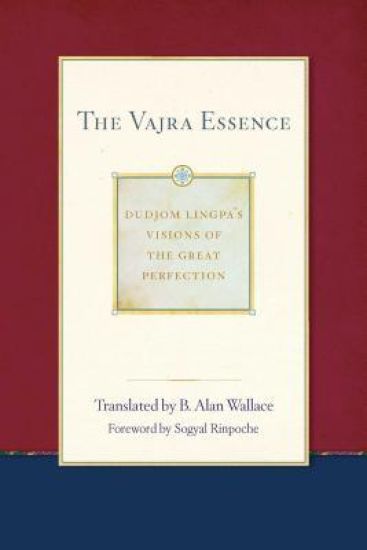
A systematic presentation of the path of Dzogchen, the Great Perfection, by one of its most renowned proponents and rendered by a master translator. Dudjom Lingpa (1835-1904) was one of the foremost tantric masters of nineteenth-century Tibet, and his powerful voice resonates strongly among Buddhist practitioners today. The Vajra Essence is Dudjom Lingpa's most extended meditation on the path of Great Perfection, in many senses a commentary on all his other Dzogchen works. Dzogchen, the pinnacle of practice in the Nyingma school, is a radical revelation of the pure nature of consciousness that is delivered from master to disciple and perfected in a meditation that permeates every moment of our experience. Revealed to Dudjom Lingpa as a visionary "treasure" text in 1862, the Vajra Essence takes the reader through seven stages of progressively deeper practice, from "taking the impure mind as the path" up to the practice of "direct crossing over" (togal). The longest of Dudjom Lingpa's five visionary works on Dzogchen, readers will find this a rich and masterful evocation of the enlightened experience. This is the first translation of this seminal work in any Western language, and B. Alan Wallace, with his forty-five-plus years of extensive learning and deep meditative experience, is one of the most accomplished translators of Tibetan texts into English.
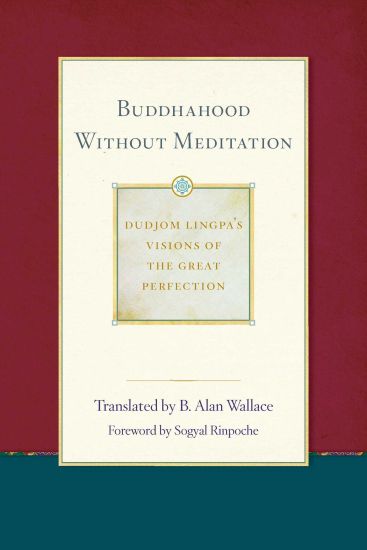
The revelations of D djom Lingpa, a highly influential mystic of 19th century Tibet, translated by B. Alan Wallace. The practice of Dzogchen, the Great Perfection, is the pinnacle of the nine vehicles of practice taught in the Nyingma school of Tibetan Buddhism. The highly influential mystic D djom Lingpa (1835-1904) and his disciple Sera Khandro (1892-1940), the most prolific female writer in Tibetan history, here illuminate the methods to discover our own primordial purity and abide in uncontrived awareness. Buddhahood Without Meditation: This is D djom Lingpa's most widely taught visionary text. In it wisdom beings and historical figures in the Great Perfection lineage emphasize the view of cutting through (trekch ) to the original purity of pristine awareness via the four special samayas, or pledges, of the Great Perfection: nonexistence, oneness, uniform pervasiveness, and spontaneous actualization. At each stage of his spiritual progress, D djom Lingpa's doubts are dispelled and his realizations enhanced by pithy advice. The Fine Path to Liberation: Sera Khandro establishes the necessary motivation and conduct for receiving teachings such as Buddhahood Without Meditation. This sublime Dharma is to be seen in the context of the five perfections of the sambhogakaya: the teacher, place, time, disciples, and Dharma are fully perfected and must not be reified as ordinary. Garland for the Delight of the Fortunate Sera Khandro fills in the gaps of Buddhahood Without Meditation, explaining the metaphors, and spelling out the implications of the root text's highly condensed verses. This is an essential key for unlocking D djom Lingpa's profound wisdom.
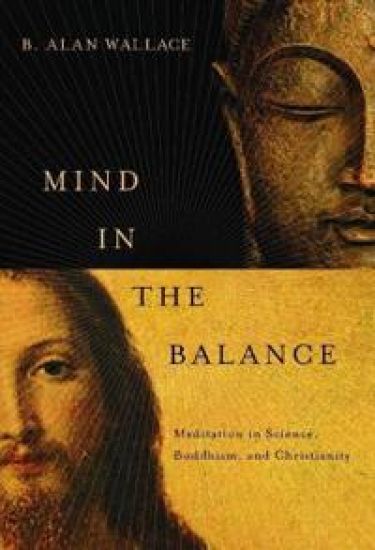
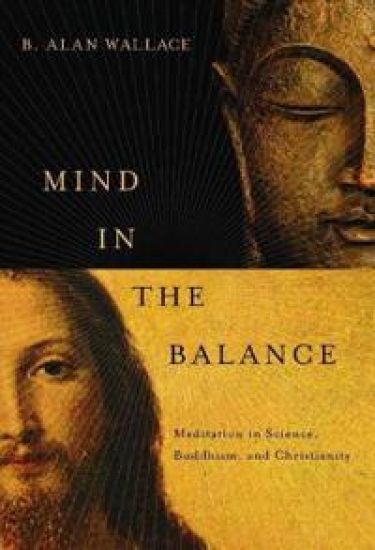
By establishing a dialogue in which the meditative practices of Buddhism and Christianity speak to the theories of modern philosophy and science, B. Alan Wallace reveals the theoretical similarities underlying these disparate disciplines and their unified approach to making sense of the objective world. Wallace begins by exploring the relationship between Christian and Buddhist meditative practices. He outlines a sequence of meditations the reader can undertake, showing that, though Buddhism and Christianity differ in their belief systems, their methods of cognitive inquiry provide similar insight into the nature and origins of consciousness. From this convergence Wallace then connects the approaches of contemporary cognitive science, quantum mechanics, and the philosophy of the mind. He links Buddhist and Christian views to the provocative philosophical theories of Hilary Putnam, Charles Taylor, and Bas van Fraassen, and he seamlessly incorporates the work of such physicists as Anton Zeilinger, John Wheeler, and Stephen Hawking. Combining a concrete analysis of conceptions of consciousness with a guide to cultivating mindfulness and profound contemplative practice, Wallace takes the scientific and intellectual mapping of the mind in exciting new directions.
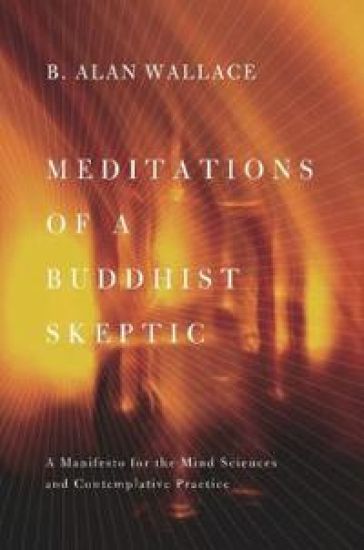
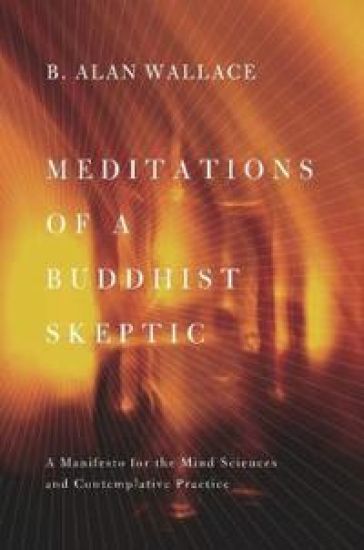
A radical approach to studying the mind. Renowned Buddhist philosopher B. Alan Wallace reasserts the power of shamatha and vipashyana, traditional Buddhist meditations, to clarify the mind's role in the natural world. Raising profound questions about human nature, free will, and experience versus dogma, Wallace challenges the claim that consciousness is nothing more than an emergent property of the brain with little relation to universal events. Rather, he maintains that the observer is essential to measuring quantum systems and that mental phenomena (however conceived) influence brain function and behavior. Wallace embarks on a two-part mission: to restore human nature and to transcend it. He begins by explaining the value of skepticism in Buddhism and science and the difficulty of merging their experiential methods of inquiry. Yet Wallace also proves that Buddhist views on human nature and the possibility of free will liberate us from the metaphysical constraints of scientific materialism. He then explores the radical empiricism inspired by William James and applies it to Indian Buddhist philosophy's four schools and the Great Perfection school of Tibetan Buddhism. Since Buddhism begins with the assertion that ignorance lies at the root of all suffering and that the path to freedom is reached through knowledge, Buddhist practice can be viewed as a progression from agnosticism (not knowing) to gnosticism (knowing), acquired through the maintenance of exceptional mental health, mindfulness, and introspection. Wallace discusses these topics in detail, identifying similarities and differences between scientific and Buddhist understanding, and he concludes with an explanation of shamatha and vipashyana and their potential for realizing the full nature, origins, and potential of consciousness.
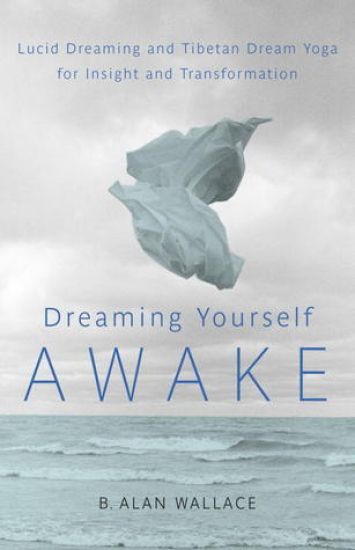
Some of the greatest of life’s adventures can happen while you’re sound asleep. That’s the promise of lucid dreaming, which is the ability to alter your own dream reality any way you like simply by being aware of the fact that you’re dreaming while you’re in the midst of a dream. There is a range of techniques anyone can learn to become a lucid dreamer—and this book provides all the instruction you need to get started. But B. Alan Wallace also shows how to take the experience of lucid dreaming beyond entertainment to use it to heighten creativity, to solve problems, and to increase self-knowledge. He then goes a step further: moving on to the methods of Tibetan Buddhist dream yoga for using your lucid dreams to attain the profoundest kind of insight.
A radical approach to studying the mind. Renowned Buddhist philosopher B. Alan Wallace reasserts the power of shamatha and vipashyana, traditional Buddhist meditations, to clarify the mind's role in the natural world. Raising profound questions about human nature, free will, and experience versus dogma, Wallace challenges the claim that consciousness is nothing more than an emergent property of the brain with little relation to universal events. Rather, he maintains that the observer is essential to measuring quantum systems and that mental phenomena (however conceived) influence brain function and behavior. Wallace embarks on a two-part mission: to restore human nature and to transcend it. He begins by explaining the value of skepticism in Buddhism and science and the difficulty of merging their experiential methods of inquiry. Yet Wallace also proves that Buddhist views on human nature and the possibility of free will liberate us from the metaphysical constraints of scientific materialism. He then explores the radical empiricism inspired by William James and applies it to Indian Buddhist philosophy's four schools and the Great Perfection school of Tibetan Buddhism. Since Buddhism begins with the assertion that ignorance lies at the root of all suffering and that the path to freedom is reached through knowledge, Buddhist practice can be viewed as a progression from agnosticism (not knowing) to gnosticism (knowing), acquired through the maintenance of exceptional mental health, mindfulness, and introspection. Wallace discusses these topics in detail, identifying similarities and differences between scientific and Buddhist understanding, and he concludes with an explanation of shamatha and vipashyana and their potential for realizing the full nature, origins, and potential of consciousness.
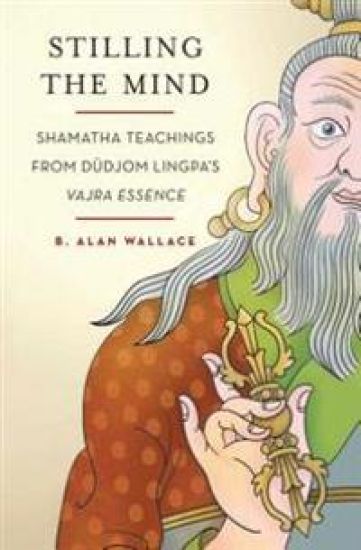
In his previous book, The Attention Revolution, bestselling author Alan Wallace guided readers through the stages of shamatha, a meditation for focusing the mind. In Stilling the Mind, he uses the wisdom of Dzogchen--the highest of all the meditation traditions--to open up the shamatha practice into a space of vast freedom. Here, Wallace introduces us to Dudjom Lingpa's Vajra Essence, one of the most cherished works of the Nyingma school from which Dzogchen stems. With his trademark enthusiasm and keen intelligence, Wallace makes obscure concepts intelligible to contemporary readers and allows us to glimpse the profound realizations of a great nineteenth-century spiritual adept.
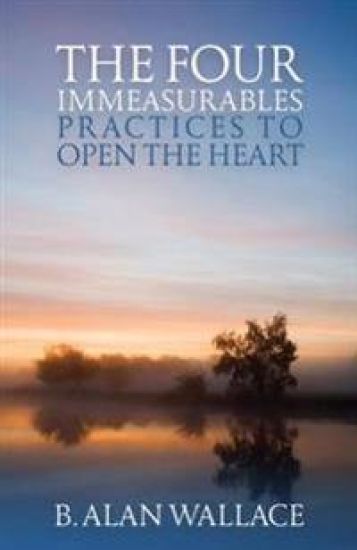
The Four Immeasurables--the cultivation of loving-kindness, compassion, empathetic joy, and equanimity--is a rich suite of practices that open the heart, counter the distortions in our relationships to ourselves, and deepen our relationships to others. Alan Wallace presents a unique interweaving of teachings on the Four Immeasurables with instruction on meditative quiescence, or shamatha practice, to empower the mind. This book includes both guided meditations and lively discussions on the implications of these teachings for our life.
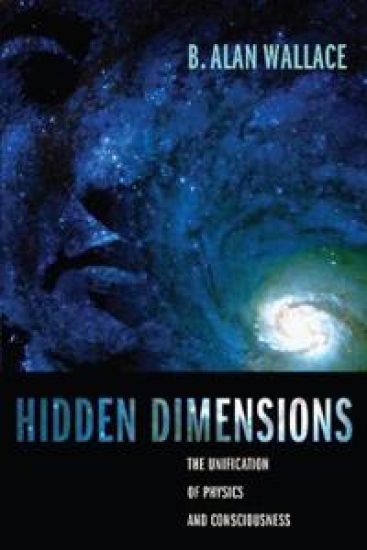
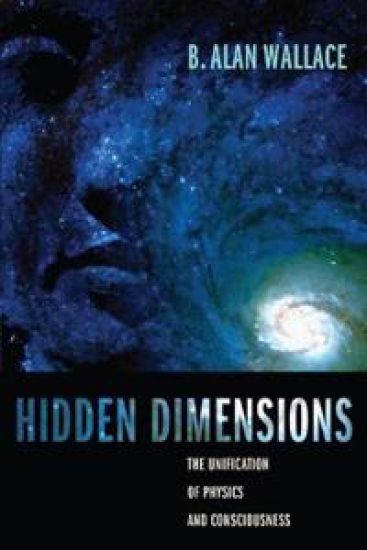
Bridging the gap between the world of science and the realm of the spiritual, B. Alan Wallace introduces a natural theory of human consciousness that has its roots in contemporary physics and Buddhism. Wallace's "special theory of ontological relativity" suggests that mental phenomena are conditioned by the brain, but do not emerge from it. Rather, the entire natural world of mind and matter, subjects and objects, arises from a unitary dimension of reality that is more fundamental than these dualities, as proposed by Wolfgang Pauli and Carl Jung. To test his hypothesis, Wallace employs the Buddhist meditative practice of samatha, refining one's attention and metacognition, to create a kind of telescope to examine the space of the mind. Drawing on the work of the physicist John Wheeler, he then proposes a more general theory in which the participatory nature of reality is envisioned as a self-excited circuit. In comparing these ideas to the Buddhist theory known as the Middle Way philosophy, Wallace explores further aspects of his "general theory of ontological relativity," which can be investigated by means of vipasyana, or insight, meditation. Wallace then focuses on the theme of symmetry in reference to quantum cosmology and the "problem of frozen time," relating these issues to the theory and practices of the Great Perfection school of Tibetan Buddhism. He concludes with a discussion of the general theme of complementarity as it relates to science and religion. The theories of relativity and quantum mechanics were major achievements in the physical sciences, and the theory of evolution has had an equally deep impact on the life sciences. However, rigorous scientific methods do not yet exist to observe mental phenomena, and naturalism has its limits for shedding light on the workings of the mind. A pioneer of modern consciousness research, Wallace offers a practical and revolutionary method for exploring the mind that combines the keenest insights of contemporary physicists and philosophers with the time-honored meditative traditions of Buddhism.
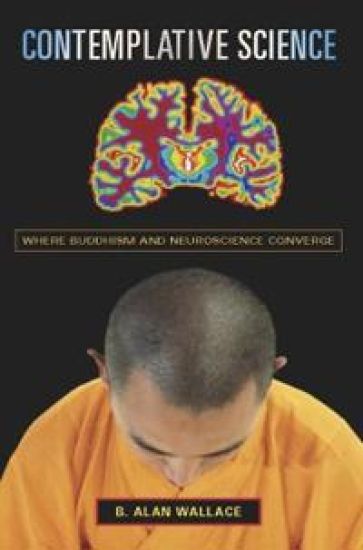
Science has long treated religion as a set of personal beliefs that have little to do with a rational understanding of the mind and the universe. However, B. Alan Wallace, a respected Buddhist scholar, proposes that the contemplative methodologies of Buddhism and of Western science are capable of being integrated into a single discipline: contemplative science. The science of consciousness introduces first-person methods of investigating the mind through Buddhist contemplative techniques, such as samatha, an organized, detailed system of training the attention. Just as scientists make observations and conduct experiments with the aid of technology, contemplatives have long tested their own theories with the help of highly developed meditative skills of observation and experimentation. Contemplative science allows for a deeper knowledge of mental phenomena, including a wide range of states of consciousness, and its emphasis on strict mental discipline counteracts the effects of conative (intention and desire), attentional, cognitive, and affective imbalances. Just as behaviorism, psychology, and neuroscience have all shed light on the cognitive processes that enable us to survive and flourish, contemplative science offers a groundbreaking perspective for expanding our capacity to realize genuine well-being. It also forges a link between the material world and the realm of the subconscious that transcends the traditional science-based understanding of the self.
By establishing a dialogue in which the meditative practices of Buddhism and Christianity speak to the theories of modern philosophy and science, B. Alan Wallace reveals the theoretical similarities underlying these disparate disciplines and their unified approach to making sense of the objective world. Wallace begins by exploring the relationship between Christian and Buddhist meditative practices. He outlines a sequence of meditations the reader can undertake, showing that, though Buddhism and Christianity differ in their belief systems, their methods of cognitive inquiry provide similar insight into the nature and origins of consciousness. From this convergence Wallace then connects the approaches of contemporary cognitive science, quantum mechanics, and the philosophy of the mind. He links Buddhist and Christian views to the provocative philosophical theories of Hilary Putnam, Charles Taylor, and Bas van Fraassen, and he seamlessly incorporates the work of such physicists as Anton Zeilinger, John Wheeler, and Stephen Hawking. Combining a concrete analysis of conceptions of consciousness with a guide to cultivating mindfulness and profound contemplative practice, Wallace takes the scientific and intellectual mapping of the mind in exciting new directions.
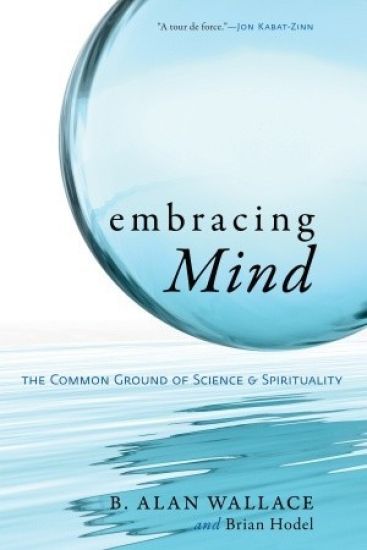
The mind is the place where science and spirituality can meet. Here a renowned scientist who is also a teacher of Buddhist meditation explores the nature of mind from scientific and spiritual perspectives to present a new model that incorporates the truths of contemplative spirituality. "This book shows clearly and compellingly how Buddhism and other spiritual traditions may help enrich our understanding of the mind and its role in nature, without reducing it merely to a material function or property of the brain."--H. H. the Dalai Lama.
Bridging the gap between the world of science and the realm of the spiritual, B. Alan Wallace introduces a natural theory of human consciousness that has its roots in contemporary physics and Buddhism. Wallace's "special theory of ontological relativity" suggests that mental phenomena are conditioned by the brain, but do not emerge from it. Rather, the entire natural world of mind and matter, subjects and objects, arises from a unitary dimension of reality that is more fundamental than these dualities, as proposed by Wolfgang Pauli and Carl Jung. To test his hypothesis, Wallace employs the Buddhist meditative practice of samatha, refining one's attention and metacognition, to create a kind of telescope to examine the space of the mind. Drawing on the work of the physicist John Wheeler, he then proposes a more general theory in which the participatory nature of reality is envisioned as a self-excited circuit. In comparing these ideas to the Buddhist theory known as the Middle Way philosophy, Wallace explores further aspects of his "general theory of ontological relativity," which can be investigated by means of vipasyana, or insight, meditation. Wallace then focuses on the theme of symmetry in reference to quantum cosmology and the "problem of frozen time," relating these issues to the theory and practices of the Great Perfection school of Tibetan Buddhism. He concludes with a discussion of the general theme of complementarity as it relates to science and religion. The theories of relativity and quantum mechanics were major achievements in the physical sciences, and the theory of evolution has had an equally deep impact on the life sciences. However, rigorous scientific methods do not yet exist to observe mental phenomena, and naturalism has its limits for shedding light on the workings of the mind. A pioneer of modern consciousness research, Wallace offers a practical and revolutionary method for exploring the mind that combines the keenest insights of contemporary physicists and philosophers with the time-honored meditative traditions of Buddhism.