Kirjojen hintavertailu – 12 903 725 kirjaa ja 27 kauppaa

Kirjailija

B.G. Weber

Kirjat ja teokset yhdessä paikassa: 14 kirjaa, julkaisuja vuosilta 1975–2014, suosituimpiin kuuluu Die Frakturenbehandlung Bei Kindern Und Jugendlichen. Vertaile teosten hintoja ja tarkista saatavuus suomalaisista kirjakaupoista.

Nimi esiintyy myös muodoissa: B. G. Weber

14 kirjaa

Kirjojen julkaisuvuodet: 1975–2014.

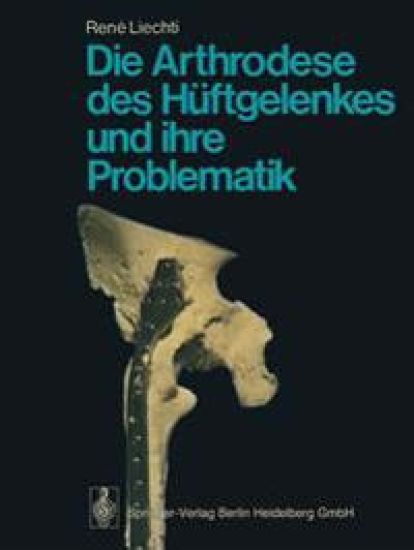
Die Arthrodese des Hüftgelenkes und ihre Problematik

Die Arthrodese des Hüftgelenkes und ihre Problematik

R. Liechti; M.E. Müller; B.G. Weber

Springer-Verlag Berlin and Heidelberg GmbH Co. K
2014
nidottu
Bis vor zehn Jahren galt die operative Hiiftversteifung bei der Behandlung der schmerzhaften einseitig teilversteiften oder stark inkongruenten Hiifte als Therapie der Wahl. Bei richtiger Indikation und Operationstechnik erzielte man damit ein standfestes, schmerzfreies Hiiftgelenk, mit dem die meisten Patienten sehr zufrieden waren. Heute glaubt nahezu jeder Hiiftpatient und leider auch mancher orthopadi- sche Chirurg, daB Totalprothesen bedenkenlos bei noch verhaltnismaBig jungen Patienten implantiert werden diirfen. Enttauschungen werden aber nicht lange auf sich warten lassen, denn Patienten unter fiinfzig Jahren werden ihre einstweilen schmerzfreien kiinstlichen Hiiftgelenke trotz allen arztlichen Mahnungen so sehr strapazieren, daB sich schon nach wenigen Jahren manche einzementierte Gelenkkorper lockem werden. Wohl kann eine Prothese ein- oder gar zweimal ausgewechselt werden, was aber dann? 1m Jahre 1970 wurden in einer Kollektivarbeit der neun groBten orthopadi- schen Kliniken der Schweiz die Ergebnisse der intertrochanteren Osteotomie in bezug auf Schmerzen, Gehfahigkeit, Beweglichkeit und Arbeitsfahigkeit kritisch analysiert. Es wurden Richtlinien fUr die Indikationsstellung, Wahl des Verfahrens und Operationstechnik ausgearbeitet. Eine Kollektivarbeit der Schweiz. Gesellschaft fUr Orthopadie solI demnachst die Spatergebnisse der Totalprothese fUr das dritte bis zehnte Jahr nach dem Eingriff zusammenstellen und nach ahnlichen Kriterien auswerten. 1m Laufe der letzten fUnfzehn Jahre hat sich die Technik der Arthrodese grundlegend geandert. Wahrend im Jahre 1958 noch niemand geglaubt hatte, daB eine Hiiftarthrodese ohne Gipsverband fest werden konne, wurden an verschiedenen Kliniken schon sechs Jahre spater die meisten Hiiftarthrodesen mit der Doppelplatte oder der Kreuzplatte versorgt und sofort funktionell nachbehandelt.

Special Techniques in Internal Fixation

Special Techniques in Internal Fixation

C. F. Brunner; B. G. Weber

Springer-Verlag Berlin and Heidelberg GmbH Co. K
2012
nidottu
and refinement that exists within the necessarily strict rules of the internal fixation method. In this way we seek to contribute to as weIl as to stimulate the search for rational solutions to surgical problems. It is assumed throughout that the reader is fa miliar with the technical fundamentals of internal fixation, and so these details are omitted. Instead, special indications and technical refinements are presented on the basis of case examples. Because an endless variety of situations can arise in orthopedic surgery (a circumstance that is attracting more and more surgeons to the field), we have taken ca re that our examples can readily be applied to novel situations. We now credit, in alphabetic order, those who contributed most to the techniques presented: R. BLATTER, A. BOITZY, C. BRUNNER, O. CECH, A. DEBRUNNER, F. MAGERL, G. SEGMÜLLER, G. STÜHMER, and B. G. WEBER. We thus express thanks to those colleagues in our clinic who agreed to having their ideas published. But we are also grateful to our illustrators, H. and K. SCHUMACHER, our photographer, M. SCHAFFNER, and our chief secretary, U. OETLIKER, who contributed so much to the preparation of the manuscript. Finally, we thank Springer-Verlag for their patience with us and especiaUy for their efficient work in bringing the book to press. St. GaU, Fall 1981 CH. F. BRUNNER B. G. WEBER Contents Lag Screws ............. .
Technique of Internal Fixation of Fractures

Technique of Internal Fixation of Fractures

M. E. Müller; W. Bandi; H. R. Bloch; M. Allgöwer; A. Mumenthaler; H. Willenegger; R. Schneider; S. Steinemann; F. Straumann; B. G. Weber

Springer-Verlag Berlin and Heidelberg GmbH Co. K
2012
nidottu
It is to the great and lasting credit of LORENZ BOHLER and his school that they have in the last decade developed and demonstrated so thoroughly the techniques for the conservative management of fractures. Nevertheless there have always been many, including some from BOHLER'S school, who have found considerable place for surgical management, and with the significant progress in general surgery seen in postwar years, a new stimulus has been given to this part of traumatic surgery, especially since bone injuries have become more complex and frequent. The concept of internal fixation is not new. The serious criticisms that have been levelled at it retain today their basic significance. Progress in the fields of asepsis, corrosion-free metal implants, operative experience and postoperative care has diminished the dangers but has not relieved the surgeon of responsibility. The Association for the Study of the Problems of Internal Fixation (AO) has devoted itself over a number of years to the basic principles and best methods of open treatment of fractures by means of extended clinical and scientific studies in order to determine in each individual case the most promising line of treatment. At the same time a well designed and tested instrument set has been developed with precise instructions for the appropriate techniques. As a result, the new observations about primary bone healing which have emerged from the practice of rigid internal fixation are as interesting as the uses to which they can be put in allowing early mobilization.
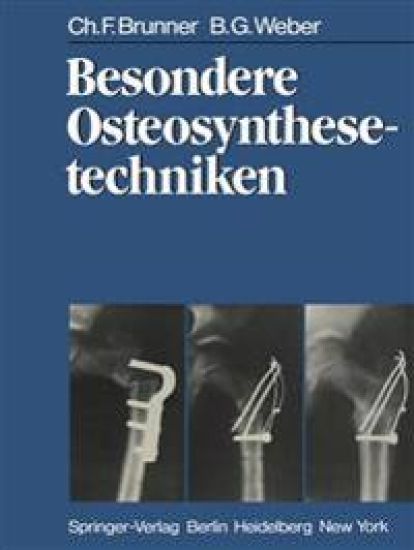
Besondere Osteosynthesetechniken

Besondere Osteosynthesetechniken

C. F. Brunner; B. G. Weber

Springer-Verlag Berlin and Heidelberg GmbH Co. K
2012
nidottu
nenkursen und Publikationen m6gen dazu beigetragen haben. Es geht uns hier nicht darum, Erfinderanspruche zu erheben, sondern vielmehr darum, aufzuzeigen, daB innerhalb der richti- gerweise starren Osteosynthesegrundgesetze ein Freiraum fUr Kreativitiit, fUr Varianten und Verfeinerungen besteht. Es erge- ben sich dabei sinn volle operative L6sungen, und der operative Alltag erfahrt anregende Bereicherung. In jedem Kapitel wird die Kenntnis der Grundtechnik als ge- liiufig vorausgesetzt und deshalb darauf nicht niiher eingegan- gen. Vorgetragen werden dagegen jeweils besondere Indikatio- nen und technische Feinheiten anhand von Fallbeispielen. Un- schwer lassen sich un sere Erfahrungen auf andere Situationen ubertragen, denn die Zahl der denkbaren Varianten in der ortho- piidischen Chirurgie ist endlos - ein Umstand, der so viele Chir- urgen verschiedener Schattierungen immer wieder in ihren Bann zieht. In alphabetischer Reihenfolge nennen wir aIle jene, die mit den dargestellten Techniken in Zusammenhang stehen: R. BLATTER, A. BOITZY, CH. BRUNNER, 0. CECH, A. DEBRUNNER, F. MAGERL, G. SEGMULLER, G. STUHMER, B. G. WEBER. Unser Dank richtet sich deshalb an die Kollegen un serer Klinik fUr das Einverstiindnis, ihre Ideen ver6ffentlichen zu durfen. Aber auch an die Zeichner H. und K. SCHUMACHER, an un sere Photographin M. SCHAFFNER, an un sere Chefsekretiirin U. OET- LIKER, welche zur Druckreife dieses Buches soviel beigetragen haben, richtet sich unser Dank. Dem Springer-Verlag dank en wir fUr die Geduld mit uns, dann aber besonders fUr die ziigige und hervorragende Drucklegung. St. Gallen, Sommer 1981 Ch. F. BRUNNER B. G. WEBER InhaItsverzeichnis 1 Zugschraube .......... .
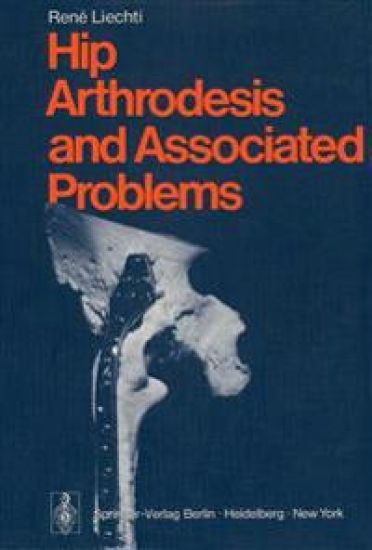
Hip Arthrodesis and Associated Problems

Hip Arthrodesis and Associated Problems

R. Liechti; M. F. Muller; B.G. Weber

Springer-Verlag Berlin and Heidelberg GmbH Co. K
2012
nidottu
In the last 10 years, total prosthetic replacement has become the hip oper­ ation for many but not all surgeons. In our clinic the increasing frequency of TP has been paralleled by a reduction in the frequency of 10 and HA. For the experienced orthopaedic surgeon and hip surgeon, hip disease has so many facets that it could not possibly be tackled with one operation alone. Thus, HA seems recently to have won renewed recognition. It has once more become the procedure of choice in specific cases, possibly because of certain disadvantages and complications associated with TP which have somewhat tempered the original optimism. Currently, the risk of infection or loosening of the pros thesis is such that the operation cannot justifiably be recommended for patients under 55-60 years of age. In contrast with HA, in the majority of cases the results of TP or 10 are not fully predictable. The loss of joint motion is offset by two important advantages: -complete freedom from pain - full weight bearing is possible on the arthrodesed hip. On following up our HA operations from 1961 to 1971, we examined the development of the operative procedures in our clinic. We found that the range of indications had narrowed as stricter criteria were applied in choosing patients for operation. Adequate and precise operative tech­ niques were developed. We studied the biomechanics of the hip joint exten­ sively (effect of arthrodesis on the statics and dynamics of the hip joint and neighbouring joints).
Fixateur Externe

Fixateur Externe

B.G. Weber; F. Magerl

Springer-Verlag Berlin and Heidelberg GmbH Co. K
2014
nidottu
Die Stabilisierung von Knochenfragmenten mit Hilfe eines Fixateur externe geht wa- scheinlich auf LAMBOTTE (1902) zuruck. Der Fixateur externe ist jedoch noch nicht im gleichen Masse zum Durchbruch gekommen, wie die geschlossene Frakturenbehandlung nach BoeHLER, W ATSON-JONES, SARMIENTO und die stabilen Osteosynthesen. Aber auch die operative Frakturbehandlung hat erst 1958 durch die Schweizerische Arbeitsgemeinschaft fur Osteosynthesefragen AO weltweite Verbreitung gefunden. Dabei ist die AO-Technik von deren Autoren MuLLER, ALLGOEWER und WILLENEGGER zu keiner Zeit etwa als allein richtige Methode verstanden worden, und in ihrem Buch "Technik der operativen Frakturenbehandlung", Springer-Verlag 1963, steht im Vorwort: "Wir koennen nicht genug warnen vor Osteosynthesen, die ohne entsprechende Schulung des Chirurgen und ohne notwendige technische Voraussetzungen bezuglich Instrumentarium und Asepsis im Operationsbetrieb durchgefuhrt werden ... ". Die Gefahren der direkten Osteosynthese haben die konservative Behandlung in modifizierter Form reaktiviert, so dass heute das "functional bracing" nach SARMIENTO vielerorts genauso oft Anw- dung findet, wie die AO-Technik.
The External Fixator

The External Fixator

B.G. Weber; A. Sarmiento; F. Magerl

Springer-Verlag Berlin and Heidelberg GmbH Co. K
2012
nidottu
Professor B. G. WEBER has once again and in a very timely fashion produced a superb book on an orthopaedic subject of great importance. "The Extemal Fixator" is the most comprehensive text on the subject in orthopaedic literature to date. Professor WEBER thoroughly discusses extemal fixation with c1arity, organization, profuse illustrations and roentgenograms. Professor WEBER acknowledges that the use of extemal fixation in orthopaedic surgery is not newand traces its history over the years. He points out c1early the fact that though at various times the "method" has experienced periods of disrepute, modem sophistication, improved technology and a better understanding of its philosophy have given the system a newand perhaps permanent place in the armamentarium of the orthopaedic surgeon. All methods of treatment have critics as well as supporters, and not infrequently the strongest criticisms are the result of poor understanding of the philosophy proposed and its proper implementation. Professor WEBER, in his carefully detailed and well illustrated book, has made it abundantly c1ear that the use of extemal fixators in the treatment of fractures must be c1early understood by the orthopaedic surgeon in order to obtain satisfactory clinical results. His discussion of its philosophy, pathomechanics and technology are most comprehensive and leave "no stone untumed" and because of this the book represents a most comprehensive text on the subject.
Gipsfibel

Gipsfibel

B.G. Weber; Franz Freuler; Ulrich Wiedmer; Domizio Bianchini

Springer-Verlag Berlin and Heidelberg GmbH Co. K
1986
nidottu
In den letzten 25 Jahren mag der falsche Eindruck entstanden sein, dass mit der stabilen Osteosynthese und funktionellen Nachbehand- lung im Sinne der AO die konservative Knochenbruchbehandlung nur mehr gelegentlich angebracht sei. In Wirklichkeit werden an der Klinik fur Orthopadische Chirurgie des Kantonsspitals St. Gallen klare Richtlinien dafur beachtet, welche Fraktur der operativen und welche der konservativen Behandlung bedarf. Von diesen Richtli- nien gibt es naturlich Abweichungen in der einen oder anderen Richtung, je nachdem, welcher Patient welche Fraktur aufweist und wie die Begleitumstande sind. Zahlenmassig ausgedruckt werden an unserer Klinik beim Kind 85% der Schaftbruche, beim Erwachsenen 40% der Schaftbruche konservativ behandelt. Im vorliegenden Buch haben in einer zweiten Auflage Dr. F. Freuler, Dr. U. Wiedmer und Herr D. Bianchini, Gipspfleger, jene Massnah- men dargestellt, die entweder zur konservativen Behandlung dienen oder die operative Versorgung erganzen. Dabei handelt es sich um Extensionen, Fixationen, Gipsschienen und Gipsverbande her- koemmlicher Art, in der jetzigen Auflage mit Berucksichtigung der neuen Kunststoffverbande und der funktionellen Verbande ("tap- ing"). Die Autoren haben das Verdienst, zahlreiche Massnahmen und Tricks zusammengestellt zu haben. Von der Beherrschung dieser Massnahmen hangt in hohem Grade das Heilungsergebnis sowohl bei konservativer als auch bei operativer Behandlung von Verletzun- gen des Bewegungsapparats ab. Meinen Mitarbeitern gilt besonde- rer Dank dafur, auch mit der 2. Auflage Ihrer Schrift dazu einen Bei- trag zu leisten.