Kirjojen hintavertailu – 12 903 737 kirjaa ja 27 kauppaa

Kirjailija

B. Rosemary Grant

Kirjat ja teokset yhdessä paikassa: 6 kirjaa, julkaisuja vuosilta 1989–2026, suosituimpiin kuuluu One Step Sideways, Three Steps Forward. Vertaile teosten hintoja ja tarkista saatavuus suomalaisista kirjakaupoista.

6 kirjaa

Kirjojen julkaisuvuodet: 1989–2026.

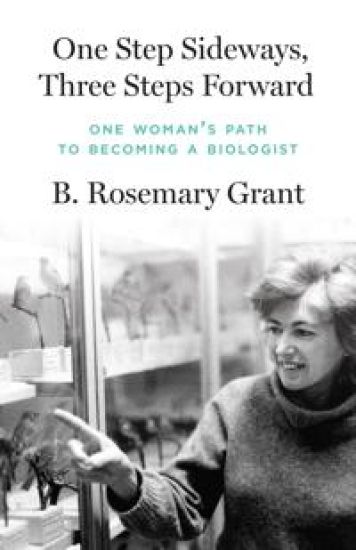
One Step Sideways, Three Steps Forward

One Step Sideways, Three Steps Forward

B. Rosemary Grant

PRINCETON UNIVERSITY PRESS
2026
pokkari
The story of the unorthodox and inspiring life and career of a pioneering biologist Scientist Rosemary Grant’s journey in life has involved detours and sidesteps—not the shortest or the straightest of paths, but one that has led her to the top of evolutionary biology. In this engaging and moving book, Grant tells the story of her life and career—from her childhood love of nature in England’s Lake District to an undergraduate education at the University of Edinburgh through a swerve to Canada and teaching, followed by marriage, children, a PhD at age forty-nine, and her life’s work with Darwin’s finches in the Galápagos islands. Grant’s unorthodox career is one woman’s solution to the problem of combining professional life as a field biologist with raising a family. Grant describes her youthful interest in fossils, which inspired her to imagine another world, distant yet connected in time—and which anticipated her later work in evolutionary biology. She and her husband, Peter Grant, visited the Galápagos archipelago annually for forty years, tracking the fates of the finches on the small, uninhabited island of Daphne Major. Their work has profoundly altered our understanding of how a group of eighteen species has diversified from a single ancestral species, demonstrating that evolution by natural selection can be observed and interpreted in an entirely natural environment. Grant’s story shows the rewards of following a winding path and the joy of working closely with a partner, sharing ideas, disappointments, and successes.
40 Years of Evolution

40 Years of Evolution

Peter R. Grant; B. Rosemary Grant

PRINCETON UNIVERSITY PRESS
2024
pokkari

Halvin toimitettuna 48,20 €

A new edition of Peter and Rosemary Grant’s classic account of their groundbreaking forty-year study of Darwin’s finches40 Years of Evolution is a landmark study of the finches first made famous by Charles Darwin, one that documents as never before the evolution of species through natural selection. In this now-legendary study, renowned evolutionary biologists Peter and Rosemary Grant draw on a vast and unparalleled range of ecological, behavioral, and genetic data to continuously measure changes in finch populations over a period of four decades on the small island of Daphne Major in the Galápagos archipelago. In the years since the book’s publication, the field of genomics has developed greatly. In this newly revised edition of 40 Years of Evolution, the Grants combine the results of their historic field study with genomic analyses of their primary findings, resolve unanswered questions from the field, and provide invaluable insights into the genetic basis of beak and body size variation and the history of this iconic adaptive radiation.
One Step Sideways, Three Steps Forward

One Step Sideways, Three Steps Forward

B. Rosemary Grant

PRINCETON UNIVERSITY PRESS
2024
sidottu
The story of the unorthodox and inspiring life and career of a pioneering biologist Scientist Rosemary Grant’s journey in life has involved detours and sidesteps—not the shortest or the straightest of paths, but one that has led her to the top of evolutionary biology. In this engaging and moving book, Grant tells the story of her life and career—from her childhood love of nature in England’s Lake District to an undergraduate education at the University of Edinburgh through a swerve to Canada and teaching, followed by marriage, children, a PhD at age forty-nine, and her life’s work with Darwin’s finches in the Galápagos islands. Grant’s unorthodox career is one woman’s solution to the problem of combining professional life as a field biologist with raising a family. Grant describes her youthful interest in fossils, which inspired her to imagine another world, distant yet connected in time—and which anticipated her later work in evolutionary biology. She and her husband, Peter Grant, visited the Galápagos archipelago annually for forty years, tracking the fates of the finches on the small, uninhabited island of Daphne Major. Their work has profoundly altered our understanding of how a group of eighteen species has diversified from a single ancestral species, demonstrating that evolution by natural selection can be observed and interpreted in an entirely natural environment. Grant’s story shows the rewards of following a winding path and the joy of working closely with a partner, sharing ideas, disappointments, and successes.
40 Years of Evolution

40 Years of Evolution

Peter R. Grant; B. Rosemary Grant

Princeton University Press
2014
sidottu
Renowned evolutionary biologists Peter and Rosemary Grant have produced landmark studies of the Galapagos finches first made famous by Charles Darwin. In How and Why Species Multiply, they offered a complete evolutionary history of Darwin's finches since their origin almost three million years ago. Now, in their richly illustrated new book, 40 Years of Evolution, the authors turn their attention to events taking place on a contemporary scale. By continuously tracking finch populations over a period of four decades, they uncover the causes and consequences of significant events leading to evolutionary changes in species. The authors used a vast and unparalleled range of ecological, behavioral, and genetic data--including song recordings, DNA analyses, and feeding and breeding behavior--to measure changes in finch populations on the small island of Daphne Major in the Galapagos archipelago. They find that natural selection happens repeatedly, that finches hybridize and exchange genes rarely, and that they compete for scarce food in times of drought, with the remarkable result that the finch populations today differ significantly in average beak size and shape from those of forty years ago. The authors' most spectacular discovery is the initiation and establishment of a new lineage that now behaves as a new species, differing from others in size, song, and other characteristics. The authors emphasize the immeasurable value of continuous long-term studies of natural populations and of critical opportunities for detecting and understanding rare but significant events. By following the fates of finches for several generations, 40 Years of Evolution offers unparalleled insights into ecological and evolutionary changes in natural environments.
How and Why Species Multiply

How and Why Species Multiply

Peter R. Grant; B. Rosemary Grant

Princeton University Press
2011
pokkari
Charles Darwin's experiences in the Galapagos Islands in 1835 helped to guide his thoughts toward a revolutionary theory: that species were not fixed but diversified from their ancestors over many generations, and that the driving mechanism of evolutionary change was natural selection. In this concise, accessible book, Peter and Rosemary Grant explain what we have learned about the origin and evolution of new species through the study of the finches made famous by that great scientist: Darwin's finches. Drawing upon their unique observations of finch evolution over a thirty-four-year period, the Grants trace the evolutionary history of fourteen different species from a shared ancestor three million years ago. They show how repeated cycles of speciation involved adaptive change through natural selection on beak size and shape, and divergence in songs. They explain other factors that drive finch evolution, including geographical isolation, which has kept the Galapagos relatively free of competitors and predators; climate change and an increase in the number of islands over the last three million years, which enhanced opportunities for speciation; and flexibility in the early learning of feeding skills, which helped species to exploit new food resources. Throughout, the Grants show how the laboratory tools of developmental biology and molecular genetics can be combined with observations and experiments on birds in the field to gain deeper insights into why the world is so biologically rich and diverse. Written by two preeminent evolutionary biologists, How and Why Species Multiply helps to answer fundamental questions about evolution--in the Galapagos and throughout the world.
Evolutionary Dynamics of a Natural Population

Evolutionary Dynamics of a Natural Population

B. Rosemary Grant; Peter R. Grant

University of Chicago Press
1989
sidottu
Presents a careful account of the results of a research project which began in 1973 and ran continuously for eleven years. Treats the ecology, behavior and genetics of a population still resident where it evolved, and small enough to permit the identification of every individual. Beautifully produce