Kirjojen hintavertailu – 12 903 724 kirjaa ja 27 kauppaa

Kirjailija

Balamurugan Balusamy

Kirjat ja teokset yhdessä paikassa: 14 kirjaa, julkaisuja vuosilta 2016–2025, suosituimpiin kuuluu Blended Learning and MOOCs. Vertaile teosten hintoja ja tarkista saatavuus suomalaisista kirjakaupoista.

14 kirjaa

Kirjojen julkaisuvuodet: 2016–2025.

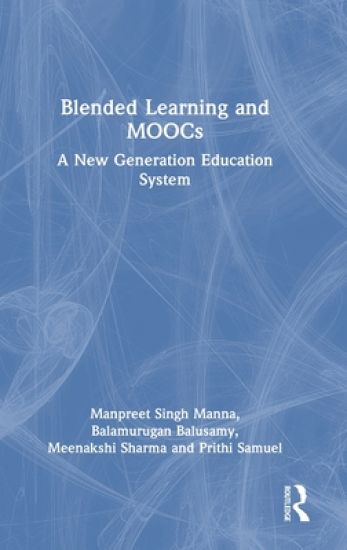
Blended Learning and MOOCs

Blended Learning and MOOCs

Manpreet Singh Manna; Balamurugan Balusamy; Meenakshi Sharma; Prithi Samuel

TAYLOR FRANCIS LTD
2023
sidottu
This book presents a framework for integrating blended learning and massive open online courses (MOOCs) in the Indian education system. It argues that blended teaching and learning is the most suitable approach to education in a post-COVID-19 world. Drawing on case studies used in blended learning practices around the world, the book provides ample resources for beginners to improvise the spread of knowledge around information technology in higher education. It discusses various concepts such as flip learning in blended learning models and examines the self-assessment tools and structures it offers to institutions for building competencies. In addition to addressing the challenges and opportunities of adopting the digital mode of teaching, the book also offers techniques and concepts helpful for designing MOOCs. It covers concepts such as curriculum designing, content flow, teaching behavior, and evaluation patterns, which are important aspects of online teaching. An indispensable guide to navigating the shift from offline to online teaching, this book will be of interest to students, teachers, and researchers of education, education technology, digital education, and information technology. It will also be useful to policymakers, educational institutions, EdTech start-ups, NGOs in the education sector, and online education centers.
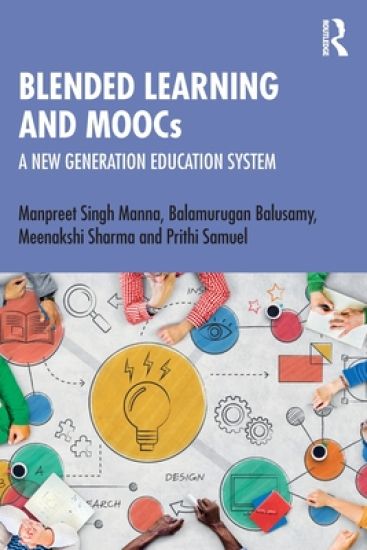
Blended Learning and MOOCs

Blended Learning and MOOCs

Manpreet Singh Manna; Balamurugan Balusamy; Meenakshi Sharma; Prithi Samuel

TAYLOR FRANCIS LTD
2023
nidottu
This book presents a framework for integrating blended learning and massive open online courses (MOOCs) in the Indian education system. It argues that blended teaching and learning is the most suitable approach to education in a post-COVID-19 world. Drawing on case studies used in blended learning practices around the world, the book provides ample resources for beginners to improvise the spread of knowledge around information technology in higher education. It discusses various concepts such as flip learning in blended learning models and examines the self-assessment tools and structures it offers to institutions for building competencies. In addition to addressing the challenges and opportunities of adopting the digital mode of teaching, the book also offers techniques and concepts helpful for designing MOOCs. It covers concepts such as curriculum designing, content flow, teaching behavior, and evaluation patterns, which are important aspects of online teaching. An indispensable guide to navigating the shift from offline to online teaching, this book will be of interest to students, teachers, and researchers of education, education technology, digital education, and information technology. It will also be useful to policymakers, educational institutions, EdTech start-ups, NGOs in the education sector, and online education centers.
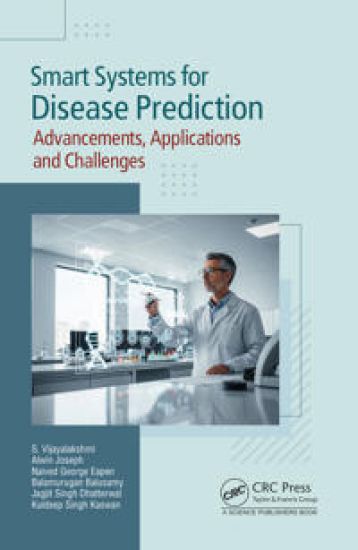
Smart Systems for Disease Prediction

Smart Systems for Disease Prediction

S Vijayalakshmi; Alwin Joseph; Naived George Eapen; Balamurugan Balusamy; Jagjit Singh Dhatterwal; Kuldeep Singh Kaswan

TAYLOR FRANCIS LTD
2025
sidottu
Smart Systems for Disease Prediction: Advancements, Applications and Challenges is a comprehensive book that explores the use of intelligent technologies to predict diseases accurately and efficiently. It covers a wide range of topics, including image and signal processing, behavioural analysis, and the integration of multimodal data in healthcare. The book examines the application of artificial intelligence, machine learning, and data analytics in creating predictive models for diseases. It also addresses the challenges, ethical considerations, and future directions in the field. This work emphasises the significant impact of intelligent systems on enabling early diagnosis, personalised medicine, and improving patient outcomes.
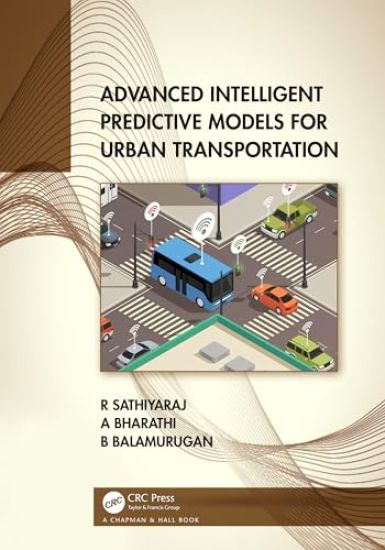
Advanced Intelligent Predictive Models for Urban Transportation

Advanced Intelligent Predictive Models for Urban Transportation

R. Sathiyaraj; A Bharathi; Balamurugan Balusamy

TAYLOR FRANCIS LTD
2024
nidottu
The book emphasizes the predictive models of Big Data, Genetic Algorithm, and IoT with a case study. The book illustrates the predictive models with integrated fuel consumption models for smart and safe traveling. The text is a coordinated amalgamation of research contributions and industrial applications in the field of Intelligent Transportation Systems. The advanced predictive models and research results were achieved with the case studies, deployed in real transportation environments. Features: Provides a smart traffic congestion avoidance system with an integrated fuel consumption model. Predicts traffic in short-term and regular. This is illustrated with a case study. Efficient Traffic light controller and deviation system in accordance with the traffic scenario. IoT based Intelligent Transport Systems in a Global perspective. Intelligent Traffic Light Control System and Ambulance Control System. Provides a predictive framework that can handle the traffic on abnormal days, such as weekends, festival holidays. Bunch of solutions and ideas for smart traffic development in smart cities. This book focuses on advanced predictive models along with offering an efficient solution for smart traffic management system. This book will give a brief idea of the available algorithms/techniques of big data, IoT, and genetic algorithm and guides in developing a solution for smart city applications. This book will be a complete framework for ITS domain with the advanced concepts of Big Data Analytics, Genetic Algorithm and IoT. This book is primarily aimed at IT professionals. Undergraduates, graduates and researchers in the area of computer science and information technology will also find this book useful.
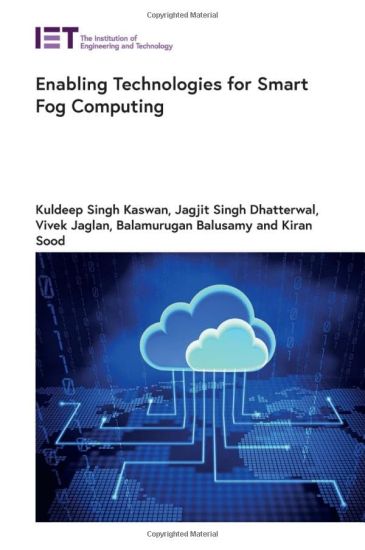
Enabling Technologies for Smart Fog Computing

Enabling Technologies for Smart Fog Computing

Kuldeep Singh Kaswan; Jagjit Singh Dhatterwal; Vivek Jaglan; Balamurugan Balusamy; Kiran Sood

INSTITUTION OF ENGINEERING AND TECHNOLOGY
2024
sidottu
Fog computing is a decentralized computing infrastructure in which computing resources are located between the data source and the cloud or any other data centers. The word "fog" refers to its cloud-like properties, which are closer to the "ground", using edge devices that carry out locally computation, storage and communication tasks. An additional benefit is that the processed data is likely to be needed by the same devices that generated the data. By processing locally rather than remotely, the latency between input and response are minimized. This technology has countless application domains such as industrial process control, smart cities, transportation, healthcare and agriculture. In this book, all the important topics in fog computing systems are covered, including energy efficiency, quality of service (QoS) issues, reliability and fault tolerance, load balancing, and scheduling. Special attention is devoted to emerging trends and industry needs associated with utilizing mobile edge computing, internet of things (IoT), resource estimation as well as virtualization in the fog computing environment. Current research on automation, robotics, data privacy, security and trust in fog computing is explored in depth. The book also discusses emerging techniques including deep learning, mobile edge computing, smart grid and intelligent transportation systems beyond theoretical and foundational concepts for smart applications including real time traffic surveillance, interoperability of fog computing architecture and smart homes and smart cities. Intended for an audience of researchers from academia and industry, as well as lecturers, engineers and advanced students, Enabling Technologies for Smart Fog Computing offers valuable insights for those with an interest in the field.
Advanced Intelligent Predictive Models for Urban Transportation

Advanced Intelligent Predictive Models for Urban Transportation

R. Sathiyaraj; A Bharathi; Balamurugan Balusamy

TAYLOR FRANCIS LTD
2022
sidottu
The book emphasizes the predictive models of Big Data, Genetic Algorithm, and IoT with a case study. The book illustrates the predictive models with integrated fuel consumption models for smart and safe traveling. The text is a coordinated amalgamation of research contributions and industrial applications in the field of Intelligent Transportation Systems. The advanced predictive models and research results were achieved with the case studies, deployed in real transportation environments. Features: Provides a smart traffic congestion avoidance system with an integrated fuel consumption model. Predicts traffic in short-term and regular. This is illustrated with a case study. Efficient Traffic light controller and deviation system in accordance with the traffic scenario. IoT based Intelligent Transport Systems in a Global perspective. Intelligent Traffic Light Control System and Ambulance Control System. Provides a predictive framework that can handle the traffic on abnormal days, such as weekends, festival holidays. Bunch of solutions and ideas for smart traffic development in smart cities. This book focuses on advanced predictive models along with offering an efficient solution for smart traffic management system. This book will give a brief idea of the available algorithms/techniques of big data, IoT, and genetic algorithm and guides in developing a solution for smart city applications. This book will be a complete framework for ITS domain with the advanced concepts of Big Data Analytics, Genetic Algorithm and IoT. This book is primarily aimed at IT professionals. Undergraduates, graduates and researchers in the area of computer science and information technology will also find this book useful.
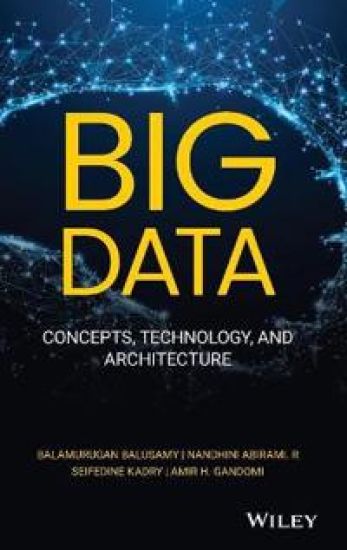
Big Data

Big Data

Balamurugan Balusamy; Nandhini Abirami R; Seifedine Kadry; Amir H. Gandomi

Wiley-Blackwell
2021
sidottu

Halvin toimitettuna 147,80 €

Learn Big Data from the ground up with this complete and up-to-date resource from leaders in the field Big Data: Concepts, Technology, and Architecture delivers a comprehensive treatment of Big Data tools, terminology, and technology perfectly suited to a wide range of business professionals, academic researchers, and students. Beginning with a fulsome overview of what we mean when we say, “Big Data,” the book moves on to discuss every stage of the lifecycle of Big Data. You’ll learn about the creation of structured, unstructured, and semi-structured data, data storage solutions, traditional database solutions like SQL, data processing, data analytics, machine learning, and data mining. You’ll also discover how specific technologies like Apache Hadoop, SQOOP, and Flume work. Big Data also covers the central topic of big data visualization with Tableau, and you’ll learn how to create scatter plots, histograms, bar, line, and pie charts with that software. Accessibly organized, Big Data includes illuminating case studies throughout the material, showing you how the included concepts have been applied in real-world settings. Some of those concepts include: The common challenges facing big data technology and technologists, like data heterogeneity and incompleteness, data volume and velocity, storage limitations, and privacy concerns Relational and non-relational databases, like RDBMS, NoSQL, and NewSQL databases Virtualizing Big Data through encapsulation, partitioning, and isolating, as well as big data server virtualization Apache software, including Hadoop, Cassandra, Avro, Pig, Mahout, Oozie, and Hive The Big Data analytics lifecycle, including business case evaluation, data preparation, extraction, transformation, analysis, and visualization Perfect for data scientists, data engineers, and database managers, Big Data also belongs on the bookshelves of business intelligence analysts who are required to make decisions based on large volumes of information. Executives and managers who lead teams responsible for keeping or understanding large datasets will also benefit from this book.