Kirjojen hintavertailu – 12 903 725 kirjaa ja 27 kauppaa

Kirjailija

Barbara A. Anderson

Kirjat ja teokset yhdessä paikassa: 13 kirjaa, julkaisuja vuosilta 2004–2025, suosituimpiin kuuluu Sustaining Social Conflict. Vertaile teosten hintoja ja tarkista saatavuus suomalaisista kirjakaupoista.

13 kirjaa

Kirjojen julkaisuvuodet: 2004–2025.

Caring for the Vulnerable: Perspectives in Nursing Theory, Practice, and Research

Caring for the Vulnerable: Perspectives in Nursing Theory, Practice, and Research

Mary de Chesnay; Barbara A. Anderson

JONES AND BARTLETT PUBLISHERS, INC
2025
nidottu
Lead editors and authors, Mary de Chesnay and Barbara Anderson, continue to offer a timely and comprehensive examination of the many facets of vulnerability in health and healthcare delivery in an updated sixth edition of Caring for the Vulnerable: Perspectives in Nursing Theory, Practice, and Research. Caring for vulnerable populations presents unique challenges, and nursing students need a resource that teaches them how to understand and recognize those who are vulnerable, address their vulnerability, and implement strategies that support their healthcare needs. This book provides a wealth of information for clinicians who care for a variety of vulnerable populations. Chapters cover concepts and theories, research, practical applications, and policy-making for a well-rounded look at how nurses and clinicians can provide optimal patient-centered care and support for vulnerable populations.

Sustaining Social Conflict

Sustaining Social Conflict

E.N. Anderson; Barbara A. Anderson

BLOOMSBURY PUBLISHING PLC
2024
nidottu
This book examines the origins of genocide and mass murder in the everyday conflicts of ordinary people, exacerbated by special interests. We examine cases harming people simply because they are considered unworthy and undeserving—for instance, if they are dehumanized. We confine our attention to genocide, mass murder, large-scale killing motivated by hate or desire for gain, and fascism as an ideology since it usually advocates and leads to such killing. The book draws on social psychology, especially recent work on the psychology of prejudice. Much new information on the psychology of fear, hate, intolerance, and violence has appeared in recent years. The world has also learned more on the funding of dehumanization by giant corporations via “dark money,” and on the psychology of genocidal leaders. This allows us to construct a much more detailed back story of why people erupt into mass killing of minorities and vulnerable populations. We thus go on to deal with the whole “problem of evil” (or at least apparently irrational killing) in general, broadening the perspective to include politics, economics, and society at large. We draw on psychology, sociology, economics, political science, public health, anthropology, and biology in a uniquely cross-disciplinary work.
Sustaining Social Conflict

Sustaining Social Conflict

E.N. Anderson; Barbara A. Anderson

BLOOMSBURY PUBLISHING PLC
2022
sidottu
This book examines the origins of genocide and mass murder in the everyday conflicts of ordinary people, exacerbated by special interests. We examine cases harming people simply because they are considered unworthy and undeserving—for instance, if they are dehumanized. We confine our attention to genocide, mass murder, large-scale killing motivated by hate or desire for gain, and fascism as an ideology since it usually advocates and leads to such killing. The book draws on social psychology, especially recent work on the psychology of prejudice. Much new information on the psychology of fear, hate, intolerance, and violence has appeared in recent years. The world has also learned more on the funding of dehumanization by giant corporations via “dark money,” and on the psychology of genocidal leaders. This allows us to construct a much more detailed back story of why people erupt into mass killing of minorities and vulnerable populations. We thus go on to deal with the whole “problem of evil” (or at least apparently irrational killing) in general, broadening the perspective to include politics, economics, and society at large. We draw on psychology, sociology, economics, political science, public health, anthropology, and biology in a uniquely cross-disciplinary work.
Complying with Genocide

Complying with Genocide

E.N. Anderson; Barbara A. Anderson

BLOOMSBURY PUBLISHING PLC
2022
nidottu
Drawing on a powerful Native American metaphor to frame this work, E. N. Anderson and Barbara Anderson examine complicity in genocide, stressing that it only through feeding the good wolf that a moral and social order of inclusion and tolerance can be built, while feeding the bad wolf will result in fear, hatred, exclusion, and violence. In Complying with Genocide: The Wolf You Feed, Anderson and Anderson illustrate how everyday frustration and fear, combined with hatred and social othering toward rivals and victims of discrimination, can lead individuals and whole nations to become complicit in genocide. Anderson and Anderson propose powerful actions that can both protect against complicity and create social change, as exemplified from populations recovering from genocidal regimes. This book is recommended for students and scholars of anthropology, sociology, public health, psychology, criminal justice, and political science.
Complying with Genocide

Complying with Genocide

E.N. Anderson; Barbara A. Anderson

Rowman Littlefield
2020
sidottu
The wolf you feed refers to a powerful Native American metaphor. Feeding the good wolf builds a moral and social order of inclusion and tolerance, whereas feeding the bad wolf leads to fear, hatred, exclusion, and violence. You must decide which wolf to feed. E. N. Anderson and Barbara A. Anderson use this metaphor to examine complicity in genocide. Anderson and Anderson argue that everyday frustration and fear, combined with hatred and social othering toward rivals and victims of discrimination, are powerful precursors to conforming to genocide and the very tools that genocidal leaders use to instigate hatred. Anderson and Anderson examine why individuals and whole nations become complicit in genocide. They propose powerful actions that can both protect against complicity and create social change, as exemplified from populations recovering from genocidal regimes. This book is targeted toward scholars and persons who are interested in understanding genocidal complicity and examining social strategies to counteract it.
Caring for the Vulnerable: Perspectives in Nursing Theory, Practice, and Research

Caring for the Vulnerable: Perspectives in Nursing Theory, Practice, and Research

Mary de Chesnay; Barbara A. Anderson

Jones and Bartlett Publishers, Inc
2019
nidottu
Caring for the Vulnerable: Perspectives in Nursing Theory, Practice, and Research focuses on vulnerable populations and how nurses can care for them, develop programs for them, conduct research, and influence health policy. Units I and II focus on concepts and theories Unit III on research Units IV, V, and VI on practice-oriented measures, including teaching nursing students to work with vulnerable patients and clients and Unit VII on policy. The text provides a broad overview of material critical to working with these populations, comprehensive treatment of issues related to vulnerable populations, outstanding contributors who are experts in what they write, and a global focus. The Fifth Edition will be a major overhaul, as each new edition of this text has been. There will be a total of 3 new chapters focusing on new and emerging research on vulnerable populations. This text is generally used as a supplement in a wide variety of courses - from health promotion to population health, to global health. New to the Fifth Edition:Thirty-one new chapters focusing on new and emerging research on vulnerable populations, exploring topics such as: Intersection of Racial Disparities and Privilege in Women's HealthHIV Prevention EducationCaring for the Transgender CommunityCaring for Vulnerable Populations: Outcomes with the DNP-Prepared NurseWith some chapters delving into key clinical topics in identified regions, such as:Opioid Abuse and Diversion Prevention in Rural Eastern Kentucky The Effects of Gun Trauma on Rural Montana Healthcare ProvidersHealth Care in MexicoFifth edition will continue to focus more on DNP authors and assess each chapter for relevance to DNP-prepared nursesFeatures an included test bank, practice activities, PPTs, IM, and a sample syllabus
Human Fertility in Russia Since the Nineteenth Century

Human Fertility in Russia Since the Nineteenth Century

Ansley Johnson Coale; Barbara A. Anderson; Erna Härm

Princeton University Press
2016
sidottu
The birth rate in late-nineteenth century Russia was high and virtually constant, but by 1970 it had fallen by about two-thirds. Although similar reductions have occurred in other countries, the decline in Russian fertility is of particular interest because it took place in a setting of great ethnic heterogeneity and under economic and social institutions different from those in the West. This book tells the full statistical story of trends in Russian fertility since the first census in 1897 by examining the conditions--social, economic, cultural, and demographic--that existed at the beginning of and during the decline in human fertility. Originally published in 1979. The Princeton Legacy Library uses the latest print-on-demand technology to again make available previously out-of-print books from the distinguished backlist of Princeton University Press. These editions preserve the original texts of these important books while presenting them in durable paperback and hardcover editions. The goal of the Princeton Legacy Library is to vastly increase access to the rich scholarly heritage found in the thousands of books published by Princeton University Press since its founding in 1905.
Internal Migration During Modernization in Late Nineteenth-Century Russia
To understand why people migrate during periods of modernization, Barbara Anderson contends that one must study the place of origin, since the persons at the origin are the potential migrant population. Using data from the 1897 Imperial Russian Census, the author examines two types of migration: that to an already settled, relatively modern area, such as the major cities; and that to a sparsely populated, relatively traditional area, such as the agricultural frontier. Originally published in 1980. The Princeton Legacy Library uses the latest print-on-demand technology to again make available previously out-of-print books from the distinguished backlist of Princeton University Press. These editions preserve the original texts of these important books while presenting them in durable paperback and hardcover editions. The goal of the Princeton Legacy Library is to vastly increase access to the rich scholarly heritage found in the thousands of books published by Princeton University Press since its founding in 1905.
Human Fertility in Russia Since the Nineteenth Century

Human Fertility in Russia Since the Nineteenth Century

Ansley Johnson Coale; Barbara A. Anderson; Erna Härm

Princeton University Press
2015
pokkari
The birth rate in late-nineteenth century Russia was high and virtually constant, but by 1970 it had fallen by about two-thirds. Although similar reductions have occurred in other countries, the decline in Russian fertility is of particular interest because it took place in a setting of great ethnic heterogeneity and under economic and social institutions different from those in the West. This book tells the full statistical story of trends in Russian fertility since the first census in 1897 by examining the conditions--social, economic, cultural, and demographic--that existed at the beginning of and during the decline in human fertility. Originally published in 1979. The Princeton Legacy Library uses the latest print-on-demand technology to again make available previously out-of-print books from the distinguished backlist of Princeton University Press. These editions preserve the original texts of these important books while presenting them in durable paperback and hardcover editions. The goal of the Princeton Legacy Library is to vastly increase access to the rich scholarly heritage found in the thousands of books published by Princeton University Press since its founding in 1905.
Warning Signs of Genocide

Warning Signs of Genocide

E.N. Anderson; Barbara A. Anderson

Lexington Books
2014
nidottu
Genocide occurs when a government attempts to exterminate systematically a large percentage of its own citizens or subjects, simply because they fall into a particular group defined by religion, ethnicity, political affiliation, or (rarely) other group identification ranging from occupation to gender status. Genocide has been a major cause of death worldwide over the last 100 years or more, and is far from being eliminated. Through examining available cases, Warning Signs of Genocide: An Anthropological Perspective shows that genocide becomes a live danger when group hatreds—especially religious, ethnic, and political—are exploited by political regimes as major ways of seizing and maintaining power. Genocide is actually invoked, however, only when such regimes feel they are threatened, usually either because they are new and not consolidated in power or because they are challenged by local rebellions, civil war, or (less often) international war or major economic decline. Knowing these warning signs should make the international community take note that genocide is virtually certain to occur, and take action to stop it. This book joins others in noting that the international community has rarely intervened in time, and in the hope that these findings will encourage more prompt action.
Internal Migration During Modernization in Late Nineteenth-Century Russia
To understand why people migrate during periods of modernization, Barbara Anderson contends that one must study the place of origin, since the persons at the origin are the potential migrant population. Using data from the 1897 Imperial Russian Census, the author examines two types of migration: that to an already settled, relatively modern area, such as the major cities; and that to a sparsely populated, relatively traditional area, such as the agricultural frontier. Originally published in 1980. The Princeton Legacy Library uses the latest print-on-demand technology to again make available previously out-of-print books from the distinguished backlist of Princeton University Press. These editions preserve the original texts of these important books while presenting them in durable paperback and hardcover editions. The goal of the Princeton Legacy Library is to vastly increase access to the rich scholarly heritage found in the thousands of books published by Princeton University Press since its founding in 1905.
Warning Signs of Genocide

Warning Signs of Genocide

E.N. Anderson; Barbara A. Anderson

Lexington Books
2012
sidottu
Genocide occurs when a government attempts to exterminate systematically a large percentage of its own citizens or subjects, simply because they fall into a particular group defined by religion, ethnicity, political affiliation, or (rarely) other group identification ranging from occupation to gender status. Genocide has been a major cause of death worldwide over the last 100 years or more, and is far from being eliminated. Through examining available cases, Warning Signs of Genocide: An Anthropological Perspective shows that genocide becomes a live danger when group hatreds—especially religious, ethnic, and political—are exploited by political regimes as major ways of seizing and maintaining power. Genocide is actually invoked, however, only when such regimes feel they are threatened, usually either because they are new and not consolidated in power or because they are challenged by local rebellions, civil war, or (less often) international war or major economic decline. Knowing these warning signs should make the international community take note that genocide is virtually certain to occur, and take action to stop it. This book joins others in noting that the international community has rarely intervened in time, and in the hope that these findings will encourage more prompt action.
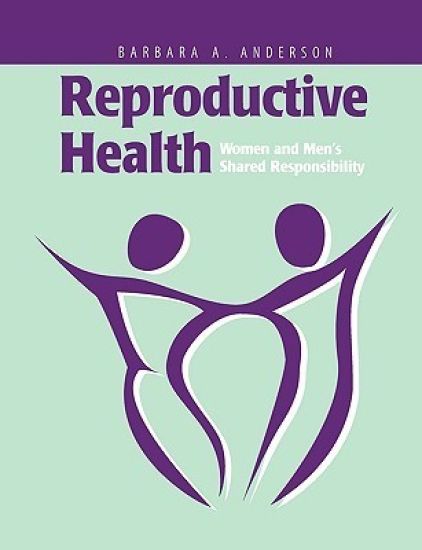
Reproductive Health: Women and Men's Shared Responsibility

Reproductive Health: Women and Men's Shared Responsibility

Barbara A. Anderson

Jones and Bartlett Publishers, Inc
2004
nidottu
Reproductive Health: Women and Men's Shared Responsibility is a much needed reference for both leaders and students in the field of public health. It offers a cutting-edge approach to its presentation of information about reproductive health, complete with recognition of the role of men, human rights, social justice, global health, infertility, environmental threats, gender violence, and more. There is no doubt that the need and timeliness for this book could not be greater.