Kirjojen hintavertailu – 12 903 725 kirjaa ja 27 kauppaa

Kirjailija

Barbara Alice Mann

Kirjat ja teokset yhdessä paikassa: 18 kirjaa, julkaisuja vuosilta 2000–2026, suosituimpiin kuuluu Indigenous Struggles in the United States. Vertaile teosten hintoja ja tarkista saatavuus suomalaisista kirjakaupoista.

18 kirjaa

Kirjojen julkaisuvuodet: 2000–2026.

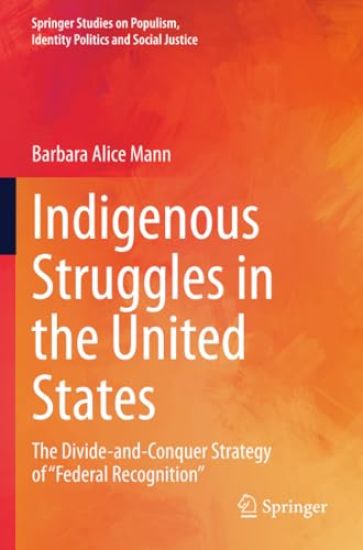
Indigenous Struggles in the United States

Indigenous Struggles in the United States

Barbara Alice Mann

Springer International Publishing AG
2026
Nidottu
This book sheds light on the intricate history of Indigenous America's struggle for identity and sovereignty. Examining the utilization of a divide-and-conquer strategy through "federal recognition" in the United States, the book offers a profound analysis of the tactics employed by the U. S. government to subdue Indigenous peoples. From the early days of American colonization, the U. S. sought to eliminate Indigenous competition for land, leading to a complex interplay of alliances and divisions within Indigenous communities. This book investigates the government's systematic efforts to redefine racial identity, ultimately erasing Indigenous people from official records. The book calls for a reclamation of Indigenous America's narrative, emphasizing the importance of self-representation and unity. This compelling work challenges readers to confront the enduring consequences of historical injustices and rethink the concept of identity in a rapidly changing world.
Empires of Violence

Empires of Violence

Philip Dwyer; Barbara Alice Mann; Nigel Penn; Lyndall Ryan

BLOOMSBURY PUBLISHING PLC
2025
nidottu
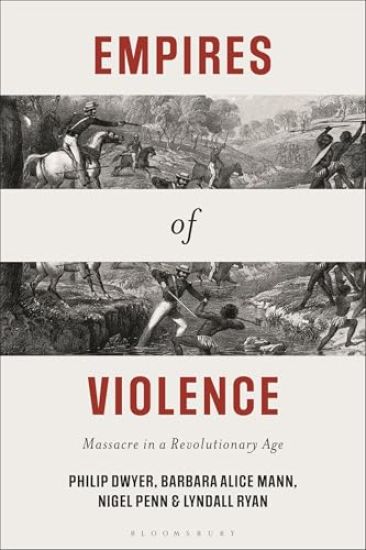
This comparative, global study of violence on the colonial frontier from 1780 to 1820 looks at four regions of the world: the expansion of Britain into the Australian and African continents, the westward and southern expansion of the United States, and the expansion of France in Europe during the Revolutionary and Napoleonic Wars. It seeks to re-think the past oppression and exploitation of colonized peoples by placing the violence committed against them in a comparative perspective. Violence and massacre were a tool at the disposal of the colonizer, and often used to subjugate unruly populations. In this book four experts specializing in four different regions of the world come together to interrogate the violence committed against indigenous peoples of these countries, and to ask whether this was a new form of violence, or the same that Europeans had always used against conquered peoples? Examining the changing nature of warfare and killing that occurred on colonial frontiers from both a European and indigenous perspective, Empires of Violence shows how race, othering and fear were maintained and buoyed by violence, in spite of prevailing discourses on humanitarianism, civilization and progress.
Empires of Violence

Empires of Violence

Philip Dwyer; Barbara Alice Mann; Nigel Penn; Lyndall Ryan

BLOOMSBURY PUBLISHING PLC
2025
sidottu
This comparative, global study of violence on the colonial frontier from 1780 to 1820 looks at four regions of the world: the expansion of Britain into the Australian and African continents, the westward and southern expansion of the United States, and the expansion of France in Europe during the Revolutionary and Napoleonic Wars. It seeks to re-think the past oppression and exploitation of colonized peoples by placing the violence committed against them in a comparative perspective. Violence and massacre were a tool at the disposal of the colonizer, and often used to subjugate unruly populations. In this book four experts specializing in four different regions of the world come together to interrogate the violence committed against indigenous peoples of these countries, and to ask whether this was a new form of violence, or the same that Europeans had always used against conquered peoples? Examining the changing nature of warfare and killing that occurred on colonial frontiers from both a European and indigenous perspective, Empires of Violence shows how race, othering and fear were maintained and buoyed by violence, in spite of prevailing discourses on humanitarianism, civilization and progress.
Indigenous Struggles in the United States

Indigenous Struggles in the United States

Barbara Alice Mann

Springer International Publishing AG
2025
sidottu
This book sheds light on the intricate history of Indigenous America's struggle for identity and sovereignty. Examining the utilization of a divide-and-conquer strategy through "federal recognition" in the United States, the book offers a profound analysis of the tactics employed by the U. S. government to subdue Indigenous peoples. From the early days of American colonization, the U. S. sought to eliminate Indigenous competition for land, leading to a complex interplay of alliances and divisions within Indigenous communities. This book investigates the government's systematic efforts to redefine racial identity, ultimately erasing Indigenous people from official records. The book calls for a reclamation of Indigenous America's narrative, emphasizing the importance of self-representation and unity. This compelling work challenges readers to confront the enduring consequences of historical injustices and rethink the concept of identity in a rapidly changing world.
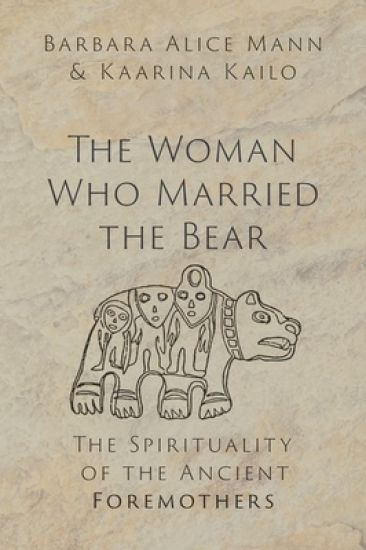
The Woman Who Married the Bear

The Woman Who Married the Bear

Barbara Alice Mann; Kaarina Kailo

OXFORD UNIVERSITY PRESS INC
2024
sidottu
Stories of the primordial woman who married a bear, appear in matriarchal traditions across the global North from Indigenous North America and Scandinavia to Russia and Korea. In The Woman Who Married the Bear, authors Barbara Alice Mann, a scholar of Indigenous American culture, and Kaarina Kailo, who specializes in the cultures of Northern Europe, join forces to examine these Woman-Bear stories, their common elements, and their meanings in the context of matriarchal culture. The authors reach back 35,000 years to tease out different threads of Indigenous Woman-Bear traditions, using the lens of bear spirituality to uncover the ancient matriarchies found in rock art, caves, ceremonies, rituals, and traditions. Across cultures, in the earliest known traditions, women and bears are shown to collaborate through star configurations and winter cave-dwelling, symbolized by the spring awakening from hibernation followed by the birth of “cubs.” By the Bronze Age, however, the story of the Woman-Bear marriage had changed: it had become a hunting tale, refocused on the male hunter. Throughout the book, Mann and Kailo offer interpretations of this earliest known Bear religion in both its original and its later forms. Together, they uncover the maternal cultural symbolism behind the bear marriage and the Original Instructions given by Bear to Woman on sustainable ecology and lifeways free of patriarchy and social stratification.
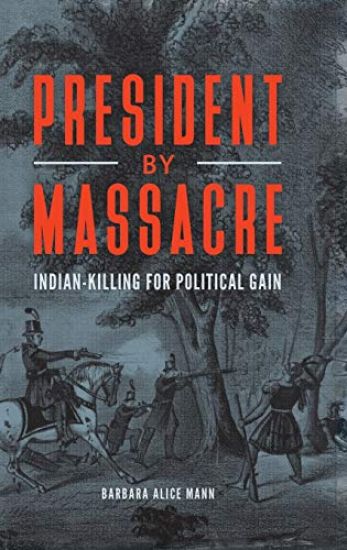
President by Massacre

President by Massacre

Barbara Alice Mann

Praeger Publishers Inc
2019
sidottu
President by Massacre pulls back the curtain of "expansionism," revealing how Andrew Jackson, William Henry Harrison, and Zachary Taylor massacred Indians to "open" land to slavery and oligarchic fortunes. President by Massacre examines the way in which presidential hopefuls through the first half of the nineteenth century parlayed militarily mounted land grabs into "Indian-hating" political capital to attain the highest office in the United States. The text zeroes in on three eras of U. S. "expansionism" as it led to the massacre of Indians to "open" land to African slavery while luring lower European classes into racism's promise to raise "white" above "red" and "black." This book inquires deeply into the existence of the affected Muskogee ("Creek"), Shawnee, Sauk, Meskwaki ("Fox"), and Seminole, before and after invasion, showing what it meant to them to have been so displaced and to have lost a large percentage of their members in the process. It additionally addresses land seizures from these and the Tecumseh, Tenskwatawa, Black Hawk, and Osceola tribes. President by Massacre is written for undergraduate and graduate readers who are interested in the Native Americans of the Eastern Woodlands, U. S. slavery, and the settler politics of U. S. expansionism.
Wielding Words Like Weapons

Wielding Words Like Weapons

Ward Churchill; Barbara Alice Mann

PM Press
2017
nidottu
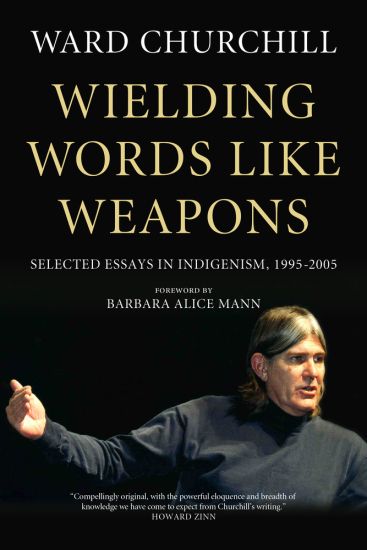
Wielding Words Like Weapons is a collection of acclaimed American Indian Movement activist-intellectual Ward Churchill's essays on indigenism, selected from material written during the decade 1995-2005. Beginning with a foreword by Seneca historian Barbara Alice Mann describing sustained efforts by police and intelligence agencies as well as university administrators and other academic adversaries to discredit or otherwise "neutralize" both the man and his work, the book includes material illustrating the range of formats Churchill has adopted in stating his case, from sharply framed book reviews and review essays, to equally pointed polemics and op-eds, and formal essays designed to reach both scholarly and popular audiences. The items selected, several of them previously unpublished, also reflect the broad range of topics addressed in Churchill's scholarship, from the fallacies of archeological/anthropological orthodoxy like the Bering Strait migration hypothesis and the insistence of "cannibologists" that American Indians were traditionally man-eaters, to cinematic degradations of native people by Hollywood, the historical and ongoing genocide of North America's native peoples, questions of American Indian identity, and the systematic distortion of political and legal history by reactionary scholars as a means of denying the realities of U. S.-Indian relations. Also included are both the initial "stream-of-consciousness" version of Churchill's famous--or notorious--"little Eichmanns" opinion piece analyzing the causes of the attacks on 9/11, as well as the counterpart essay in which his argument was fully developed and garnered honorable mention for the 2004 Gustavus Myers Award for best writing on human rights. Less typical of Churchill's oeuvre is an essay commemorating the passing of Cherokee anthropologist Robert K. Thomas, and another on that of Yankton Sioux legal scholar and theologian Vine Deloria Jr., to each of whom he acknowledges a deep intellectual debt. More unusual still is his moving and profoundly personal effort to come to grips with the life and death of his late wife, Leah Renae Kelly, thereby illuminating in very human terms the grim and lasting effects of Canada's residential schools upon the country's indigenous peoples.
Wielding Words like Weapons

Wielding Words like Weapons

Ward Churchill; Barbara Alice Mann

PM Press
2017
sidottu
Wielding Words Like Weapons is a collection of acclaimed American Indian Movement activist-intellectual Ward Churchill's essays on indigenism, selected from material written during the decade 1995-2005. Beginning with a foreword by Seneca historian Barbara Alice Mann describing sustained efforts by police and intelligence agencies as well as university administrators and other academic adversaries to discredit or otherwise "neutralize" both the man and his work, the book includes material illustrating the range of formats Churchill has adopted in stating his case, from sharply framed book reviews and review essays, to equally pointed polemics and op-eds, and formal essays designed to reach both scholarly and popular audiences. The items selected, several of them previously unpublished, also reflect the broad range of topics addressed in Churchill's scholarship, from the fallacies of archeological/anthropological orthodoxy like the Bering Strait migration hypothesis and the insistence of "cannibologists" that American Indians were traditionally man-eaters, to cinematic degradations of native people by Hollywood, the historical and ongoing genocide of North America's native peoples, questions of American Indian identity, and the systematic distortion of political and legal history by reactionary scholars as a means of denying the realities of U. S.-Indian relations. Also included are both the initial "stream-of-consciousness" version of Churchill's famous--or notorious--"little Eichmanns" opinion piece analyzing the causes of the attacks on 9/11, as well as the counterpart essay in which his argument was fully developed and garnered honorable mention for the 2004 Gustavus Myers Award for best writing on human rights. Less typical of Churchill's oeuvre is an essay commemorating the passing of Cherokee anthropologist Robert K. Thomas, and another on that of Yankton Sioux legal scholar and theologian Vine Deloria Jr., to each of whom he acknowledges a deep intellectual debt. More unusual still is his moving and profoundly personal effort to come to grips with the life and death of his late wife, Leah Renae Kelly, thereby illuminating in very human terms the grim and lasting effects of Canada's residential schools upon the country's indigenous peoples.
Spirits of Blood, Spirits of Breath

Spirits of Blood, Spirits of Breath

Barbara Alice Mann

Oxford University Press Inc
2016
sidottu
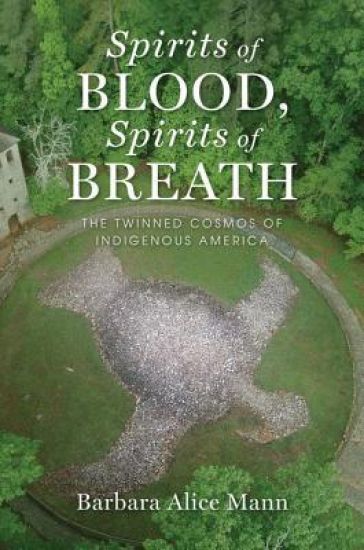
Before invasion, Turtle Island--or North America--was home to vibrant cultures that shared long-standing philosophical precepts. The most important and wide-spread of these was the view of reality as a collaborative binary known as the Twinned Cosmos of Blood and Breath. This binary system was built on the belief that neither half of the cosmos can exist without its twin; both halves are, therefore, necessary and good. Western anthropologists typically shorthand the Twinned Cosmos as "Sky and Earth," but this erroneously saddles it with Christian baggage and, worse, imposes a hierarchy that puts sky quite literally above earth. None of this Western ideology legitimately applies to traditional Indigenous American thought, which is about equal cooperation and the continual recreation of reality. Spirits of Blood, Spirits of Breath examines traditional historical concepts of spirituality among North American Indians both at and, to the extent it can be determined, before contact. In doing so, Barbara Mann rescues the authentically indigenous ideas from Western, and especially missionary, interpretations. In addition to early European source material, she uses Indian oral traditions, traced as much as possible to early sources, and Indian records, including pictographs, petroglyphs, bark books, and wampum. Moreover, Mann respects each Native culture as a discrete unit, rather than generalizing them as is often done in Western anthropology. To this end, she collates material in accordance with actual historical, linguistic, and traditional linkages among the groups at hand, with traditions clearly identified by group and, where recorded, by speaker. In this way she provides specialists and non-specialists alike a window into the seemingly lost, and often caricatured world of Indigenous American thought.
Spirits of Blood, Spirits of Breath

Spirits of Blood, Spirits of Breath

Barbara Alice Mann

Oxford University Press Inc
2016
nidottu
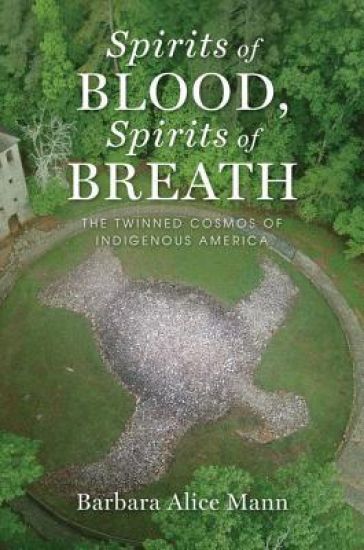
Before invasion, Turtle Island--or North America--was home to vibrant cultures that shared long-standing philosophical precepts. The most important and wide-spread of these was the view of reality as a collaborative binary known as the Twinned Cosmos of Blood and Breath. This binary system was built on the belief that neither half of the cosmos can exist without its twin; both halves are, therefore, necessary and good. Western anthropologists typically shorthand the Twinned Cosmos as "Sky and Earth," but this erroneously saddles it with Christian baggage and, worse, imposes a hierarchy that puts sky quite literally above earth. None of this Western ideology legitimately applies to traditional Indigenous American thought, which is about equal cooperation and the continual recreation of reality. Spirits of Blood, Spirits of Breath examines traditional historical concepts of spirituality among North American Indians both at and, to the extent it can be determined, before contact. In doing so, Barbara Mann rescues the authentically indigenous ideas from Western, and especially missionary, interpretations. In addition to early European source material, she uses Indian oral traditions, traced as much as possible to early sources, and Indian records, including pictographs, petroglyphs, bark books, and wampum. Moreover, Mann respects each Native culture as a discrete unit, rather than generalizing them as is often done in Western anthropology. To this end, she collates material in accordance with actual historical, linguistic, and traditional linkages among the groups at hand, with traditions clearly identified by group and, where recorded, by speaker. In this way she provides specialists and non-specialists alike a window into the seemingly lost, and often caricatured world of Indigenous American thought.
The Tainted Gift

The Tainted Gift

Barbara Alice Mann

Praeger Publishers Inc
2009
sidottu
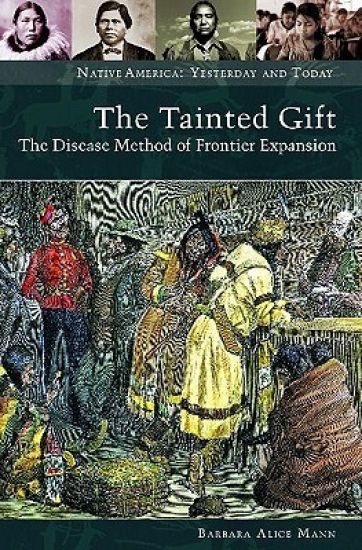
For the first time, an accomplished scholar offers a painstakingly researched examination of the United States' involvement in deliberate disease spreading among native peoples in the military conquest of the West. The speculation that the United States did infect Indian populations has long been a source of both outrage and skepticism. Now there is an exhaustively researched exploration of an issue that continues to haunt U. S.-Native American relations. Barbara Alice Mann's The Tainted Gift: The Disease Method of Frontier Expansion offers riveting accounts of four specific incidents: The 1763 smallpox epidemic among native peoples in Ohio during the French and Indian War; the cholera epidemic during the 1832 Choctaw removal; the 1837 outbreak of smallpox among the high plains peoples; and the alleged 1847 poisonings of the Cayuses in Oregon. Drawing on previously unavailable sources, Mann's work is the first to give one of the most controversial questions in U. S. history the rigorous scrutiny it requires.
George Washington's War on Native America

George Washington's War on Native America

Barbara Alice Mann

University of Nebraska Press
2009
pokkari
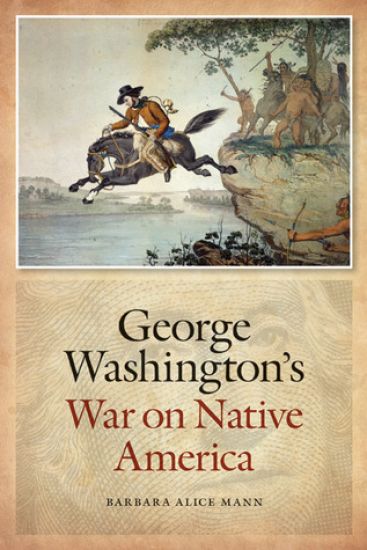
The Revolutionary War is ordinarily presented as a conflict exclusively between colonists and the British, fought along the northern Atlantic seacoast. George Washington's War on Native America recounts the tragic events on the forgotten western front of the American Revolution—a war fought against and ultimately won by Native America. Although history texts often erroneously present the Natives, primarily the Iroquois League and the Ohio Union, as "allies" (or lackeys) of the British, Native America was in fact working from its own agenda: to prevent settlers from invading the Old Northwest. Throughout the war, the unwavering goal of the Revolutionary Army, under George Washington, and its associated settler militias was to break the power of the Iroquois League, which had successfully held off invasion for the preceding two centuries, and the newly formed Ohio Union. To destroy the Natives who stood in the way of land seizure, Washington authorized a series of rampages intended to destroy the League and the Union by starvation. As a result, uncounted thousands of Natives perished from New York and Pennsylvania to Ohio. Barbara Alice Mann tells how, in the wake of the massive assaults, Native America nonetheless won the war in the West and managed to maintain control of the land west and north of the Allegheny–Ohio River systems.
Iroquoian Women

Iroquoian Women

Barbara Alice Mann; Paula Gunn Allen

Peter Lang Publishing Inc
2006
nidottu
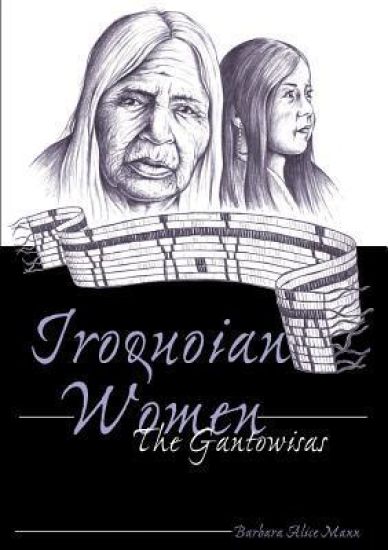
Iroquoian Women: The Gantowisas provides a thorough, organized look at the social, political, economic, and religious roles of women among the Iroquois, explaining their fit with the larger culture. Gantowisas means more than simply woman - gantowisas is woman acting in her official capacity as fire-keeping woman, faith-keeping woman, gift-giving woman; leader, counselor, judge; Mother of the People. This is the light in which the reader will find her in Iroquoian Women. Barbara Alice Mann draws upon worthy sources, be they early or modern, oral or written, to present a Native American point of view that insists upon accuracy, not only in raw reporting, but also in analysis. Iroquoian Women is the first book-length study to regard Iroquoian women as central and indispensable to Iroquoian studies.
George Washington's War on Native America

George Washington's War on Native America

Barbara Alice Mann

Praeger Publishers Inc
2005
sidottu
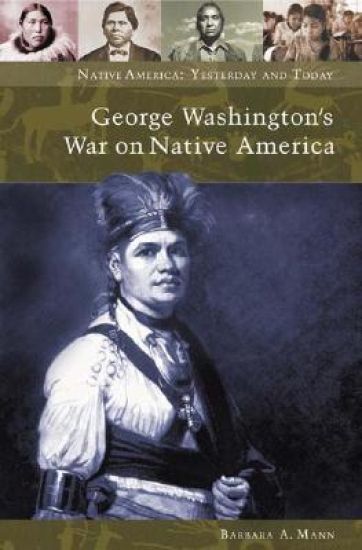
The Revolutionary War is ordinarily presented as a conflict exclusively between colonists and the British, fought along the northern Atlantic seacoast. This important work recounts the tragic events on the forgotten Western front of the American Revolution—a war fought against and ultimately won by Native America. The Natives, primarily the Iroquois League and the Ohio Union, are erroneously presented in history texts as allies (or lackeys) of the British, but Native America was working from its own internally generated agenda: to prevent settlers from invading the Old Northwest. Native America won the war in the West, holding the land west and north of the Allegheny-Ohio River systems. While the British may have awarded these lands to the colonists in the Treaty of Paris, the Native Americans did not concur. Throughout the war, the unwavering goal of the Revolutionary Army, under George Washington, and their associated settler militias was to break the power of the Iroquois League, which had successfully held off invasion for the preceding two centuries, and the newly formed Ohio Union. To destroy the Natives in the way of land seizure, Washington authorized a series of rampages intended to destroy the League and the Union by starvation. Food, livestock, homes, and trees were destroyed, first in the New York breadbaskets, then in the Ohio granaries—spreading famine across Native lands. Uncounted thousands of Natives perished from New York to Pennsylvania to Ohio. This book tells how, in the wake of the massive assaults, the Natives held back the American onslaught.
International Government Information and Country Information

International Government Information and Country Information

Andrea Morrison; Barbara Alice Mann

Oryx Press Inc
2004
sidottu
This is the only authoritative guide that offers a subject approach to the plentiful resources provided by international government organizations, national governments, and other foreign information sources. In addition to an overview section, 21 chapters cover rich resources of topical, statistical, and analytical information on agriculture and food; crime; health; human rights; laws and treaties; transportation; women and children; and more. Each chapter provides descriptions of Web sites, books, reports, and other important materials, and concludes with research strategies and tips on the most efficient ways to search for certain types of information. In addition to international and foreign government sources, this book covers resources from foreign organizations, foreign universities, and commercial publishers. Appendixes identify the acronyms and initialisms that are often used in place of international government organizations' full names; the organizations' Web site addresses are also listed. Students from high school to graduate level, researchers, and librarians will find this an important reference work.
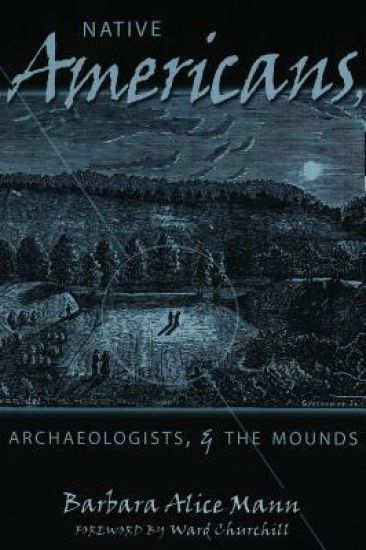
Native Americans, Archaeologists, and the Mounds

Native Americans, Archaeologists, and the Mounds

Barbara Alice Mann

Peter Lang Publishing Inc
2003
nidottu
Ever since European settlers stumbled upon the eighteenth-century mounds, explanations and interpretations of them - often ridiculous and seldom Native American - have appeared as sober scholarship. Today, the Native American Graves Protection and Repatriation Act of 1990 (NAGPRA) has intensified the debate over who owns the mounds - modern descendants of the Mound builders or Western archaeologists. Native Americans, Archaeologists, and the Mounds is the first cogent look at all the issues surrounding the mounds, their history, their preservation, and their interpretation. Using the traditions of those Natives descended from the Mound Builders as well as historical and archaeological evidence, Barbara Alice Mann placed the mounds in their native cultural context as she examines the fraught issues enveloping them in the twenty-first century.
Native American Speakers of the Eastern Woodlands

Native American Speakers of the Eastern Woodlands

Barbara Alice Mann

Praeger Publishers Inc
2001
sidottu

Halvin toimitettuna 117,70 €

This collection of essays examines, in context, eastern Native American speeches, which are translated and reprinted in their entirety. Anthologies of Native American orators typically focus on the rhetoric of western speakers but overlook the contributions of Eastern speakers. The roles women played, both as speakers themselves and as creators of the speeches delivered by the men, are also commonly overlooked. Finally, most anthologies mine only English-language sources, ignoring the fraught records of the earliest Spanish conquistadors and French adventurers. This study fills all these gaps and also challenges the conventional assumption that Native thought had little or no impact on liberal perspectives and critiques of Europe. Essays are arranged so that the speeches progress chronologically to reveal the evolving assessments and responses to the European presence in North America, from the mid-sixteenth century to the twentieth century. Providing a discussion of the history, culture, and oratory of eastern Native Americans, this work will appeal to scholars of Native American history and of communications and rhetoric. Speeches represent the full range of the woodland east and are taken from primary sources.
Encyclopedia of the Haudenosaunee (Iroquois Confederacy)

Encyclopedia of the Haudenosaunee (Iroquois Confederacy)

Bruce E. Johansen; Barbara Alice Mann

Greenwood Press
2000
sidottu
A comprehensive reference work on the Haudenosaunee (Iroquois Confederacy), containing over 200 entries covering Haudenosaunee history, present-day issues, and contributions to general North American culture. Haudenosaunee (People of the Longhouse) is the name the Iroquois use for their confederacy (Iroquois is the name given them by the French). This encyclopedia surveys the histories of the six constituent nations of the confederacy (Seneca, Cayuga, Onondaga, Oneida, Mohawk, and Tuscarora, adopted about 1725). Several entries also trace ways in which the practices of the Iroquois have filtered into general North American society.