Kirjojen hintavertailu – 12 903 735 kirjaa ja 27 kauppaa
Kirjailija
Barbara Baert
Kirjat ja teokset yhdessä paikassa: 8 kirjaa, julkaisuja vuosilta 2004–2026, suosituimpiin kuuluu Back to the Marshes. Vertaile teosten hintoja ja tarkista saatavuus suomalaisista kirjakaupoista.
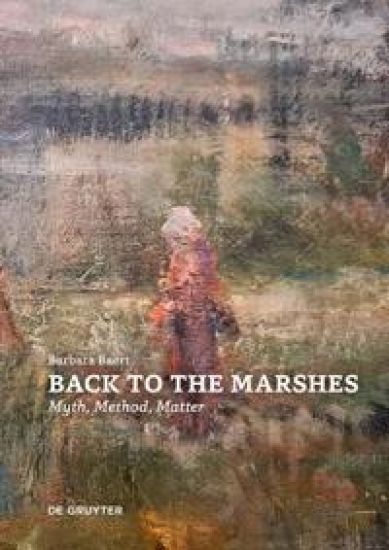
Back to the Marshesis the final volume in Barbara Baert’s tripartite study on the cultural impact of weather and environment, on the artistic symptoms of fertility and anxiety, and on the study of matter and medium. In this essay Baert explores the cosmological imagination, prehistoric graphemes, and the sensory experiences of marshes and wetlands, including their artistic significance for raw and biological materials such as clay, mud and fungi
Humankind has a special relationship with rain. The sensory experience of water falling from the heavens evokes feelings ranging from fear to gratitude and has inspired many works of art. Using unique and expertly developed art-historical case studies – from prehistoric cave paintings up to photography and cinema – this book casts new light on a theme that is both ecological and iconological, both natural and cultural-historical. Barbara Baert’s distinctive prose makes Looking Into the Rain. Magic, Moisture, Medium a profound reading experience, particularly at a moment when disruptions of the harmony among humans, animals, and nature affect all of us and the entire planet. Barbara Baert is Professor of Art History at KU Leuven. She teaches in the field of Iconology, Art Theory & Analysis, and Medieval Art. Her work links knowledge and questions from the history of ideas, cultural anthropology and philosophy, and shows great sensitivity to cultural archetypes and their symptoms in the visual arts.
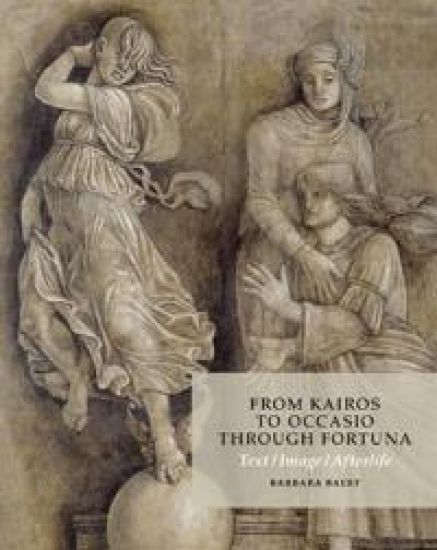
The author discusses the Mantuan fresco's key position in the iconographic Nachleben of the Kairos/Occasio figure, and the way the theme was accustomed in the Quattrocento and the transition from the Middle Ages to the Renaissance. The ancient Greeks had a name for the joy as well as the sorrow of an occasion that suddenly presents itself, but disappears just as swiftly: kairos, or in Latin occasio. Using the Mantua grisaille as starting point and leading motif, Barbara Baert guides us in her own intriguing way through the history of the representation of this figure in art. How did the archaic Greek Kairos model survive in the Quattrocento? Which appearances did Kairos take on along the way and how can we explain his mutations? The author shows us how the semantic and rhetorical expansion of the concept kairos/occasio brought about gender switches and conflations with other personifications of time and fate. Grasping the lock of hair of Kairos/Occasio, spinning the wheel of fortune of Tyche/Fortuna, acting as the mast of the ship and holding the billowing sails, she steers us through depictions of the motionlessness of the moment throughout history before dropping anchor in the fascinating vocabulary of Aby Warburg. During this journey, she invites us to go offshore looking for a new critical moment that presents itself as a powerful opening of possibilities.
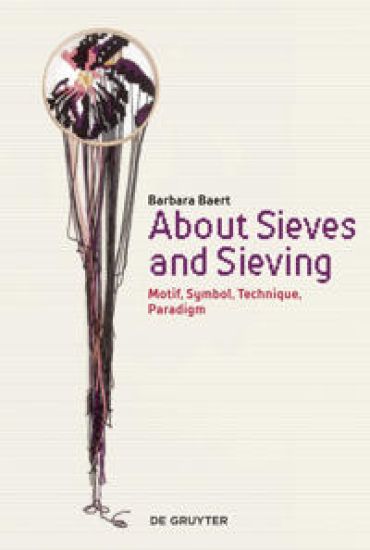
The sieve exhibits a wide-ranging symbolism that extends across art history, philosophy, anthropology, psychoanalysis, and gender studies. Barbara Baert looks at the sieve from an interdisciplinary perspective and from four different innovative methodological angles: as motif and symbol, as technique and as paradigm. The sieve as motif goes back to Roman stories the Vestal Virgins. In later times, their impermeable sieve, which - according to legend - they used to fetch water from the River Tiber, was iconographically transferred to Elisabeth I as a sign of her integrity. Furthermore, the long durée life of sieves as symbolic-technical utilitarian object is investigated: in examples from the Jewish folklore, the Berber culture, and ancient Egypt.
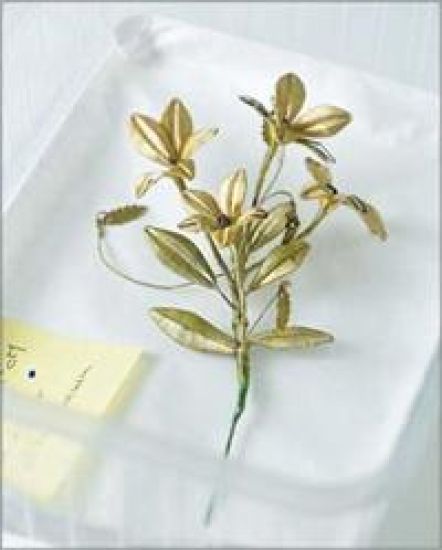
Artist Berlinde De Bruyckere enters into a sensitive dialogue with the sixteenth-century Enclosed Gardens. Published to accompany an exhibition at Museum Hof Van Busleyden, Mechelen, 15 December - 12 May, 2019. "I mould and cut out large petal shapes that correspond to the size of my body and carefully mount them on the oak frame. I repeat this process until the 'lily' appears. The warm petals weigh heavily upon each other. Outstretched and melted together, they enforce their final shape: It almost seemed a lily. [...] I connect the petals of the lilies to images of skin, of flesh; their fragrance to lust and pleasure; their unsavoury smell while wilting to ephemerality and pain." Berlinde De Bruyckere Belgian artist Berlinde De Bruyckere's most recent work is inspired by the sixteenth-century artefacts known as the Enclosed Gardens. The Gardens are small wooden cabinets filled with a profusion of artefacts, ranging from handmade sculptures to flowers and animals in silk, and including wax medallions and fabric-wrapped bone relics. De Bruyckere senses a natural affinity between her work and these wonderful microcosms, which were part of the spiritual world of the sisters of the Hospital of Our Lady in Mechelen, who crafted them with the utmost care and devotion. With her series 'It Almost Seemed a lily', De Bruyckere enters into a dialogue with the seven Enclosed Gardens of Mechelen, which are now recognised as masterpieces. She has created monumental wooden frames that house the tender silhouette of a flower, the latter of which is composed of a multitude of materials that can conceal as much as they reveal. The imposing dimensions of the frames contrast with the fragility of their interiors. Just as the sumptuous Gardens stimulate the imagination and suggest a paradisiacal 'garden', the material stratification and interwoven contrasts in De Bruyckere's works also evoke another time and space: a Utopia. De Bruyckere is showing her new series for the first time in an exhibition of the same name in the Hof van Busleyden Museum in Mechelen, where the Enclosed Gardens are displayed (15 December 2018 - 12 May 2019). To mark the occasion, the artist has created a luxurious portfolio in which her work is linked both visually and conceptually to the Gardens. Evocative images by top photographer Mirjam Devriendt are interwoven with poetic texts by Berlinde De Bruyckere, Barbara Baert (KU Leuven) and Lieve Watteeuw (KU Leuven). The portfolio contains six removable sections that can be progressively opened and unravelled as though an Enclosed Garden. Text in English and Dutch.
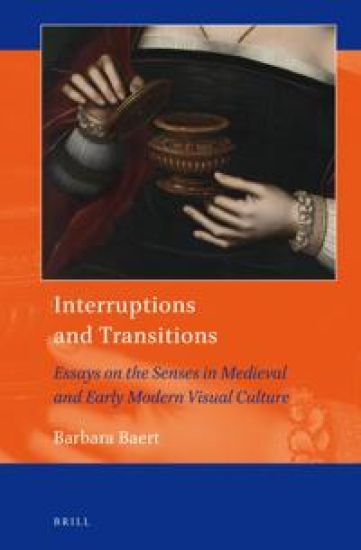
Interruptions and Transitions: Essays on the Senses in Medieval and Early Modern Visual Culture is an anthology of the most recent works by Barbara Baert, discussing the connection between the experiences of the senses in the medieval and early modern visual culture, the hermeneutics of imagery, and the limits and possibilities of contemporary Art Sciences. The six chapters include Pentecost, Noli me tangere, the woman with an issue of blood, the Johannesschüssel, the dancing Salome, and the role of the wind. The reader is shown a medieval and early modern visual culture as a history of artistic solutions, as the fascinating approach between biblical texts, plastic imagination, and the art-scientific métier. This makes him a privileged guest in a unique in-between space where humans and their artistic expression can meet existentially.
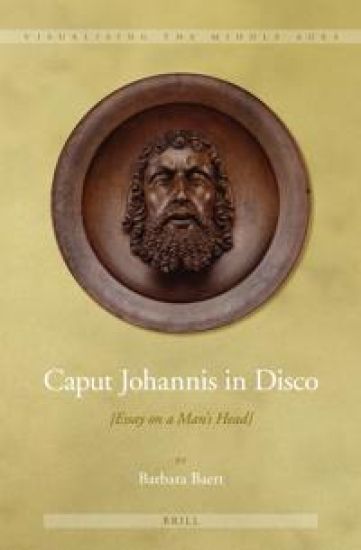
During the Middle Ages, the head of St John the Baptist was widely venerated. According to the biblical text, John was beheaded at the order of Herod’s stepdaughter, who is traditionally given the name Salome. His head was later found in Jerusalem. Legends concerning the discovery of this relic form the basis of an iconographic type in which the head of St John the Baptist is represented as an “object.” The phenomenon of the Johannesschüssel is the subject of this essay. Little is known about how exactly these objects functioned. How are we to understand this fascination with horror, death and decapitation? What phantasms does the artifact channel? The present study offers the unique key to the Johannesschüssel as artifact, phenomenon, phantasm and medium.
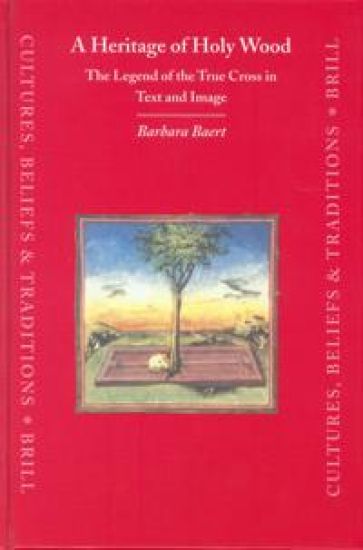
In the fourth century the idea arose that the Cross on which Christ was crucified had been found by Helena, mother of Emperor Constantine. Thus began a legend that would grow and flourish throughout the Middle Ages and cause the diffusion of countless splinters of holy wood. And where there is wood, there was once a tree. Could it be that the Cross was made from that most noble species, the Tree of Life? So, gathering characters along the way, the legend evolved into a tale that stretches from the Creation to the End of Time. A Heritage of Holy Wood is the first reconstruction of the iconographic and literary tradition of the Legend of the True Cross. Its broad scope encompasses relic cults, pilgrimages, travellers’ tales and the Tree of Life and involves Church Fathers, crusader kings, Teutonic Knights and mendicant orders, all of which influenced the legend’s depiction from its earliest representation in manuscripts, reliquaries and altarpieces, to the great monumental cycles of the high Middle Ages. If the holy wood was the medium of medieval memory, A Heritage of Holy Wood reveals the growth rings of fifteen centuries of imagery.