Kirjojen hintavertailu – 12 903 725 kirjaa ja 27 kauppaa

Kirjailija

Barbara J Little

Kirjat ja teokset yhdessä paikassa: 12 kirjaa, julkaisuja vuosilta 2007–2023, suosituimpiin kuuluu National Capital Area Archeological Overview and Survey Plan. Vertaile teosten hintoja ja tarkista saatavuus suomalaisista kirjakaupoista.

Nimi esiintyy myös muodoissa: Barbara J. Little

12 kirjaa

Kirjojen julkaisuvuodet: 2007–2023.

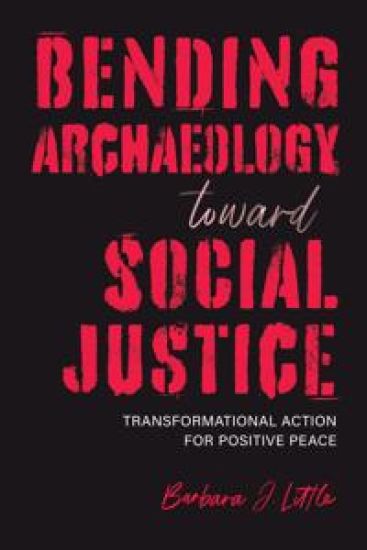
Bending Archaeology toward Social Justice

Bending Archaeology toward Social Justice

Barbara J. Little

THE UNIVERSITY OF ALABAMA PRESS
2023
sidottu
In this time of Black Lives Matter, the demands of NAGPRA, and climate crises, the field of American archaeology needs a radical transformation. It has been largely a white, male, privileged domain that replicates an entrenched patriarchal, colonial, and capitalist system. In Bending Archaeology toward Social Justice, Barbara J. Little explores the concepts and actions required for such a change, looking to peace studies, anthropology, sociology, social justice activism, and the achievements of community-based archaeology for helpful approaches in keeping with the UN Sustainable Development Goals. She introduces an analytic model that uses the strengths of archaeology to destabilize violence and build peace. As Little explains, the Diachronic Transformational Action model and the peace/violence triad of interconnected personal, cultural, and structural domains of power can help disrupt the injustice of all forms of violence. Diachronic connects the past to the present to understand how power worked in the past and works now. Transformational influences power now by disrupting the stability of the violence triad. Action refers to collaborative work to diagnose power relations and transform toward social justice. Using this framework, Little confronts the country’s founding and myth of liberty and justice for all, as well as the American Dream. She also examines whiteness, antiracism, privilege, and intergenerational trauma, and offers white archaeologists concepts to grapple with their own racialized identities and to consider how to relinquish white supremacy. Archaeological case studies examine cultural violence and violent direct actions against women, Indigenous peoples, African Americans, and Japanese Americans, while archaeologies of poverty, precarity, and labor are used to show how archaeologists have helped expose the roots of these injustices. Because climate justice is integral to social justice, Little showcases insights that archaeology can bring to bear on the climate crisis and how lessons from the past can inform direct actions today. Finally, Little invites archaeologists to embrace inquiry and imagination so that they can both imagine and achieve the positive peace of social justice.
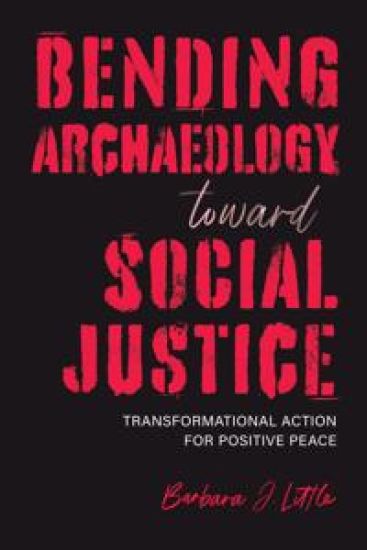
Bending Archaeology toward Social Justice

Bending Archaeology toward Social Justice

Barbara J. Little

THE UNIVERSITY OF ALABAMA PRESS
2023
nidottu
In this time of Black Lives Matter, the demands of NAGPRA, and climate crises, the field of American archaeology needs a radical transformation. It has been largely a white, male, privileged domain that replicates an entrenched patriarchal, colonial, and capitalist system. In Bending Archaeology toward Social Justice, Barbara J. Little explores the concepts and actions required for such a change, looking to peace studies, anthropology, sociology, social justice activism, and the achievements of community-based archaeology for helpful approaches in keeping with the UN Sustainable Development Goals. She introduces an analytic model that uses the strengths of archaeology to destabilize violence and build peace. As Little explains, the Diachronic Transformational Action model and the peace/violence triad of interconnected personal, cultural, and structural domains of power can help disrupt the injustice of all forms of violence. Diachronic connects the past to the present to understand how power worked in the past and works now. Transformational influences power now by disrupting the stability of the violence triad. Action refers to collaborative work to diagnose power relations and transform toward social justice. Using this framework, Little confronts the country’s founding and myth of liberty and justice for all, as well as the American Dream. She also examines whiteness, antiracism, privilege, and intergenerational trauma, and offers white archaeologists concepts to grapple with their own racialized identities and to consider how to relinquish white supremacy. Archaeological case studies examine cultural violence and violent direct actions against women, Indigenous peoples, African Americans, and Japanese Americans, while archaeologies of poverty, precarity, and labor are used to show how archaeologists have helped expose the roots of these injustices. Because climate justice is integral to social justice, Little showcases insights that archaeology can bring to bear on the climate crisis and how lessons from the past can inform direct actions today. Finally, Little invites archaeologists to embrace inquiry and imagination so that they can both imagine and achieve the positive peace of social justice.

Archaeology, Heritage, and Civic Engagement

Archaeology, Heritage, and Civic Engagement

Barbara J Little; Paul A Shackel

Left Coast Press Inc
2014
nidottu
The definition of “public archaeology” has expanded in recent years to include archaeologists’ collaborations with and within communities and activities in support of education, civic renewal, peacebuilding, and social justice. Barbara Little and Paul Shackel, long-term leaders in the growth of a civically-engaged, relevant archaeology, outline a future trajectory for the field in this concise, thoughtful volume. Drawing from the archaeological study of race and labor, among other examples, the authors explore this crucial opportunity and responsibility, then point the way for the discipline to contribute to the contemporary public good.
Archaeology, Heritage, and Civic Engagement

Archaeology, Heritage, and Civic Engagement

Barbara J Little; Paul A Shackel

Left Coast Press Inc
2014
sidottu
The definition of “public archaeology” has expanded in recent years to include archaeologists’ collaborations with and within communities and activities in support of education, civic renewal, peacebuilding, and social justice. Barbara Little and Paul Shackel, long-term leaders in the growth of a civically-engaged, relevant archaeology, outline a future trajectory for the field in this concise, thoughtful volume. Drawing from the archaeological study of race and labor, among other examples, the authors explore this crucial opportunity and responsibility, then point the way for the discipline to contribute to the contemporary public good.
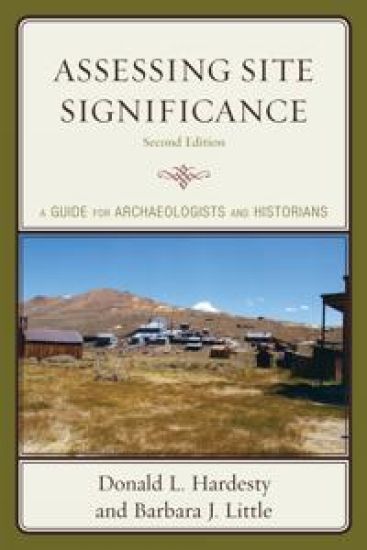
Assessing Site Significance

Assessing Site Significance

Donald L. Hardesty; Barbara J. Little

AltaMira Press,U.S.
2009
nidottu
Assessing Site Significance is an invaluable resource for archaeologists and others who need guidance in determining whether sites are eligible for listing in the National Register of Historic Places (NRHP). Because the register's eligibility criteria were largely developed for standing sites, it is difficult to know in any particular case whether a site known primarily through archaeological work has sufficient "historical significance" to be listed. Hardesty and Little address these challenges, describing how to file for NRHP eligibility and how to determine the historical significance of archaeological properties. This second edition brings everything up to date, and includes new material on 17th- and 18th-century sites, traditional cultural properties, shipwrecks, Japanese internment camps, and military properties.
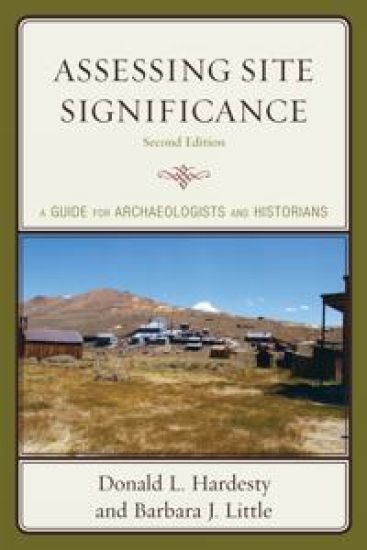
Assessing Site Significance

Assessing Site Significance

Donald L. Hardesty; Barbara J. Little

AltaMira Press,U.S.
2009
sidottu
Assessing Site Significance is an invaluable resource for archaeologists and others who need guidance in determining whether sites are eligible for listing in the National Register of Historic Places (NRHP). Because the register's eligibility criteria were largely developed for standing sites, it is difficult to know in any particular case whether a site known primarily through archaeological work has sufficient 'historical significance' to be listed. Hardesty and Little address these challenges, describing how to file for NRHP eligibility and how to determine the historical significance of archaeological properties. This second edition brings everything up to date, and includes new material on 17th- and 18th-century sites, traditional cultural properties, shipwrecks, Japanese internment camps, and military properties.
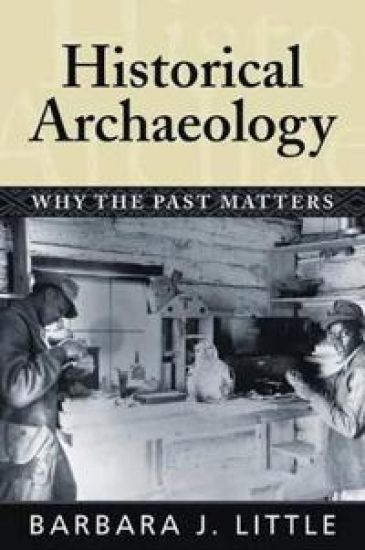
Historical Archaeology

Historical Archaeology

Barbara J Little

Left Coast Press Inc
2007
sidottu
What is historical archaeology and why is it important? Well-known archaeologist Barbara Little addresses these key questions for introductory students in this concise, inexpensive, and well-written text. Little covers the goals of historical archaeological work, the kinds of questions it asks, and the ethical and political concerns it raises. She shows what historical archaeology can provide that neither of its parent disciplines can offer alone. Little offers brief snapshots of key American sites: Jamestown, Mission San Luis, West Oakland, the African American Burial Ground, and the Garbage Project, among others. And she shows how historical archaeology is inextricably linked to public education, justice issues, and our collective understanding of the past. As an introductory guide for historical archaeology and similar courses, or as thought-provoking reading for professionals, this volume is unmatched in quality and scope.
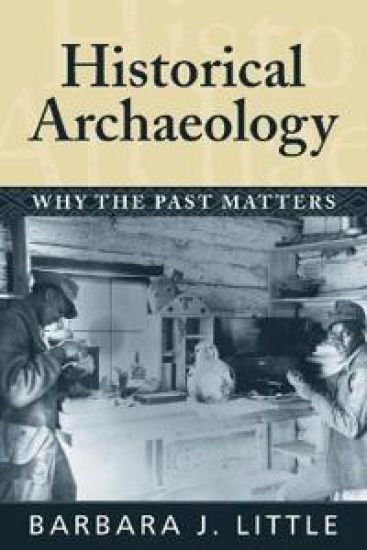
Historical Archaeology

Historical Archaeology

Barbara J Little

Left Coast Press Inc
2007
nidottu
What is historical archaeology and why is it important? Well-known archaeologist Barbara Little addresses these key questions for introductory students in this concise, inexpensive, and well-written text. Little covers the goals of historical archaeological work, the kinds of questions it asks, and the ethical and political concerns it raises. She shows what historical archaeology can provide that neither of its parent disciplines can offer alone. Little offers brief snapshots of key American sites: Jamestown, Mission San Luis, West Oakland, the African American Burial Ground, and the Garbage Project, among others. And she shows how historical archaeology is inextricably linked to public education, justice issues, and our collective understanding of the past. As an introductory guide for historical archaeology and similar courses, or as thought-provoking reading for professionals, this volume is unmatched in quality and scope.