Kirjojen hintavertailu – 12 903 727 kirjaa ja 27 kauppaa

Kirjailija

Barbara Mittler

Kirjat ja teokset yhdessä paikassa: 6 kirjaa, julkaisuja vuosilta 1997–2020, suosituimpiin kuuluu Dangerous Tunes: The Politics of Chinese Music in Hong Kong, Taiwan, and the People's Republic of China Since 1949. Vertaile teosten hintoja ja tarkista saatavuus suomalaisista kirjakaupoista.

6 kirjaa

Kirjojen julkaisuvuodet: 1997–2020.

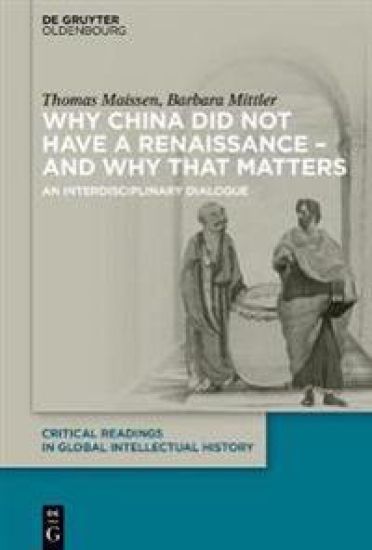
Why China did not have a Renaissance – and why that matters

Why China did not have a Renaissance – and why that matters

Thomas Maissen; Barbara Mittler

De Gruyter Oldenbourg
2020
isokokoinen pokkari
Concepts of historical progress or decline and the idea of a cycle of historical movement have existed in many civilizations. In spite of claims that they be transnational or even universal, periodization schemes invariably reveal specific social and cultural predispositions. Our dialogue, which brings together a Sinologist and a scholar of early modern History in Europe, considers periodization as a historical phenomenon, studying the case of the “Renaissance.” Understood in the tradition of J. Burckhardt, who referred back to ideas voiced by the humanists of the 14th and 15th centuries, and focusing on the particularities of humanist dialogue which informed the making of the “Renaissance” in Italy, our discussion highlights elements that distinguish it from other movements that have proclaimed themselves as “r/Renaissances,” studying, in particular, the Chinese Renaissance in the early 20th century. While disagreeing on several fundamental issues, we suggest that interdisciplinary and interregional dialogue is a format useful to addressing some of the more far-reaching questions in global history, e.g. whether and when a periodization scheme such as “Renaissance” can fruitfully be applied to describe non-European experiences.

Why China did not have a Renaissance – and why that matters

Why China did not have a Renaissance – and why that matters

Thomas Maissen; Barbara Mittler

De Gruyter Oldenbourg
2018
sidottu
Concepts of historical progress or decline and the idea of a cycle of historical movement have existed in many civilizations. In spite of claims that they be transnational or even universal, periodization schemes invariably reveal specific social and cultural predispositions. Our dialogue, which brings together a Sinologist and a scholar of early modern History in Europe, considers periodization as a historical phenomenon, studying the case of the “Renaissance.” Understood in the tradition of J. Burckhardt, who referred back to ideas voiced by the humanists of the 14th and 15th centuries, and focusing on the particularities of humanist dialogue which informed the making of the “Renaissance” in Italy, our discussion highlights elements that distinguish it from other movements that have proclaimed themselves as “r/Renaissances,” studying, in particular, the Chinese Renaissance in the early 20th century. While disagreeing on several fundamental issues, we suggest that interdisciplinary and interregional dialogue is a format useful to addressing some of the more far-reaching questions in global history, e.g. whether and when a periodization scheme such as “Renaissance” can fruitfully be applied to describe non-European experiences.
A Continuous Revolution

A Continuous Revolution

Barbara Mittler

Harvard University, Asia Center
2016
nidottu
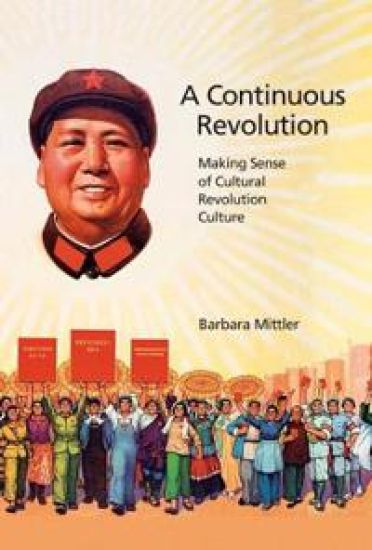
Cultural Revolution Culture, often denigrated as nothing but propaganda, was liked not only in its heyday but continues to be enjoyed today. A Continuous Revolution sets out to explain its legacy. By considering Cultural Revolution propaganda art—music, stage works, prints and posters, comics, and literature—from the point of view of its longue durée, Barbara Mittler suggests it was able to build on a tradition of earlier art works, and this allowed for its sedimentation in cultural memory and its proliferation in contemporary China. Taking the aesthetic experience of the Cultural Revolution (1966–1976) as her base, Mittler juxtaposes close readings and analyses of cultural products from the period with impressions given in a series of personal interviews conducted in the early 2000s with Chinese from diverse class and generational backgrounds. By including much testimony from these original voices, Mittler illustrates the extremely multifaceted and contradictory nature of the Cultural Revolution, both in terms of artistic production and of its cultural experience.
A Continuous Revolution

A Continuous Revolution

Barbara Mittler

Harvard University, Asia Center
2013
sidottu
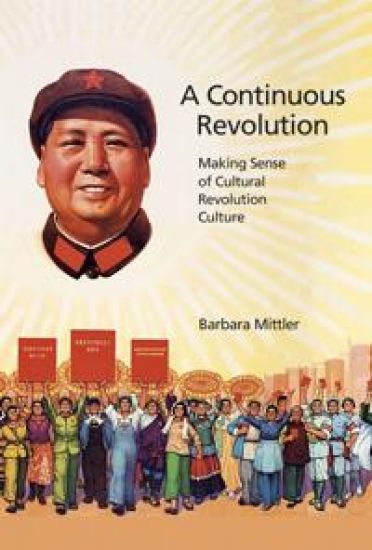
Cultural Revolution Culture, often denigrated as nothing but propaganda, was liked not only in its heyday but continues to be enjoyed today. A Continuous Revolution sets out to explain its legacy. By considering Cultural Revolution propaganda art—music, stage works, prints and posters, comics, and literature—from the point of view of its longue durée, Barbara Mittler suggests it was able to build on a tradition of earlier art works, and this allowed for its sedimentation in cultural memory and its proliferation in contemporary China. Taking the aesthetic experience of the Cultural Revolution (1966–1976) as her base, Mittler juxtaposes close readings and analyses of cultural products from the period with impressions given in a series of personal interviews conducted in the early 2000s with Chinese from diverse class and generational backgrounds. By including much testimony from these original voices, Mittler illustrates the extremely multifaceted and contradictory nature of the Cultural Revolution, both in terms of artistic production and of its cultural experience.