Kirjojen hintavertailu – 12 903 735 kirjaa ja 27 kauppaa

Kirjailija

Barbara W. Fash

Kirjat ja teokset yhdessä paikassa: 3 kirjaa, julkaisuja vuosilta 2006–2022, suosituimpiin kuuluu Precolumbian Water Management. Vertaile teosten hintoja ja tarkista saatavuus suomalaisista kirjakaupoista.

3 kirjaa

Kirjojen julkaisuvuodet: 2006–2022.

Precolumbian Water Management

Precolumbian Water Management

Lisa J. Lucero; Barbara W. Fash

University of Arizona Press
2006
sidottu
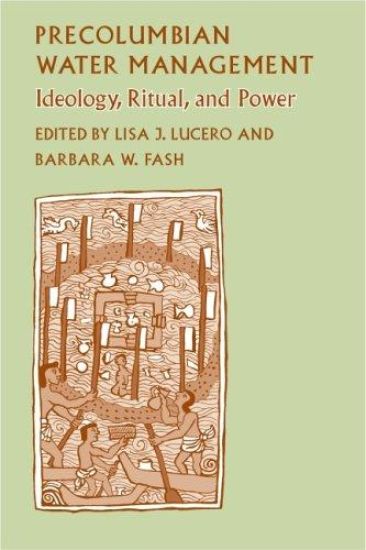
Among ancient Mesoamerican and Southwestern peoples, water was as essential as maize for sustenance and was a driving force in the development of complex society. Control of water shaped the political, economic, and religious landscape of the ancient Americas, yet it is often overlooked in Precolumbian studies. Now one volume offers the latest thinking on water systems and their place within the ancient physical and mental language of the region. Precolumbian Water Management examines water management from both economic and symbolic perspectives. Water management facilities, settlement patterns, shrines, and water-related imagery associated with civic-ceremonial and residential architecture provide evidence that water systems pervade all aspects of ancient society. Through analysis of such data, the contributors seek to combine an understanding of imagery and the religious aspects of water with its functional components, thereby presenting a unified perspective of how water was conceived, used, and represented in ancient greater Mesoamerica. The collection boasts broad chronological and geographical coveragefrom the irrigation networks of Teotihuacan to the use of ritual water technology at Casas Grandes that shows how procurement and storage systems were adapted to local conditions. The articles consider the mechanisms that were used to build upon the sacredness of water to enhance political authority through time and space and show that water was not merely an essential natural resource but an important spiritual one as well, and that its manipulation was socially far more complex than might appear at first glance. As these papers reveal, an understanding of materials associated with water can contribute much to the ways that archaeologists study ancient cultural systems. Precolumbian Water Management underscores the importance of water management research and the need to include it in archaeological projects of all types.
Corpus of Maya Hieroglyphic Inscriptions, Volume 3: Part 4: Yaxchilan

Corpus of Maya Hieroglyphic Inscriptions, Volume 3: Part 4: Yaxchilan

Barbara W. Fash; Alexandre Tokovinine; Ian Graham

PEABODY MUSEUM OF ARCHAEOLOGY ETHNOLOGY,U.S.
2022
nidottu
The goal of the Corpus of Maya Hieroglyphic Inscriptions is to document in photographs and detailed line drawings all known Maya inscriptions and their associated figurative art. As monuments continue to be discovered, the CMHI series is ongoing and far from complete. It has been instrumental in the remarkable success of the ongoing process of deciphering Maya writing, making available hundreds of texts to epigraphers working around the world, in addition to assisting studies among Maya communities and scholars. This folio-sized volume documents thirty stelae at Yaxchilan, a Classic Maya city located on the Usumacinta River in the state of Chiapas, Mexico. Precisely rendered line drawings and three-dimensional scans bring out details of the monuments that would otherwise be invisible to the naked eye. These illustrations are accompanied by descriptions of the stelae in English and Spanish.
The Copan Sculpture Museum

The Copan Sculpture Museum

Barbara W. Fash

Peabody Museum of Archaeology Ethnology,U.S.
2011
nidottu
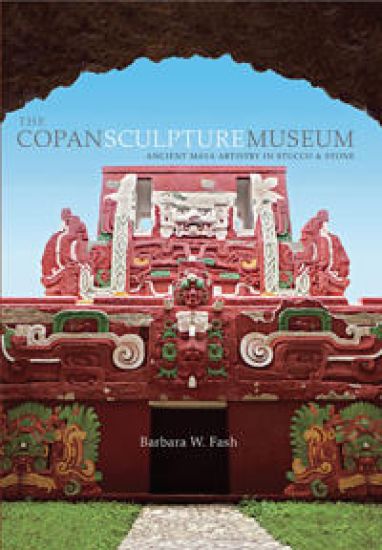
The Copan Sculpture Museum in western Honduras features the extraordinary stone carvings of the ancient Maya city known as Copan. The city's sculptors produced some of the finest and most animated buildings and temples in the Maya area, in addition to stunning monolithic statues and altars. The ruins of Copan were named a UNESCO World Heritage site in 1980, and more than 150,000 national and international tourists visit the ancient city each year. Opened in 1996, the Copan Sculpture Museum was initiated as an international collaboration to preserve Copan's original stone monuments. Its exhibits represent the best-known examples of building faAades and sculptural achievements from the ancient kingdom of Copan. The creation of this on-site museum involved people from all walks of life: archaeologists, artists, architects, and local craftspeople. Today it fosters cultural understanding and promotes Hondurans' identity with the past. In The Copan Sculpture Museum, Barbara Fash--one of the principle creators of the museum--tells the inside story of conceiving, designing, and building a local museum with global significance. Along with numerous illustrations and detailed archaeological context for each exhibit in the museum, the book provides a comprehensive introduction to the history and culture of the ancient Maya and a model for working with local communities to preserve cultural heritage.