Kirjojen hintavertailu – 12 903 735 kirjaa ja 27 kauppaa

Kirjailija

Barney Warf

Kirjat ja teokset yhdessä paikassa: 17 kirjaa, julkaisuja vuosilta 1995–2026, suosituimpiin kuuluu e-Government in Asia:Origins, Politics, Impacts, Geographies. Vertaile teosten hintoja ja tarkista saatavuus suomalaisista kirjakaupoista.

17 kirjaa

Kirjojen julkaisuvuodet: 1995–2026.

e-Government in Asia:Origins, Politics, Impacts, Geographies

e-Government in Asia:Origins, Politics, Impacts, Geographies

Barney Warf

Chandos Publishing (Oxford) Ltd
2016
sidottu
E-Government in Asia offers a thorough examination of e-governance in Asia, including the uses of the Internet to mediate interactions between Asian governments and their citizens. The book examines how the Internet is reshaping these interactions in the region and summarizes the nature of e-government, the growth of the Internet in Asia, issues of the digital divide, and how the Internet is affecting the ways in which public services are provided, how Asians acquire information, and other issues.
Urban Geography

Urban Geography

Barney Warf

ELSEVIER SCIENCE PUBLISHING CO INC
2026
nidottu
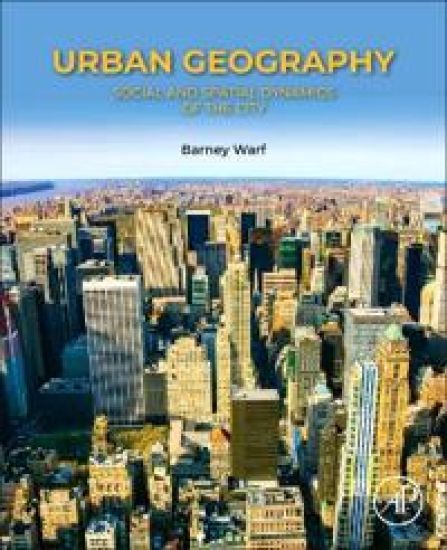
Urban Geography: Social and Spatial Dynamics of the City is an essential introductory textbook for urban geography from an urban political economy perspective. It lays special emphasis on the dynamics of capitalist cities, exploring the complex politics of inequality in an engaging and approachable way. The book addresses a wide range of topics concerned with both production and social reproduction in the city and explores both social issues such as poverty and inequality as well as environmental issues such as climate change. The initial chapters of the book make a case for why cities are such an important locus of study for urban geography and traces the origins and historical development of cities globally. The textbook provides a detailed overview of the effects of the industrial revolution on the city and examines the historical geography of the US. From here, the subsequent chapters review the urban economy and urban hierarchies, engaging with questions of urban residential space, segregation, social ecology, and gentrification. The relationship between the state and the urban structure is investigated, as well as the issues of environmental problems, air pollution, climate change and water shortage. Finally, urbanization in the developing world is examined considering the legacies of colonialism and formal and informal urban economies. This textbook is an essential resource for upper-level undergraduate students in geography and environmental science and non-science majors engaging with urban geography within the social sciences. It is also useful for professionals in the field of urban planning, environmental science, and architecture. This textbook contains study questions as additional resources for students and instructors.
Economic Geography

Economic Geography

Barney Warf

BLOOMSBURY PUBLISHING PLC
2025
nidottu
This core text on economic geography from acclaimed scholar Barney Warf provides students an accessible, balanced, and concise overview of why location matters in business and economics. Warf puts capitalism in historical and contextual perspective and examines producers and industry as well as consumption.
Economic Geography

Economic Geography

Barney Warf

BLOOMSBURY PUBLISHING PLC
2025
sidottu
This core text on economic geography from acclaimed scholar Barney Warf provides students an accessible, balanced, and concise overview of why location matters in business and economics. Warf puts capitalism in historical and contextual perspective and examines producers and industry as well as consumption.
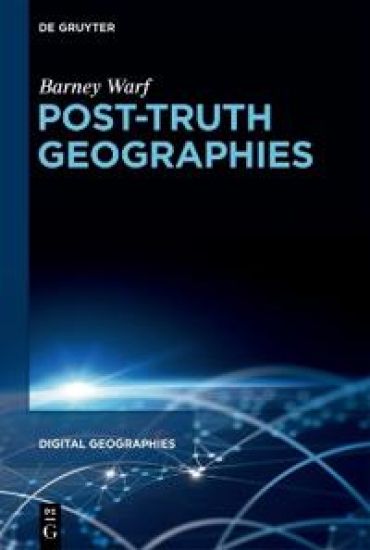
Post-Truth Geographies

Post-Truth Geographies

Barney Warf

De Gruyter
2024
isokokoinen pokkari
This book explores the geographical dimensions and implications of the post-truth era. Opening with a defense of the Enlightenment and the continued significance of science, objectivity, and truth, it then provides three key perspectives on the concept: The first is a philosophical analysis of post-truth. Social theory in various forms has sutured knowledge and power, in the process relativizing the nature of truth. This process reaches its apogee under post-modernism, which questions the very nature of truth itself. The second is the examination of the historical origins and development of the post-truth world. While post-truth has a history that can be traced back to the 18th and 19th centuries, more recently it has growth prolifically through the use of social media. The book examines post-truth as it appears in the yellow journalism of the Hearst newspapers, Holocaust denial, and contemporary attacks on science itself (e.g., the anti-vaccine movement, denial of evolution). Post-truth becomes a central issue in Western politics following Brexit and the election of Donald Trump, who uses it frequently to advance a reactionary political agenda. Russian hackers weaponize it to interfere in the politics of Europe and the U. S. Fox News and other right-wing outlets also play a central role. One result is the proliferation of unfounded conspiracy theories such as QAnon. Today, autocrats and dictators the world over use fake news to maintain their power. Finally, this book links the rise of a post-truth society to the dynamics of contemporary economic geography. Knowledge-intensive capitalism has greatly elevated the significance of symbolic workers or the creative class. Geographically, contemporary capitalism has accentuated the agglomeration of producer services in large urban areas in which such workers labor. Conversely, rural areas and small towns have largely become repositories of the undereducated, and thus are more susceptible to fake news.
Post-Truth Geographies

Post-Truth Geographies

Barney Warf

De Gruyter
2023
sidottu
This book explores the geographical dimensions and implications of the post-truth era. Opening with a defense of the Enlightenment and the continued significance of science, objectivity, and truth, it then provides three key perspectives on the concept: The first is a philosophical analysis of post-truth. Social theory in various forms has sutured knowledge and power, in the process relativizing the nature of truth. This process reaches its apogee under post-modernism, which questions the very nature of truth itself. The second is the examination of the historical origins and development of the post-truth world. While post-truth has a history that can be traced back to the 18th and 19th centuries, more recently it has growth prolifically through the use of social media. The book examines post-truth as it appears in the yellow journalism of the Hearst newspapers, Holocaust denial, and contemporary attacks on science itself (e.g., the anti-vaccine movement, denial of evolution). Post-truth becomes a central issue in Western politics following Brexit and the election of Donald Trump, who uses it frequently to advance a reactionary political agenda. Russian hackers weaponize it to interfere in the politics of Europe and the U. S. Fox News and other right-wing outlets also play a central role. One result is the proliferation of unfounded conspiracy theories such as QAnon. Today, autocrats and dictators the world over use fake news to maintain their power. Finally, this book links the rise of a post-truth society to the dynamics of contemporary economic geography. Knowledge-intensive capitalism has greatly elevated the significance of symbolic workers or the creative class. Geographically, contemporary capitalism has accentuated the agglomeration of producer services in large urban areas in which such workers labor. Conversely, rural areas and small towns have largely become repositories of the undereducated, and thus are more susceptible to fake news.
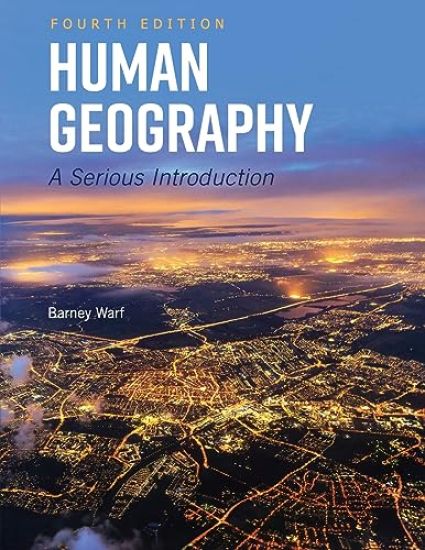
Human Geography

Human Geography

Barney Warf

Cognella, Inc
2023
pokkari
Human Geography: A Serious Introduction gives students a thorough, rigorous grounding in the subject and its historical, economic, political, cultural, and urban dimensions. The book addresses early cultures, languages, religions, the rise of capitalism, and globalisation as components of human geographical systems. Students read about developed and underdeveloped societies, population, political geography, urban geography, agriculture, manufacturing, and services. Each chapter includes a preview of the main points, a post-reading summary, a glossary of key terms, and study questions to be used for in-class discussions or as writing assignments. The fourth edition features a new chapter on economic geography concerned with industrial agriculture, manufacturing, and services. It includes refreshed statistics and figures regarding world populations, groups, and geography to provide students with the most up-to-date information possible. It also contains new data on the COVID-19 pandemic and its effects on world geography. By reading Human Geography, students gain a historically contextualised understanding of how the world's geographies have been formed, from hunting and gathering societies to cyberspace. The book is an idea resource for freshman-level human geography courses.
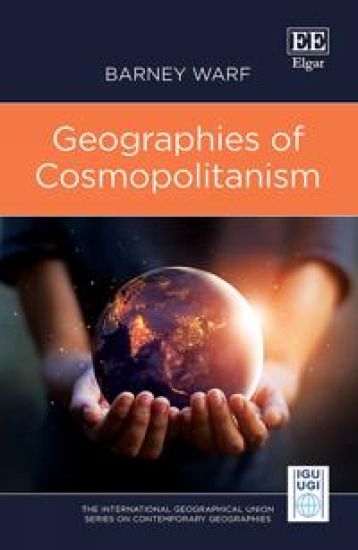
Geographies of Cosmopolitanism

Geographies of Cosmopolitanism

Barney Warf

Edward Elgar Publishing Ltd
2021
sidottu
Invigorating and timely, this book provides a thorough overview of the geographies of cosmopolitanism, an ethical and political philosophy that views humanity as one community. Barney Warf charts the origins and developments of this line of thought, exploring how it has changed over time, acquiring many variations along the way. Offering a comprehensive account of the theory and practice of cosmopolitanism at multiple spatial scales, chapters note how and why cosmopolitans reject the nation-state and nationalism and view borders as artificial. The book addresses the intersections between cosmopolitanism and geography, including care-giving and relational space. It examines key contemporary issues, including globalization, negotiating the post-Westphalian political order, the United Nations, global citizenship, immigration, refugees and sanctuary cities. Particular focus is also given to cosmopolitanism in everyday life, including education, tourism, consumption and veganism. Analysing cosmopolitanism in an interdisciplinary manner, Geographies of Cosmopolitanism will be an interesting read for sociology, human geography and political science scholars. It will also appeal to philosophy and social science students more broadly who are keen to understand this approach to social justice and human rights.
Global Corruption from a Geographic Perspective

Global Corruption from a Geographic Perspective

Barney Warf

Springer Nature Switzerland AG
2019
sidottu
This monograph explores the nature of corruption around the world from a geographic perspective. It focuses on historical context and cultural factors. Readers will learn that though corruption is pervasive, geography greatly shapes its character. This book will offer a better understanding of the level of corrupt activity in any given country. The book analyzes an array of countries and regions. Coverage ranges from democratic societies, where corruption is low due to high rates of literacy and a free press, to the most corrupt places, where centralized power structures and lack of a free media allow corruption to unfold unimpeded. Anti-corruption campaigns and their effectiveness are also reflected upon. In addition to data from Transparency International, the text examines relevant political events. In each case, the analysis focuses on the major actors and institutions involved; the cultural norms that often regard corruption as a normal part of doing business; and the attempts by foreign and domestic actors to minimize corruption. This book will help readers better understand the causes and consequences of corruption, as well as its type and severity varies widely across the planet. It will appeal to students, researchers, policy makers, and interested general readers.
Time-Space Compression

Time-Space Compression

Barney Warf

Routledge
2014
nidottu
If geography is the study of how human beings are stretched over the earth’s surface, a vital part of that process is how we know and feel about space and time. Although space and time appear as "natural" and outside of society, they are in fact social constructions; every society develops different ways of measuring, organizing, and perceiving them. Given steady increases in the volume and velocity of social transactions over space, time and space have steadily "shrunk" via the process of time-space compression. By changing the time-space prisms of daily life – how people use their times and spaces, the opportunities and constraints they face, the meanings they attach to them – time-space compression is simultaneously cultural, social, political, and psychological in nature. This book explores how various social institutions and technologies historically generated enormous improvements in transportation and communications that produced transformative reductions in the time and cost of interactions among places, creating ever-changing geographies of centrality and peripherality. Warf invokes a global perspective on early modern, late modern, and postmodern capitalism. He makes use of data concerning travel times at various historical junctures, maps of distances between places at different historical moments, anecdotal analyses based on published accounts of people’s sense of place, examinations of cultural forms that represented space (e.g., paintings), and quotes about the culture of speed. Warf shows how time-space compression varies under different historical and geographical conditions, indicating that it is not one, single, homogenous process but a complex, contingent, and contested one. This book will be useful book for those studying and researching Geography, History, Sociology, and Political Science, as well as Anthropology, and Philosophy.

Global Geographies of the Internet
Today, roughly 2 billion people use the internet, and its applications have flourished in number and importance. This volume will examine the growth and geography of the internet from a political economy perspective. Its central motivation is to illustrate that cyberspace does not exist in some aspatial void, but is deeply rooted in national and local political and cultural contexts. Toward that end, it will invoke a few major theorists of cyberspace, but apply their perspectives in terms that are accessible to readers with no familiarity with them. Beyond summaries of the infrastructure that makes the internet possible and global distributions of users, it delves into issues such as the digital divide to emphasize the inequalities that accompany the growth of cyberspace. It also addresses internet censorship, e-commerce, and e-government, issues that have received remarkably little scholarly attention, particularly from a spatial perspective. Throughout, it demonstrates that in cyberspace, place matters, so that no comprehensive understanding of the internet can be achieved without considering how it is embedded within, and in turn changes, local institutional and political contexts. Thus the book rebuts simplistic “death of distance” views or those that assert there is, or can be, a “one-size-fits-all, cookie-cutter” model of the internet applicable to all times and places.
Time-Space Compression

Time-Space Compression

Barney Warf

Routledge
2008
sidottu
If geography is the study of how human beings are stretched over the earth’s surface, a vital part of that process is how we know and feel about space and time. Although space and time appear as "natural" and outside of society, they are in fact social constructions; every society develops different ways of measuring, organizing, and perceiving them. Given steady increases in the volume and velocity of social transactions over space, time and space have steadily "shrunk" via the process of time-space compression. By changing the time-space prisms of daily life – how people use their times and spaces, the opportunities and constraints they face, the meanings they attach to them – time-space compression is simultaneously cultural, social, political, and psychological in nature. This book explores how various social institutions and technologies historically generated enormous improvements in transportation and communications that produced transformative reductions in the time and cost of interactions among places, creating ever-changing geographies of centrality and peripherality. Warf invokes a global perspective on early modern, late modern, and postmodern capitalism. He makes use of data concerning travel times at various historical junctures, maps of distances between places at different historical moments, anecdotal analyses based on published accounts of people’s sense of place, examinations of cultural forms that represented space (e.g., paintings), and quotes about the culture of speed. Warf shows how time-space compression varies under different historical and geographical conditions, indicating that it is not one, single, homogenous process but a complex, contingent, and contested one. This book will be useful book for those studying and researching Geography, History, Sociology, and Political Science, as well as Anthropology, and Philosophy.
Service Worlds

Service Worlds

John Bryson; Peter Daniels; Barney Warf

Routledge
2003
sidottu
As the twenty-first century begins, significant changes are occurring in the way that services and goods are produced and consumed. One of the key drivers of this change is information and communications technology (ICT). It has transformed the role of space and time in patterns of economic development, in the rise of globalization and in the scale and structure of organizations. ICT has therefore accelerated the process of continual change and evolution that is the hallmark of both the capitalist economy and of organizations. Giving a student-friendly account of the diversity of theoretical perspectives, this outstanding book aids understanding the evolving economic geography of advanced capitalist economies. A series of detailed firm and employees' case studies from Europe, North America and the Asia Pacific, are used to inform useful theoretical case studies, which also investigate the significance of increased blurring of the lines between services and manufacturing functions in the production and consumption process.
Service Worlds

Service Worlds

John Bryson; Peter Daniels; Barney Warf

Routledge
2003
nidottu
As the twenty-first century begins, significant changes are occurring in the way that services and goods are produced and consumed. One of the key drivers of this change is information and communications technology (ICT). It has transformed the role of space and time in patterns of economic development, in the rise of globalisation and in the scale and structure of organisations. ICT has therefore accelerated the process of continual change and evolution that is the hallmark of both the capitalist economy and of organisations. A student-friendly account is given of the diversity of theoretical perspectives for understanding the evolving economic geography of advanced capitalist economies. A series of detailed firm and employees' case-studies from Europe, North America and the Asia Pacific, are used to inform the theoretical case-studies. These also highlight and examine the significance of the increased blurring of the distinction between services and manufacturing functions in the production and consumption process. Contents: Acknowledgements 1. Services Worlds 2. Changing Perspectives on the Service Economy 3. From Networks to New Forms of Regulation 4. Service Knowledge and the Production Process 5. The Rise and Role of Producer Services 6. Service Work 7. Information and Communications Technology and Services: Opportunities and Impacts 8. Consuming Services: Circuits of Knowledge, Stages and Performances 9. Service Spaces 10. Services and Globalisation 11. Global Services: from Trade to Foreign Direct Investment 12. Service Worlds Revisited References
Industrial Location

Industrial Location

James W. Harrington; Barney Warf

Routledge
1995
sidottu
Location is vital to the efficiency and profitability of industrial activity. Industrial Location presents a comprehensive introduction to and critical review of this field of growing academic and business interest. In business, the right choices have to be made to produce profit. Industrial location is a fixed investment, crucial to the strategy and capital investment of any organization. Location also impacts upon non-investors, directly affecting employment, the environment, and economic activity in the locale. Focusing chiefly on the United States, but drawing on an international range of cases, the authors explain the economic, social and political forces which have shaped comtemporary patterns of industrialization and examines the changing nature of production and systems.
Industrial Location

Industrial Location

James W. Harrington; Barney Warf

Routledge
1995
nidottu
Location is vital to the efficiency and profitability of industrial activity. Industrial Location presents a comprehensive introduction to and critical review of this field of growing academic and business interest. In business, the right choices have to be made to produce profit. Industrial location is a fixed investment, crucial to the strategy and capital investment of any organization. Location also impacts upon non-investors, directly affecting employment, the environment, and economic activity in the locale. Focusing chiefly on the United States, but drawing on an international range of cases, the authors explain the economic, social and political forces which have shaped comtemporary patterns of industrialization and examines the changing nature of production and systems.