Kirjojen hintavertailu – 12 871 169 kirjaa ja 27 kauppaa
Kirjailija
Barrie Axford
Kirjat ja teokset yhdessä paikassa: 9 kirjaa, julkaisuja vuosilta 2013–2021, suosituimpiin kuuluu Populism and Globalization. Vertaile teosten hintoja ja tarkista saatavuus suomalaisista kirjakaupoista.
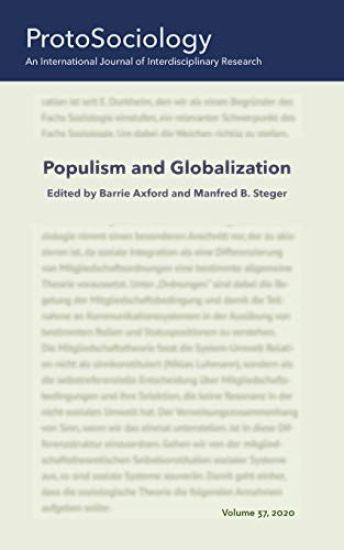
The narrative of populism as a "rising tide" has enjoyed currency at least since the election of Donald Trump in 2016 and the success of the "Leave" campaign in the UK referendum on membership of the EU earlier in that year. And yet, on the eve of what proved to be President Trump's election defeat some four years later, the British journalist Nick Cohen felt able to muse "(w)e're endlessly told why populism works. Now see how it might fail" (October 10, 2020). So, one might be forgiven for thinking that what goes around must eventually come around. However, things are not that simple, and the runes are harder to read.
Populism and globalization are shorthand for the temper of our times. Populism is usually cast as globalization’s nemesis, a backlash against worldwide connectivity, while globalization is often said to be in retreat or even demise. This book takes issue with both interpretations, claiming instead that while populism of all shades tends to be anti-globalist, the globalism it is pitted against has changed dramatically in recent years and is increasingly decentred, destabilized, contingent, multipolar, and multidirectional. Axford paints a picture of this new globalization and dissects the strains of postmodern populism that both contest it and are its expression. Attention to the current surge of populism also affords purchase on an axial feature of our turbulent and globalized world—the imbrication or antithesis of local and global, of difference and sameness. This is an interdisciplinary examination of populism as a factor in global change, drawing on international politics, sociology, and global studies.
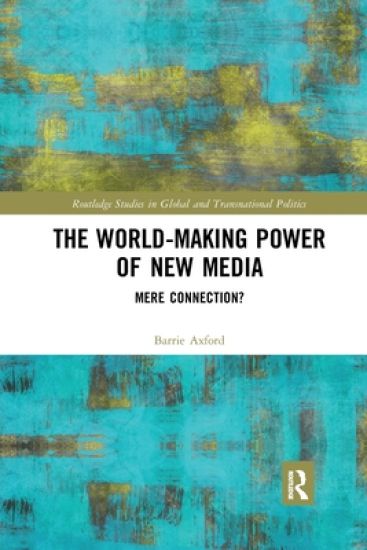
In this new work, Axford seeks to contribute to the development of global theory, particularly where it engages with the contested idea of globality; a concept which musters as consciousness, condition, framework, even system. By examining emergent globalities through the lens of world-making communicative practices and forms, the author demonstrates their transformative social power and underlines the cultural dynamics of globalization. Taking a critical view of much of the current scholarship on emergent globalities, Axford steps outside the rationalist-territorialist conceptions of association and order and takes issue with those who advise there is a widespread 'myth' of media globalization. The book examines global communicative connectivity, using digital, or "new" media – especially the Internet - as the prime exemplar of global process. As well as the academic importance of such themes for theory-building, the strategic, "real-world" impacts of communicative connectivity are palpable. Thus, the welter of debate around the influence of the Internet on democracy, democratization, revolt and collective action generally, have real purchase when discussed in relation to the events of the uprisings in MENA, anti-capitalist protests in London and New York and the tribulations of the EU in recent months/years. Using such exemplars the book assesses claims for the existence and robustness of global society, the significance of cosmopolitan communication and the extent of global consciousness. This work will be of interest to students and scholars of globalization, international relations, and media and cultural studies.
The eagerly awaited third edition of this highly respected and user-friendly text for introductory courses has been thoroughly updated to reflect the world today. Politics: An Introduction provides stimulating coverage of topics essential to the understanding of contemporary politics. It offers students necessary guidance on ways of studying and understanding politics, and illustration of the many different sites at which politics is construed and conducted. Ideal for students taking combined degrees at introductory level in politics and the social sciences, it emphasises the individual and social dimension of politics and covers theories and concepts in an accessible way. Fundamentally, it helps students see the political, and its relevance, in their lives. Key features include: a revised introduction considering ‘what is politics’ and how we understand and approach its study clear and well-organised coverage of political theory, political behaviour, institutions and the policy process carefully crafted in-text chapter features such as ‘consider this’ thought-provoking scenarios, ‘think points’, keyword definitions, chapter summaries, and exercises designed to enliven and extend the learning experience stimulating, up-to-date examples and case studies from across the globe, such as ‘fake news’, online activism, the rise of populism, culture wars, ‘fertility tourism’ in India, hydropower in Cambodia, free speech in France, and personality politics in Turkmenistan detailed consideration of democratisation, authoritarian regimes, direct democracy, gender critical perspectives, minority rights, global capitalism, social movements, radical political change, post-secularism, and challenges and changes brought by social media. Politics: An Introduction is a broad-ranging, accessible, and essential guide for all students studying, or beginning to study, politics.
The eagerly awaited third edition of this highly respected and user-friendly text for introductory courses has been thoroughly updated to reflect the world today. Politics: An Introduction provides stimulating coverage of topics essential to the understanding of contemporary politics. It offers students necessary guidance on ways of studying and understanding politics, and illustration of the many different sites at which politics is construed and conducted. Ideal for students taking combined degrees at introductory level in politics and the social sciences, it emphasises the individual and social dimension of politics and covers theories and concepts in an accessible way. Fundamentally, it helps students see the political, and its relevance, in their lives. Key features include: a revised introduction considering ‘what is politics’ and how we understand and approach its study clear and well-organised coverage of political theory, political behaviour, institutions and the policy process carefully crafted in-text chapter features such as ‘consider this’ thought-provoking scenarios, ‘think points’, keyword definitions, chapter summaries, and exercises designed to enliven and extend the learning experience stimulating, up-to-date examples and case studies from across the globe, such as ‘fake news’, online activism, the rise of populism, culture wars, ‘fertility tourism’ in India, hydropower in Cambodia, free speech in France, and personality politics in Turkmenistan detailed consideration of democratisation, authoritarian regimes, direct democracy, gender critical perspectives, minority rights, global capitalism, social movements, radical political change, post-secularism, and challenges and changes brought by social media. Politics: An Introduction is a broad-ranging, accessible, and essential guide for all students studying, or beginning to study, politics.
In this new work, Axford seeks to contribute to the development of global theory, particularly where it engages with the contested idea of globality; a concept which musters as consciousness, condition, framework, even system. By examining emergent globalities through the lens of world-making communicative practices and forms, the author demonstrates their transformative social power and underlines the cultural dynamics of globalization. Taking a critical view of much of the current scholarship on emergent globalities, Axford steps outside the rationalist-territorialist conceptions of association and order and takes issue with those who advise there is a widespread 'myth' of media globalization. The book examines global communicative connectivity, using digital, or "new" media – especially the Internet - as the prime exemplar of global process. As well as the academic importance of such themes for theory-building, the strategic, "real-world" impacts of communicative connectivity are palpable. Thus, the welter of debate around the influence of the Internet on democracy, democratization, revolt and collective action generally, have real purchase when discussed in relation to the events of the uprisings in MENA, anti-capitalist protests in London and New York and the tribulations of the EU in recent months/years. Using such exemplars the book assesses claims for the existence and robustness of global society, the significance of cosmopolitan communication and the extent of global consciousness. This work will be of interest to students and scholars of globalization, international relations, and media and cultural studies.
Theories of Globalization offers students and scholars a comprehensive and critical introduction to the concept of globalization. Barrie Axford expertly guides readers through the full range of perspectives on the topic, from international political economy to geography, global anthropology to cultural and communication studies. In so doing he draws out the common threads between competing theories, as well as pinpointing the problems that challenge our understanding of globalization. Key terms such as 'globalism' and 'globality' are carefully explained and central themes like capitalism, governance, culture and history explored in full. In assessing the contribution made by globalization theory, Axford's account also sheds new light on several crucial current issues. These range from the changing shape of democracy and citizen engagement with governance, to issues surrounding 'just war' and humane intervention, and problems relating to empire and post-colonialism. This wide-ranging and detailed new book will be essential reading for students and scholars of international politics, sociology and any area where the concept of globalization is discussed and disputed.
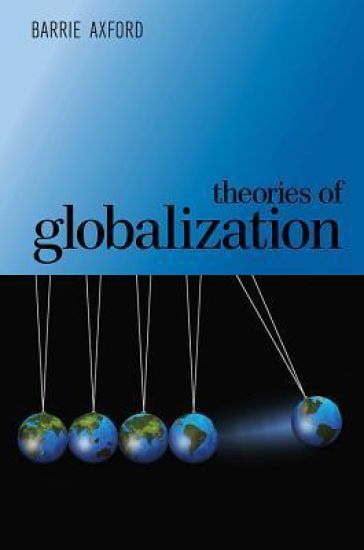
Theories of Globalization offers students and scholars a comprehensive and critical introduction to the concept of globalization. Barrie Axford expertly guides readers through the full range of perspectives on the topic, from international political economy to geography, global anthropology to cultural and communication studies. In so doing he draws out the common threads between competing theories, as well as pinpointing the problems that challenge our understanding of globalization. Key terms such as 'globalism' and 'globality' are carefully explained and central themes like capitalism, governance, culture and history explored in full. In assessing the contribution made by globalization theory, Axford's account also sheds new light on several crucial current issues. These range from the changing shape of democracy and citizen engagement with governance, to issues surrounding 'just war' and humane intervention, and problems relating to empire and post-colonialism. This wide-ranging and detailed new book will be essential reading for students and scholars of international politics, sociology and any area where the concept of globalization is discussed and disputed.