Kirjojen hintavertailu – 12 903 725 kirjaa ja 27 kauppaa

Kirjailija

Barrie Needham

Kirjat ja teokset yhdessä paikassa: 9 kirjaa, julkaisuja vuosilta 2006–2020, suosituimpiin kuuluu Dutch Land-use Planning. Vertaile teosten hintoja ja tarkista saatavuus suomalaisista kirjakaupoista.

9 kirjaa

Kirjojen julkaisuvuodet: 2006–2020.

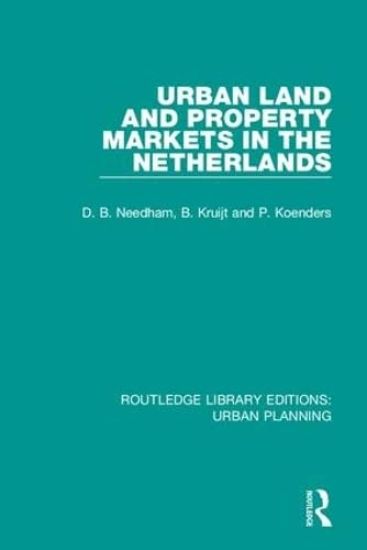
Urban Land and Property Markets in The Netherlands

Urban Land and Property Markets in The Netherlands

Barrie Needham; Patrick Koenders; Bert Kruijt

Routledge
2020
nidottu
Originally published in 1993, Urban Land and Property Markets in the Netherlands provides a detailed explanation of how the land and property markets of the Netherlands work. This book describes the scene extensively and goes deeper to explain the situation in the Netherlands, with commercial real estate being regarded internationally as mature, and offering good safe investment prospects while other aspects of the land and property markets are unique to that country. The constitutional, economic and social contexts are described and current public policies are explained as they affect property development.
Planning, Law and Economics

Planning, Law and Economics

Barrie Needham; Edwin Buitelaar; Thomas Hartmann

Routledge
2018
nidottu
Planning, Law and Economics sets out a new framework for applying a legal approach to spatial planning, showing how to improve the practice and help achieve its aims. The book covers planning laws, citizens' rights and property rights, asking ‘What rules do we want to make and, where necessary, enforce? And how do we want to apply them in planning practice?’ This book sets out, in general and illustrated with concrete examples, how the three types of law mentioned above are unavoidably involved in all types of spatial planning. The book also makes clear that these laws can be combined in different ways, each way a particular approach to the practice of spatial planning (regulative planning, structuring markets, pro-active planning, collaborative planning, etc.). Throughout, the book shows what legal approaches can be taken to spatial planning, and uses a four-part framework to evaluate the effects of choosing such an approach. The spatial planning should be effective, legitimate, morally just and economically sound. In particular the book details why the economic effects for society are important and how spatial planning affects how the economic resources of land and buildings are used. The book will be invaluable to students and planners to understand the relationship between their actions and the basic principles of the rule of law in a democratic, liberal society.
Planning, Law and Economics

Planning, Law and Economics

Barrie Needham; Edwin Buitelaar; Thomas Hartmann

Routledge
2018
sidottu
Planning, Law and Economics sets out a new framework for applying a legal approach to spatial planning, showing how to improve the practice and help achieve its aims. The book covers planning laws, citizens' rights and property rights, asking ‘What rules do we want to make and, where necessary, enforce? And how do we want to apply them in planning practice?’ This book sets out, in general and illustrated with concrete examples, how the three types of law mentioned above are unavoidably involved in all types of spatial planning. The book also makes clear that these laws can be combined in different ways, each way a particular approach to the practice of spatial planning (regulative planning, structuring markets, pro-active planning, collaborative planning, etc.). Throughout, the book shows what legal approaches can be taken to spatial planning, and uses a four-part framework to evaluate the effects of choosing such an approach. The spatial planning should be effective, legitimate, morally just and economically sound. In particular the book details why the economic effects for society are important and how spatial planning affects how the economic resources of land and buildings are used. The book will be invaluable to students and planners to understand the relationship between their actions and the basic principles of the rule of law in a democratic, liberal society.
Urban Land and Property Markets in The Netherlands

Urban Land and Property Markets in The Netherlands

Barrie Needham; Patrick Koenders; Bert Kruijt

Routledge
2018
sidottu
Originally published in 1993, Urban Land and Property Markets in the Netherlands provides a detailed explanation of how the land and property markets of the Netherlands work. This book describes the scene extensively and goes deeper to explain the situation in the Netherlands, with commercial real estate being regarded internationally as mature, and offering good safe investment prospects while other aspects of the land and property markets are unique to that country. The constitutional, economic and social contexts are described and current public policies are explained as they affect property development.
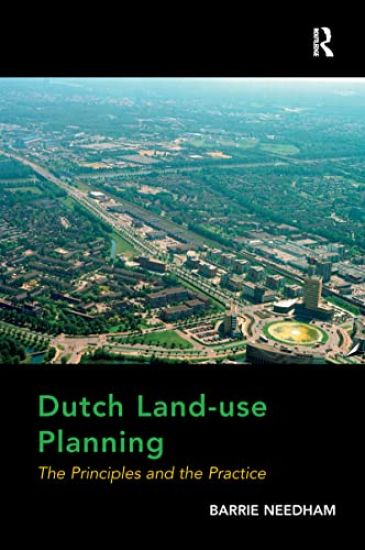
Dutch Land-use Planning

Dutch Land-use Planning

Barrie Needham

Routledge
2016
nidottu
Dutch planning is widely known and admired for its ambitions and its achievements. This book provides, for the first time, a comprehensive description and analysis in English of its full range of policies and practices. It gives an up-to-date account of the principles - written and unwritten - behind the planning, and in addition shows how the practice sometimes ignores those principles in order to achieve better results. It describes the content of the policies, the measures taken to realise them, and the successes and failures. The book is not uncritical of Dutch land-use planning, but the author values its strengths and believes that planning in other countries could learn from them. These strengths arise in the continuing tension between the high ambitions of the Dutch planning, and the ingenuity and pragmatism exercised in order to realise those ambitions.
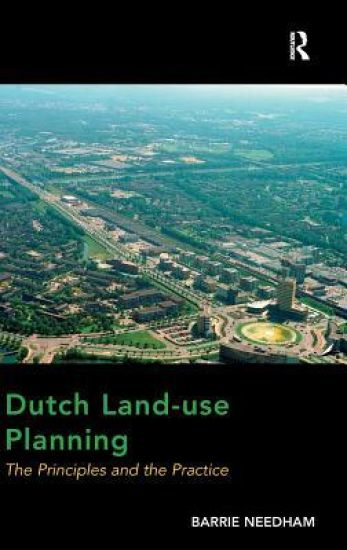
Dutch Land-use Planning

Dutch Land-use Planning

Barrie Needham

Routledge
2014
sidottu
Dutch planning is widely known and admired for its ambitions and its achievements. This book provides, for the first time, a comprehensive description and analysis in English of its full range of policies and practices. It gives an up-to-date account of the principles - written and unwritten - behind the planning, and in addition shows how the practice sometimes ignores those principles in order to achieve better results. It describes the content of the policies, the measures taken to realise them, and the successes and failures. The book is not uncritical of Dutch land-use planning, but the author values its strengths and believes that planning in other countries could learn from them. These strengths arise in the continuing tension between the high ambitions of the Dutch planning, and the ingenuity and pragmatism exercised in order to realise those ambitions.
Planning, Law and Economics

Planning, Law and Economics

Barrie Needham

Routledge
2006
sidottu
What rights does the state have over privately owned land? Why should some landowners be favoured over others? How can the practice of land-use planning be improved? This book addresses these essential questions and shows that the interests people have in property rights over land and buildings are not just emotional but often financial too. It follows that the law, which affects who has property rights, what those rights are and how they may be used, can have great financial consequences for people and great economic consequences for society in general. For those reasons, looking at land-use planning as it affects and is affected by property rights illuminates some core aspects of land-use planning, including the law, economics, ethics and ideology. In this book, Needham examines those aspects from the clear perspective of property rights.
Planning, Law and Economics

Planning, Law and Economics

Barrie Needham

Routledge
2006
nidottu
What rights does the state have over privately owned land? Why should some landowners be favoured over others? How can the practice of land-use planning be improved? This book addresses these essential questions and shows that the interests people have in property rights over land and buildings are not just emotional but often financial too. It follows that the law, which affects who has property rights, what those rights are and how they may be used, can have great financial consequences for people and great economic consequences for society in general. For those reasons, looking at land-use planning as it affects and is affected by property rights illuminates some core aspects of land-use planning, including the law, economics, ethics and ideology. In this book, Needham examines those aspects from the clear perspective of property rights.