Kirjojen hintavertailu – 12 859 819 kirjaa ja 27 kauppaa
Kirjailija
Barry Cunliffe
Kirjat ja teokset yhdessä paikassa: 29 kirjaa, julkaisuja vuosilta 1993–2025, suosituimpiin kuuluu Romney Marsh. Vertaile teosten hintoja ja tarkista saatavuus suomalaisista kirjakaupoista.
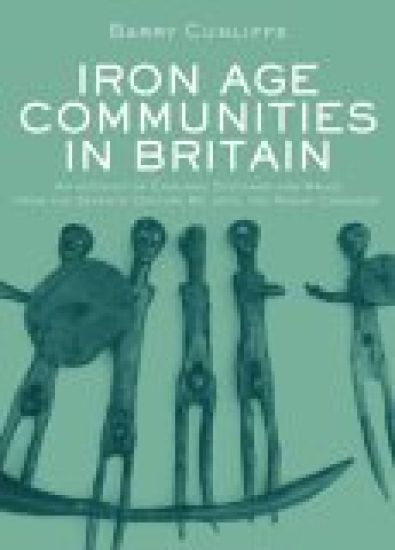
Since its first publication in 1971, Barry Cunliffe's monumental survey has established itself as a classic of British archaeology. This fully revised fourth edition maintains the qualities of the earlier editions, whilst taking into account the significant developments that have moulded the discipline in recent years. Barry Cunliffe here incorporates new theoretical approaches, technological advances and a range of new sites and finds, ensuring that Iron Age Communities in Britain remains the definitive guide to the subject.
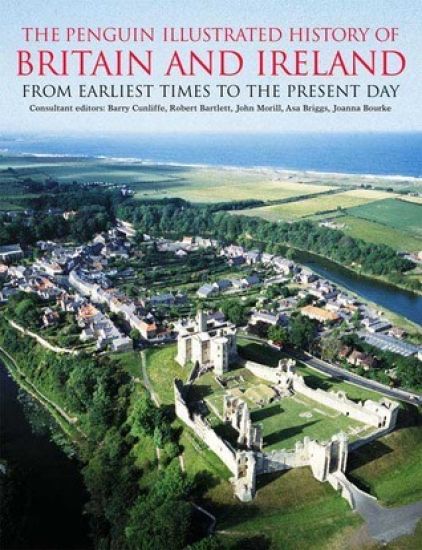
Compiled by a team of leading historians, this is a wonderfully rich, lavishly illustrated history of England, Scotland, Wales and Ireland. The reader is taken on a journey from prehistoric times to the present day, examining such topics as the spread of literacy, the development of transport, and the evolution of country houses on the way. British cities are brought to life in artwork reconstructions that take the reader back to the Dublin of the 18th century or London in the 1850s. Scholarly yet accessible, this is the ideal introduction to British and Irish history.
Savage and bloodthirsty, or civilized and peaceable? The Celts have long been a subject of enormous fascination, speculation, and misunderstanding. From the ancient Romans to the present day, their real nature has been obscured by a tangled web of preconceived ideas and stereotypes. Barry Cunliffe seeks to reveal this fascinating people for the first time, using an impressive range of evidence, and exploring subjects such as trade, migration, and the evolution of Celtic traditions. Along the way, he exposes the way in which society's needs have shaped our visions of the Celts, and examines such colourful characters as St Patrick, Cú Chulainn, and Boudica. ABOUT THE SERIES: The Very Short Introductions series from Oxford University Press contains hundreds of titles in almost every subject area. These pocket-sized books are the perfect way to get ahead in a new subject quickly. Our expert authors combine facts, analysis, perspective, new ideas, and enthusiasm to make interesting and challenging topics highly readable.
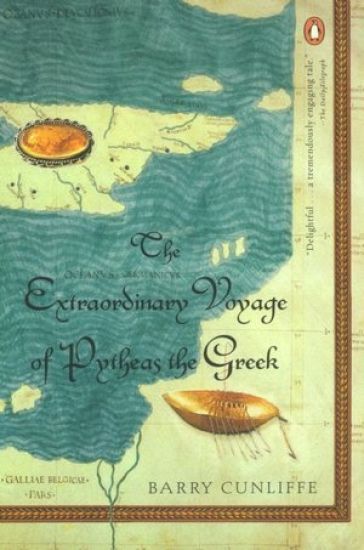
Around 330 b.c., a remarkable adventurer named Pytheas set out from the Greek colony of Massalia (now Marseille) on the Mediterranean Sea to explore the fabled, terrifying lands of northern Europe. Renowned archaeologist Barry Cunliffe here re-creates Pytheas's unprecedented journey, which occurred almost 300 years before Julius Caesar landed in Britain. Beginning with an invaluable pocket history of early Mediterranean civilization, Cunliffe illuminates what Pytheas would have seen and experienced--the route he likely took to reach Brittany, then Britain, Iceland, and Denmark; and evidence of the ancient cultures he would have encountered on shore. The discoveries Pytheas made would reverberate throughout the civilized world for years to come, and in recounting his extraordinary voyage, Cunliffe chronicles an essential chapter in the history of civilization.
The finding, in 1727, of the gilded bronze head of the Roman goddess Minerva during the construction of the famous Stall Street led to the discovery of the Roman temple and of the baths. Since then archaeologists have discovered more and more about the Roman city of Aquae Sulis. In this new edition of a work first published almost thirty years ago, Professor Cunliffe brings the story right up to date. He deals in detail with the temple and its precinct and with the 'curse tablets' which have been deciphered to reveal the thoughts of Roman visitors. He then explains just how the bathing establishment was organized and explores the relationship between the spa and the town. We learn what life was like for the local inhabitants as well as for the visitors. Finally, he charts the process of decline and decay during the 300 years after the Roman period.
Volume 2 comprises seven separate volumes reporting on the excavations and research at the following sites: Woolbury and Stockbridge Down 1989, Bury Hill, Upper Clatford 1990, Suddern Farm, Middle Wallop 1991 & 1996, New Buildings & Fiveways, Longstock 1992 & 1996, Nettlebank Copse, Wherwell 1993, Houghton Down, Stockbridge 1994, Windy Dido, Cholderton 1995.
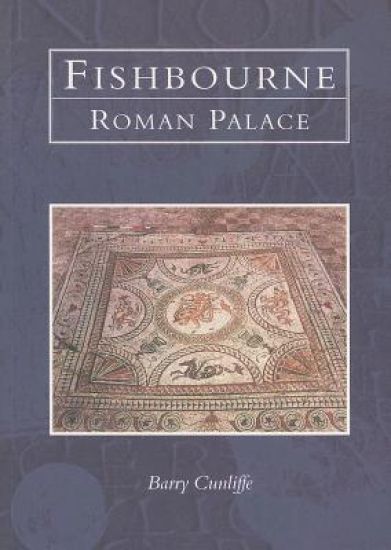
The discovery, during the early 1960s, of the site of a Roman Palace and its garden at Fishbourne, near Chichester, remains the most important and exciting event in Romano-British archaeology over the last half-century. Since his original excavation, Barry Cunliffe has kept in close contact with work on the site and more is now known about the building itself and about its place in the development of Roman Britain. It is still believed that this huge building - covering 10 acres and furnished with many mosaic floors and other luxurious appointments - was indeed a palace, probably belonging to Tiberius Claudius Togidubnus, who has been granted Roman citizenship under Claudius and who as a client king was responsible for governing the area in which the palace was situated. As remarkable as the palace itself is the large formal garden, laid out with paths, hedges, fountains and basins. No comparable Roman garden has been discovered west of Italy. Professor Cunliffe describes the whole story of the historic excavation, unfolding the history of the site from the early military beginnings down to the final destruction of the palace by fire.
This volume is largely composed of a report of excavations in St. Peter Port in 1980-83, which revealed a later Iron Age settlement with a smithy and stone covered graves. Not only Iron Age material was discovered, Bronze Age pottery also appeared, as well as later finds from Medieval and Roman times. The rest of the study is devoted to the Iron Age cist burials, a special feature of the island, which exist in considerable numbers and have not been fully discussed since the 1920s. A gazetteer of Iron Age sites and finds in Guernsey, Herm and Sark is followed by a brief discussion on the Iron Age occupation of Guernsey and its place in the trade between Armorica and Britain.
Wessex -- the ancient counties of Dorset, Somerset, Wiltshire, Hampshire and Berkshire -- is remarkable for its economic and social cohesion as a region, and for the extraordinary wealth of its ancient remains. In this authoritative survey, Barry Cunliffe sets the great monuments and famous sites in their full cultural context. His chief concern, however, is to interpret the landscape of the region, and the people who over so many centuries created it. In his hands it becomes an archaeological artefact as eloquent as Avebury and Stonehenge themselves.