Kirjojen hintavertailu – 12 859 819 kirjaa ja 27 kauppaa
Kirjailija
Barry Driscoll
Kirjat ja teokset yhdessä paikassa: 4 kirjaa, julkaisuja vuosilta 2021–2025, suosituimpiin kuuluu International Studies. Vertaile teosten hintoja ja tarkista saatavuus suomalaisista kirjakaupoista.
Through an intellectually stimulating and empirical approach to global studies, students examine how key factors—forces, interactions, and tensions—contribute to world events and global problems.
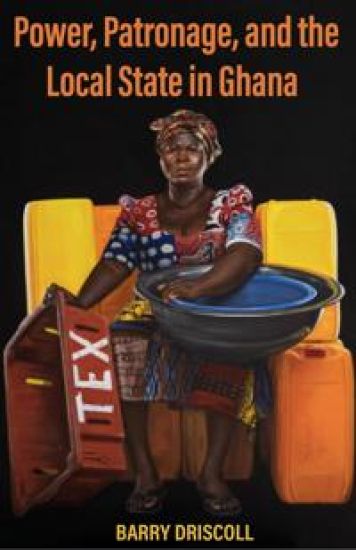
How have the waves of democracy and decentralization that swept the developing world in recent decades affected states—among the most important drivers of poverty and prosperity—at national and local levels in Ghana and beyond? State actors beneath the national level—what Barry Driscoll calls the local state—have considerable responsibility for carrying out state functions, but they are also forced to compete for these local state offices. How does a local state actually work in poor twentieth-century countries? This book offers a descriptive account, as well as a causal explanation, of how political competition affects the local state in Ghana. Driscoll shows how closely fought elections drive local state institutions to provide patronage. The source of these demands for patronage comes not from rent-seeking bureaucrats or landed elites but from the government's own party volunteers. Driscoll explains how electoral competition affects how local state actors are insulated from such patronage demands. Moreover, these highly competitive, patronage-providing local governments actually have relatively better-qualified senior civil servants at their disposal. Driscoll makes sense of this paradox by introducing the logic of building administrative capacity in order to provide patronage. He then abstracts from the case of Ghana to generalize about how the effect of political competition is shaped by the locally salient variety of clientelism, which in turn is conditioned by the strength of the party system. The book draws on fourteen months of fieldwork in six of Ghana's districts, far from the nation's capital city. Ethnographic and interview data come from time spent with market traders, tax collectors, politicians, and other figures in local state offices. Quantitative data come from a survey covering almost all local governments. The result is a detailed account of Ghana's local state power dynamics that has relevant implications for states across the developing world.
How have the waves of democracy and decentralization that swept the developing world in recent decades affected states—among the most important drivers of poverty and prosperity—at national and local levels in Ghana and beyond? State actors beneath the national level—what Barry Driscoll calls the local state—have considerable responsibility for carrying out state functions, but they are also forced to compete for these local state offices. How does a local state actually work in poor twentieth-century countries? This book offers a descriptive account, as well as a causal explanation, of how political competition affects the local state in Ghana. Driscoll shows how closely fought elections drive local state institutions to provide patronage. The source of these demands for patronage comes not from rent-seeking bureaucrats or landed elites but from the government's own party volunteers. Driscoll explains how electoral competition affects how local state actors are insulated from such patronage demands. Moreover, these highly competitive, patronage-providing local governments actually have relatively better-qualified senior civil servants at their disposal. Driscoll makes sense of this paradox by introducing the logic of building administrative capacity in order to provide patronage. He then abstracts from the case of Ghana to generalize about how the effect of political competition is shaped by the locally salient variety of clientelism, which in turn is conditioned by the strength of the party system. The book draws on fourteen months of fieldwork in six of Ghana's districts, far from the nation's capital city. Ethnographic and interview data come from time spent with market traders, tax collectors, politicians, and other figures in local state offices. Quantitative data come from a survey covering almost all local governments. The result is a detailed account of Ghana's local state power dynamics that has relevant implications for states across the developing world.
The challenge of teaching international studies is to help students think coherently about the multiple causes and effects of global problems. In International Studies: Global Forces, Interactions, and Tensions, award-winning scholars Scott Straus and Barry Driscoll introduce students to the foundations of the course; the major actors, institutions and theories; as well as the contemporary problems that will matter most to students. In the fully updated Second Edition, the authors give students a clear framework that pinpoints how key factors—forces, interactions, and tensions—contribute to current world events and global problems like human rights abuses, economic inequality, pandemic and global health responses, and food security. The book raises the bar for the Introduction to International Studies course and is relevant to students from a wide variety of backgrounds with diverse interests in geography, sociology, political science, and anthropology. Included with this text The online resources for your text are available via the password-protected Instructor Resource Site.