Kirjojen hintavertailu – 12 903 724 kirjaa ja 27 kauppaa

Kirjailija

Barry Hindess

Kirjat ja teokset yhdessä paikassa: 11 kirjaa, julkaisuja vuosilta 1973–2019, suosituimpiin kuuluu Mode of Production and Social Formation. Vertaile teosten hintoja ja tarkista saatavuus suomalaisista kirjakaupoista.

11 kirjaa

Kirjojen julkaisuvuodet: 1973–2019.

Routledge Revivals: Pre-Capitalist Modes of Production (1975)

Routledge Revivals: Pre-Capitalist Modes of Production (1975)

(Roys Paul Q Hirst Dec'D); Barry Hindess

Routledge
2019
nidottu
First published in 1975, this book investigates the various pre-capitalist modes of production briefly indicated in the works of Marx and Engels, and gives an examination of the conditions of the transition from one mode of production to another. The fundamental concepts used in these investigations, including those of mode of production, of necessary labour and surpass labour, of politics and state, are derived from Capital and from other works of Marxist theory. The primary aim of the analysis is to raise the conceptualisation of pre-capitalist modes of production and of transition to a more rigorous level. This book will appear controversial to both Marxists and non-Marxists alike.
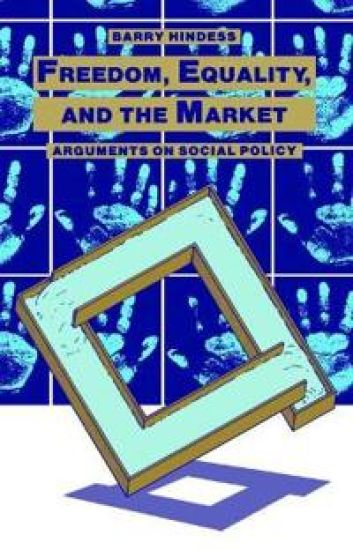
Freedom, Equality and the Market

Freedom, Equality and the Market

Barry Hindess

Routledge
2017
sidottu
This new textbook for students of social theory considers the role of public intervention in social and economic processes. It is a clear, critical discussion of different theoretical and political perspectives on social policy. Barry Hindess begins with theconsensus view, shared by senior politicians, civil servants, and academics throughout much of the postwar period. This view depends on two beliefs: in the capacity of government to manage the economy; and in the development of a qualitatively new relationship between the state and the population. The first is discussed in relation to Croslands The Future of Socialism, and the second in relation to Marshall‘s conception of citizenship and Titmuss‘s account of social policy. The consensus view generated serious objections, and Hindess examines two in particular. One is the argument that the view itself causes a destructive, competitive struggle between sectional interests for state intervention in their favour. The other, from the left, is that what Tawney calledthe strategy of equality has failed, and that a more radical attack on inequality is required. The remaining section looks at the Marxist and liberal alternatives to the consensus view. In conclusion, the author discusses firstly the essentialism of the market both in consensus and (in very different ways) in liberal and Marxist thought; and secondly the place of principles such as freedom and equality in political discussion and the analysis of social conditions. He shows that market and plan are not necessarily incompatible. Freedom, Equality, and the Market, with its careful assessment of the key texts, will be important reading for undergraduate students of sociology and social policy.
Routledge Revivals: Pre-Capitalist Modes of Production (1975)

Routledge Revivals: Pre-Capitalist Modes of Production (1975)

(Roys Paul Q Hirst Dec'D); Barry Hindess

Routledge
2017
sidottu
First published in 1975, this book investigates the various pre-capitalist modes of production briefly indicated in the works of Marx and Engels, and gives an examination of the conditions of the transition from one mode of production to another. The fundamental concepts used in these investigations, including those of mode of production, of necessary labour and surpass labour, of politics and state, are derived from Capital and from other works of Marxist theory. The primary aim of the analysis is to raise the conceptualisation of pre-capitalist modes of production and of transition to a more rigorous level. This book will appear controversial to both Marxists and non-Marxists alike.
Choice, Rationality and Social Theory (RLE Social Theory)
Choice, Rationality and Social Theory is a powerful rebuttal of the remarkably influential theories underlying 'rational choice analysis'. Rational choice analysis maintains that social life is principally to be explained as the outcome of rational choices on the part of individual actors. Adherents of this view include not only philosophers, political scientists and sociologists, but also prominent politicians in Western governments – notably of the United Kingdom and the United States. Rational choice analysis is said to be rigorous, capable of great technical sophistication, and able to generate powerful explanations on the basis of a few, relatively simple theoretical assumptions. Barry Hindess argues that the theory is seriously deficient, first, because there are important actors in the modern world other than human individuals, and second, because it says nothing about those processes of deliberation that play an important part in actors' decisions. The use of highly questionable assumptions about actors and their rationality has the effect of closing off important areas of intellectual inquiry and ignoring the reality of certain forms of thought and the social conditions on which they depend. These points are established through detailed examination of the concepts of the actor and of rationality – providing an overall argument that constitutes a serious challenge to any adherent of rational choice analysis.
Choice, Rationality and Social Theory (RLE Social Theory)
Choice, Rationality and Social Theory is a powerful rebuttal of the remarkably influential theories underlying 'rational choice analysis'. Rational choice analysis maintains that social life is principally to be explained as the outcome of rational choices on the part of individual actors. Adherents of this view include not only philosophers, political scientists and sociologists, but also prominent politicians in Western governments – notably of the United Kingdom and the United States. Rational choice analysis is said to be rigorous, capable of great technical sophistication, and able to generate powerful explanations on the basis of a few, relatively simple theoretical assumptions. Barry Hindess argues that the theory is seriously deficient, first, because there are important actors in the modern world other than human individuals, and second, because it says nothing about those processes of deliberation that play an important part in actors' decisions. The use of highly questionable assumptions about actors and their rationality has the effect of closing off important areas of intellectual inquiry and ignoring the reality of certain forms of thought and the social conditions on which they depend. These points are established through detailed examination of the concepts of the actor and of rationality – providing an overall argument that constitutes a serious challenge to any adherent of rational choice analysis.
Marx's Capital and Capitalism Today Routledge Library Editions: Political Science Volume 52

Marx's Capital and Capitalism Today Routledge Library Editions: Political Science Volume 52

Athar Hussain; Tony Cutler; Barry Hindess; Paul Q. Hirst

Routledge
2012
nidottu
This volume is concerned with the re-evaluation and criticism of Capital itself. It is in three parts, each covering a specific area of Marxist theory. The first part contains an investigation into Marx’s theory of value and considers the types of questions and modes of analysis to which this theory leads. In the second part the nature and implications of necessary economic ‘laws of tendency’ in the capitalist mode of production are covered. Finally there is an analysis of the role of class structure and economic agents in Marxist theory.
Marx's Capital and Capitalism Today Routledge Library Editions: Political Science Volume 52

Marx's Capital and Capitalism Today Routledge Library Editions: Political Science Volume 52

Tony Cutler; Barry Hindess; Athar Hussain; Paul Q.Hirst

Routledge
2009
sidottu
This volume is concerned with the re-evaluation and criticism of Capital itself. It is in three parts, each covering a specific area of Marxist theory. The first part contains an investigation into Marx’s theory of value and considers the types of questions and modes of analysis to which this theory leads. In the second part the nature and implications of necessary economic ‘laws of tendency’ in the capitalist mode of production are covered. Finally there is an analysis of the role of class structure and economic agents in Marxist theory.
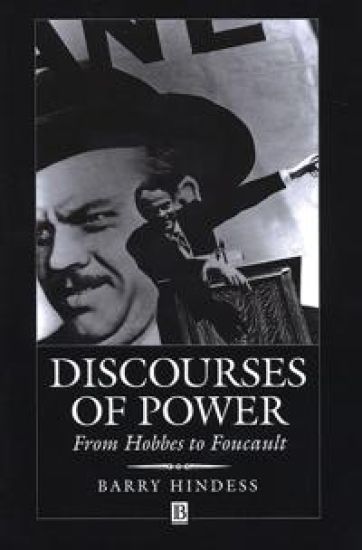
Discourses of Power

Discourses of Power

Barry Hindess

Blackwell Publishers
1995
nidottu
In this accessible yet provocative text Barry Hindess provides a new interpretation of concepts of power within Western social thought, from Hobbes' notion of "sovereign power" to Foucault's account of "government". This book will be welcomed as an important contemporary contribution to one of the key debates in social and political theory.
Freedom, Equality and the Market

Freedom, Equality and the Market

Barry Hindess

Routledge
1986
nidottu
This new textbook for students of social theory considers the role of public intervention in social and economic processes. It is a clear, critical discussion of different theoretical and political perspectives on social policy. Barry Hindess begins with the ‘consensus’ view, shared by senior politicians, civil servants, and academics throughout much of the postwar period. This view depends on two beliefs: in the capacity of government to manage the economy; and in the development of a qualitatively new relationship between the state and the population. The first is discussed in relation to Crosland’s The Future of Socialism, and the second in relation to Marshall’s conception of citizenship and Titmuss’s account of social policy. The consensus view generated serious objections, and Hindess examines two in particular. One is the argument that the view itself causes a destructive, competitive struggle between sectional interests for state intervention in their favour. The other, from the left, is that what Tawney called ‘the strategy of equality’ has failed, and that a more radical attack on inequality is required. The remaining section looks at the Marxist and liberal alternatives to the consensus view. In conclusion, the author discusses firstly the essentialism of the market both in consensus and (in very different ways) in liberal and Marxist thought; and secondly the place of principles such as freedom and equality in political discussion and the analysis of social conditions. He shows that market and plan are not necessarily incompatible. Freedom, Equality, and the Market, with its careful assessment of the key texts, will be important reading for undergraduate students of sociology and social policy.