Kirjojen hintavertailu – 12 859 819 kirjaa ja 27 kauppaa

Kirjailija

Barry M. Gough

Kirjat ja teokset yhdessä paikassa: 4 kirjaa, julkaisuja vuosilta 2004–2021, suosituimpiin kuuluu Historical Dictionary of Canada. Vertaile teosten hintoja ja tarkista saatavuus suomalaisista kirjakaupoista.

4 kirjaa

Kirjojen julkaisuvuodet: 2004–2021.

Historical Dictionary of Canada

Historical Dictionary of Canada

Stephen Azzi; Barry M. Gough

Rowman Littlefield
2021
sidottu
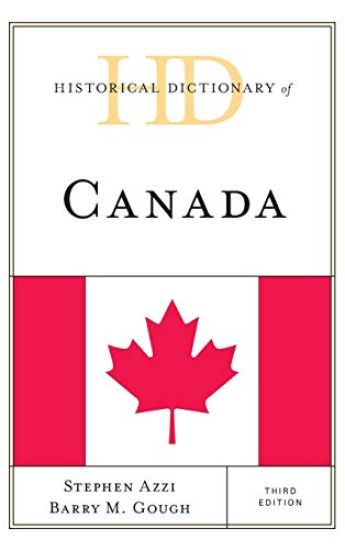
Canada has become a leader among the modern nations of the world. It has emerged as a modern industrial nation, and as a key player in the resource, commodities, and financial institutions that make up today’s world. This third edition of the Historical Dictionary of Canada contains a chronology, an introduction, and an extensive bibliography. It includes over 700 cross-referenced entries on a wide range of topics, covering the broad sweep of Canadian history from long before European contact until present day. Topics include Indigenous peoples, women, religion, regions, politics, international affairs, arts and culture, the environment, the economy, language, and war. This is an excellent resource for students, researchers, and anyone wanting to know more about Canada. It introduces readers to the successes and failures, the conflicts and accommodations, the events and trends that have shaped Canadian history.
Britain, Canada and the North Pacific: Maritime Enterprise and Dominion, 1778–1914
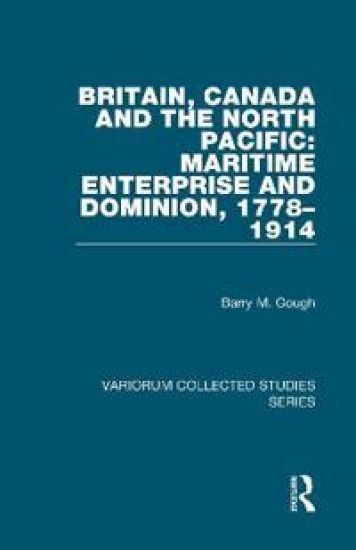
From the time of Cook, the British and their Canadian successors were drawn to the Northwest coast of North America by possibilities of trade in sea otter and the wish to find a 'northwest passage'. The studies collected here trace how, under the influences of the Royal Navy and British statecraft, the British came to dominate the area, with expeditions sent from London, Bombay and Macau, and the Canadian quest from overland. The North West Company came to control the trade of the Columbia River, despite American opposition, and British sloop diplomacy helped overcome Russian and Spanish resistance to British aspirations. Elsewhere in the Americas, the British promoted trans-Pacific trade with China, harvested British Columbia forests, conveyed specie from western Mexico, and established the South America naval station. The flag followed trade and vice versa; empire was both formal (at Vancouver Island) and informal (as in California or Mexico). This book features individuals such as James Cook, William Bolts, Peter Pond, and Sir Alexander Mackenzie. It is also an account of the pressure that corporations placed on the British state in shaping the emerging world of trade and colonization in that distant ocean and its shores, and of the importance of sea-power in the creation of modern Canada.
Historical Dictionary of Canada

Historical Dictionary of Canada

Barry M. Gough

Scarecrow Press
2010
sidottu
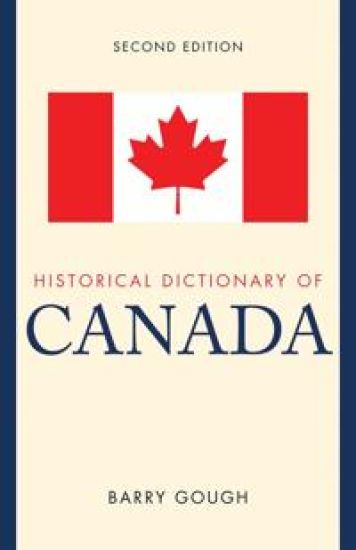
Once on the margins of European empires, notably those of France, England and Spain, then a focus of international rivalries and wars during the 18th century, Canada is now a nation that is front and center in the world's affairs. Canada's emergence as a modern industrial nation and a key player in the resource, commodities, and financial institutions that make up today's world shows many aspects of what ex-colonial powers have gone through—except that compromise and reform rather than revolution and revolt have been the cardinal historical features. The second edition of the Historical Dictionary of Canada greatly expands on the first edition through a chronology, an introductory essay, a bibliography, and over 500 cross-referenced dictionary entries on important persons, places, events, and institutions, as well as on significant political, economic, social, and cultural aspects. This book is an essential guide to the history of Canada.
Britain, Canada and the North Pacific: Maritime Enterprise and Dominion, 1778–1914
From the time of Cook, the British and their Canadian successors were drawn to the Northwest coast of North America by possibilities of trade in sea otter and the wish to find a 'northwest passage'. The studies collected here trace how, under the influences of the Royal Navy and British statecraft, the British came to dominate the area, with expeditions sent from London, Bombay and Macau, and the Canadian quest from overland. The North West Company came to control the trade of the Columbia River, despite American opposition, and British sloop diplomacy helped overcome Russian and Spanish resistance to British aspirations. Elsewhere in the Americas, the British promoted trans-Pacific trade with China, harvested British Columbia forests, conveyed specie from western Mexico, and established the South America naval station. The flag followed trade and vice versa; empire was both formal (at Vancouver Island) and informal (as in California or Mexico). This book features individuals such as James Cook, William Bolts, Peter Pond, and Sir Alexander Mackenzie. It is also an account of the pressure that corporations placed on the British state in shaping the emerging world of trade and colonization in that distant ocean and its shores, and of the importance of sea-power in the creation of modern Canada.