Kirjojen hintavertailu – 12 903 724 kirjaa ja 27 kauppaa

Kirjailija

Barry Schwartz

Kirjat ja teokset yhdessä paikassa: 13 kirjaa, julkaisuja vuosilta 1988–2025, suosituimpiin kuuluu Why we work. Vertaile teosten hintoja ja tarkista saatavuus suomalaisista kirjakaupoista.

13 kirjaa

Kirjojen julkaisuvuodet: 1988–2025.

Choose Wisely

Choose Wisely

Barry Schwartz; Richard Schuldenfrei

YALE UNIVERSITY PRESS
2025
sidottu

Halvin toimitettuna 31,90 €

A leading psychologist and philosopher challenge the shortcomings of rational choice theory—and propose a new framework for understanding decision making For many decision scientists, their starting point—drawn from economics—is a quantitative formula called rational choice theory, allowing people to calculate and choose the best options. The problem is that this framework assumes an overly simplistic picture of the world where different types of values can be quantified and compared, leading to the one “most rational” choice. Behavioral economics acknowledges that irrationality is common but still accepts the underlying belief from economics of what a rational decision should look like. In this book, Barry Schwartz and Richard Schuldenfrei offer a different way to think about the choices we make every day. Drawing from economics, psychology, and philosophy—and both inspired by and challenging Daniel Kahneman’s Thinking, Fast and Slow—they show how the focus on rationality, narrowly understood, fails to fully describe how we think about our decisions, much less help us make better ones. Notably, it overlooks the positive contribution that framing—how we determine what aspects are most important to us—contributes to good decisions. Schwartz and Schuldenfrei argue that our choices should be informed by our individual “constellation of virtues,” allowing for a far richer understanding of the decisions we make and helping us to live more integrated and purposeful lives.
Jonah's Tale of a Whale

Jonah's Tale of a Whale

Barry Schwartz

Behrman House Inc.,U.S.
2021
sidottu
“A well-told, accessible Bible tale for young readers.“– Kirkus ReviewsJonah lived by the sea. As a boy, he heard fishermen tell tales of whales that swallowed up ships. But he never expected to be swallowed up himself! Follow Jonah on his famous biblical adventure as he runs away to the sea, gets gulped down by a great gray whale, and then finds his way back home again.
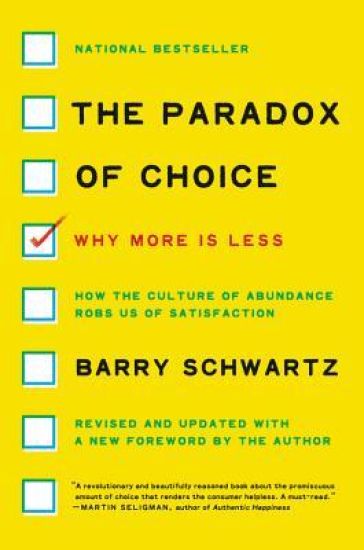
The Paradox of Choice

The Paradox of Choice

Barry Schwartz

ECCO Press
2016
nidottu

Halvin toimitettuna 20,90 €

In the spirit of Alvin Toffler's Future Shock, a social critique of our obsession with choice, and how it contributes to anxiety, dissatisfaction and regret. This paperback includes a new preface from the author. Whether we're buying a pair of jeans, ordering a cup of coffee, selecting a long-distance carrier, applying to college, choosing a doctor, or setting up a 401(k), everyday decisions-both big and small-have become increasingly complex due to the overwhelming abundance of choice with which we are presented. As Americans, we assume that more choice means better options and greater satisfaction. But beware of excessive choice: choice overload can make you question the decisions you make before you even make them, it can set you up for unrealistically high expectations, and it can make you blame yourself for any and all failures. In the long run, this can lead to decision-making paralysis, anxiety, and perpetual stress. And, in a culture that tells us that there is no excuse for falling short of perfection when your options are limitless, too much choice can lead to clinical depression. In The Paradox of Choice, Barry Schwartz explains at what point choice-the hallmark of individual freedom and self-determination that we so cherish-becomes detrimental to our psychological and emotional well-being. In accessible, engaging, and anecdotal prose, Schwartz shows how the dramatic explosion in choice-from the mundane to the profound challenges of balancing career, family, and individual needs-has paradoxically become a problem instead of a solution. Schwartz also shows how our obsession with choice encourages us to seek that which makes us feel worse. By synthesizing current research in the social sciences, Schwartz makes the counter intuitive case that eliminating choices can greatly reduce the stress, anxiety, and busyness of our lives. He offers eleven practical steps on how to limit choices to a manageable number, have the discipline to focus on those that are important and ignore the rest, and ultimately derive greater satisfaction from the choices you have to make.
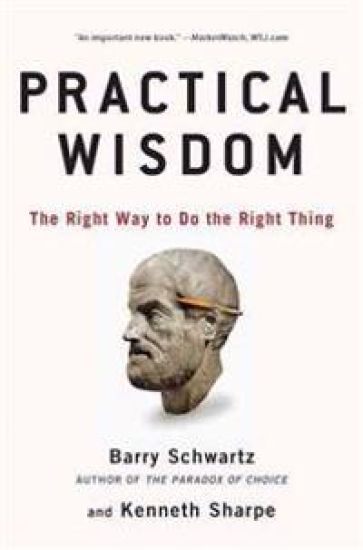
Practical Wisdom

Practical Wisdom

Barry Schwartz; Kenneth Sharpe

Riverhead Books,U.S.
2011
pokkari
A reasoned and urgent call to embrace and protect the essential human quality that has been drummed out of our lives: wisdom. In their provocative new book, Barry Schwartz and Kenneth Sharpe explore the insights essential to leading satisfying lives. Encouraging individuals to focus on their own personal intelligence and integrity rather than simply navigating the rules and incentives established by others, Practical Wisdom outlines how to identify and cultivate our own innate wisdom in our daily lives.
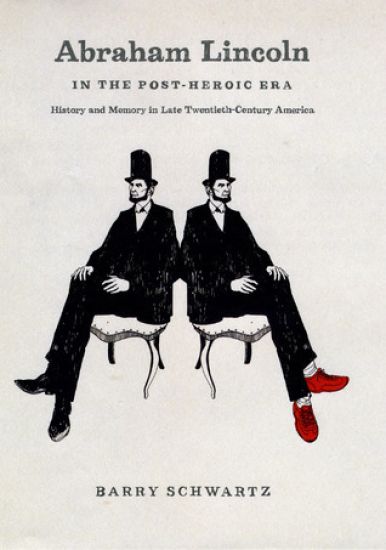
Abraham Lincoln in the Post-Heroic Era

Abraham Lincoln in the Post-Heroic Era

Barry Schwartz

University of Chicago Press
2009
sidottu
By the 1920s, Abraham Lincoln had transcended the lingering controversies of the Civil War to become a secular saint, honored in the North and South alike. Throughout the Great Depression and World War II, Lincoln was invoked as a reminder of America's strength and wisdom, a commanding ideal against which weary citizens could see their own hardships in perspective. But as Barry Schwartz reveals in "Abraham Lincoln in the Post-Heroic Era", those years represent the apogee of Lincoln's prestige. The decades following World War II brought radical changes to American culture, changes that led to the diminishing of all heroes - Lincoln not least among them. As Schwartz explains, growing sympathy for the plight of racial minorities, disenchantment with the American state, and an intensifying celebration of diversity all contributed to a culture in which neither Lincoln nor any single person could be a heroic symbol for all Americans. Paradoxically, however, the very culture that made Lincoln an object of indifference, questioning, criticism, and even ridicule was a culture of unprecedented beneficence and inclusion, where racial, ethnic, and religious groups treated one another more fairly and justly than ever before. Thus, as the prestige of the Great Emancipator shrank, his legacy of equality continued to flourish. Schwartz documents the decline of Lincoln's public standing, asking throughout whether there is any path back from this post-heroic era. Can a new generation of Americans embrace again their epic past, including great leaders whom they know to be flawed? As the 2009 Lincoln Bicentennial approaches, readers will discover here a stirring reminder that Lincoln, as a man, still has much to say to us - about our past, our present, and our possible futures.
Valgfrihedens tyranni

Valgfrihedens tyranni

Barry Schwartz

Boedal
2005
sidottu
Mennesker skal i dag foretage flere valg end nogensinde før. Vi skal vælge næsten alt i vores liv: fra tøjmærke, feriemål og telefonselskab til uddannelse, pensionsordning og religion. Man kunne tro, at denne totale frihed ville gøre livet mere lykkeligt, men det viser sig at være modsat: Valgfriheden bliver en byrde, som stresser os og giver os en følelse af frustration og utilfredshed. Hvor godt vi lykkes med at håndtere de mange valg, hænger sammen med vores personlighed, mener Barry Schwartz. Han påviser, at der er en direkte sammenhæng mellem vores måde at vælge på og en af tidens store folkelidelser, depression. I sin tankevækkende bog vil Schwartz inspirere os til at se på vore valg på en ny måde. Han præsenterer læseren for 11 skridt til, hvordan man kan forenkle sin tilværelse midt i valgfrihedens kultur og dermed komme til at leve et mere harmonisk og tilfredsstillende liv. Barry Schwartz er professor i psykologi og social teori ved et af USA's mest ansete universiteter, Swarthmore College.
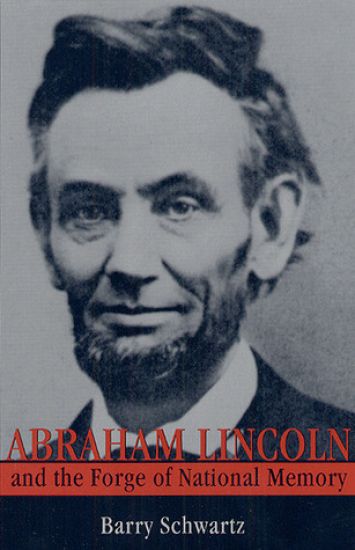
Abraham Lincoln and the Forge of National Memory

Abraham Lincoln and the Forge of National Memory

Barry Schwartz

University of Chicago Press
2003
nidottu
Abraham Lincoln has long dominated the pantheon of American presidents. From his lavish memorial in Washington and immortalization on Mount Rushmore, one might assume he was a national hero rather than a controversial president who came close to losing his 1864 bid for reelection. Drawing on a wide array of materials - painting and sculpture, popular magazines and school textbooks, newspaper accounts and oratory - Barry Schwartz aims at this sort of contradiction in his study of the role Lincoln's reputation and memory has played in American life. Schwartz explains, for example, how dramatic funeral rites elevated Lincoln's reputation even while funeral eulogists questioned his presidential actions and how his reputation, over the next four decades, diminished and grew. Schwartz links the vagaries of Lincoln's image to broad transformations of the nation, arguing that Lincoln's life symbolized America's development from a rural republic to an industrial democracy and articulated the roles of economic and political reform, military power and nationalism in the country's self-conception. Lincoln's memory assumed a double aspect of "mirror" and "lamp", acting as a reflection of the nation's concerns and an illumination of its ideals, and Schwartz offers a fascinating view of these two functions as they were realized in the commemorative symbols of an ever-widening circle of ethnic, religious, political and regional communities. The first part of the study that will continue through the present, "Abraham Lincoln and the Forge of National Memory" is the story of how America has shaped its past selectivey and imaginatively, but around a real person whose character and achievements symbolized his country's ideals.
Psychology of Learning and Behavior

Psychology of Learning and Behavior

Steven J. Robbins; Barry Schwartz; Edward A. Wasserman

WW Norton Co
2001
sidottu
Barry Schwartz, Steven Robbins, and new coauthor Edward Wasserman offer students an engaging introduction to the basic principles of Pavlovian conditioning, operant conditioning, and comparative cognition. The text’s critical approach exposes students to the unresolved problems and controversies surrounding behavior theory and encourages them to interpret the material and make connections between theories and real-life situations. With several hundred new references, a new emphasis on comparative cognition, and expanded treatment of neuroscience and the neural basis of learning, the Fifth Edition sets the standard in its coverage of contemporary theory and research.
Learning and Memory

Learning and Memory

Daniel Reisberg; Barry Schwartz

WW Norton Co
2001
sidottu
Without losing sight of each field's historical development, they provide modern bridges by which students can observe the cognitive underpinnings of animal learning and the descendants of associationism currently under scrutiny by human memory psychologists-in short, a state-of-the-art presentation that makes clear the commonalities (and contrasts) of human and animal research. Learning and Memory includes the most recent findings in the fields: the study of choice, operant behavior and economics, behavior theory and memory, implicit memory and unconscious memory, connectionism, concepts and generic memory, and networks of memories. In presenting these latest findings, the authors develop selective lines of research rather than merely listing research finding after research finding. This approach not only clearly shows students which findings support (or do nor support) hypotheses, but it also gives students a firm sense of how experiments are conducted, and science developed. In addition, a unique chapter, Chapter 14, "Memory and the Decision-Making of Everyday Life," concludes the book. Drawing from the previous chapters, it explains how normal memory processes lead to the heuristics and strategies that guide our everyday thinking. Taking up heuristics, representativeness, covariation detection, and schema-based reasoning, including animal and human research, this chapter provides even more integration of the fields.
The Battle for Human Nature

The Battle for Human Nature

Barry Schwartz

WW Norton Co
1988
nidottu
Suggests that modern science equates human nature with the single-minded pursuit of self-interest and presents examples from economics, evolutionary biology, and psychology that show this view will lead to society's destruction