Kirjojen hintavertailu – 12 903 735 kirjaa ja 27 kauppaa

Kirjailija

Barry Turner

Kirjat ja teokset yhdessä paikassa: 12 kirjaa, julkaisuja vuosilta 1991–2025, suosituimpiin kuuluu A. H. Nasution and Indonesia's Elites. Vertaile teosten hintoja ja tarkista saatavuus suomalaisista kirjakaupoista.

12 kirjaa

Kirjojen julkaisuvuodet: 1991–2025.

A. H. Nasution and Indonesia's Elites

A. H. Nasution and Indonesia's Elites

Barry Turner

BLOOMSBURY PUBLISHING PLC
2025
nidottu
This is an account of the military, political and personal life of Abdul Harus Nasution who was a seminal figure in modern Indonesian history in the years prior to his effective sidelining in the 1960s. He was an important commander during Indonesia’s struggle for independence, who rose to become a key leader of the Indonesian armed forces under the first president, Sukarno. Perhaps more significantly, he developed ideas about guerrilla warfare that developed into a sophisticated and socially conservative doctrine for the mobilising of civilian communities. This, in turn, became the underpinning of the repressive, military-backed New Order regime of Indonesia’s second president, Suharto, who ruled from 1966 until 1998, and which Nasution initially supported. Understanding Nasution’s thinking about ‘total people’s resistance’ is therefore very important for understanding the broader trajectory of Indonesian political history. That includes both the New Order and the emerging democratic regime that developed after its collapse. The new political system that called itself ‘the Refom Era’ was, in many ways, a direct reaction to the New Order military's penetration and close control of Indonesian society but it has never dismantled the ‘shadow’ state’ structure of the armed forces that Nasution designed and Suharto perfected. In other words, as this book shows, Nasution’s legacy still looms large today in Jokowi’s Indonesia. This is not the first assessment of Nasution’s life but it differs from earlier works by its investigation of Nasution’s personal life and, in particular, his relationship with the well-off and well-connected Gondokusumo family, of which he became a member by his marriage to Johana Sunarti Gondokusumo. The author’s thorough investigation of Nasution’s relationship with Sunarti and her father offers important new insights into how Nasution’s ideas evolved, as does the translations of important extracts from Nasution’s own voluminous writing included in the text.

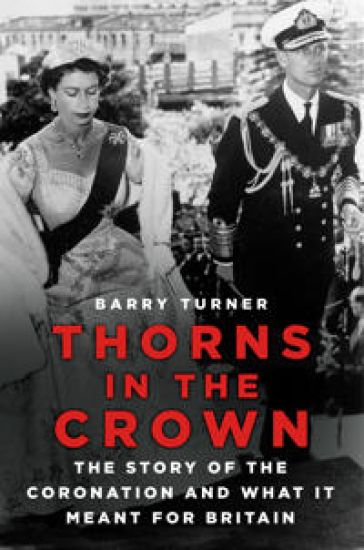
Thorns in the Crown

Thorns in the Crown

Barry Turner

THE HISTORY PRESS LTD
2023
pokkari
‘A lively book that captures the essence of a modern monarchy and a new Elizabethan era’ - Lyndsy Spence, The Lady‘Down-to-earth and insightful’ - Daily MailIt is 1952 and Britain is changing. The Second World War is over, but the country is still scarred, recovering from six years of horror and still in the grip of food rationing. The British Empire is crumbling as countries fight for their independence both literally and physically. And George VI, the king who had refused to abandon London, is dead. Thorns in the Crown is the story of a country on the precipice, divided between those who held firm to old values and traditions and those who were fighting for modernity and progression. Featuring memories and reflections of those who were part of the coronation, Barry Turner presents a unique look at Britain as it came to terms with the second Elizabethan age.
Waiting for War

Waiting for War

Barry Turner

Icon Books Ltd
2019
sidottu
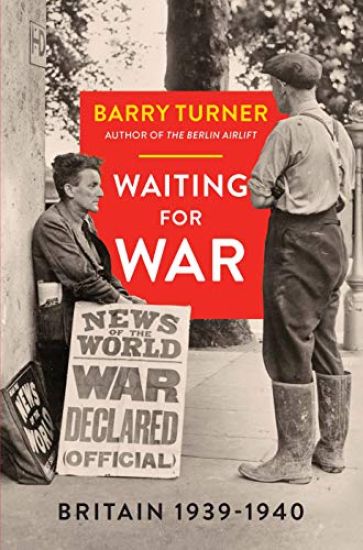
At the outbreak of war in 1939, ordinary people were quickly forced to adapt to the realities of a nation under dire threat. But it soon became known as the Phoney War, a time when official incompetence reigned supreme. Theatres and cinemas were closed and football matches cancelled, only for the government to realise belatedly that morale was plunging as a result. Thousands of women and children were evacuated to the countryside, only for many to flood back to the cities, preferring the dangers to separation from their families. Censorship of news was heavy-handed and bred widespread resentment. In fact, the period from September 1939 to May 1940 was a time of intense political and military activity - the blitzkrieg on Poland, the start of the U-boat menace, the disastrous Norwegian campaign, the political manoeuvrings that brought Churchill to power. Barry Turner skilfully weaves these events into a compelling home front narrative which evokes the fears and dangers but also the humour and the absurdities of everyday life in the dark days of 1939-1940.
The Berlin Airlift

The Berlin Airlift

Barry Turner

Icon Books Ltd
2018
pokkari
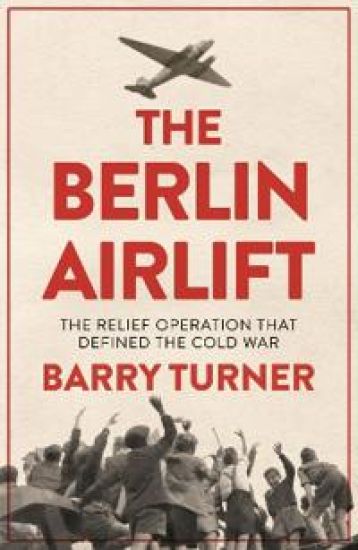
Acclaimed historian Barry Turner presents a new history ofthe Cold War's defining episode. Berlin, 1948 - a divided city in a divided country in adivided Europe. The ruined German capital lay 120 miles insideSoviet-controlled eastern Germany. Stalin wanted the Allies out; the Allieswere determined to stay, but had only three narrow air corridors linking thecity to the West. Stalin was confident he could crush Berlin's resolve bycutting off food and fuel. In the USA, despite some voices still urging 'Americafirst', it was believed that a rebuilt Germany was the best insurance againstthe spread of communism across Europe. And so over eleven months from June 1948 to May 1949,British and American aircraft carried out the most ambitious airborne reliefoperation ever mounted, flying over 2 million tons of supplies on almost300,000 flights to save a beleaguered Berlin. With new material from American, British and German archivesand original interviews with veterans, Turner paints a fresh, vivid picture theairlift, whose repercussions - the role of the USA as global leader, Germanascendancy, Russian threat - we are still living with today.
A. H. Nasution and Indonesia's Elites

A. H. Nasution and Indonesia's Elites

Barry Turner

Lexington Books
2017
sidottu
This is an account of the military, political and personal life of Abdul Harus Nasution who was a seminal figure in modern Indonesian history in the years prior to his effective sidelining in the 1960s. He was an important commander during Indonesia’s struggle for independence, who rose to become a key leader of the Indonesian armed forces under the first president, Sukarno. Perhaps more significantly, he developed ideas about guerrilla warfare that developed into a sophisticated and socially conservative doctrine for the mobilising of civilian communities. This, in turn, became the underpinning of the repressive, military-backed New Order regime of Indonesia’s second president, Suharto, who ruled from 1966 until 1998, and which Nasution initially supported. Understanding Nasution’s thinking about ‘total people’s resistance’ is therefore very important for understanding the broader trajectory of Indonesian political history. That includes both the New Order and the emerging democratic regime that developed after its collapse. The new political system that called itself ‘the Refom Era’ was, in many ways, a direct reaction to the New Order military's penetration and close control of Indonesian society but it has never dismantled the ‘shadow’ state’ structure of the armed forces that Nasution designed and Suharto perfected. In other words, as this book shows, Nasution’s legacy still looms large today in Jokowi’s Indonesia. This is not the first assessment of Nasution’s life but it differs from earlier works by its investigation of Nasution’s personal life and, in particular, his relationship with the well-off and well-connected Gondokusumo family, of which he became a member by his marriage to Johana Sunarti Gondokusumo. The author’s thorough investigation of Nasution’s relationship with Sunarti and her father offers important new insights into how Nasution’s ideas evolved, as does the translations of important extracts from Nasution’s own voluminous writing included in the text.

Karl Doenitz and the Last Days of the Third Reich
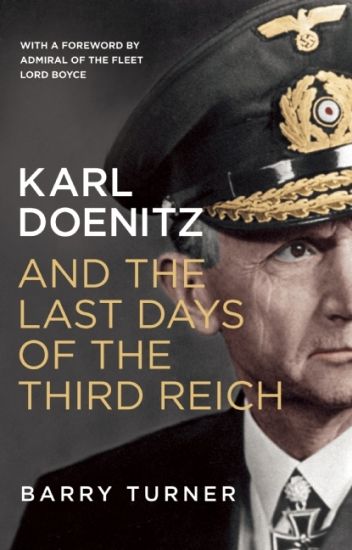
Among the military leaders of the Second World War, Grand Admiral Karl Doenitz remains a deeply enigmatic figure. As chief of the German submarine fleet he earned Allied respect as a formidable enemy. But after he succeeded Hitler - to whom he was unquestioningly loyal - as head of the Third Reich, his name became associated with all that was most hated in the Nazi regime. Yet Doenitz deserves credit for ending the war quickly while trying to save his compatriots in the East - his Dunkirk-style operation across the Baltic rescued up to 2 million troops and civilian refugees. Historian Barry Turner argues that while Doenitz can never be dissociated from the evil done under the Third Reich, his contribution to the war must be acknowledged in its entirety in order to properly understand the conflict. An even-handed portrait of Nazi Germany's last leader and a compellingly readable account of the culmination of the war in Europe, Karl Doenitz and the Last Days of the Third Reich gives a fascinating new perspective on a complex man at the heart of this crucial period in history.
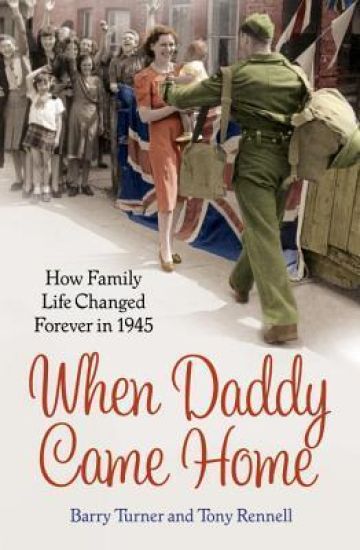
When Daddy Came Home

When Daddy Came Home

Barry Turner; Tony Rennell

Arrow Books Ltd
2014
pokkari
Compelling and moving real-life accounts of the impact on family life of the return of the troops at the end of the Second World War. Summer 1945. Britain was in jubilant mood. At last, the war was over. Soon the men would be coming home. Then everything would be fine: life would get back to normal. Or would it? Six long years of war had profoundly changed family life. For years, Dad had been a khaki figure in a photograph on the wall, a crumpled letter from overseas, an occasional visitor on weekend leave. Now he was here to stay, a stranger in a group that had learned to live without him - and was not always prepared to have him back. Most homecomings were joyful, never-to-be-forgotten moments of humour and hope. Others were hard. And there was no one to deal with the tears and the trauma. It would take hope and courage for families to live and love together again.
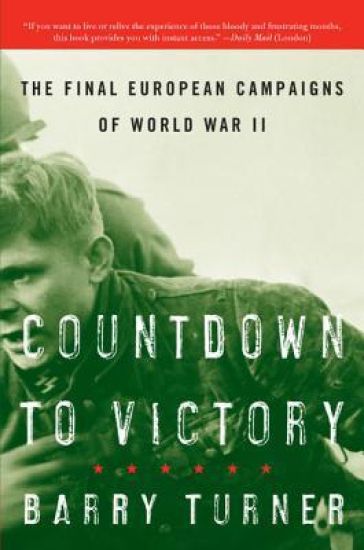
Countdown to Victory: The Final European Campaigns of World War II
In most accounts of World War II, the last six months of fighting in Europe are tucked into an epilogue. After the Battle of the Bulge, the Nazis are assumed to be as good as defeated. In fact, they fought to their last breath. In the H rtgen Forest, in the Po Valley of Italy, and in the German industrial heartland of the Ruhr, the Allies suffered horrific losses. Drawing on never-before-published sources, Barry Turner captures the thrill of victory, the despair of defeat, and the staggering human costs of war. From the grunts on the ground to the machinations of generals and statesmen and the daily miseries of civilians caught in the crossfire, Turner brings this critical chapter of World War II searingly and indelibly to life.
And the Policeman Smiled

And the Policeman Smiled

Barry Turner

Bloomsbury Publishing PLC
1991
nidottu
From 1938 over 10,000 Jewish and Catholic children were helped to escape from Nazi Europe. They were bundled onto trains and set off across Germany and Holland to the ferries which took them to England. This book traces the story of the Kindertransporte and those who helped organize the exodus.