

Kirjailija
Bartolomé De Las Casas
Kirjat ja teokset yhdessä paikassa: 72 kirjaa, julkaisuja vuosilta 1975–2026, suosituimpiin kuuluu The Letters of Amerigo Vespucci, and Other Documents Illustrative of His Career (Cram Edition). Vertaile teosten hintoja ja tarkista saatavuus suomalaisista kirjakaupoista.
Nimi esiintyy myös muodoissa: Bartolome de Las Casas
72 kirjaa
Kirjojen julkaisuvuodet: 1975–2026.

Boka er en kritikk fra 1500 tallet av spaniernes erobring av Den nye verden. Beretningen er rettet til arveprinsen Filip, den senere Filip II av Spania, og viser at en del prester innenfor den katolske kirke var opprørt over hvordan erobrerne gikk frem overfor indianerne.

La Controverse Entre Las Casas Et Sepulveda
Bartolome de Las Casas
Librarie Philosophique J. Vrin
2007
nidottu
La controverse entre Las Casas et Sepulveda (1550-1551), connue sous le nom de controverse de Valladolid, est une interrogation des fondements de l'imperialisme europeen qui le fait apparaitre a ses propres yeux comme une entreprise civilisatrice ou genocidaire. Ce debat rigoureusement fonde sur les principes universalistes de la revelation et du droit naturel est un conflit politique pour une nouvelle determination de l'empire rendue necessaire par la decouverte du Nouveau Monde et sa conquete. Sepulveda legitime cette guerre en revendiquant pour l'Espagne, en tant que peuple chretien et rationnel, un droit a priori sur l'Amerique et ses habitants idolatres et barbares. Las Casas condamne toute la conquete en niant la barbarie des peuples indiens et en leur reconnaissant la souverainete. Ce qui aux yeux de Sepulveda est un usage legitime de la force au service de la foi et de la civilisation est pour Las Casas un sacrifice humain inavouable et occulte par la victoire du faux christianisme sur le vrai . Le traite de Las Casas intitule La Controverse entre Las Casas et Sepulveda, contient un resume de la discussion par le theologien Domingo de Soto et les arguments exposes par les deux adversaires lors de la controverse.
Basta esta cita para comprender la idea del buen gobierno de los Incas descrita por Bartolome de las Casas: Consideraba en esta visita de la tierra, si se podia hacer alguna semilla o arboles y frutales que no fructificaban, o no tanto, en otras partes, y era necesaria, y traia de otra tierra hombres que la supiesen sembrar y cultivar y a los naturales de alli lo ensenasen;a los cuales mandaba galardonar y repartir tierras y solares para sus casas y heredades. Consideraba asimismo la condicion e inclinaciones de las gentes, y si entendia que eran orgullosos o inquietos, traia de otros pueblos, mayormente de los que tenia mas conocidos y experimentados por fieles y obedientes, aprobados y leales, donde mandaba que morasen y usasen de sus oficios o ejercicios que en su naturaleza usaban, para que los de alli aprendiesen a vivir quietos, y para que, entendiendo quel rey los mandaba poner alli por esta causa, temiesen de hacer novedades, como quien tenia cabe si las espias y testigos que habian luego de avisar al senor, y por consiguiente, de causar en el pueblo inquietud se descuidasen.
An Account, Much Abbreviated, of the Destruction of the Indies
Bartolome De Las Casas
Hackett Publishing Co, Inc
2003
sidottu
Fifty years after the arrival of Columbus, at the height of Spain's conquest of the West Indies, Spanish bishop and colonist Bartolomé de Las Casas dedicated his Brevísima Relación de la Destruición de las Indias to Philip II of Spain. An impassioned plea on behalf of the native peoples of the West Indies, the Brevísima Relación catalogues in horrific detail atrocities it attributes to the king’s colonists in the New World. The result is a withering indictment of the conquerors that has cast a 500-year shadow over the subsequent history of that world and the European colonization of it.
Account, Much Abbreviated, of the Destruction of the Indies
Bartolome De Las Casas
Hackett Publishing Co, Inc
2003
pokkari
Fifty years after the arrival of Columbus, at the height of Spain's conquest of the West Indies, Spanish bishop and colonist Bartolome de Las Casas dedicated his Brevisima Relacion de la Destruicion de las Indias to Philip II of Spain. An impassioned plea on behalf of the native peoples of the West Indies, the Brevisima Relacion catalogues in horrific detail atrocities it attributes to the kings colonists in the New World. The result is a withering indictment of the conquerors that has cast a 500-year shadow over the subsequent history of that world and the European colonization of it.
Brevisima Relacion De La Destruccion De Las Indias
Bartolome de las Casas
Ediciones Catedra, S.A.
2000
nidottu
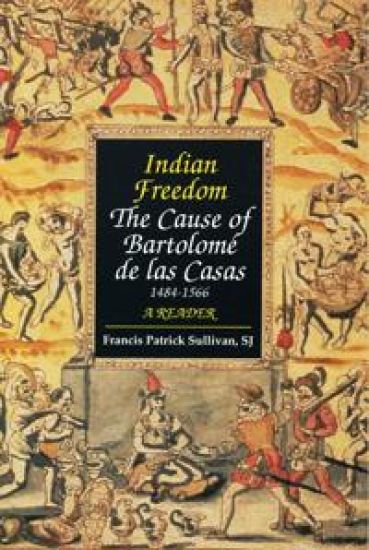
The story of las CasasO 16th century fight against oppression of the Indian people in the New World.
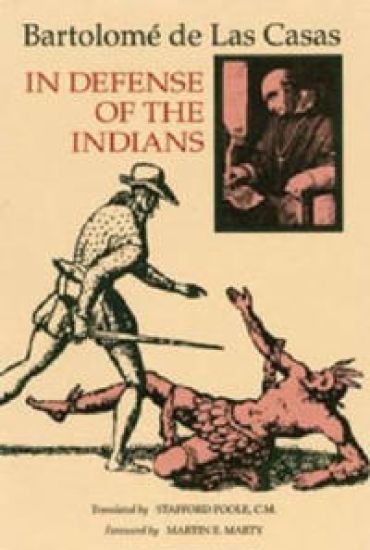
Bartolom\u00e9 de Las Casas championed the rights of the Indians of Mexico and Central America, disputing a widely held belief that they were "beasts" to be enslaved. In a dramatic debate in 1550 with Juan Gin\u00e9s de Sep\u00falveda, Las Casas argued vehemently before a royal commission in Valladolid that the native inhabitants should be viewed as fellow human beings, artistically and mechanically adroit, and capable of learning when properly taught. In Defense of the Indians, Las Casas's classic treatise on the humanity of native peoples, had far-reaching implications for the policies adopted by both the Spanish Crown and the Church toward slavery in the New World. This carefully reasoned but emotionally charged defense addresses issues such as the concept of a just war, the relationships between differing races and cultures, the concept of colonialism, and the problem of racism. Written toward the end of an active career as "Protector of the Indians," the work stands as a summary of the teaching of Las Casas's life. Available in its entirety for the first time in paperback, with a new foreword by Martin E. Marty, In Defense of the Indians has proved to be an enduring work that speaks with relevance in the twentieth-first century. Skillfully translated from Latin by the Reverend Stafford Poole, it is an eloquent plea for human freedom that will appeal to scholars interested in the founding of the Americas and the development of the New World.
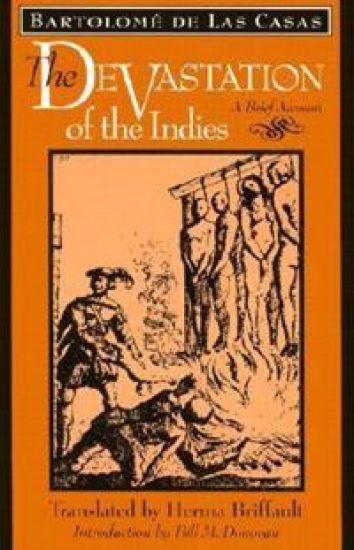
Five hundred years after Columbus's first voyage to the New World, the debate over the European impact on Native American civilization has grown more heated than ever. Among the first—and most insistent—voices raised in that debate was that of a Spanish priest, Bartolomé de Las Casas, acquintance of Cortes and Pizarro and shipmate of Velasquez on the voyage to conquer Cuba. In 1552, after forty years of witnessing—and opposing—countless acts of brutality in the new Spanish colonies, Las Casas returned to Seville, where he published a book that caused a storm of controversy that persists to the present day. The Devastation of the Indies is an eyewitness account of the first modern genocid, a story of greed, hypocrisy, and cruelties so grotesque as to rival the worst of our own century. Las Casas writes of men, women and children burned alive "thirteen at a time in memoery of Our Redeemer and his twelve apostles." He describes butcher shops that sold human flesh for dog food ("Give me a quarter of that rascal there," one customer says, "until I can kill some more of my own"). Slave ship captains navigate "without need if compass or charts," following instead the trail of floating corpes tossed overboard by the ship before them. Native kings are promised peace, then slaughted. Whole families hang themselves in despair. Once-fertile islands are turned to desert, the wealth of nations plundered, millions killed outright, whole peoples annihilated. In an introduction, historian Bill M. Donovan provides a brief biography of Las Casas and reviews the controversy his work produced among Europeans, whose indignation—and denials—lasted centuries. But the book itself is short. "Were I to describe all this," writes Las Casas of the four decades of suffering he witnessed, "no amount of time and paper could emcimpass this task."
Très brève relation sur la destruction des Indes
Bartolomé de Las Casas
Walter de Gruyter
1975
sidottu