Kirjojen hintavertailu – 12 859 829 kirjaa ja 27 kauppaa
Kirjailija
Bas van der Vossen
Kirjat ja teokset yhdessä paikassa: 5 kirjaa, julkaisuja vuosilta 2017–2024, suosituimpiin kuuluu Political Philosophy: The Basics. Vertaile teosten hintoja ja tarkista saatavuus suomalaisista kirjakaupoista.
This book offers an introduction to political philosophy, the study of the role of government in our lives. It discusses what political philosophy is about, its most important and enduring questions, and how to do political philosophy well. Throughout, the book discusses issues such as:• Do we have a moral obligation to obey the law?• What’s the value of equality?• What’s the nature of justice?• How can we answer philosophical questions about politics?• Is political philosophy a form of activism? Or is it more like a science? Written in an inviting and accessible style, Political Philosophy: The Basics offers an ideal starting point for anyone wishing to learn more about the philosophical study of politics.
This book offers an introduction to political philosophy, the study of the role of government in our lives. It discusses what political philosophy is about, its most important and enduring questions, and how to do political philosophy well. Throughout, the book discusses issues such as:• Do we have a moral obligation to obey the law?• What’s the value of equality?• What’s the nature of justice?• How can we answer philosophical questions about politics?• Is political philosophy a form of activism? Or is it more like a science? Written in an inviting and accessible style, Political Philosophy: The Basics offers an ideal starting point for anyone wishing to learn more about the philosophical study of politics.
The topic of global justice has long been a central concern within political philosophy and political theory, and there is no doubt that it will remain significant given the persistence of poverty on a massive scale and soaring global inequality. Yet, virtually every analysis in the vast literature of the subject seems ignorant of what developmental economists, both left and right, have to say about the issue. In Defense of Openness illuminates the problem by stressing that that there is overwhelming evidence that economic rights and freedom are necessary for development, and that global redistribution tends to hurt more than it helps. Bas van der Vossen and Jason Brennan instead ask what a theory of global justice would look like if it were informed by the facts that mainstream development and institutional economics have brought to light. They conceptualize global justice as global freedom and insist we can help the poor-and help ourselves at the same time-by implementing open borders, free trade, the strong protection of individual freedom, and economic rights and property for all around the world. In short, they work from empirical, consequentialist grounds to advocate for the market society as a model for global justice. A spirited challenge to mainstream political theory from two leading political philosophers, In Defense of Openness offers a new approach to global justice: We don't need to "save" the poor. The poor will save themselves, if we would only get out of their way and let them.
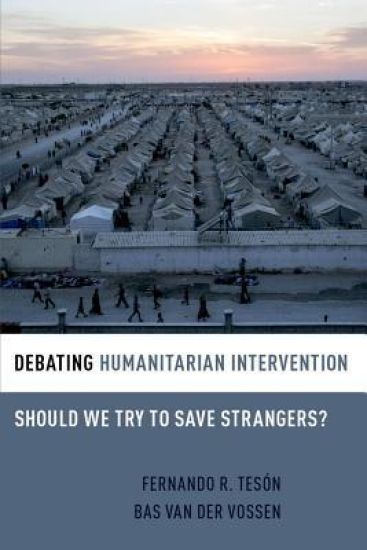
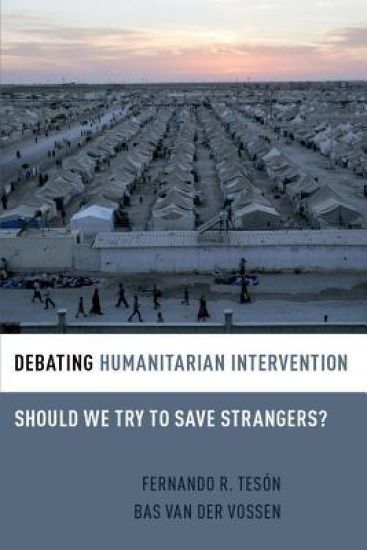
When foreign powers attack civilians, other countries face an impossible dilemma. Two courses of action emerge: either to retaliate against an abusive government on behalf of its victims, or to remain spectators. Either course offers its own perils: the former, lost lives and resources without certainty of restoring peace or preventing worse problems from proliferating; the latter, cold spectatorship that leaves a country at the mercy of corrupt rulers or to revolution. Philosophers Fernando Tesón and Bas van der Vossen offer contrasting views of humanitarian intervention, defining it as either war aimed at ending tyranny, or as violence. The authors employ the tools of impartial modern analytic philosophy, particularly just war theory, to substantiate their claims. According to Tesón, a humanitarian intervention has the same just cause as a justified revolution: ending tyranny. He analyzes the different kinds of just cause and whether or not an intervener may pursue other justified causes. For Tesón, the permissibility of humanitarian intervention is almost exclusively determined by the rules of proportionality. Bas van der Vossen, by contrast, holds that military intervention is morally impermissible in almost all cases. Justified interventions, Van der Vossen argues, must have high ex ante chance of success. Analyzing the history and prospects of intervention shows that they almost never do. Tesón and van der Vossen refer to concrete cases, and weigh the consequences of continued or future intervention in Syria, Somalia, Rwanda, Bosnia, Iraq, Lybia and Egypt. By placing two philosophers in dialogue, Debating Humanitarian Intervention is not constrained by a single, unifying solution to the exclusion of all others. Rather, it considers many conceivable actions as judged by analytic philosophy, leaving the reader equipped to make her own, informed judgments.
When foreign powers attack civilians, other countries face an impossible dilemma. Two courses of action emerge: either to retaliate against an abusive government on behalf of its victims, or to remain spectators. Either course offers its own perils: the former, lost lives and resources without certainty of restoring peace or preventing worse problems from proliferating; the latter, cold spectatorship that leaves a country at the mercy of corrupt rulers or to revolution. Philosophers Fernando Tesón and Bas van der Vossen offer contrasting views of humanitarian intervention, defining it as either war aimed at ending tyranny, or as violence. The authors employ the tools of impartial modern analytic philosophy, particularly just war theory, to substantiate their claims. According to Tesón, a humanitarian intervention has the same just cause as a justified revolution: ending tyranny. He analyzes the different kinds of just cause and whether or not an intervener may pursue other justified causes. For Tesón, the permissibility of humanitarian intervention is almost exclusively determined by the rules of proportionality. Bas van der Vossen, by contrast, holds that military intervention is morally impermissible in almost all cases. Justified interventions, Van der Vossen argues, must have high ex ante chance of success. Analyzing the history and prospects of intervention shows that they almost never do. Tesón and van der Vossen refer to concrete cases, and weigh the consequences of continued or future intervention in Syria, Somalia, Rwanda, Bosnia, Iraq, Lybia and Egypt. By placing two philosophers in dialogue, Debating Humanitarian Intervention is not constrained by a single, unifying solution to the exclusion of all others. Rather, it considers many conceivable actions as judged by analytic philosophy, leaving the reader equipped to make her own, informed judgments.