Kirjojen hintavertailu – 12 903 733 kirjaa ja 27 kauppaa

Kirjailija

Ben A Minteer

Kirjat ja teokset yhdessä paikassa: 4 kirjaa, julkaisuja vuosilta 2009–2027, suosituimpiin kuuluu Wild Visions. Vertaile teosten hintoja ja tarkista saatavuus suomalaisista kirjakaupoista.

Nimi esiintyy myös muodoissa: Ben A. Minteer

4 kirjaa

Kirjojen julkaisuvuodet: 2009–2027.

Wild Visions

Wild Visions

Ben A Minteer; Mark Klett; Stephen J. Pyne; Roderick Frazier Nash

YALE UNIVERSITY PRESS
2022
sidottu
A stunning combination of landscape photography and thematic essays exploring how the concept of wilderness has evolved over time Our ideas of wilderness have evolved dramatically over the past one hundred and fifty years, from a view of wild country as an inviolable “place apart” to one that exists only within the matrix of human activity. This shift in understanding has provoked complicated questions about the importance of the wild in American environmentalism, as well as new aesthetic expectations as we reframe the wilderness as (to some degree) a human creation. Wild Visions is distinctive in its union of landscape photography and environmental thought, a merging of short, thematic essays with a striking visual narrative. Often, the wild is viewed in binary terms: either revered as sacred and ecologically pure or dismissed as spoiled by human activities. This book portrays wilderness instead as an evolving gamut of understandings, a collage of views and ideas that is still in process.

Saving the Wild Country

Saving the Wild Country

Ben A Minteer

Yale University Press
2027
Kangassidos
The gripping story of the trailblazing conservationists who shaped the wilderness of the American West into legend Driven by richly drawn characters and framed by cinematic showdowns in epic landscapes, Saving the Wild Country vividly combines narrative history, biography, cultural criticism, and outdoor writing to show how postwar wildland advocacy—and the western myth—shaped American attitudes toward wilderness in a time of ferocious development and change. In the boom years following World War II, a small but vital group of artists, writers, and advocates mobilized the visual and therapeutic power of the wilderness to combat the dizzying development of the American West. With cinematic flair, Ben A. Minteer explores the motives and achievements of photographer Ansel Adams, conservationist David Brower, curator and writer Nancy Newhall, and authors Wallace Stegner and Edward Abbey, an ensemble united by a fierce commitment to preserving the American wildlands. Through a burst of creative projects, they struggled to control the narrative of development in the American West and offered an alternative vision to the culturally corrosive impacts of mid-twentieth-century industrialism and consumerism. But as the five visionaries fought the dams, bulldozers, and highways that slashed across the wild country, they also fought among themselves—and with their internal doubts and regrets—in a land where personality, myth, and activism collided. In this volume, illustrated with compelling photographs, portraits, and iconic landscapes, Minteer • investigates the intertwined truths and myths of the West that still permeate American culture • provides nuance to the backgrounds and motivations of Adams, Stegner, Brower, Newhall, and Abbey • sheds light on the perpetual battle against the negative cultural impacts of industrialism and consumerism • engages with several influential western films, including The Searchers, Ride the High Country, Lonely Are the Brave, The Wild Bunch, and Butch Cassidy and the Sundance Kid This long-overdue assessment by one of the top thinkers in environmental history and ethics shows why these postwar defenders of wilderness remain relevant for readers today.
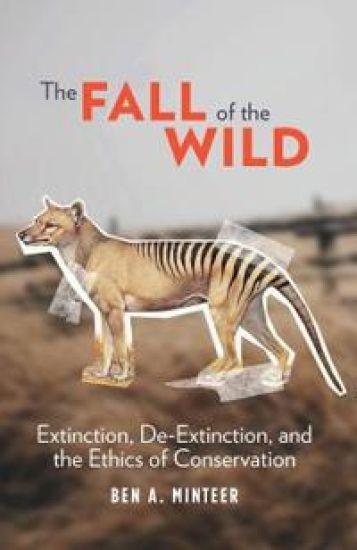
The Fall of the Wild

The Fall of the Wild

Ben A. Minteer

Columbia University Press
2018
sidottu
The passenger pigeon, the great auk, the Tasmanian tiger—the memory of these vanished species haunts the fight against extinction. Seeking to save other creatures from their fate in an age of accelerating biodiversity loss, wildlife advocates have become captivated by a narrative of heroic conservation efforts. A range of technological and policy strategies, from the traditional, such as regulations and refuges, to the novel—the scientific wizardry of genetic engineering and synthetic biology—seemingly promise solutions to the extinction crisis. In The Fall of the Wild, Ben A. Minteer calls for reflection on the ethical dilemmas of species loss and recovery in an increasingly human-driven world. He asks an unsettling but necessary question: Might our well-meaning efforts to save and restore wildlife pose a threat to the ideal of preserving a world that isn’t completely under the human thumb? Minteer probes the tension between our impulse to do whatever it takes and the risk of pursuing strategies that undermine our broader commitment to the preservation of wildness. From collecting wildlife specimens for museums and the wilderness aspirations of zoos to visions of “assisted colonization” of new habitats and high-tech attempts to revive long-extinct species, he explores the scientific and ethical concerns vexing conservation today. The Fall of the Wild is a nuanced treatment of the deeper moral issues underpinning the quest to save species on the brink of extinction and an accessible intervention in debates over the principles and practice of nature conservation.
The Landscape of Reform

The Landscape of Reform

Ben A. Minteer

MIT Press
2009
pokkari
A study of the pragmatic roots of American environmentalism-as seen in the work of Liberty Hyde Bailey, Lewis Mumford, Benton MacKaye, and Aldo Leopold-and how it can inform a new, civic-minded environmentalism today. InThe Landscape of Reform Ben Minteer offers a fresh and provocative reading of the intellectual foundations of American environmentalism, focusing on the work and legacy of four important conservation and planning thinkers in the first half of the twentieth century: Liberty Hyde Bailey, a forgotten figure in the Progressive conservation movement; urban and regional planning theorist Lewis Mumford; Benton MacKaye, the forester and conservationist who proposed the Appalachian Trail in the 1920s; and Aldo Leopold, author of the environmentalist classic A Sand County Almanac. Minteer argues that these writers blazed a significant "third way" in environmental ethics and practice, a more pragmatic approach that offers a counterpoint to the anthropocentrism-versus-ecocentrism-use-versus-preservation-narrative that has long dominated discussions of the development of American environmental thought. Minteer shows that the environmentalism of Bailey, Mumford, MacKaye, and Leopold was also part of a larger moral and political program, one that included efforts to revitalize democratic citizenship, conserve regional culture and community identity, and reclaim a broader understanding of the public interest that went beyond economics and materialism. Their environmental thought was an attempt to critique and at the same time reform American society and political culture. Minteer explores the work of these four environmental reformers and considers two present-day manifestations of an environmental third way: Natural Systems Agriculture, an alternative to chemical and energy-intensive industrial agriculture; and New Urbanism, an attempt to combat the negative effects of suburban sprawl. By rediscovering the pragmatic roots of American environmentalism, writes Minteer, we can help bring about a new, civic-minded environmentalism today.