Kirjojen hintavertailu – 12 859 818 kirjaa ja 27 kauppaa

Kirjailija

Ben Jonson

Kirjat ja teokset yhdessä paikassa: 440 kirjaa, julkaisuja vuosilta 1963–2026, suosituimpiin kuuluu Ben Jonson. Vertaile teosten hintoja ja tarkista saatavuus suomalaisista kirjakaupoista.

440 kirjaa

Kirjojen julkaisuvuodet: 1963–2026.

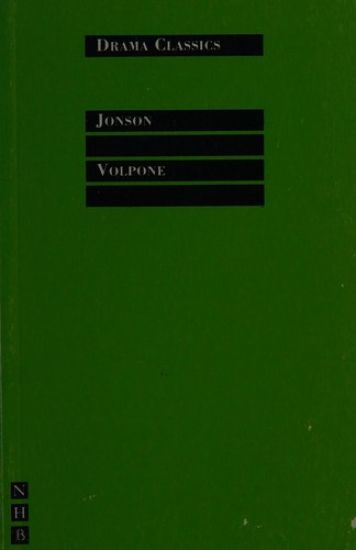
Volpone

Volpone

Ben Jonson

Nick Hern Books
1995
nidottu
Drama Classics: The World's Great Plays at a Great Little Price Ben Jonson's comedy, one of the finest of the Jacobean era. Volpone is a Venetian aristocrat, a loveable rogue who enjoys the cunning pursuit of wealth more than money itself. Pretending to be mortally ill, he watches as his greedy neighbours swarm around him with expensive gifts in the hope of inheriting his fortune. Volpone was premiered by the King's Men at the Globe Theatre, London, in 1606. This edition of Volpone, in the Nick Hern Books Drama Classics series, is edited by R. B. Parker, and introduced by Colin Counsell.
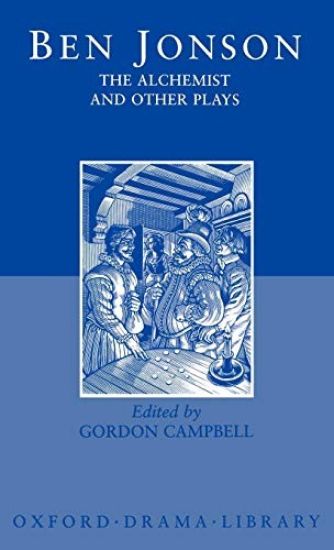
The Alchemist and Other Plays

The Alchemist and Other Plays

Ben Jonson

Clarendon Press
1995
sidottu
This edition brings together Jonson's four great comedies in one volume. Volpone, which was first performed in 1606, dramatizes the corrupting nature of greed in an exuberant satire set in contemporary Venice. The first production of Epicene marked the end of a year-long closure of the theatres because of an epidemic of Plague in 1609; its comedy affirms the consolatory power of laughter at such a time. The Alchemist (1610) deploys the metaphors of alchemical transformation to emphasize the mutability of the characters and ther relationships. In Bartholomew Fair (1614) Jonson ebroils the visitors to the fair in its myriad temptations, exposing the materialistic impulses beneath the apparent godliness of jacobean Puritans. Under the General Editorship of Michael Cordner of the University of York, the texts of the plays have been newly edited and are presented with modernized spelling and punctuation. Stage directions have been added to facilitate the reconstruction of the plays' performance, and there is a scholarly introduction, detailed annotation, and a glossary.
Volpone, or The Fox

Volpone, or The Fox

Ben Jonson

Yale University Press
1977
pokkari
Volpone, or “The Fox,” is one of Jonson’s most popular plays and through the years has been a favorite of both theater-goers and readers. Professor Kernan offers his own interpretation, in a critical introduction that fully exploits the rich imagery, intricate plot development, and skillful delineation of character.
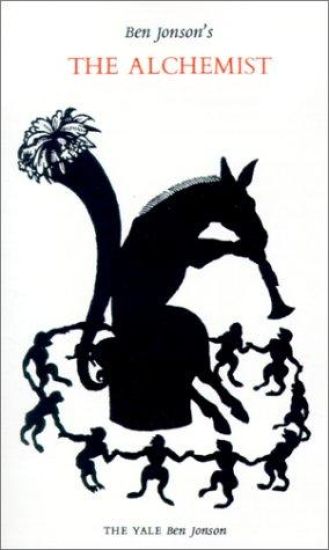
The Alchemist

The Alchemist

Ben Jonson

Yale University Press
1977
pokkari
In none of Ben Jonson’s plays is Renaissance heroic humanism converted to comic reality more obviously and successfully than in The Alchemist. Here the aspiration of the Renaissance to control and remake the world is imaged as a great swindle, alchemy. Jonson parodies philosophers, scientists, the new Protestantism, the great Renaissance merchant adventurers, and the ages’ ideals of military valor and impassioned love. His characters are comic versions of the ways in which the Renaissance sought power, knowledge, and pleasure—they are also a remarkably realistic cross section, ranging from servant through knight, of London’s life. One of the most popular of Jonson’s plays during his lifetime and a favorite throughout the seventeenth century, The Alchemist, was first produced in 1610. In his introduction, Alvin B. Kernan skillfully conveys the vitality and ultimate power of this difficult play. The glosses and explanatory notes clarify Jonson’s language, with all its references to classical and alchemical literature and the contemporary London underworld. In Appendix I, Mr. Kernan discusses Jonson’s use of alchemy and provides a glossary of alchemical terms. Appendix II includes a discussion of the text, sources, and stage history of the play.
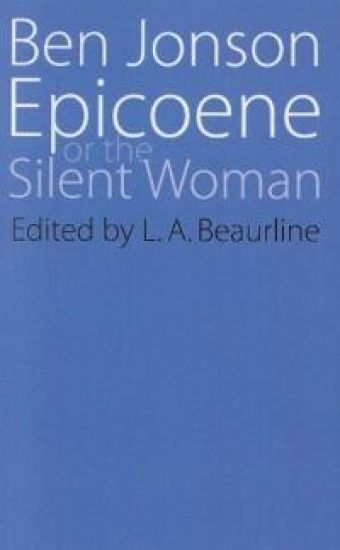
Epicoene or the Slient Woman

Epicoene or the Slient Woman

Ben Jonson; L. A. Beaurline

University of Nebraska Press
1966
pokkari
Ben Jonson (1572–1637), actor, playwright, satirist, and lyric poet, studied under William Camden at Westminster, worked as a bricklayer, served in the army, and was imprisoned twice—once for sedition and once for murder. Epicoene: or, The Silent Woman (1609) is considered one of his greatest comedies, upon which, along with Volpone (1607), The Alchemist (1610), and Bartholomew Fair (1614), his reputation rests. At his death, he was regarded as the leading man of letters in England, and was a major influence on the Cavalier poets, including Robert Herrick, Sir John Suckling, Thomas Carew, and Richard Lovelace.