Kirjojen hintavertailu – 12 903 725 kirjaa ja 27 kauppaa

Kirjailija

Ben Kiernan

Kirjat ja teokset yhdessä paikassa: 8 kirjaa, julkaisuja vuosilta 2004–2019, suosituimpiin kuuluu The Historiography of Genocide. Vertaile teosten hintoja ja tarkista saatavuus suomalaisista kirjakaupoista.

8 kirjaa

Kirjojen julkaisuvuodet: 2004–2019.

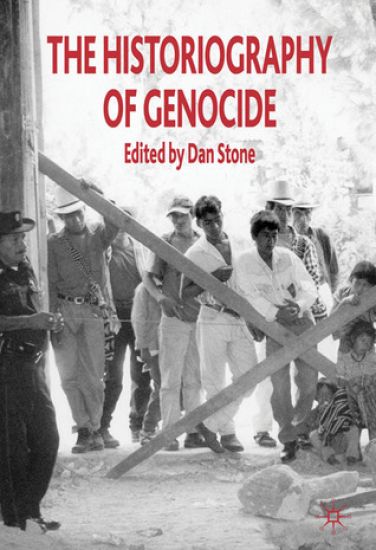
The Historiography of Genocide

The Historiography of Genocide

Anton Weiss-Wendt; Robert Krieken; Alfred A. Cave; Ben Kiernan; Doris Bergen; David Moshman; Victoria Sanford; John Docker; Robert Hitchcock

Palgrave Macmillan
2008
nidottu
The Historiography of Genocide is an indispensable guide to the development of the emerging discipline of genocide studies and the only available assessment of the historical literature pertaining to genocides.
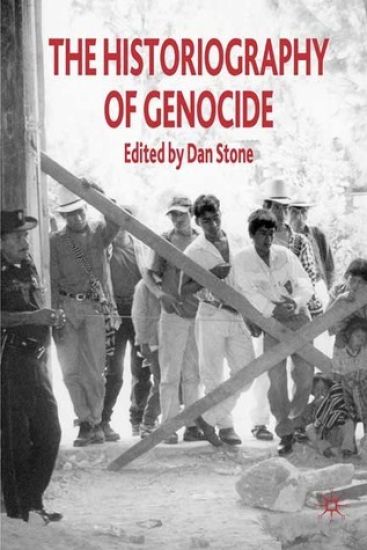
The Historiography of Genocide

The Historiography of Genocide

Anton Weiss-Wendt; Robert Krieken; Alfred A. Cave; Ben Kiernan; Doris Bergen; David Moshman; Victoria Sanford; John Docker; Robert Hitchcock

Palgrave Macmillan
2008
sidottu
The Historiography of Genocide is an indispensable guide to the development of the emerging discipline of genocide studies and the only available assessment of the historical literature pertaining to genocides.
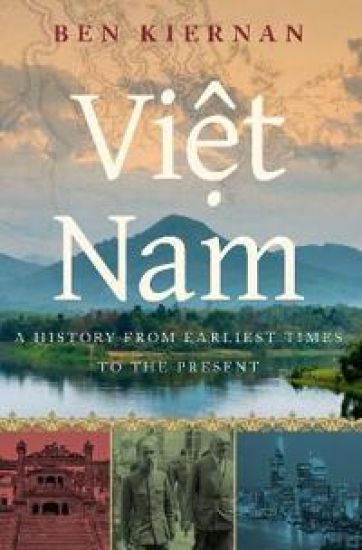
Viet Nam

Viet Nam

Ben Kiernan

Oxford University Press Inc
2019
nidottu
For many Westerners, the name Vietnam evokes images of a bloody televised American war that generated a firestorm of protest and brought conflict into their living rooms. In his sweeping account, Ben Kiernan broadens this vision by narrating the rich history of the peoples who have inhabited the land now known as Viet Nam over the past three thousand years. Despite the tragedies of the American-Vietnamese conflict, Viet Nam has always been much more than a war. Its long history had been characterized by the frequent rise and fall of different political formations, from ancient chiefdoms to imperial provinces, from independent kingdoms to divided regions, civil wars, French colonies, and modern republics. In addition to dramatic political transformations, the region has been shaped by its environment, changing climate, and the critical importance of water, with rivers, deltas, and a long coastline facilitating agricultural patterns, trade, and communications. Kiernan weaves together the many narrative strands of Viet Nam's multi-ethnic populations, including the Chams, Khmers, and Vietnamese, and its multi-religious heritage, from local spirit cults to Buddhism, Confucianism, and Catholicism. He emphasizes the peoples' interactions over the millennia with foreigners, particularly their neighbors in China and Southeast Asia, in engagements ranging from military conflict to linguistic and cultural influences. He sets the tumultuous modern period--marked by French and Japanese occupation, anticolonial nationalism, the American-Vietnamese war, and communist victory--against the continuities evident in the deeper history of the people's relationships with the lands where they have lived. In contemporary times, he explores this one-party state's transformation into a global trading nation, the country's tense diplomatic relationship with China and developing partnership with the United States in maintaining Southeast Asia's regional security, and its uncertain prospects for democracy. Written by a leading scholar of Southeast Asia, Viet Nam presents an authoritative history of an ancient land.

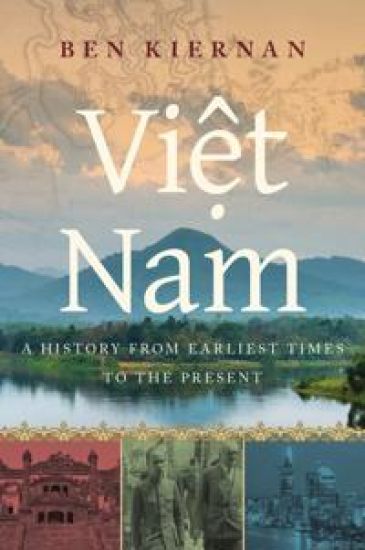
Viet Nam

Viet Nam

Ben Kiernan

Oxford University Press Inc
2017
sidottu
This book narrates the history of the different peoples who have lived in the three major regions of Viet Nam over the past 3,000 years. It brings to life their relationships with these regions' landscapes, water resources, and climatic conditions, their changing cultures and religious traditions, and their interactions with their neighbors in China and Southeast Asia. Key themes include the dramatic impact of changing weather patterns from ancient to medieval and modern times, the central importance of riverine and maritime communications, ecological and economic transformations, and linguistic and literary changes. The country's long experience of regional diversity, multi-ethnic populations, and a multi-religious heritage that ranges from local spirit cults to the influences of Buddhism, Confucianism and Catholicism, makes for a vividly pluralistic narrative. The arcs of Vietnamese history include the rise and fall of different political formations, from chiefdoms to Chinese provinces, from independent kingdoms to divided regions, civil wars, French colonies, and modern republics. In the twentieth century anticolonial nationalism, the worldwide depression, Japanese occupation, a French attempt at reconquest, the traumatic American-Vietnamese war, and the 1975 communist victory all set the scene for the making of contemporary Viet Nam. Rapid economic growth in recent decades has transformed this one-party state into a global trading nation. Yet its rich history still casts a long shadow. Along with other members of the Association of Southeast Asian Nations, Viet Nam is now involved in a tense territorial standoff in the South China Sea, as a rival of China and a "partner" of the United States. If its independence and future geographical unity seem assured, Viet Nam's regional security and prospects for democracy remain clouded.
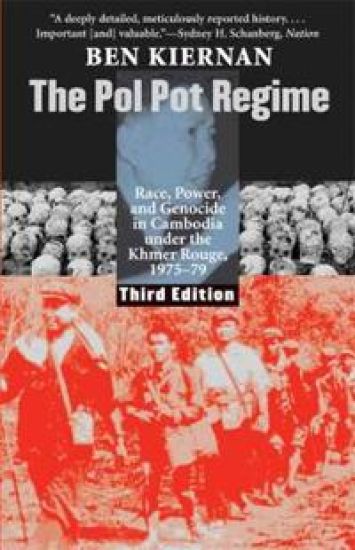
The Pol Pot Regime

The Pol Pot Regime

Ben Kiernan

Yale University Press
2008
pokkari

Halvin toimitettuna 29,50 €

This edition of Ben Kiernan’s definitive account of the Cambodian revolution and genocide includes a new preface that takes the story up to 2008 and the UN-sponsored Khmer Rouge tribunal. “Deeply detailed, meticulously reported. . . . Important [and] valuable.” —Nation "In this authoritative work, Ben Kiernan . . . explores the reasons why Pol Pot's Khmer Rouge revolution became a Cambodian nightmare." —Richard Gough, Times Higher Education Supplement “Perhaps the most complete [account of Pol Pot’s terror] and the closest to Cambodian sources.” —Economist “One of the most important contributions to the subject so far.” —R. B. Smith, Asian Affairs "Kiernan, the leading authority on modern Cambodia, meticulously examines Pol Pot's killing machine and clears up many misconceptions found in earlier studies. . . . An important book for students of genocide as well as scholars of Southeast Asia." —Library Journal "[A] detailed and chilling history." —Asiaweek "The most detailed history to date of the genocidal Khmer Rouge regime. . . . This book . . . will certainly be the benchmark against which all future research on the Khmer Rouge must be measured. Very highly recommended." —Choice
Genocide and Resistance in Southeast Asia

Genocide and Resistance in Southeast Asia

Ben Kiernan

AldineTransaction
2007
sidottu
Two modern cases of genocide and extermination began in Southeast Asia in the same year. Pol Pot's Khmer Rouge regime ruled Cambodia from 1975 to 1979, and Indonesian forces occupied East Timor from 1975 to 1999. This book examines the horrific consequences of Cambodian communist revolution and Indonesian anti-communist counterinsurgency. It also chronicles the two cases of indigenous resistance to genocide and extermination, the international cover-ups that obstructed documentation of these crimes, and efforts to hold the perpetrators legally accountable. The perpetrator regimes inflicted casualties in similar proportions. Each caused the deaths of about one-fifth of the population of the nation. Cambodia's mortality was approximately 1.7 million, and approximately 170,000 perished in East Timor. In both cases, most of the deaths occurred in the five-year period from 1975 to1980. In addition, Cambodia and East Timor not only shared the experience of genocide but also of civil war, international intervention, and UN conflict resolution. U. S. policymakers supported the invading Indonesians in Timor, as well as the indigenous Khmer Rouge in Cambodia. Both regimes exterminated ethnic minorities, including local Chinese, as well as political dissidents. Yet the ideological fuel that ignited each conflagration was quite different. Jakarta pursued anti-communism; the Khmer Rouge were communists. In East Timor the major Indonesian goal was conquest. In Cambodia, the Khmer Rouge's goal was revolution. Maoist ideology influenced Pol Pot's regime, but it also influenced the East Timorese resistance to the Indonesia's occupiers. Genocide and Resistance in Southeast Asia is significant both for its historical documentation and for its contribution to the study of the politics and mechanisms of genocide. It is a fundamental contribution that will be read by historians, human rights activists, and genocide studies specialists.
Genocide and Resistance in Southeast Asia

Genocide and Resistance in Southeast Asia

Ben Kiernan

AldineTransaction
2007
nidottu
Two modern cases of genocide and extermination began in Southeast Asia in the same year. Pol Pot's Khmer Rouge regime ruled Cambodia from 1975 to 1979, and Indonesian forces occupied East Timor from 1975 to 1999. This book examines the horrific consequences of Cambodian communist revolution and Indonesian anti-communist counterinsurgency. It also chronicles the two cases of indigenous resistance to genocide and extermination, the international cover-ups that obstructed documentation of these crimes, and efforts to hold the perpetrators legally accountable. The perpetrator regimes inflicted casualties in similar proportions. Each caused the deaths of about one-fifth of the population of the nation. Cambodia's mortality was approximately 1.7 million, and approximately 170,000 perished in East Timor. In both cases, most of the deaths occurred in the five-year period from 1975 to1980. In addition, Cambodia and East Timor not only shared the experience of genocide but also of civil war, international intervention, and UN conflict resolution. U. S. policymakers supported the invading Indonesians in Timor, as well as the indigenous Khmer Rouge in Cambodia. Both regimes exterminated ethnic minorities, including local Chinese, as well as political dissidents. Yet the ideological fuel that ignited each conflagration was quite different. Jakarta pursued anti-communism; the Khmer Rouge were communists. In East Timor the major Indonesian goal was conquest. In Cambodia, the Khmer Rouge's goal was revolution. Maoist ideology influenced Pol Pot's regime, but it also influenced the East Timorese resistance to the Indonesia's occupiers. Genocide and Resistance in Southeast Asia is significant both for its historical documentation and for its contribution to the study of the politics and mechanisms of genocide. It is a fundamental contribution that will be read by historians, human rights activists, and genocide studies specialists.
How Pol Pot Came to Power

How Pol Pot Came to Power

Ben Kiernan

Yale University Press
2004
pokkari
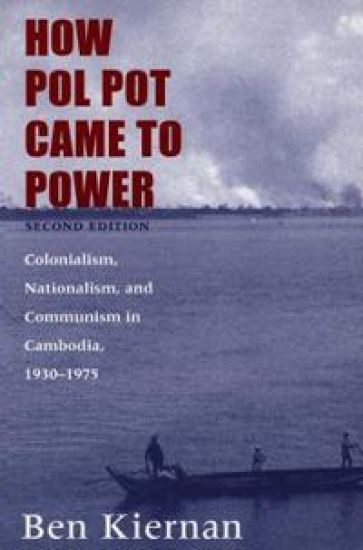
How did Pol Pot, a tyrant comparable to Hitler and Stalin in his brutality and contempt for human life, rise to power? This authoritative book explores what happened in Cambodia from 1930 to 1975, tracing the origins and trajectory of the Cambodian Communist movement and setting the ascension of Pol Pot’s genocidal regime in the context of the conflict between colonialism and nationalism. A new preface bring this edition up to date. Praise for the first edition:“Given the highly secretive nature of Pol Pot’s activities, the precise circumstances and manoeuvres that propelled him to the top of the heap will perhaps never be known. But Kiernan has come impressively close to it. . . . And he has presented it in a wide perspective, drawing interesting comparisons with communist movements in Indonesia, Thailand, Burma and India. . . . Incisive.”—T. J. S. George, Asiaweek, “Editor’s Pick of the Month” “A rich, gruesome and compelling tale. . . fascinating, well-researched and measured . . . a model of judgement and scholarship.”—Fred Halliday, New Statesman“[Kiernan’s] capacity for dogged research on three continents, and his mastery of every ideological nuance. . . [are] awe-inspiring.”—Dervla Murphy, Irish Times