Kirjojen hintavertailu – 12 859 818 kirjaa ja 27 kauppaa

Kirjailija

Ben Lerner

Kirjat ja teokset yhdessä paikassa: 48 kirjaa, julkaisuja vuosilta 2004–2029, suosituimpiin kuuluu Puhtaaksikirjoitus. Vertaile teosten hintoja ja tarkista saatavuus suomalaisista kirjakaupoista.

48 kirjaa

Kirjojen julkaisuvuodet: 2004–2029.

Generation XL

Generation XL

Joseph Mercola; Ben Lerner

Thomas Nelson Publishers
2013
nidottu
Childhood is a pivotal time for good nutrition. Organs and blood streams nurtured with junk food cannot build a foundation for good health and longevity as an adult. Drs. Joseph Mercola and Ben Lerner believe profound inactivity, addiction to electronic media, and diets of super-sized fast food and sugar-laden beverages have created a national emergency. Generation XL is a clarion call and a detailed guide to giving your child a vibrant, successful future and a healthy, wholesome, invigorating youth. As children riddled with pain, illness, learning disorders, and even depression begin to show up everywhere, rather than looking at brain development, nutrition, and lack of movement as the culprits, concerned parents are turning to more and more medications. Think about that. Is that how we were designed? To make medication a way of life and to be drugged early on a consistent basis? What does the future hold for us when kids are overweight, out of shape, and taking medications for the effects? What kind of children are we creating? This is not a diet book-far, far from it. Dropping another diet book into the same culture will do nothing but take up more room on your shelf. Generation XL shows you how kids were created to eat, breathe, sleep, run, and live. At the same time, Drs. Mercola and Lerner help you change your family culture and recognize where the culture around you isn't working so you can avoid it or help to change it. Since prevention is always easier (and wiser) than cure, incorporating the lifestyle changes suggested in Generation XL gives your child a realistic way to reach and maintain a healthy weight; dramatically reduce the risk of developing type 2 diabetes, cardiovascular disease, and other health risks; and build a strong body and positive mental attitude, maximizing his or her IQ and giving the best chance for success.

Leaving the Atocha Station

Leaving the Atocha Station

Ben Lerner

Coffee House Press
2011
pokkari

Halvin toimitettuna 20,30 €

Adam Gordon is a brilliant, if highly unreliable, young American poet on a prestigious fellowship in Madrid, struggling to establish his sense of self and his relationship to art. What is actual when our experiences are mediated by language, technology, medication, and the arts? Is poetry an essential art form, or merely a screen for the reader's projections? Instead of following the dictates of his fellowship, Adam's "research" becomes a meditation on the possibility of the genuine in the arts and beyond: are his relationships with the people he meets in Spain as fraudulent as he fears his poems are? A witness to the 2004 Madrid train bombings and their aftermath, does he participate in historic events or merely watch them pass him by? In prose that veers between the comic and tragic, the self-contemptuous and the inspired, Leaving the Atocha Station is a portrait of the artist as a young man in an age of Google searches, pharmaceuticals, and spectacle. Born in Topeka, Kansas, in 1979, Ben Lerner is the author of three books of poetry The Lichtenberg Figures, Angle of Yaw, and Mean Free Path. He has been a finalist for the National Book Award and the Northern California Book Award, a Fulbright Scholar in Spain, and the recipient of a 2010-2011 Howard Foundation Fellowship. In 2011 he became the first American to win the Preis der Stadt M nster f r Internationale Poesie. Leaving the Atocha Station is his first novel.
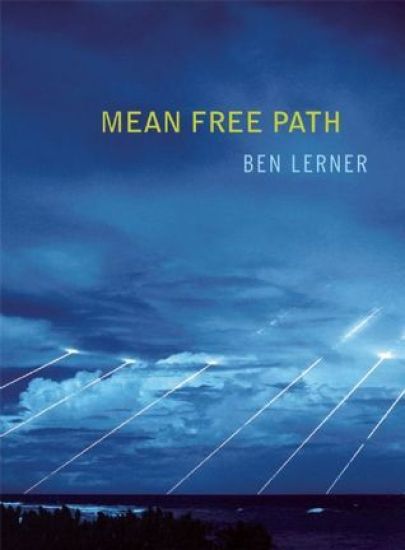
Mean Free Path

Mean Free Path

Ben Lerner

Copper Canyon Press
2010
pokkari
"Lerner is] among the most promising young poets now writing."--Publishers Weekly"Sharp, ambitious, and impressive." --Boston ReviewNational Book Award finalist Ben Lerner turns to science once again for his guiding metaphor. "Mean free path" is the average distance a particle travels before colliding with another particle. The poems in Lerner's third collection are full of layered collisions--repetitions, fragmentations, stutters, re-combinations--that track how language threatens to break up or change course under the emotional pressures of the utterance. And then there's the larger collision of love, and while Lerner questions whether love poems are even possible, he composes a gorgeous, symphonic, and complicated one. You startled me. I thought you were sleepingIn the traditional sense. I like lookingAt anything under glass, especiallyGlass. You called me. Like overheardDreams. I'm writing this one as a womanComfortable with failure. I promise I will neverBut the predicate withered. If you areUncomfortable seeing this as portraitureClose your eyes. No, you startledBen Lerner is the author of three books of poetry and was named a finalist for the National Book Award for his second book, Angle of Yaw. He holds degrees from Brown University, co-founded No: a journal of the arts, and teaches at the University of Pittsburgh.
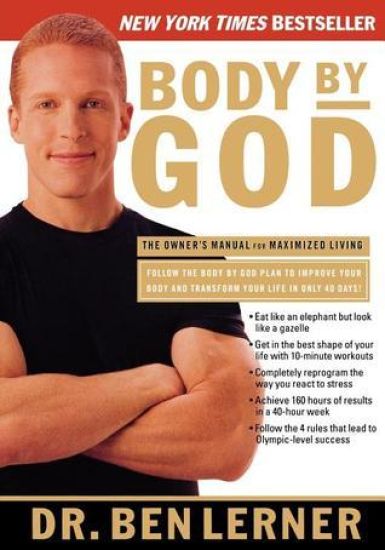
Body by God

Body by God

Ben Lerner

Thomas Nelson Publishers
2007
nidottu
Your body is by God. God preprogrammed you to look great, have outrageous health, and experience incredible happiness. In the human body, God created a perfect design, equipped with all the organs, tissues, and cells necessary for health, production, and reproduction. The problem, asserts Dr. Ben Lerner, is when we as humans interfere with God's design for our bodies. Junk food, high-stress living, and neglecting exercise are just a few of the things we do to hinder our bodies' performance. In Body by God, Dr. Lerner offers a comprehensive plan for getting in touch with our bodies in four areas: nutrition, exercise, stress management, and time management. His "5-in-5" plan is designed to instill the good habits that will lead to optimum health benefits. Readers will learn how to get in shape with 10-minute workouts, reprogram the way they react to stress, and more. "Owner's Manual Tips" give specific ways to apply the material to real life. Our bodies are "fearfully and wonderfully made." With the help of Body by God, readers will learn how to achieve the highest level of performance from God's handiwork.
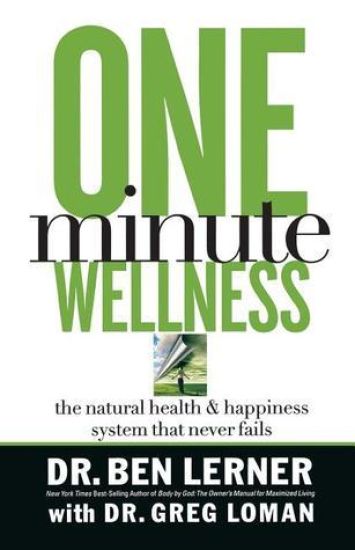
One Minute Wellness

One Minute Wellness

Ben Lerner

Thomas Nelson Publishers
2007
nidottu
No more dependence on cold medicines, prescription pills, and anti-depressants. With One-Minute Wellness, you will revitalize every area of your well-being. And the bonus fiction story uniquely illustrates the authors' strategies at work in ordinary lives-a terrific motivator as you optimize your own life.
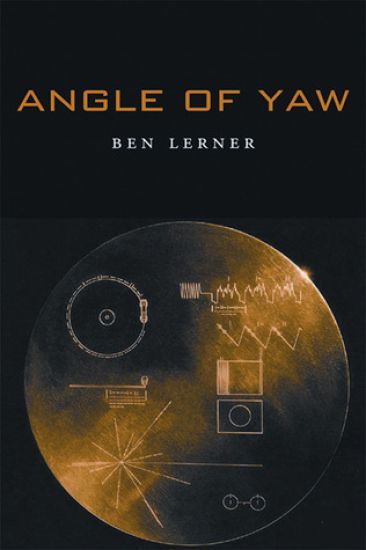
Angle of Yaw

Angle of Yaw

Ben Lerner

Copper Canyon Press
2006
pokkari
In his bold second book, Ben Lerner molds philosophical insight, political outrage, and personal experience into a devastating critique of mass society. Angle of Yaw investigates the fate of public space, public speech, and how the technologies of viewing--aerial photography in particular--feed our culture an image of itself. And it's a spectacular view. The man observes the action on the field with the tiny television he brought to the stadium. He is topless, painted gold, bewigged. His exaggerated foam index finger indicates the giant screen upon which his own image is now displayed, a model of fanaticism. He watches the image of his watching the image on his portable TV on his portable TV. He suddenly stands with arms upraised and initiates the wave that will consume him. Haunted by our current "war on terror," much of the book was written while Lerner was living in Madrid (at the time of the Atocha bombings and their political aftermath), as the author steeped himself in the history of Franco and fascism. Regardless of when or where it was written, Angle of Yaw will further establish Ben Lerner as one of our most intriguing and least predictable poets.
The Lichtenberg Figures

The Lichtenberg Figures

Ben Lerner

Copper Canyon Press
2004
pokkari
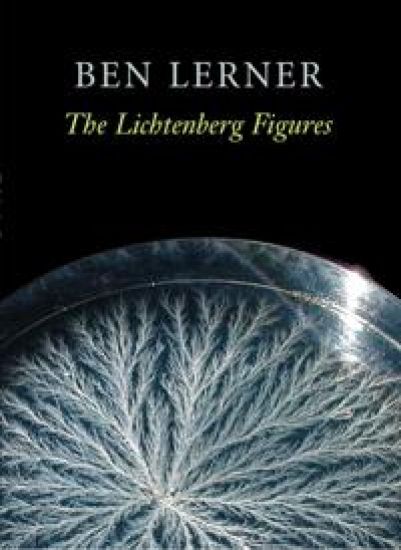
The Lichtenberg Figures, winner of the Hayden Carruth Award, is an unconventional sonnet sequence that interrogates the relationship between language and memory, violence and form. "Lichtenberg figures" are fern-like electrical patterns that can appear on (and quickly fade from) the bodies of people struck by lightning. Throughout this playful and elegiac debut--with its flashes of autobiography, intellection, comedy, and critique--the vocabulary of academic theory collides with American slang and the idiom of the Old Testament meets the jargon of the Internet to display an eclectic sensibility. Ben Lerner, the youngest poet ever published by Copper Canyon Press, is co-founder of No: a journal of the arts. He earned an MFA from Brown University and is currently a Fulbright scholar in Spain.
Transkripsjon

Transkripsjon

Ben Lerner

Cappelen Damm AS
Sidottu
Ny roman fra amerikansk litteraturs ledende samtidsforfatter. Fortelleren i Transkripsjon reiser tilbake til sin studieby for å gjøre et intervju med en tidligere foreleser. På hotellrommet mister han telefonen i vasken, og blir plutselig revet ut av den alltid allerede medierte virkeligheten han er vant til å befinne seg. Han har ikke lenger mulighet til å gjøre opptak under intervjuet, men gjennomfører likevel og transkriberer etter hukommelsen. «Denne romanen er en nøkkel til vår merkelige, merkelige tid.» Bernhard Ellefsen, Morgenbladet «En utsøkt, formskiftende roman.» Giles Harvey, The New Yorker «[Lerners] merkeligste og mest rørende bok så langt (…) En roman som forsøker å omforme de mest fremmedgjørende av våre felles plager – den menneskelige kroppen i uorden, den relativt nye samfunnsangsten for skjermavhengighet – til en mer human estetisk opplevelse.» Kevin Lozano, New York Magazine «Dette kan være den beste romanen du leser i år (…) Lerners stil er særegen og vidunderlig.» Cal Revely-Calder, The Telegraph «Transkripsjon viser seg å være noe mer, langt mer, enn en antropologi over den digitale moderniteten.» Sukhdev Sandhu, The Guardian