Kirjojen hintavertailu – 12 859 828 kirjaa ja 27 kauppaa

Kirjailija

Ben Russell

Kirjat ja teokset yhdessä paikassa: 5 kirjaa, julkaisuja vuosilta 2013–2024, suosituimpiin kuuluu The Economics of the Roman Stone Trade. Vertaile teosten hintoja ja tarkista saatavuus suomalaisista kirjakaupoista.

5 kirjaa

Kirjojen julkaisuvuodet: 2013–2024.

The 'Place of Palms': An Urban Park at Aphrodisias: Results of the Mica and Ahmet Ertegun South Agora Pool Project
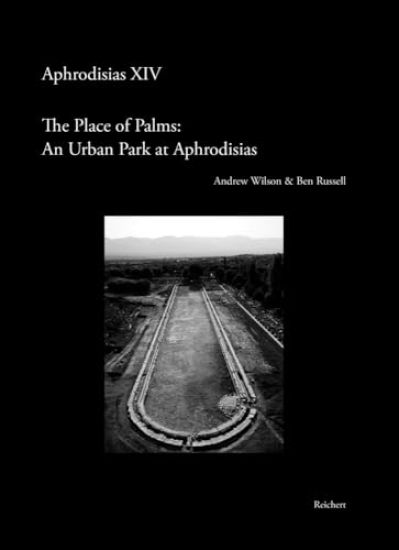
Excavations at Aphrodisias in the 1980s revealed an extraordinary monumental water-basin (170 x 30m) in the centre of a colonnaded square, formerly called the 'South Agora'. A hypothesis that the complex was not an agora at all but 'the place of palms' mentioned by a sixth-century benefactor in an inscription on its Propylon was demonstrated during a five-year excavation project - The Mica and Ahmet Ertegun South Agora Pool Project. This volume publishes the rich results of this excavation and the long life of the complex from the first to the sixth century and beyond. The pool was surrounded by palm trees and Ionic stoas, in the manner of the urban parks or porticus familiar in early imperial Rome. The Aphrodisian example gives us an entirely new sense of what these porticus complexes were like.
The Economics of the Roman Stone Trade

The Economics of the Roman Stone Trade

Ben Russell

Oxford University Press
2019
nidottu
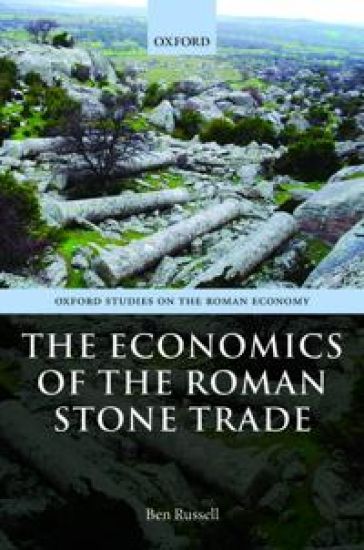
The use of stone in vast quantities is a ubiquitous and defining feature of the material culture of the Roman world. In this volume, Russell provides a new and wide-ranging examination of the production, distribution, and use of carved stone objects throughout the Roman world, including how enormous quantities of high-quality white and polychrome marbles were moved all around the Mediterranean to meet the demand for exotic material. The long-distance supply of materials for artistic and architectural production, not to mention the trade in finished objects like statues and sarcophagi, is one of the most remarkable features of the Roman world. Despite this, it has never received much attention in mainstream economic studies. Focusing on the market for stone and its supply, the administration, distribution, and chronology of quarrying, and the practicalities of stone transport, Russell offers a detailed assessment of the Roman stone trade and how the relationship between producer and customer functioned even over considerable distances.
Noah Drake And The Dragon Killer: A Christian Fiction Adventure

Noah Drake And The Dragon Killer: A Christian Fiction Adventure

Ben Russell

Createspace Independent Publishing Platform
2016
nidottu
Adventures in Odyssey meets Jurassic ParkWhat if you discovered a real, living dinosaur? Got caught up in the adventure and couldn't put it down ★★★★★We enjoyed it from beginning to end ★★★★★This book is amazing It explains God's creation in easy to understand terms ★★★★★ Noah Drake dreamed of the day he could dig up dinosaur bones and strike it rich, until he discovered a living dinosaur. But his dreams of fame and fortune stir up trouble when he meets a couple of dinosaur hunters. Will Noah get the desires of his heart or will he save a dinosaur from extinction? Biblical Creation, the love of God and the love of familyIf you like Jonathan Park, Ken Ham or Kent Hovind, you'll love Noah Drake
James Watt

James Watt

Ben Russell

Reaktion Books
2014
sidottu
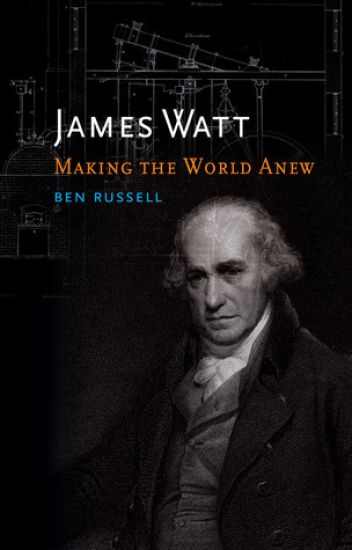
This book explores James Watt’s early years and interests, as well as his highly successful 25-year partnership with the industrialist Matthew Boulton. But while traditional biographies of Watt concentrate on the steam engine, James Watt: Making the World Anew tells a richer story: it explores the processes by which ephemeral ideas were transformed into tangible artefacts, and places Watt within the context of Britain’s early industrial transformation. Watt’s work is emblematic of a wider culture of multifaceted artisanship, and this book probes the widely held motivation for making things, looking not only at what was produced but also why. It draws on a rich range of resources – from archival material and biographies on Watt to objects themselves, and sources from fields as diverse as ceramics, antique systems of proportion, sculpture and machine making. Generously illustrated, James Watt is a unique, expansive exploration of the engineer’s career. His life is used as a lens through which the broader practices of manufacturing in the eighteenth and early nineteenth centuries, and the Industrial Revolution, are explored. Published in association with the Science Museum, London.
The Economics of the Roman Stone Trade

The Economics of the Roman Stone Trade

Ben Russell

Oxford University Press
2013
sidottu
This innovative monograph series reflects a vigorous revival of interest in the ancient economy, focusing on the Mediterranean world under Roman rule (c.100 BC to AD 350). Carefully quantified archaeological and documentary data will be integrated to help ancient historians, economic historians, and archaeologists think about economic behaviour collectively rather than from separate perspectives. The volumes will include a substantial comparative element and thus be of interest to historians of other periods and places. The use of stone in vast quantities is a ubiquitous and defining feature of the material culture of the Roman world. In this volume, Russell provides a new and wide-ranging examination of the production, distribution, and use of carved stone objects throughout the Roman world, including how enormous quantities of high-quality white and polychrome marbles were moved all around the Mediterranean to meet the demand for exotic material. The long-distance supply of materials for artistic and architectural production, not to mention the trade in finished objects like statues and sarcophagi, is one of the most remarkable features of the Roman world. Despite this, it has never received much attention in mainstream economic studies. Focusing on the market for stone and its supply, the administration, distribution, and chronology of quarrying, and the practicalities of stone transport, Russell offers a detailed assessment of the Roman stone trade and how the relationship between producer and customer functioned even over considerable distances.