Kirjojen hintavertailu – 12 903 735 kirjaa ja 27 kauppaa

Kirjailija

Ben Saul

Kirjat ja teokset yhdessä paikassa: 8 kirjaa, julkaisuja vuosilta 2006–2017, suosituimpiin kuuluu The International Covenant on Economic, Social and Cultural Rights. Vertaile teosten hintoja ja tarkista saatavuus suomalaisista kirjakaupoista.

8 kirjaa

Kirjojen julkaisuvuodet: 2006–2017.

The International Covenant on Economic, Social and Cultural Rights

The International Covenant on Economic, Social and Cultural Rights

Ben Saul; David Kinley; Jacqueline Mowbray

Oxford University Press
2016
nidottu
Economic, social, and cultural rights are finally coming of age. This book brings together all essential documents, materials, and case law relating to the International Covenant on Economic, Social and Cultural Rights (ICESCR) - one of the most important human rights instruments in international law - and its Optional Protocol. This book presents extracts from primary materials alongside critical commentary and analysis, placing the documents in their wider context and situating economic, social, and cultural rights within the broader human rights framework. There is increasing interest internationally, regionally, and in domestic legal systems in the protection of economic, social, and cultural rights. The Optional Protocol of 2008 allows for individual communications to be made to the UN Committee on Economic, Social and Cultural Rights after its entry into force in 2013. At the regional level, socio-economic rights are well embedded in human rights systems in Europe, Africa and the Americas. At the national level, constitutions and courts have increasingly regarded socio-economic rights as justiciable, narrowing the traditional divide with civil and political rights. This book contextualises these developments in the context of the ICESCR. It provides detailed analysis of the ICESCR structured around its articles, drawing on national as well as international case law and materials, and containing all of the key primary materials in its extensive appendices. New in paperback, this book is an indispensable resource for students of international human rights law.
The International Covenant on Economic, Social and Cultural Rights

The International Covenant on Economic, Social and Cultural Rights

Ben Saul; David Kinley; Jacqueline Mowbray

Oxford University Press
2014
sidottu
Economic, social and cultural rights are finally coming of age. This book brings together all essential documents, materials, and case law relating to the International Covenant on Economic, Social and Cultural Rights (ICESCR) - one of the most important human rights instruments in international law - and its Optional Protocol. This book presents extracts from primary materials alongside critical commentary and analysis, placing the documents in their wider context and situating economic, social, and cultural rights within the broader human rights framework. There is increasing interest internationally, regionally, and in domestic legal systems in the protection of economic, social, and cultural rights. The Optional Protocol of 2008 allows for individual communications to be made to the UN Committee on Economic, Social and Cultural Rights after its entry into force in 2013. At the regional level, socio-economic rights are well embedded in human rights systems in Europe, Africa and the Americas. At the national level, constitutions and courts have increasingly regarded socio-economic rights as justiciable, narrowing the traditional divide with civil and political rights. This book contextualises these developments in the context of the ICESCR. It provides detailed analysis of the ICESCR structured around its articles, drawing on national as well as international case law and materials, and containing all of the key primary materials in its extensive appendices. This book is indispensible for the judiciary, human rights practitioners, government legal advisers and agencies, national human rights institutions, international organisations, regional human rights bodies, NGOs and human rights activists, academics, and students alike.
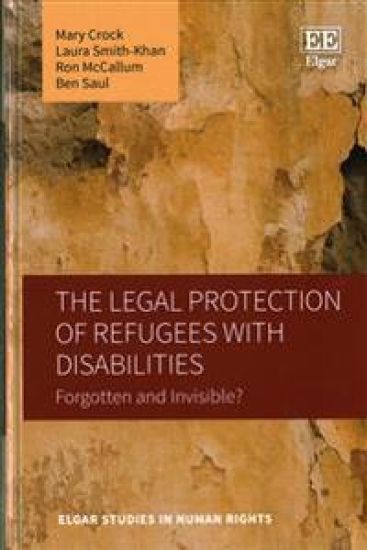
The Legal Protection of Refugees with Disabilities

The Legal Protection of Refugees with Disabilities

Mary Crock; Laura Smith-Khan; Ron McCallum; Ben Saul

Edward Elgar Publishing Ltd
2017
sidottu
Refugees living with disabilities are often forgotten or invisible during acute crises of human displacement. This groundbreaking work examines the experiences of persons with disabilities who have crossed borders in search of protection from disasters or conflict, and analyses the existing legal frameworks for their protection. The authors deftly explore the intersection between one of the oldest international human rights treaties, the 1951 Refugee Convention, with one of the newest, the Convention on the Rights of Persons with Disabilities (CRPD). Drawing on pioneering fieldwork in six countries - Malaysia, Indonesia, Pakistan, Uganda, Jordan and Turkey - this book examines how the CRPD is, or should be, changing the way that governments and aid agencies engage with and accommodate refugees with disabilities. Its timeliness is underscored by the adoption in 2016 of the UN Charter on Inclusion of Persons with Disabilities in Humanitarian Action at the World Humanitarian Summit. Engaging and thought-provoking, this book will captivate any scholar studying international law, development, disability rights and refugee and forced migration studies. It is also an imperative resource for practitioners and policymakers in the humanitarian and development sector, as well as international human rights organisations.
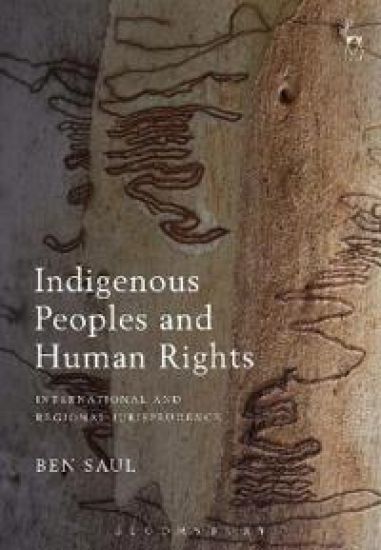
Indigenous Peoples and Human Rights

Indigenous Peoples and Human Rights

Ben Saul

Hart Publishing
2016
nidottu
Indigenous Peoples and Human Rights explores how general human rights standards have enabled, empowered and constrained indigenous peoples in claiming and defending their essential economic, social, cultural, civil and political interests. The book examines the jurisprudence of United Nations treaty committees and regional human rights bodies (in Africa, the Americas and Europe) that have interpreted and applied human rights standards to the special circumstances and experiences of indigenous peoples. It focuses particularly on how human rights laws since the 1960s have been drawn upon by indigenous activists and victims to protect their interests in ancestral lands, natural resources, culture and language. It further explores the right to indigenous self-determination; civil and political rights; economic, social and cultural rights (including labour rights); family and children’s rights; violence and discrimination against indigenous peoples; and access to justice and remedies for violations. The book also discusses international and regional efforts to define who is ‘indigenous’ and who is a ‘minority’, and the legal relationship between indigenous individuals and their communities. The jurisprudence considered in this book significantly shaped the UN Declaration on the Rights of Indigenous Peoples 2007, which particularises and adapts general human rights standards for indigenous peoples. The book concludes by exploring future normative and implementation challenges in the light of the standard setting and consolidation, and political momentum, surrounding the UN Declaration and associated UN human rights mechanisms.
The Mekong: A Socio-legal Approach to River Basin Development

The Mekong: A Socio-legal Approach to River Basin Development

Ben Boer; Philip Hirsch; Fleur Johns; Ben Saul; Natalia Scurrah

Routledge
2015
sidottu
An international river basin is an ecological system, an economic thoroughfare, a geographical area, a font of life and livelihoods, a geopolitical network and, often, a cultural icon. It is also a socio-legal phenomenon. This book is the first detailed study of an international river basin from a socio-legal perspective. The Mekong River Basin, which sustains approximately 70 million people across Cambodia, China, Laos, Myanmar, Thailand and Vietnam, provides a prime example of the socio-legal complexities of governing a transboundary river and its tributaries. The book applies its socio-legal analysis to bring a fresh approach to understanding conflicts surrounding water governance in the Mekong River Basin. The authors describe the wide range of uses being made of legal doctrine and legal argument in ongoing disputes surrounding hydropower development in the Basin, putting to rest lingering caricatures of a single, ‘ASEAN’ way of navigating conflict. They call into question some of the common assumptions concerning the relationship between law and development. The book also sheds light on important questions concerning the global hybridization or crossover of public and private power and its ramifications for water governance. With current debates and looming conflicts over water governance globally, and over shared rivers in particular, these issues could not be more pressing.
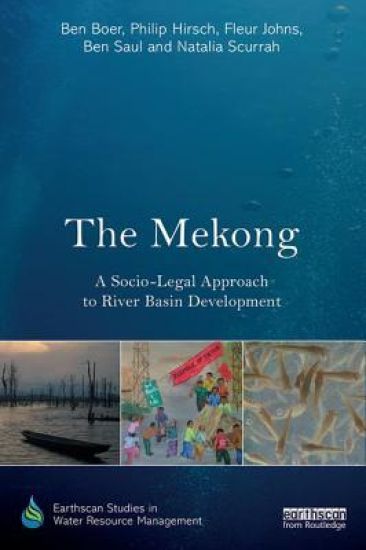
The Mekong: A Socio-legal Approach to River Basin Development

The Mekong: A Socio-legal Approach to River Basin Development

Ben Boer; Philip Hirsch; Fleur Johns; Ben Saul; Natalia Scurrah

Routledge
2015
nidottu
An international river basin is an ecological system, an economic thoroughfare, a geographical area, a font of life and livelihoods, a geopolitical network and, often, a cultural icon. It is also a socio-legal phenomenon. This book is the first detailed study of an international river basin from a socio-legal perspective. The Mekong River Basin, which sustains approximately 70 million people across Cambodia, China, Laos, Myanmar, Thailand and Vietnam, provides a prime example of the socio-legal complexities of governing a transboundary river and its tributaries. The book applies its socio-legal analysis to bring a fresh approach to understanding conflicts surrounding water governance in the Mekong River Basin. The authors describe the wide range of uses being made of legal doctrine and legal argument in ongoing disputes surrounding hydropower development in the Basin, putting to rest lingering caricatures of a single, ‘ASEAN’ way of navigating conflict. They call into question some of the common assumptions concerning the relationship between law and development. The book also sheds light on important questions concerning the global hybridization or crossover of public and private power and its ramifications for water governance. With current debates and looming conflicts over water governance globally, and over shared rivers in particular, these issues could not be more pressing.
Defining Terrorism in International Law

Defining Terrorism in International Law

Ben Saul

Oxford University Press
2008
nidottu
Despite numerous efforts since the 1920s, the international community has failed to define or criminalize 'terrorism' in international law. This book first explores the policy reasons for defining and criminalizing terrorism, before proposing the basic elements of an international definition. Terrorism should be defined and criminalized because it seriously undermines fundamental human rights, jeopardizes the State and peaceful politics, and may threaten international peace and security. Definition would also help to distinguish political from private violence, eliminating the overreach of the many 'sectoral' anti-terrorism treaties. A definition may also help to confine the scope of UN Security Council resolutions since 11 September 2001, which have encouraged States to pursue unilateral and excessive counter-terrorism measures. Defining terrorism as a discrete international crime normatively recognizes and protects vital international community values and interests, symbolically expresses community condemnation, and stigmatizes offenders. Any definition of terrorism must also accommodate reasonable claims to political violence, particularly against repressive governments, and this book examines the range of exceptions, justifications, excuses, defences, and amnesties potentially available to terrorists, as well as purported exceptions such as self-determination struggles, 'State terrorism', and armed conflicts. While this book seeks to minimize recourse to violence, it recognises that international law should not become complicit in oppression by criminalizing legitimate forms of political resistance. In the absence of an international definition, the remainder of the book explores how the international community has responded to terrorism in international and 'regional' treaties, the United Nations system, and in customary law. The final part of the book explores the distinctive prohibitions and crime of 'terrorism' in armed conflict under international humanitarian law.
Defining Terrorism in International Law

Defining Terrorism in International Law

Ben Saul

Oxford University Press
2006
sidottu
Despite numerous efforts since the 1920s, the international community has failed to define or criminalize 'terrorism' in international law. This book first explores the policy reasons for defining and criminalizing terrorism, before proposing the basic elements of an international definition. Terrorism should be defined and criminalized because it seriously undermines fundamental human rights, jeopardizes the State and peaceful politics, and may threaten international peace and security. Definition would also help to distinguish political from private violence, eliminating the overreach of the many 'sectoral' anti-terrorism treaties. A definition may also help to confine the scope of UN Security Council resolutions since 11 September 2001, which have encouraged States to pursue unilateral and excessive counter-terrorism measures. Defining terrorism as a discrete international crime normatively recognizes and protects vital international community values and interests, symbolically expresses community condemnation, and stigmatizes offenders. Any definition of terrorism must also accommodate reasonable claims to political violence, particularly against repressive governments, and this book examines the range of exceptions, justifications, excuses, defences and amnesties potentially available to terrorists, as well as purported exceptions such as self-determination struggles, 'State terrorism' and armed conflicts. While this book seeks to minimize recourse to violence, it recognises that international law should not become complicit in oppression by criminalizing legitimate forms of political resistance. In the absence of an international definition, the remainder of the book explores how the international community has responded to terrorism in international and 'regional' treaties, the United Nations system, and in customary law. The final part of the book explores the distinctive prohibitions and crime of 'terrorism' in armed conflict under international humanitarian law.