Kirjailija
Ben Witherington
Kirjat ja teokset yhdessä paikassa: 57 kirjaa, julkaisuja vuosilta 1994–2026, suosituimpiin kuuluu Paul of Arabia. Vertaile teosten hintoja ja tarkista saatavuus suomalaisista kirjakaupoista.
57 kirjaa
Kirjojen julkaisuvuodet: 1994–2026.



Art West is enjoying his new life in North Carolina when he gets a phone call from his old friend and classmate and fellow archaeologist, Charlie. It seems a major discovery has been made at a dig at the back of the Vatican property--the tomb of Andronicus and Junia, apostles of the Lord, and other Jewish Christians as well. Charlie is in over his head, and calls in Art for help. What will the Catholic hierarchy make of the evidence of a female apostle right under their own territory? Why has the press suspected the Vatican of trying to bury its Jewish past? Set in Rome and other Italian venues, this novel explores the evidence for women as apostles and leaders in early Christianity, and various interesting aspects of Roman culture--including the famous graffiti artists. Once again Art West and his friends Grace and Khalil are called in to interpret Christian history, this time for the Pope. As the novel demonstrates, Christian history is always full of amazing and interesting surprises.
Art West is enjoying his new life in North Carolina when he gets a phone call from his old friend and classmate and fellow archaeologist, Charlie. It seems a major discovery has been made at a dig at the back of the Vatican property--the tomb of Andronicus and Junia, apostles of the Lord, and other Jewish Christians as well. Charlie is in over his head, and calls in Art for help. What will the Catholic hierarchy make of the evidence of a female apostle right under their own territory? Why has the press suspected the Vatican of trying to bury its Jewish past? Set in Rome and other Italian venues, this novel explores the evidence for women as apostles and leaders in early Christianity, and various interesting aspects of Roman culture--including the famous graffiti artists. Once again Art West and his friends Grace and Khalil are called in to interpret Christian history, this time for the Pope. As the novel demonstrates, Christian history is always full of amazing and interesting surprises.
When was the last time you heard a sermon on the theological importance of play? What do rest, eating, studying -- and sex -- have to do with the Kingdom of God? Strangely, although these activities together take up much of our time, they seldom receive much discussion from a biblical point of view. In The Rest of Life Ben Witherington explores these subjects in the light of biblical teaching about the Kingdom of God and the Christian hope for the future. He shows why and how all the normal activities of life should be done to the glory of God and for the edification of others. Focusing as it does on practical, everyday matters in an accessible style, this topical study is ideal for both individual reading and small-group discussion.
Interprets Paul's letter in light of its rhetorical content and cultural context Skeptical of the trend among many biblical scholars to analyze Paul's short, affectionate letter to the Philippians in light of Greco-Roman letter-writing conventions, Ben Witherington instead looks at Philippians as a masterful piece of long-distance oratory -- an extension of Paul's oral speech, dictated to a scribe and meant to be read aloud to its recipients. Witherington examines Philippians in light of Greco-Roman rhetorical conventions, identifying Paul's purpose, highlighting his main points and his persuasive strategies, and considering how his original audience would have heard and received Paul's message.
Most Christians spend most of their waking hours working, yet many regard work as at best a necessary evil -- just one more unfortunate by-product of humanity's fall from grace. Not so, says Ben Witherington III, and in Work: A Kingdom Perspective on Labor, he considers work as neither the curse nor the cure of human life but, rather, as something good that God has given us to do. In this brief primer on the biblical theology and ethics of work, Witherington carefully unpacks the concept of work, considering its relationship to rest, play, worship, the normal cycle of human life, and the coming Kingdom of God. Work as calling, work as ministry, work as a way to make a living, and the notably unbiblical notion of retirement -- Witherington's Work engages these subjects and more, combining scholarly acumen with good humor, common sense, cultural awareness, and biblically based insights from Genesis to Revelation. "Ben Witherington has given the whole people of God something desperately needed to make sense of Monday to Friday -- a theology of work that breaks down the heretical sacred-secular distinction. . . . Offers a work-view and life-view that, if embraced, would revitalize the mission of God's people in the world. It's that good." -- R. Paul Stevens author of The Other Six Days and Taking Your Soul to Work "Conducting a critical dialogue with the theological voices of our day, drawing upon the wisdom of the Christian tradition, and offering a sensitive reading of New Testament parables, Witherington delivers sound counsel on the Kingdom meaning of work and its implications for our lives today." -- Lee Hardy author of The Fabric of This World
The Bible contains passages of great beauty and comfort and some that may strike you as bizarre, bewildering, or even frightening. The Book of Revelation is filled with this rich and perplexing symbolism, yet its message is one of hope for all Christians. Revelation and the End Times unravels God s message for our time. With his rich knowledge of and provocative insights into the New Testament, Ben Witherington will guide you into a deeper understanding of the truths found within Revelation's often mysterious text, so that you can feel more secure in your faith. This is the book for the study by the same title. To order the separate DVD and Leader Guide #843504011642 "
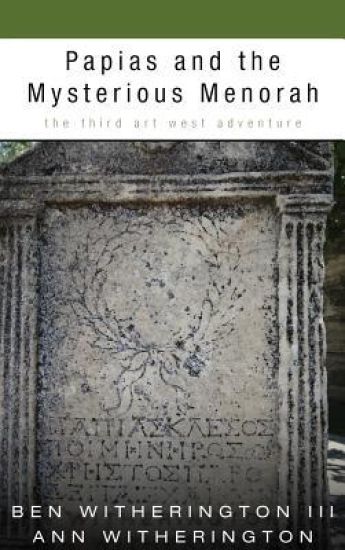
Papias and the Mysterious Menorah
Ben Witherington; Ann Witherington
Pickwick Publications
2010
sidottu
New Testament expert Ben Witherington III explores what the Bible does - and doesn't - say about money. He clearly and concisely examines what Jesus and his earliest followers taught about wealth and poverty, money and debt, and tithing and sacrificial giving to help readers understand the proper role of money in modern Christian life. At a time when money issues at the forefront of many people's concerns, this is a book for church study groups, ministers, church leaders, students, and all who are concerned about making sense of money in a world of economic uncertainty.
We Have Seen His Glory sounds a clarion call to worship in light of the coming Kingdom. Ben Witherington here contends that Christian worship cannot be a matter of merely continuing ancient practices; instead, we must be preparing for worship in the Kingdom of God when it comes on earth. The eight chapters in this thought-provoking book each end with questions for reflection and discussion -- ideal fare for church study groups. -In this study I hope to tease some minds into active thought about what worship should look like if we really believe that God's Kingdom is coming. . . . It's time for us to explore a more biblical and Kingdom-oriented vision of worship.- -- from the prelude
The Theological and Ethical Thought World of the New Testament
Ben Witherington
IVP Academic
2009
sidottu
All too often, argues Ben Witherington, the theology of the New Testament has been divorced from its ethics, leaving as isolated abstractions what are fully integrated, dynamic elements within the New Testament itself. As Witherington stresses, "behavior affects and reinforces or undoes belief." Having completed commentaries on all of the New Testament books, a remarkable feat in itself, Witherington now offers the first of a two-volume set on the theological and ethical thought world of the New Testament. The first volume looks at the individual witnesses, while the second examines the collective witness. The New Testament, says Ben Witherington, is "like a smallish choir. All are singing the same cantata, but each has an individual voice and is singing its own parts and notes. If we fail to pay attention to all the voices in the choir, we do not get the entire effect. . . . If this first volume is about closely analyzing the sheet music left to us by which each musician's part is delineated, the second volume will attempt to re-create what it might have sounded like had they ever gotten together and performed their scores to produce a single masterful cantata." What the New Testament authors have in mind, Witherington contends, is that all believers should be conformed in thought, word and deed to the image of Jesus Christ--the indelible image.