Kirjojen hintavertailu – 12 859 819 kirjaa ja 27 kauppaa

Kirjailija

Benedetta Carlotti

Kirjat ja teokset yhdessä paikassa: 4 kirjaa, julkaisuja vuosilta 2020–2025, suosituimpiin kuuluu Patterns of Opposition in the European Parliament. Vertaile teosten hintoja ja tarkista saatavuus suomalaisista kirjakaupoista.

4 kirjaa

Kirjojen julkaisuvuodet: 2020–2025.

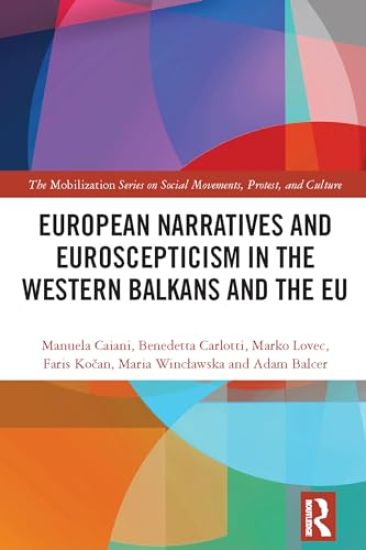
European Narratives and Euroscepticism in the Western Balkans and the EU

European Narratives and Euroscepticism in the Western Balkans and the EU

Manuela Caiani; Benedetta Carlotti; Marko Lovec; Maria Winclawska; Faris Kocan; Adam Balcer

TAYLOR FRANCIS LTD
2025
nidottu
Moving from a social movement perspective, this timely volume examines narratives on Euroscepticism and frames on Europe from below, at the party and social movement levels. Revealing perspectives from both the Right and the Left, it unpacks the emergence, re-emergence and increase in critical ‘voices’ and opposition towards Europe. Based on extensive fieldwork in two candidate countries for accession to the EU and three member states, it offers insight from analysis of focus groups, interviews with Eurosceptic and pro-European political actors and ordinary citizens, together with frame analysis and scrutiny of archival material, electoral manifestoes and organisational documents. Revealing the development of Eurocritical frames, it demonstrates the differences and similarities in narratives used to address Europe and the conceptualisation of Euroscepticism. Key cases examined include the rise of illiberalism in post-transition Slovenia; complex Euroscepticism in Poland; the path from strong support to harsh opposition in Italy; indecision over membership in North Macedonia; anticipating the future while revisiting the past in Bosnia and Herzegovina. Offering guidelines for the direction of future research and policy, European Narratives and Euroscepticism in the Western Balkans and the EU is essential reading for scholars and students of political sociology, political science, European studies and international relations, as well as policy makers concerned with trajectories pro and against Europe and the European integration process.
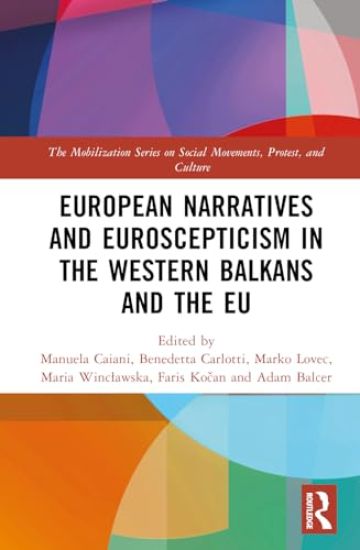
European Narratives and Euroscepticism in the Western Balkans and the EU

European Narratives and Euroscepticism in the Western Balkans and the EU

Manuela Caiani; Benedetta Carlotti; Marko Lovec; Maria Winclawska; Faris Kocan; Adam Balcer

TAYLOR FRANCIS LTD
2024
sidottu
Moving from a social movement perspective, this timely volume examines narratives on Euroscepticism and frames on Europe from below, at the party and social movement levels. Revealing perspectives from both the Right and the Left, it unpacks the emergence, re-emergence and increase in critical ‘voices’ and opposition towards Europe. Based on extensive fieldwork in two candidate countries for accession to the EU and three member states, it offers insight from analysis of focus groups, interviews with Eurosceptic and pro-European political actors and ordinary citizens, together with frame analysis and scrutiny of archival material, electoral manifestoes and organisational documents. Revealing the development of Eurocritical frames, it demonstrates the differences and similarities in narratives used to address Europe and the conceptualisation of Euroscepticism. Key cases examined include the rise of illiberalism in post-transition Slovenia; complex Euroscepticism in Poland; the path from strong support to harsh opposition in Italy; indecision over membership in North Macedonia; anticipating the future while revisiting the past in Bosnia and Herzegovina. Offering guidelines for the direction of future research and policy, European Narratives and Euroscepticism in the Western Balkans and the EU is essential reading for scholars and students of political sociology, political science, European studies and international relations, as well as policy makers concerned with trajectories pro and against Europe and the European integration process.

Patterns of Opposition in the European Parliament

Patterns of Opposition in the European Parliament

Benedetta Carlotti

Springer Nature Switzerland AG
2021
nidottu
Is Euroscepticism still suited to analyze the variegated nature of opposition to the EU? Starting from this question, this book critically reviews Euroscepticism, reconceptualizes it in terms of political opposition and discovers, disentangles and explains patterns of EU-opposition within the European Parliament (EP). Distinguishing between “what the EU does” and “what the EU is”, the research elaborates an index of parties’ positioning “measuring” it through the speeches that parties’ deliver in the EP. The EP is the “perfect laboratory” where decisions concerning EU-policies are taken and the future EU-trajectories are shaped. Besides delineating a set of guidelines categorizing parties, the book concludes that their positioning varies along two main axes: the pro-anti-EU-system and the pro-anti-EU-establishment. From a normative perspective, the research argues for the growing importance of the “cumulation hypothesis”: if criticism remains unheard within the European elitist construct, such criticism will transform itself into rejection.
Patterns of Opposition in the European Parliament

Patterns of Opposition in the European Parliament

Benedetta Carlotti

Springer Nature Switzerland AG
2020
sidottu
Is Euroscepticism still suited to analyze the variegated nature of opposition to the EU? Starting from this question, this book critically reviews Euroscepticism, reconceptualizes it in terms of political opposition and discovers, disentangles and explains patterns of EU-opposition within the European Parliament (EP). Distinguishing between “what the EU does” and “what the EU is”, the research elaborates an index of parties’ positioning “measuring” it through the speeches that parties’ deliver in the EP. The EP is the “perfect laboratory” where decisions concerning EU-policies are taken and the future EU-trajectories are shaped. Besides delineating a set of guidelines categorizing parties, the book concludes that their positioning varies along two main axes: the pro-anti-EU-system and the pro-anti-EU-establishment. From a normative perspective, the research argues for the growing importance of the “cumulation hypothesis”: if criticism remains unheard within the European elitist construct, such criticism will transform itself into rejection.