Kirjojen hintavertailu – 12 869 331 kirjaa ja 27 kauppaa

Kirjailija

Benito Mussolini

Kirjat ja teokset yhdessä paikassa: 48 kirjaa, julkaisuja vuosilta 1998–2026, suosituimpiin kuuluu My Autobiography (Cram Edition). Vertaile teosten hintoja ja tarkista saatavuus suomalaisista kirjakaupoista.

48 kirjaa

Kirjojen julkaisuvuodet: 1998–2026.

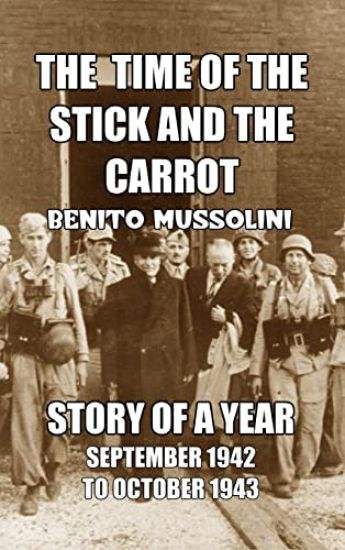
The Time of the Stick and the Carrot

The Time of the Stick and the Carrot

Benito Mussolini

Scrawny Goat Books
2022
sidottu

Halvin toimitettuna 32,70 €

First published in 1944, this indispensable historical work covers the dramatic year from October 1942 to September 1943-a period which produced a series of military and political crises in Italy which led to the overthrow of Benito Mussolini and the fall of Fascism. Written by the man at the very centre of events, this work starts with the defeat of the Axis armies at the Battle of El Alamein and the end of the war in North Africa. This was the first-but not the last-of the devastating military setbacks which shook confidence at home in Mussolini. Soon was to come the invasions of the Italian territory-first, the island of Pantelleria, then Sicily, and finally the Italian mainland. Mussolini describes, with no punches pulled, the disastrous performance of the Italian military forces, and the betrayal and intrigue which lay behind the total collapse of the army in Sicily. These defeats, the author readily acknowledges, brought on the internal dissension which finally saw him ousted from power at his own party's "Grand Fascist Council" meeting in July 1943. Summoned by the King of Italy the next day, Mussolini was informed that he had been dismissed as the head of government. Upon his departure, the ousted Fascist leader was then placed under arrest, and detained at two separate locations until finally being placed on the top of a remote hill, the Gran Sosso, to await extradition to Britain to stand trial. There, literally out of the blue, German commandos swooped down in gliders and freed Mussolini. After being spirited away in a small aircraft, Mussolini then returned to Italy to start again . . . All of these events, and more, are covered in detail, using resources available only to the author. Written originally in the third person as a series of anonymous articles published in the Corriere della Sera newspaper from June to July 1944, it soon became obvious from the details contained therein who the author was. Finally, in August 1944, the articles were republished as a book, with the title "Storia di un anno. Il tempo del bastone e della carota, Storia di un anno, Ottobre 1942 - Settembre 1943,"-and sold out in weeks. This gripping account of the last days of the Fascist party in Italy also reveals the internal divisions which wracked that movement, its ongoing conflict with the Italian monarchy, and the full extent of how German support had propped up the state. This new English translation contains 27 rare photographs and is fully indexed. It is an utterly indispensable historical work for both historians and lay people alike, as it provides a completely unique perspective of some of the most earth-shaking events in modern Italian history.
The Time of the Stick and the Carrot

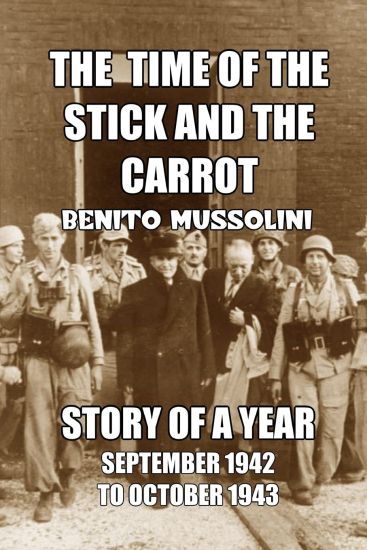
The Time of the Stick and the Carrot

Benito Mussolini

Scrawny Goat Books
2022
pokkari
First published in 1944, this indispensable historical work covers the dramatic year from October 1942 to September 1943-a period which produced a series of military and political crises in Italy which led to the overthrow of Benito Mussolini and the fall of Fascism. Written by the man at the very centre of events, this work starts with the defeat of the Axis armies at the Battle of El Alamein and the end of the war in North Africa. This was the first-but not the last-of the devastating military setbacks which shook confidence at home in Mussolini. Soon was to come the invasions of the Italian territory-first, the island of Pantelleria, then Sicily, and finally the Italian mainland. Mussolini describes, with no punches pulled, the disastrous performance of the Italian military forces, and the betrayal and intrigue which lay behind the total collapse of the army in Sicily. These defeats, the author readily acknowledges, brought on the internal dissension which finally saw him ousted from power at his own party's "Grand Fascist Council" meeting in July 1943. Summoned by the King of Italy the next day, Mussolini was informed that he had been dismissed as the head of government. Upon his departure, the ousted Fascist leader was then placed under arrest, and detained at two separate locations until finally being placed on the top of a remote hill, the Gran Sosso, to await extradition to Britain to stand trial. There, literally out of the blue, German commandos swooped down in gliders and freed Mussolini. After being spirited away in a small aircraft, Mussolini then returned to Italy to start again . . . All of these events, and more, are covered in detail, using resources available only to the author. Written originally in the third person as a series of anonymous articles published in the Corriere della Sera newspaper from June to July 1944, it soon became obvious from the details contained therein who the author was. Finally, in August 1944, the articles were republished as a book, with the title "Storia di un anno. Il tempo del bastone e della carota, Storia di un anno, Ottobre 1942 - Settembre 1943,"-and sold out in weeks. This gripping account of the last days of the Fascist party in Italy also reveals the internal divisions which wracked that movement, its ongoing conflict with the Italian monarchy, and the full extent of how German support had propped up the state. This new English translation contains 27 rare photographs and is fully indexed. It is an utterly indispensable historical work for both historians and lay people alike, as it provides a completely unique perspective of some of the most earth-shaking events in modern Italian history.
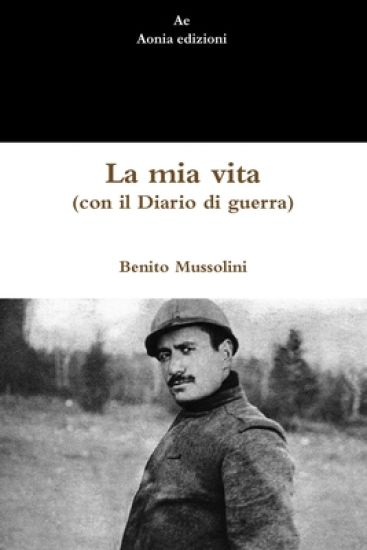
La mia vita (con il Diario di guerra)

La mia vita (con il Diario di guerra)

Benito Mussolini

Lulu.com
2019
nidottu
L'autobiografia di Mussolini, pubblicata a suo tempo a puntate sul Saturday Evening Post, e poi in volume a Londra. Nel 1915, a guerra gia iniziata e dopo diversi tentativi di partire volontario, il trentaquattrenne Benito Mussolini venne chiamato alle armi ed inviato al fronte, dapprima nei pressi di Caporetto, poi in Carnia, ed infine a Doberdo sul Lago. Bersagliere, il futuro duce non visse direttamente le grandi battaglie isontine, ma neppure trascorse i due anni di ferma in un comodo ufficio: la sua esperienza di trincea, bruscamente interrotta a causa di un'esplosione che lo feri gravemente, venne affidata a note ed articoli pubblicati a gruppi sul "Popolo d'Italia" nel corso del conflitto, e poi raccolte in forma di libro nel 1923 (Aonia edizioni).
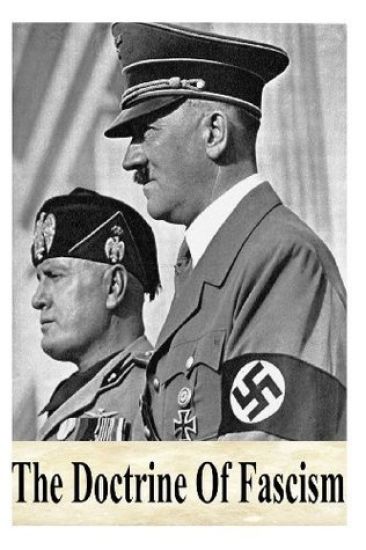
The Doctrine of Fascism

The Doctrine of Fascism

Benito Mussolini

Createspace Independent Publishing Platform
2016
nidottu

Halvin toimitettuna 13,80 €

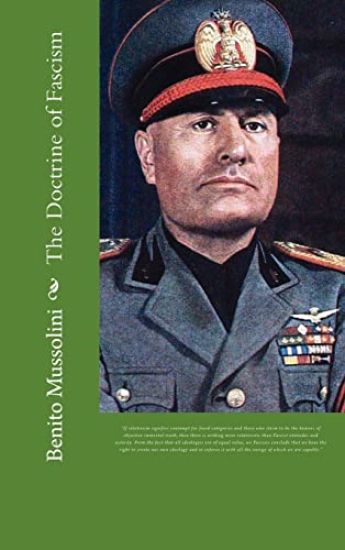
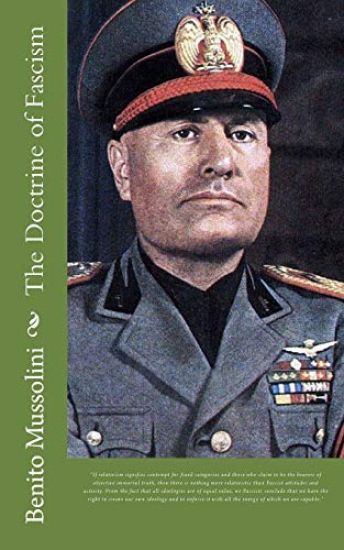
This is the original Doctrine of Fascism. This doctrine worked as the basis of the Italian Fascist Party and influenced numerous fascist movements and individuals that followed." Fascism, the more it considers and observes the future and the development of humanity quite apart from political considerations of the moment, believes neither in the possibility nor the utility of perpetual peace. It thus repudiates the doctrine of Pacifism - born of a renunciation of the struggle and an act of cowardice in the face of sacrifice. War alone brings up to its highest tension all human energy and puts the stamp of nobility upon the peoples who have courage to meet it." -Mussolini
The Doctrine of Fascism

The Doctrine of Fascism

Benito Mussolini

Fpd Books
2015
sidottu
"The Doctrine of Fascism" ("La dottrina del fascismo") is an essay written by Giovanni Gentile, but credit is given to Benito Mussolini. It was first published in the Enciclopedia Italiana of 1932, as the first section of a lengthy entry on "Fascismo" (Fascism). The entire entry on Fascism spans pages 847-884 of the Enciclopedia Italiana, and includes numerous photographs and graphic images. The Mussolini essay leads off the entry: FASCISMO - Movimento politico italiano creato da Benito Mussolini (v.). DOTTRINA Idee Fondamentali. (the first section of the essay) A second section of the essay is titled: "Dottrina Politica e sociale." The Mussolini entry starts on page 847 and ends on 851 with the credit line "Benito Mussolini." All subsequent translations of "The Doctrine of Fascism" are from this work. A key concept of the Mussolini essay was that fascism was a rejection of previous models: "Granted that the 19th century was the century of socialism, liberalism, democracy, this does not mean that the 20th century must also be the century of socialism, liberalism, democracy. Political doctrines pass; nations remain. We are free to believe that this is the century of authority, a century tending to the 'right', a Fascist century. If the 19th century was the century of the individual (liberalism implies individualism) we are free to believe that this is the 'collective' century, and therefore the century of the State."
LA Dottrina Del Fascismo - Terza Edizione Riveduta

LA Dottrina Del Fascismo - Terza Edizione Riveduta

Marco Piraino; Stefano Fiorito; Benito Mussolini

Lulu.com
2014
nidottu
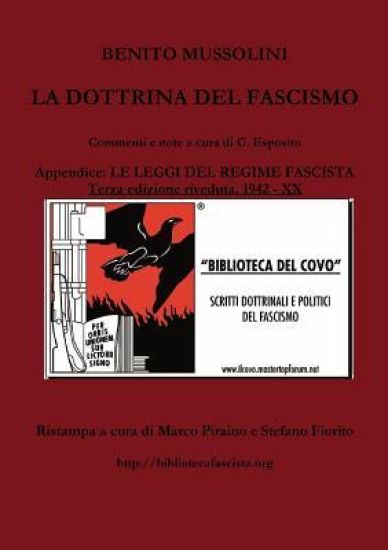
La Dottrina del Fascismo costituisce il documento politico cardine del pensiero filosofico fascista, dove sono fissati ufficialmente i capisaldi ideologici stabiliti dal P. N. F. Comparve per la prima volta nel 1932 sull'Enciclopedia Italiana, inserita nella voce Fascismo. Successivamente ne vennero realizzate ulteriori riedizioni, in Italia e all'estero. Rimase pero sempre invariata nel contenuto, venendo invece arricchita di note esplicative ed altri documenti attinenti le realizzazioni politiche del Partito Nazionale Fascista, che attestavano l'applicazione concreta dei principi dottrinali enunciati in essa. La "Biblioteca del Covo" presenta la ristampa integrale dell'edizione datata 1942, redatta per gli istituti superiori (la Dottrina, infatti, era insegnata nelle scuole italiane) che rappresenta l'ultima e piu esaustiva versione ufficiale pubblicata durante il Regime di Mussolini.
My Autobiography by Benito Mussolini

My Autobiography by Benito Mussolini

Benito Mussolini

Literary Licensing, LLC
2013
sidottu
My Autobiography By Benito Mussolini is a memoir written by the infamous Italian fascist dictator himself. In this book, Mussolini details his life from his humble beginnings as a schoolteacher's son to his rise to power as the leader of Italy. He discusses his political ideology, his involvement in World War I, and his creation of the fascist party. Mussolini also delves into his personal life, including his relationships with women and his family. The book provides insight into the mind of one of the most controversial figures in modern history and offers a unique perspective on the events that shaped Europe in the early 20th century. This is a new release of the original 1928 edition. This scarce antiquarian book is a facsimile reprint of the old original and may contain some imperfections such as library marks and notations. Because we believe this work is culturally important, we have made it available as part of our commitment for protecting, preserving, and promoting the world's literature in affordable, high quality, modern editions, that are true to their original work.
The Life of Benito Mussolini

The Life of Benito Mussolini

Margherita G. Sarfatti; Benito Mussolini

Literary Licensing, LLC
2013
sidottu
The Life of Benito Mussolini is a biography written by Margherita G. Sarfatti that provides a comprehensive account of the life of the Italian fascist dictator. The book chronicles Mussolini's early years, his rise to power, his policies and actions during his time in office, and his eventual downfall and execution. Sarfatti offers insight into Mussolini's personal life, including his relationships with women and his family, as well as his political ideologies and motivations. The author draws on extensive research and firsthand knowledge of Mussolini, having been a close confidant of the dictator and a prominent figure in fascist Italy herself. The book offers a unique perspective on one of the most controversial figures of the 20th century and sheds light on the inner workings of fascist Italy. This is a new release of the original 1925 edition. This scarce antiquarian book is a facsimile reprint of the old original and may contain some imperfections such as library marks and notations. Because we believe this work is culturally important, we have made it available as part of our commitment for protecting, preserving, and promoting the world's literature in affordable, high quality, modern editions, that are true to their original work.
The Political and Social Doctrine of Fascism: International Conciliation, No. 306, January, 1935

The Political and Social Doctrine of Fascism: International Conciliation, No. 306, January, 1935

Benito Mussolini; Beniamino De Ritis; Nicholas Murray Butler

Literary Licensing, LLC
2013
sidottu
The Political and Social Doctrine of Fascism is a book written by Benito Mussolini, the founder of the political ideology of fascism. The book was published in January 1935 as part of the International Conciliation series, and it outlines the core principles of fascism as a political and social doctrine. The book is divided into several chapters, each of which focuses on a different aspect of fascist ideology. Mussolini begins by defining fascism as a ""totalitarian"" political system, in which the state has complete control over all aspects of society. He argues that fascism is a rejection of both liberal democracy and communism, and that it represents a ""third way"" of organizing society. Mussolini goes on to discuss the role of the state in fascist society, arguing that the state must be strong and centralized in order to ensure the well-being of the nation. He also discusses the importance of nationalism and the need for a strong sense of national identity in fascist societies. The book also delves into the role of the individual in fascist society, arguing that individuals must be willing to sacrifice their own interests for the good of the nation. Mussolini also discusses the importance of social hierarchy and the need for a strong sense of discipline and order in fascist societies. Overall, The Political and Social Doctrine of Fascism provides a comprehensive overview of the core principles of fascist ideology as espoused by Mussolini. The book is an important historical document that sheds light on the origins and development of fascist ideology in the early 20th century. This scarce antiquarian book is a facsimile reprint of the old original and may contain some imperfections such as library marks and notations. Because we believe this work is culturally important, we have made it available as part of our commitment for protecting, preserving, and promoting the world's literature in affordable, high quality, modern editions, that are true to their original work.