

Kirjojen hintavertailu – 12 903 724 kirjaa ja 27 kauppaa

Kirjailija

Benjamin L. Berger

Kirjat ja teokset yhdessä paikassa: 3 kirjaa, julkaisuja vuosilta 2015–2025, suosituimpiin kuuluu Making Promises. Vertaile teosten hintoja ja tarkista saatavuus suomalaisista kirjakaupoista.

3 kirjaa

Kirjojen julkaisuvuodet: 2015–2025.

Making Promises

Making Promises

Pamela Klassen; Benjamin L. Berger; Monique Scheer

UNIVERSITY OF TORONTO PRESS
2025
sidottu
How should we understand promises as public, private, or political commitments? What are the conditions for promise-making in religiously diverse societies with competing jurisdictions and sovereignties? Making Promises addresses how promises are made meaningful not only through law, but also through appeals to transcendent powers across diverse traditions. Each contribution in this volume takes a closer look at specific kinds of promises: oaths, treaties, and covenants. The chapters reveal much about the nature of promises in multi-religious and multi-jurisdictional societies, and with contributions from scholars of religious studies, Indigenous studies, law, history, politics, and anthropology, this volume represents a comparative conversation on the making of promises. It pays close attention to Indigenous histories, visions, and conceptions of justice; comparative law within and across settler colonial states; interactions among religions and secularisms; and the ongoing importance of material culture, ritual, and emotion for these practices. At a time of human-caused environmental devastation and political upheaval, when making promises for the future seems both urgent and futile, this volume shows that promises have long been made and unmade, kept and broken, in ways that successive generations need to acknowledge and take up anew.

Making Promises

Making Promises

Pamela Klassen; Benjamin L. Berger; Monique Scheer

UNIVERSITY OF TORONTO PRESS
2025
pokkari
How should we understand promises as public, private, or political commitments? What are the conditions for promise-making in religiously diverse societies with competing jurisdictions and sovereignties? Making Promises addresses how promises are made meaningful not only through law, but also through appeals to transcendent powers across diverse traditions. Each contribution in this volume takes a closer look at specific kinds of promises: oaths, treaties, and covenants. The chapters reveal much about the nature of promises in multi-religious and multi-jurisdictional societies, and with contributions from scholars of religious studies, Indigenous studies, law, history, politics, and anthropology, this volume represents a comparative conversation on the making of promises. It pays close attention to Indigenous histories, visions, and conceptions of justice; comparative law within and across settler colonial states; interactions among religions and secularisms; and the ongoing importance of material culture, ritual, and emotion for these practices. At a time of human-caused environmental devastation and political upheaval, when making promises for the future seems both urgent and futile, this volume shows that promises have long been made and unmade, kept and broken, in ways that successive generations need to acknowledge and take up anew.
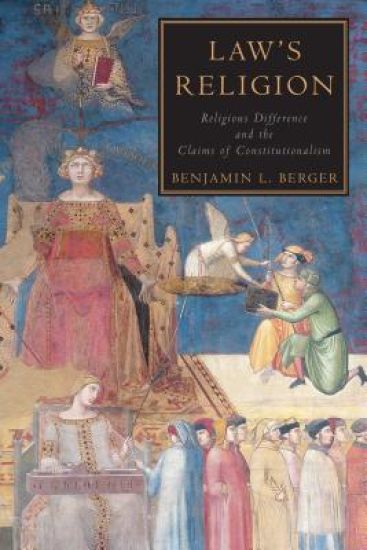
Law's Religion

Law's Religion

Benjamin L. Berger

University of Toronto Press
2015
pokkari
Prevailing stories about law and religion place great faith in the capacity of legal multiculturalism, rights-based toleration, and conceptions of the secular to manage issues raised by religious difference. Yet the relationship between law and religion consistently proves more fraught than such accounts suggest. In Law’s Religion, Benjamin L. Berger knocks law from its perch above culture, arguing that liberal constitutionalism is an aspect of, not an answer to, the challenges of cultural pluralism. Berger urges an approach to the study of law and religion that focuses on the experience of law as a potent cultural force. Based on a close reading of Canadian jurisprudence, but relevant to all liberal legal orders, this book explores the nature and limits of legal tolerance and shows how constitutional law’s understanding of religion shapes religious freedom. Rather than calling for legal reform, Law’s Religion invites us to rethink the ethics, virtues, and practices of adjudication in matters of religious difference.