Kirjojen hintavertailu – 12 903 725 kirjaa ja 27 kauppaa

Kirjailija

Benjamin Paloff

Kirjat ja teokset yhdessä paikassa: 7 kirjaa, julkaisuja vuosilta 2014–2025, suosituimpiin kuuluu Worlds Apart. Vertaile teosten hintoja ja tarkista saatavuus suomalaisista kirjakaupoista.

7 kirjaa

Kirjojen julkaisuvuodet: 2014–2025.

Bakhtin's Adventure

Bakhtin's Adventure

Benjamin Paloff

NORTHWESTERN UNIVERSITY PRESS
2025
sidottu
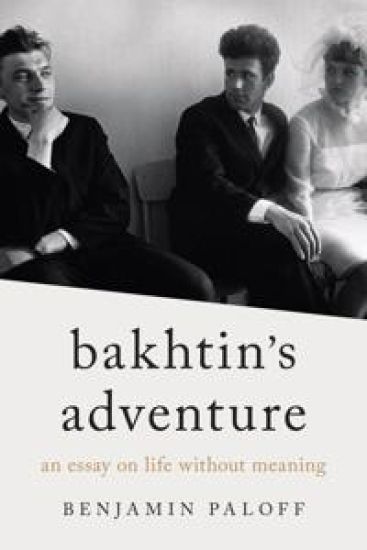
A bold rereading of Mikhail Bakhtin's groundbreaking theories A century after Mikhail Bakhtin first began formulating his now-canonical reflections on freedom and literary representation, we often seem as confused as ever about the relationship between narrative form and what it means to live ethically. Focusing on the throughline of adventure in Bakhtin's thought, we find a peculiar, yet no less ethically urgent challenge: not to imagine the literary hero as if they were a real person but to recognize how we are always imagining real people as if they were literary characters. This is a provocation with far-reaching consequences for how we understand ourselves, each other, and our situatedness in space and time. In Bakhtin's Adventure: An Essay on Life without Meaning, Benjamin Paloff argues that the major aesthetic, ethical, and sociological threads of Bakhtin’ s thought intersect in his concept of adventure. Reading across a wide variety of media, from classic literature to contemporary film, Paloff demonstrates how, for Bakhtin and his interlocutors, the test of human freedom is whether narrative means nothing beyond its own adventure. Reframed in this light, Bakhtin’ s most influential ideas (eventness, chronotope, heteroglossia, polyphony, carnival) form a cohesive model for how to maintain ethical relations in a world where we can never really know each other the way we know ourselves.
Bakhtin's Adventure

Bakhtin's Adventure

Benjamin Paloff

NORTHWESTERN UNIVERSITY PRESS
2025
nidottu
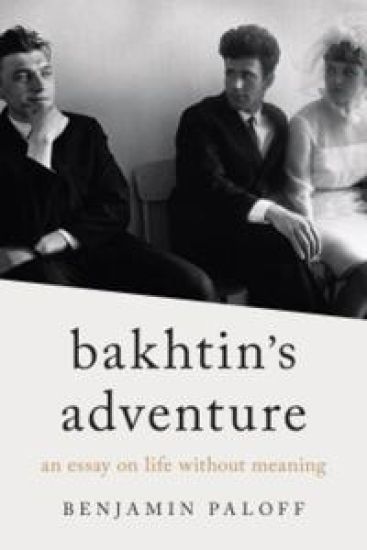
A bold rereading of Mikhail Bakhtin’ s groundbreaking theories A century after Mikhail Bakhtin first began formulating his now-canonical reflections on freedom and literary representation, we often seem as confused as ever about the relationship between narrative form and what it means to live ethically. Focusing on the throughline of adventure in Bakhtin's thought, we find a peculiar, yet no less ethically urgent challenge: not to imagine the literary hero as if they were a real person but to recognize how we are always imagining real people as if they were literary characters. This is a provocation with far-reaching consequences for how we understand ourselves, each other, and our situatedness in space and time. In Bakhtin's Adventure: An Essay on Life without Meaning, Benjamin Paloff argues that the major aesthetic, ethical, and sociological threads of Bakhtin's thought intersect in his concept of adventure. Reading across a wide variety of media, from classic literature to contemporary film, Paloff demonstrates how, for Bakhtin and his interlocutors, the test of human freedom is whether narrative means nothing beyond its own adventure. Reframed in this light, Bakhtin's most influential ideas (eventness, chronotope, heteroglossia, polyphony, carnival) form a cohesive model for how to maintain ethical relations in a world where we can never really know each other the way we know ourselves.
Worlds Apart

Worlds Apart

Benjamin Paloff

Columbia University Press
2025
sidottu
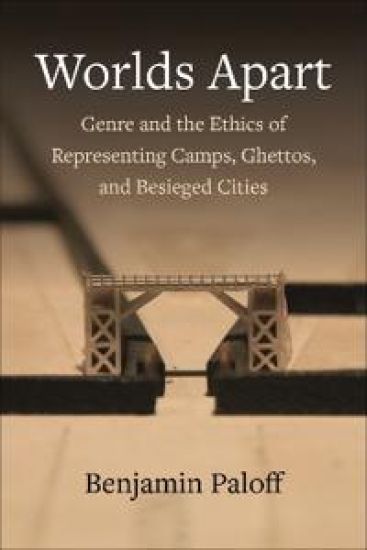
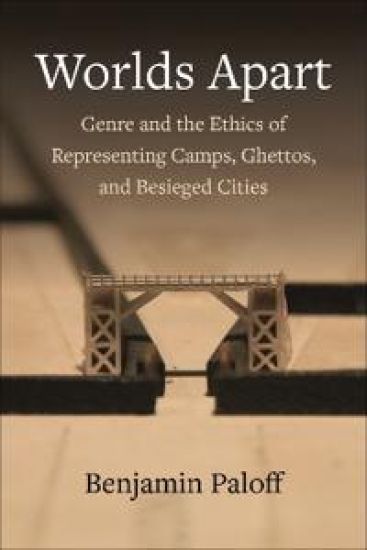
A number of European authors who survived concentration camps, ghettos, and besieged cities in the middle of the twentieth century chose not to write straightforward memoirs or testimonials but instead to fictionalize their experiences. By manipulating narrative time and point of view and altering biographical facts, these writers produced literary texts that challenge common notions of what constitutes an appropriate representation of collective trauma. How might such works provide a deeper understanding of historical truth than the facts alone? What does the literature of the camps reveal about present-day spaces of confinement? Worlds Apart explores the ethics of representation by reading the works of writers who use the techniques of literary fiction to depict survival in these precarious spaces. Benjamin Paloff traces the complex relationship between fact and truth in these texts, disentangling writers’ individual experiences from fictional elements that universalize that experience and, in so doing, show the camp to be an institution of the present. Touring the unusual genre conventions of these works, he weighs crucial questions about what constitutes “truth” in historical representation, literature, and the popular imagination. Reading across Czech, French, German, Polish, Russian, and Yiddish, including lesser-known and untranslated works, Paloff considers portrayals of the Shoah, the Gulag, the Warsaw Ghetto Uprising, and the blockade of Leningrad. Bold, nuanced, and rich in comparative insight, Worlds Apart argues forcefully for the moral urgency of recognizing that the camp is not simply a historical artifact but a basic institution of contemporary society.
Worlds Apart

Worlds Apart

Benjamin Paloff

Columbia University Press
2025
pokkari
A number of European authors who survived concentration camps, ghettos, and besieged cities in the middle of the twentieth century chose not to write straightforward memoirs or testimonials but instead to fictionalize their experiences. By manipulating narrative time and point of view and altering biographical facts, these writers produced literary texts that challenge common notions of what constitutes an appropriate representation of collective trauma. How might such works provide a deeper understanding of historical truth than the facts alone? What does the literature of the camps reveal about present-day spaces of confinement? Worlds Apart explores the ethics of representation by reading the works of writers who use the techniques of literary fiction to depict survival in these precarious spaces. Benjamin Paloff traces the complex relationship between fact and truth in these texts, disentangling writers’ individual experiences from fictional elements that universalize that experience and, in so doing, show the camp to be an institution of the present. Touring the unusual genre conventions of these works, he weighs crucial questions about what constitutes “truth” in historical representation, literature, and the popular imagination. Reading across Czech, French, German, Polish, Russian, and Yiddish, including lesser-known and untranslated works, Paloff considers portrayals of the Shoah, the Gulag, the Warsaw Ghetto Uprising, and the blockade of Leningrad. Bold, nuanced, and rich in comparative insight, Worlds Apart argues forcefully for the moral urgency of recognizing that the camp is not simply a historical artifact but a basic institution of contemporary society.
The Career of Nicodemus Dyzma

The Career of Nicodemus Dyzma

Tadeusz Dolega-Mostowicz; Benjamin Paloff

Northwestern University Press
2020
nidottu
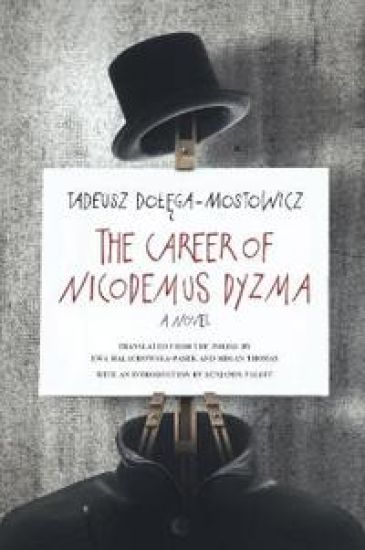
First published in Polish in 1932, The Career of Nicodemus Dyzma was Tadeusz Dolega-Mostowicz’s breakout novel. Dyzma is an unemployed clerk who crashes a swanky party, where he makes an offhand crass remark that sets him on a new course. Soon high society—from government ministers to drug-fueled aristocrats—wants a piece of him. As Dyzma’s status grows, his vulgarity is interpreted as authenticity and strength. He is unable to comprehend complicated political matters, but his cryptic responses are celebrated as wise introspection. His willingness to do anything to hold on to power—flip-flopping on political positions, inventing xenophobic plots, even having enemies assaulted—only leads to greater success. Dolega-Mostowicz wrote his novel in a newly independent Poland rampant with political corruption and populist pandering. Jerzy Kosinski borrowed heavily from the novel when he wrote Being There, and readers of both books will recognize similarities between their plots. This biting political satire—by turns hilarious and disturbing, contemptuous and sympathetic—is an indictment of a system in which money and connections matter above all else, bluster and ignorance are valorized, and a deeply incompetent man rises to the highest spheres of government.
Lost in the Shadow of the Word

Lost in the Shadow of the Word

Benjamin Paloff

Northwestern University Press
2016
nidottu
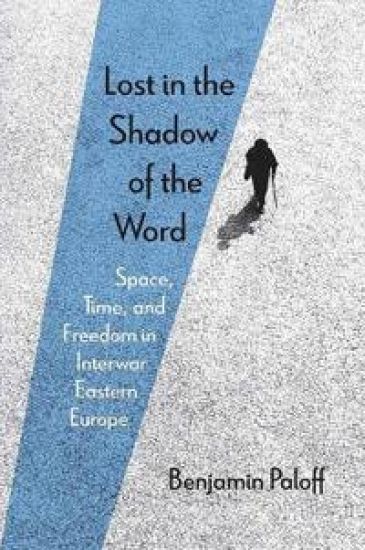
Scholars of modernism have long addressed how literature, painting, and music reflected the radical reconceptualization of space and time in the early twentieth century—a veritable revolution in both physics and philosophy that has been characterized as precipitating an “epistemic trauma” around the world. In this wide-ranging study, Benjamin Paloff contends that writers in Central and Eastern Europe felt this impact quite distinctly from their counterparts in Western Europe. For the latter, the destabilization of traditional notions of space and time inspired works that saw in it a new kind of freedom. However, for many Central and Eastern European authors, who were writing from within public discourses about how to construct new social realities, the need for escape met the realization that there was both nowhere to escape to and no stable delineation of what to escape from. In reading the prose and poetry of Czech, Polish, and Russian writers, Paloff imbues the term “Kafkaesque” with a complexity so far missing from our understanding of this moment in literary history.
The Romance of Teresa Hennert

The Romance of Teresa Hennert

Zofia Nalkowska; Benjamin Paloff

Northern Illinois University Press
2014
pokkari
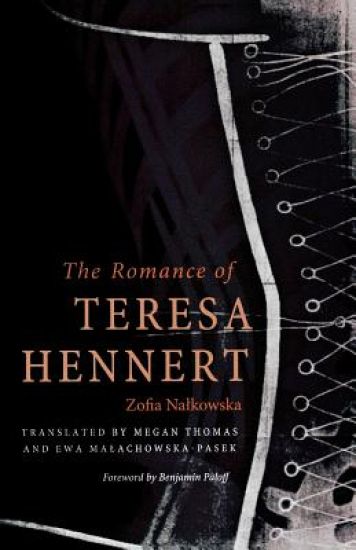
The Romance of Teresa Hennert is a masterpiece of psychological realism and a still-shocking portrait of mixed motives and bad behavior. It renders a tragicomic vision of what happens when a society is suddenly deprived of the struggle that had defined it for more than a century. Written in 1922, just four years after Poland achieved independence from its neighboring empires, the novel focuses on a Warsaw community of officers, bureaucrats, intellectuals, wives, and lovers, all of them adrift in a hell of their own making—the long-sought freedom to shape their own destiny. At the center of this milieu is Teresa Hennert, whose youthful charm, modern habits, and apparent indifference to the emotional torment of those around her make her an inescapable object of their fascination and desire. Told in multiple voices and from numerous perspectives, Zofia Nalkowska's novel is a mosaic of dysfunction at all levels of the new Polish society, from a bumbling lieutenant who cannot stand his home life to a young Communist who believes his forebears have made a mess that only the next generation can clean up. In this world, ideological battles, personal animosity, postwar trauma, and infidelity become inextricably bound together, driving these colorful, increasingly confused characters toward corruption, suicide, and murder. Nalkowska (1884–1954), though long neglected in the West, was a central figure in the literary life of interwar Poland and was an early pioneer of feminist fiction in Central Europe. Her spare, witty prose will surprise contemporary readers with its frank sexuality and stark illustration of dreams gone horribly, humiliatingly, dramatically awry.