Kirjojen hintavertailu – 12 903 725 kirjaa ja 27 kauppaa

Kirjailija

Benjamin R. Kracht

Kirjat ja teokset yhdessä paikassa: 5 kirjaa, julkaisuja vuosilta 2017–2024, suosituimpiin kuuluu Kiowa Belief and Ritual. Vertaile teosten hintoja ja tarkista saatavuus suomalaisista kirjakaupoista.

5 kirjaa

Kirjojen julkaisuvuodet: 2017–2024.

The Anthropology of Religion, Magic, and Witchcraft

The Anthropology of Religion, Magic, and Witchcraft

Rebecca L. Stein; Philip L. Stein; Benjamin R. Kracht; Marjorie M. Snipes

TAYLOR FRANCIS LTD
2024
nidottu
This concise and accessible textbook introduces students to the anthropological study of religion. It examines religious expression from a cross-cultural perspective and exposes students to the complexities of religion in small-scale and complex societies. The chapters incorporate key theoretical concepts and a wide range of ethnographic material. The fifth edition of The Anthropology of Religion, Magic, and Witchcraft offers: • a revised introduction covering the foundations of the anthropology of religion, anthropological methods, and a push toward decolonizing the anthropology of religion, • expanded coverage of symbols, healing, wizardry, and the intersections of religion with other social institutions, • new case study material with examples drawn from around the globe, especially from Indigenous communities, • marginalia in each chapter introducing provocative small-case examples related to the chapter—many of these can be used as prompts for further research, small in-class case studies, or examples for hands-on learning, • a new chapter on religion and healing, especially useful for Anthropology programs without representation of four fields, as it provides a wider and more interdisciplinary application of the discipline, • a consistent review of foundations from chapter to chapter, linking material and enabling students to connect what they are learning throughout the course, and • further resources via a comprehensive companion website, including interactive activities, critical case studies, updated study questions, bibliographical suggestions (including video), and color images. This is an essential guide for students encountering the anthropology of religion for the first time and also for those with an ongoing interest in this fascinating field.
The Anthropology of Religion, Magic, and Witchcraft

The Anthropology of Religion, Magic, and Witchcraft

Rebecca L. Stein; Philip L. Stein; Benjamin R. Kracht; Marjorie M. Snipes

TAYLOR FRANCIS LTD
2024
sidottu
This concise and accessible textbook introduces students to the anthropological study of religion. It examines religious expression from a cross-cultural perspective and exposes students to the complexities of religion in small-scale and complex societies. The chapters incorporate key theoretical concepts and a wide range of ethnographic material. The fifth edition of The Anthropology of Religion, Magic, and Witchcraft offers: • a revised introduction covering the foundations of the anthropology of religion, anthropological methods, and a push toward decolonizing the anthropology of religion, • expanded coverage of symbols, healing, wizardry, and the intersections of religion with other social institutions, • new case study material with examples drawn from around the globe, especially from Indigenous communities, • marginalia in each chapter introducing provocative small-case examples related to the chapter—many of these can be used as prompts for further research, small in-class case studies, or examples for hands-on learning, • a new chapter on religion and healing, especially useful for Anthropology programs without representation of four fields, as it provides a wider and more interdisciplinary application of the discipline, • a consistent review of foundations from chapter to chapter, linking material and enabling students to connect what they are learning throughout the course, and • further resources via a comprehensive companion website, including interactive activities, critical case studies, updated study questions, bibliographical suggestions (including video), and color images. This is an essential guide for students encountering the anthropology of religion for the first time and also for those with an ongoing interest in this fascinating field.
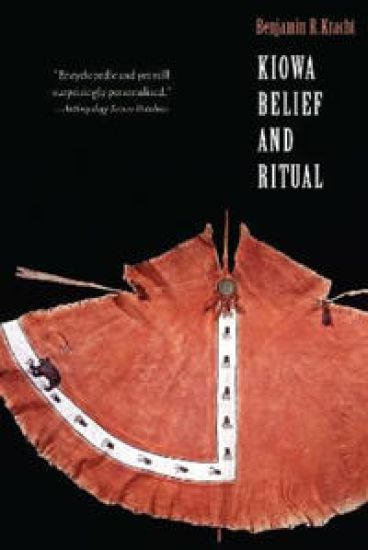
Kiowa Belief and Ritual

Kiowa Belief and Ritual

Benjamin R. Kracht

University of Nebraska Press
2022
pokkari
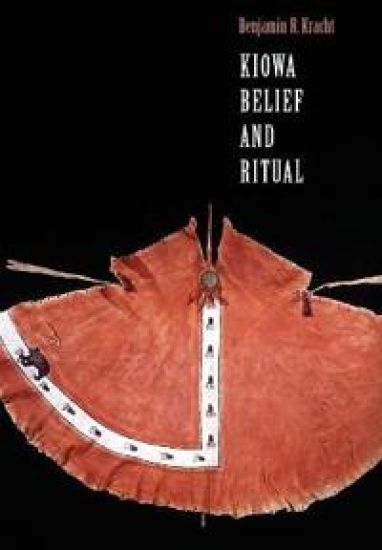
Directed by anthropologist Alexander Lesser in 1935, the Santa Fe Laboratory of Anthropology sponsored a field school in southwestern Oklahoma that focused on the neighboring Kiowas. During two months, graduate students compiled more than 1,300 pages of single-spaced field notes derived from cross-interviewing thirty-five Kiowas. These eyewitness and first-generation reflections on the horse and buffalo days are undoubtedly the best materials available for reconstructing pre-reservation Kiowa beliefs and rituals. The field school compiled massive data resulting in a number of publications on this formerly nomadic Plains tribe, though the planned collaborative ethnographies never materialized. The extensive Kiowa field notes, which contain invaluable information, remained largely unpublished until now. In Kiowa Belief and Ritual, Benjamin R. Kracht reconstructs Kiowa cosmology during the height of the horse and buffalo culture from field notes pertaining to cosmology, visions, shamans, sorcery, dream shields, tribal bundles, and the now-extinct Sun Dance ceremony. These topics are interpreted through the Kiowa concept of a power force permeating the universe. Additional data gleaned from the field notes of James Mooney and Alice Marriott enrich the narrative. Drawing on more than thirty years of field experiences, Kracht’s discussion of how Indigenous notions of power are manifested today significantly enhances the existing literature concerning Plains religions.
Religious Revitalization Among the Kiowas

Religious Revitalization Among the Kiowas

Benjamin R. Kracht

University of Nebraska Press
2018
sidottu
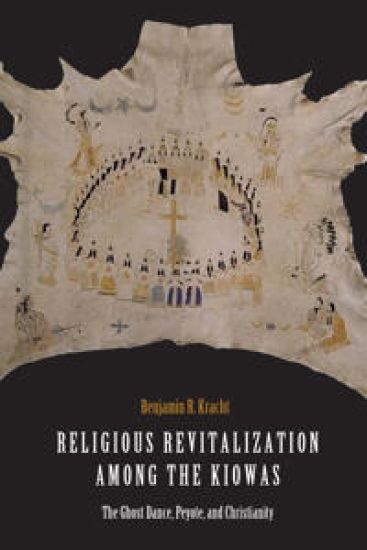
Framed by theories of syncretism and revitalization, Religious Revitalization among the Kiowas examines changes in Kiowa belief and ritual in the final decades of the nineteenth century. During the height of the horse-and-bison culture, Kiowa beliefs were founded in the notion of daudau, a force permeating the universe that was accessible through vision quests. Following the end of the Southern Plains wars in 1875, the Kiowas were confined within the boundaries of the Kiowa-Comanche-Apache (Plains Apache) Reservation. As wards of the government, they witnessed the extinction of the bison herds, which led to the collapse of the Sun Dance by 1890. Though prophet movements in the 1880s had failed to restore the bison, other religions emerged to fill the void left by the loss of the Sun Dance. Kiowas now sought daudau through the Ghost Dance, Christianity, and the Peyote religion. Religious Revitalization among the Kiowas examines the historical and sociocultural conditions that spawned the new religions that arrived in Kiowa country at the end of the nineteenth century, as well as Native and non-Native reactions to them. A thorough examination of these sources reveals how resilient and adaptable the Kiowas were in the face of cultural genocide between 1883 and 1933. Although the prophet movements and the Ghost Dance were short-lived, Christianity and the Native American Church have persevered into the twenty-first century. Benjamin R. Kracht shows how Kiowa traditions and spirituality were amalgamated into the new religions, creating a distinctive Kiowa identity.
Kiowa Belief and Ritual

Kiowa Belief and Ritual

Benjamin R. Kracht

University of Nebraska Press
2017
sidottu
Directed by anthropologist Alexander Lesser in 1935, the Santa Fe Laboratory of Anthropology sponsored a field school in southwestern Oklahoma that focused on the neighboring Kiowas. During two months, graduate students compiled more than 1,300 pages of single-spaced field notes derived from cross-interviewing thirty-five Kiowas. These eyewitness and first-generation reflections on the horse and buffalo days are undoubtedly the best materials available for reconstructing pre-reservation Kiowa beliefs and rituals. The field school compiled massive data resulting in a number of publications on this formerly nomadic Plains tribe, though the planned collaborative ethnographies never materialized. The extensive Kiowa field notes, which contain invaluable information, remained largely unpublished until now. In Kiowa Belief and Ritual, Benjamin R. Kracht reconstructs Kiowa cosmology during the height of the horse and buffalo culture from field notes pertaining to cosmology, visions, shamans, sorcery, dream shields, tribal bundles, and the now-extinct Sun Dance ceremony. These topics are interpreted through the Kiowa concept of a power force permeating the universe. Additional data gleaned from the field notes of James Mooney and Alice Marriott enrich the narrative. Drawing on more than thirty years of field experiences, Kracht’s discussion of how Indigenous notions of power are manifested today significantly enhances the existing literature concerning Plains religions.