Kirjojen hintavertailu – 12 903 724 kirjaa ja 27 kauppaa

Kirjailija

Bernadette Bensaude-Vincent

Kirjat ja teokset yhdessä paikassa: 8 kirjaa, julkaisuja vuosilta 1996–2025, suosituimpiin kuuluu Carbon. Vertaile teosten hintoja ja tarkista saatavuus suomalaisista kirjakaupoista.

8 kirjaa

Kirjojen julkaisuvuodet: 1996–2025.

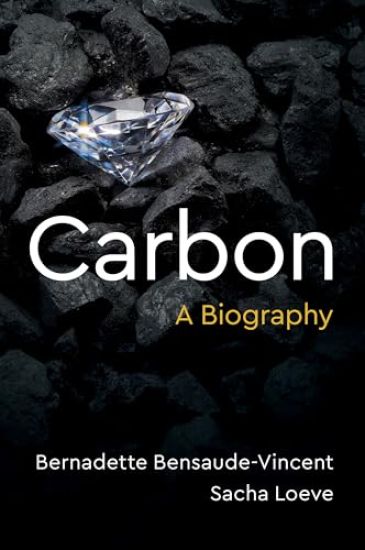
Carbon

Carbon

Bernadette Bensaude-Vincent; Sacha Loeve

JOHN WILEY AND SONS LTD
2025
nidottu

Halvin toimitettuna 26,90 €

Carbon is much more than a chemical element: it is a polymorphic entity with many faces, at once natural, cultural and social. Ranging across ten million different compounds, carbon has as many personas in nature as it has roles in human life on earth. And yet it rarely makes the headlines as anything other than the villain of our fossil-based economy, feeding an addiction which is driving dangerous levels of consumption and international conflict and which, left unchecked, could lead to our demise as a species. But the impact of CO on climate change only tells part of the story, and to demonize carbon as an element which will bring about the downfall of humanity is to reduce it to a pale shadow of itself. In this major new history of carbon, Bernadette Bensaude-Vincent and Sacha Loeve show that this omnipresent element is at the root of countless histories and adventures through time, thanks to its extraordinary versatility. Carbon has a long and prestigious CV: its work and achievements extend far beyond the burning of fossil fuels. The fourth most abundant element in the universe and the second most abundant element in the human body, carbon is the chemical basis of all known life. Carbon chemistry has a long history, with applications ranging from jewellery to heating, underpinning developments in metallurgy, textiles, pharmaceuticals, electronics, nanoscience and green technologies. A biography of carbon transgresses the boundaries between chemical and social existence, between nature and culture, forcing us to abandon the simplified image of carbon as the anti-hero of human civilization and enabling us to see instead the great diversity of carbon’s modes of existence. With scientific precision and literary flair, Bensaude-Vincent and Loeve unravel the surprising ways in which carbon has shaped our world, showing how unrecognizable the earth would be without it. Uncovering the many hidden lives of carbon allows us to view our own with fresh eyes.

Paul Langevin:  Physicist and Social Activist

Paul Langevin: Physicist and Social Activist

Bernadette Bensaude-Vincent; Francis Duck

Springer International Publishing AG
2025
sidottu
The book is based on a complete translation into English of the 1987 biography, Langevin 1872-1946 Science et Vigilance by Bernadette Bensaude-Vincent. This new book includes some important revisions to the original text with numerous additional figures. The description of Langevin’s work in ultrasonics has been developed and expanded, including much new detail. French physicist, student of Pierre Curie, close friend of Marie Curie and Albert Einstein, Paul Langevin was one of the handful of influential European physicists who created modern physics at the beginning of the twentieth century. Scientifically, he is remembered particularly for his contributions to the atomic theory of magnetism, for the understanding of relativity and for his work on statistical kinetics. This establishes the context for his role as the ‘originator of modern ultrasonics’ during the First World War, and his influence on its growth as a scientific speciality during the subsequent two decades. Leading educationalist, he promoted education for women, and science as a core subject. He viewed science as a common good, to be shared for the benefit of all mankind, at a time of growing nationalism. The book focuses also on his political activism as a rationalist and humanist, including his public anti-fascist stand and communist sympathies leading to his house arrest during the Second World War. This portrait of a committed scientist regains a special relevance in the 21st century.
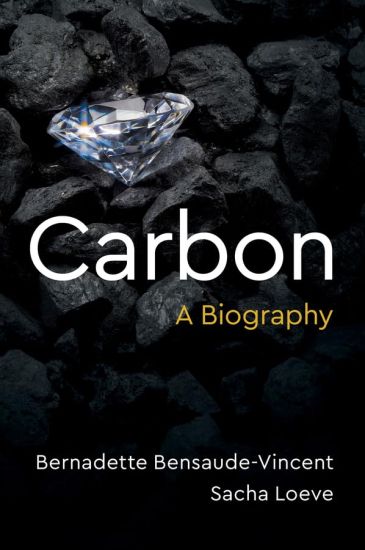
Carbon

Carbon

Bernadette Bensaude-Vincent; Sacha Loeve

JOHN WILEY AND SONS LTD
2024
sidottu
Carbon is much more than a chemical element: it is a polymorphic entity with many faces, at once natural, cultural and social. Ranging across ten million different compounds, carbon has as many personas in nature as it has roles in human life on earth. And yet it rarely makes the headlines as anything other than the villain of our fossil-based economy, feeding an addiction which is driving dangerous levels of consumption and international conflict and which, left unchecked, could lead to our demise as a species. But the impact of CO2 on climate change only tells part of the story, and to demonize carbon as an element which will bring about the downfall of humanity is to reduce it to a pale shadow of itself. In this major new history of carbon, Bernadette Bensaude-Vincent and Sacha Loeve show that this omnipresent element is at the root of countless histories and adventures through time, thanks to its extraordinary versatility. Carbon has a long and prestigious CV: its work and achievements extend far beyond the burning of fossil fuels. The fourth most abundant element in the universe and the second most abundant element in the human body, carbon is the chemical basis of all known life. Carbon chemistry has a long history, with applications ranging from jewellery to heating, underpinning developments in metallurgy, textiles, pharmaceuticals, electronics, nanoscience and green technologies. A biography of carbon transgresses the boundaries between chemical and social existence, between nature and culture, forcing us to abandon the simplified image of carbon as the anti-hero of human civilization and enabling us to see instead the great diversity of carbon’s modes of existence. With scientific precision and literary flair, Bensaude-Vincent and Loeve unravel the surprising ways in which carbon has shaped our world, showing how unrecognizable the earth would be without it. Uncovering the many hidden lives of carbon allows us to view our own with fresh eyes.
Science and Spectacle in the European Enlightenment

Science and Spectacle in the European Enlightenment

Bernadette Bensaude-Vincent

Routledge
2016
nidottu
Air-pumps, electrical machines, colliding ivory balls, coloured sparks, mechanical planetariums, magic mirrors, hot-air balloons - these are just a sample of the devices displayed in public demonstrations of science in the eighteenth century. Public and private demonstrations of natural philosophy in Europe then differed vastly from today's unadorned and anonymous laboratory experiments. Science was cultivated for a variety of purposes in many different places; scientific instruments were built and used for investigative and didactic experiments as well as for entertainment and popular shows. Between the culture of curiosities which characterized the seventeenth century and the distinction between academic and popular science that gradually emerged in the nineteenth, the eighteenth century was a period when scientific activities took place in a variety of sites, ranging from academies, and learned societies to salons and popular fairs, shops and streets. This collection of case studies describing public demonstrations in Britain, Germany, Italy and France exemplifies the wide variety of settings for scientific activities in the European Enlightenment. Filled with sparks and smells, the essays raise broader issues about the ways in which modern science established its legitimacy and social acceptability. They point to two major features of the cultures of science in the eighteenth-century: entertainment and utility. Experimental demonstrations were attended by apothecaries and craftsmen for vocational purposes. At the same time, they had to fit in with the taste of both polite society and market culture. Public demonstrations were a favourite entertainment for ladies and gentlemen and a profitable activity for instrument makers and booksellers.
Chemistry: The Impure Science (2nd Edition)

Chemistry: The Impure Science (2nd Edition)

Jonathan Simon; Bernadette Bensaude-vincent

Imperial College Press
2012
sidottu
What do you associate with chemistry? Explosions, innovative materials, plastics, pollution? The public's confused and contradictory conception of chemistry as basic science, industrial producer and polluter contributes to what we present in this book as chemistry's image as an impure science. Historically, chemistry has always been viewed as impure both in terms of its academic status and its role in transforming modern society. While exploring the history of this science we argue for a characteristic philosophical approach that distinguishes chemistry from physics. This reflection leads us to a philosophical stance that we characterise as operational realism. In this new expanded edition we delve deeper into the questions of properties and potentials that are so important for this philosophy that is based on the manipulation of matter rather than the construction of theories.
Chemistry: The Impure Science

Chemistry: The Impure Science

Bernadette Bensaude-vincent; Jonathan Simon

Imperial College Press
2008
sidottu
This book uses history to introduce central issues in the philosophy of chemistry. Mobilizing the theme of impurity, it explores the tradition of chemistry's negative image. It then argues for the positive philosophical value of chemistry, reflecting its characteristic practical engagement with the material world. The book concludes with some ethical reflections concerning chemistry's orientations in the twenty-first century. The authors have previously both offered significant contributions to the history and philosophy of chemistry.
Science and Spectacle in the European Enlightenment

Science and Spectacle in the European Enlightenment

Bernadette Bensaude-Vincent

Ashgate Publishing Limited
2008
sidottu
Air-pumps, electrical machines, colliding ivory balls, coloured sparks, mechanical planetariums, magic mirrors, hot-air balloons - these are just a sample of the devices displayed in public demonstrations of science in the eighteenth century. Public and private demonstrations of natural philosophy in Europe then differed vastly from today's unadorned and anonymous laboratory experiments. Science was cultivated for a variety of purposes in many different places; scientific instruments were built and used for investigative and didactic experiments as well as for entertainment and popular shows. Between the culture of curiosities which characterized the seventeenth century and the distinction between academic and popular science that gradually emerged in the nineteenth, the eighteenth century was a period when scientific activities took place in a variety of sites, ranging from academies, and learned societies to salons and popular fairs, shops and streets. This collection of case studies describing public demonstrations in Britain, Germany, Italy and France exemplifies the wide variety of settings for scientific activities in the European Enlightenment. Filled with sparks and smells, the essays raise broader issues about the ways in which modern science established its legitimacy and social acceptability. They point to two major features of the cultures of science in the eighteenth-century: entertainment and utility. Experimental demonstrations were attended by apothecaries and craftsmen for vocational purposes. At the same time, they had to fit in with the taste of both polite society and market culture. Public demonstrations were a favourite entertainment for ladies and gentlemen and a profitable activity for instrument makers and booksellers.
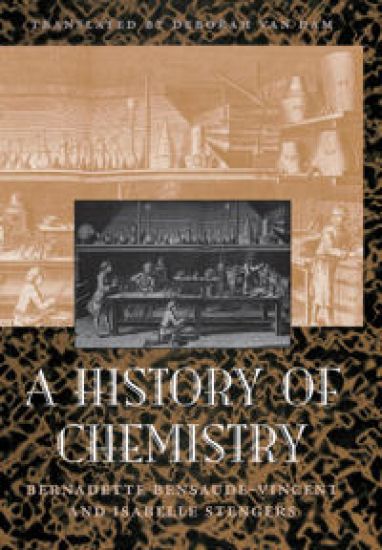
A History of Chemistry

A History of Chemistry

Bernadette Bensaude-Vincent; Isabelle Stengers

Harvard University Press
1996
sidottu
From the earliest use of fire to forge iron tools to the medieval alchemists’ search for the philosopher’s stone, the secrets of the elements have been pursued by human civilization. But, as the authors of this concise history remind us, “disciplines like physics and chemistry have not existed since the beginning of time; they have been built up little by little, and that does not happen without difficulties.” Bernadette Bensaude-Vincent and Isabelle Stengers present chemistry as a science in search of an identity, or rather as a science whose identity has changed in response to its relation to society and to other disciplines. The authors—respected, prolific scholars in history and philosophy of science—have distilled their knowledge into an accessible work, free of jargon. They have written a book deeply enthusiastic about the conceptual, experimental, and technological complexities and challenges with which chemists have grappled over many centuries. Beginning with chemistry’s polymorphous beginnings, featuring many independent discoveries all over the globe, the narrative then moves to a discussion of chemistry’s niche in the eighteenth-century notion of Natural Philosophy and on to its nineteenth-century days as an exemplar of science as a means of reaching positive knowledge. The authors also address contentious issues of concern to contemporary scientists: whether chemistry has become a service science; whether its status has “declined” because its value lies in assisting the leading-edge research activities of molecular geneticists and materials scientists; or whether it is redefining its agenda. A History of Chemistry treats chemistry as a study whose subject matter, the nature and behavior of qualitatively different materials, remains constant, while the methods and disciplinary boundaries of the science constantly shift.