Kirjailija
Bernard E. Harcourt
Kirjat ja teokset yhdessä paikassa: 19 kirjaa, julkaisuja vuosilta 2005–2024, suosituimpiin kuuluu The Counterrevolution. Vertaile teosten hintoja ja tarkista saatavuus suomalaisista kirjakaupoista.
19 kirjaa
Kirjojen julkaisuvuodet: 2005–2024.
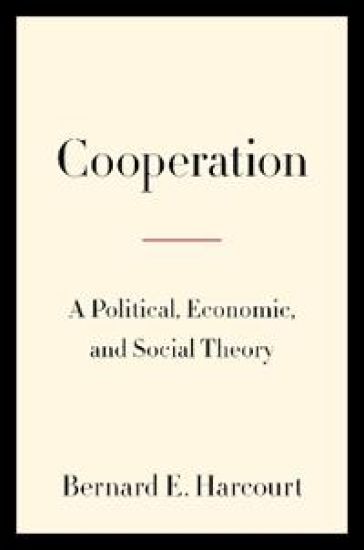
Liberal democracy is in crisis around the world, unable to address pressing problems such as climate change. There is, however, another path—cooperation democracy. From consumer co-ops to credit unions, worker cooperatives to insurance mutuals, nonprofits to mutual aid, countless examples prove that people working together can extend the ideals of participatory democracy and sustainability into every aspect of their lives. These forms of cooperation do not depend on electoral politics. Instead, they harness the longstanding practices and values of cooperatives: self-determination, democratic participation, equity, solidarity, and respect for the environment. Bernard E. Harcourt develops a transformative theory and practice that builds on worldwide models of successful cooperation. He identifies the most promising forms of cooperative initiatives and then distills their lessons into an integrated framework: Coöperism. This is a political theory grounded on recognition of our interdependence. It is an economic theory that can ensure equitable distribution of wealth. Finally, it is a social theory that replaces the punishment paradigm with a cooperation paradigm. A creative work of normative critical theory, Cooperation provides a positive vision for addressing our most urgent challenges today. Harcourt shows that by drawing on the core values of cooperation and the power of people working together, a new world of cooperation democracy is within our grasp.

In the 1950s, long before his ascent to international renown, Michel Foucault published a scant few works. His early writings on psychology, psychopathology, and anthropology have been dismissed as immature. However, recently discovered manuscripts from the mid-1950s, when Foucault was a lecturer at the University of Lille, testify to the significance of the work that the philosopher produced in the years leading up to the “archaeological” project he launched with History of Madness. Elisabetta Basso offers a groundbreaking and in-depth analysis of Foucault’s Lille manuscripts that sheds new light on the origins of his philosophical project. She considers the epistemological style and methodology of these writings as well as their philosophical context and the scholarly networks in which Foucault was active, foregrounding his relationship to existential psychiatry. Young Foucault blurs the boundaries between biography and theory, exploring the transformations—and, at times, contradictions—that characterize the intellectual trajectory of a philosopher who, as Foucault himself put it, “turned to psychology, and from psychology to history.” Retracing the first steps of the philosopher’s intellectual journey, Basso shows how Foucault’s early writings provide key insights into his archaeological work of the 1960s. Assembling a vast array of archival sources—including manuscripts, reading notes, notes for lectures and conferences, and correspondence—this book develops a new and deeper understanding of Foucault’s body of work.
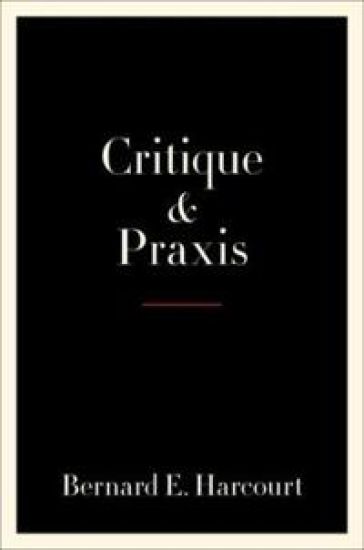
Critique and Praxis
Bernard E. Harcourt
Columbia University Press
2022
pokkari
Halvin toimitettuna 38,30 €
Critical philosophy has always challenged the division between theory and practice. At its best, it aims to turn contemplation into emancipation, seeking to transform society in pursuit of equality, autonomy, and human flourishing. Yet today’s critical theory often seems to engage only in critique. These times of crisis demand more. Bernard E. Harcourt challenges us to move beyond decades of philosophical detours and to harness critical thought to the need for action. In a time of increasing awareness of economic and social inequality, Harcourt calls on us to make society more equal and just. Only critical theory can guide us toward a more self-reflexive pursuit of justice. Charting a vision for political action and social transformation, Harcourt argues that instead of posing the question, “What is to be done?” we must now turn it back onto ourselves and ask, and answer, “What more am I to do?” Critique and Praxis advocates for a new path forward that constantly challenges each and every one of us to ask what more we can do to realize a society based on equality and justice. Joining his decades of activism, social-justice litigation, and political engagement with his years of critical theory and philosophical work, Harcourt has written a magnum opus.
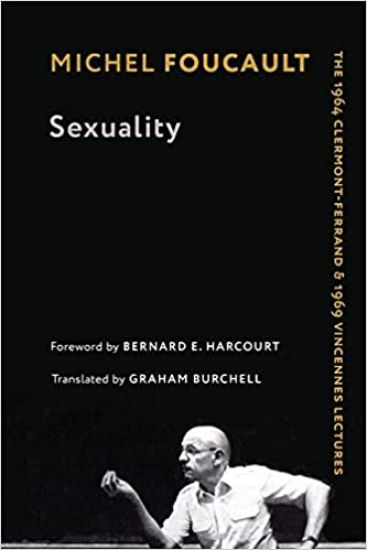
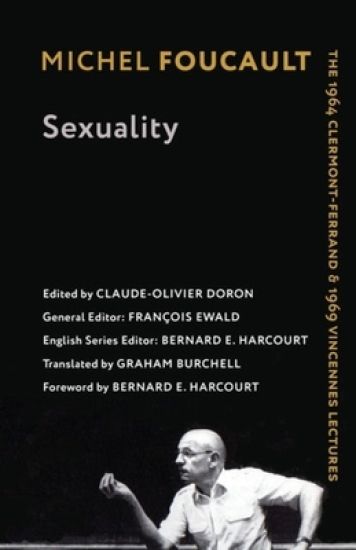
Michel Foucault’s The History of Sexuality—the first volume of which was published in 1976—exerts a vast influence across the humanities and social sciences. However, Foucault’s interest in the history of sexuality began as early as the 1960s, when he taught two courses on the subject. These lectures offer crucial insight into the development of Foucault’s thought yet have remained unpublished until recently. This book presents Foucault’s lectures on sexuality for the first time in English. In the first series, held at the University of Clermont-Ferrand in 1964, Foucault asks how sexuality comes to be constituted as a scientific body of knowledge within Western culture and why it derived from the analysis of “perversions”—morbidity, homosexuality, fetishism. The subsequent course, held at the experimental university at Vincennes in 1969, shows how Foucault’s theories were reoriented by the events of May 1968; he refocuses on the regulatory nature of the discourse of sexuality and how it serves economic, social, and political ends. Examining creators of political and literary utopias in the nineteenth and twentieth centuries, from Sade to Fourier to Marcuse, who attempted to integrate “natural” sexualities, including transgressive forms, into social and economic life, Foucault elaborates a double critique of the naturalization and the liberation of sexuality. Together, the lectures span a range of interests, from abnormality to heterotopias to ideology, and they offer an unprecedented glimpse into the evolution of Foucault’s transformative thinking on sexuality.
Critique and Praxis
Bernard E. Harcourt
Columbia University Press
2020
sidottu
Halvin toimitettuna 217,90 €
Critical philosophy has always challenged the division between theory and practice. At its best, it aims to turn contemplation into emancipation, seeking to transform society in pursuit of equality, autonomy, and human flourishing. Yet today’s critical theory often seems to engage only in critique. These times of crisis demand more. Bernard E. Harcourt challenges us to move beyond decades of philosophical detours and to harness critical thought to the need for action. In a time of increasing awareness of economic and social inequality, Harcourt calls on us to make society more equal and just. Only critical theory can guide us toward a more self-reflexive pursuit of justice. Charting a vision for political action and social transformation, Harcourt argues that instead of posing the question, “What is to be done?” we must now turn it back onto ourselves and ask, and answer, “What more am I to do?” Critique and Praxis advocates for a new path forward that constantly challenges each and every one of us to ask what more we can do to realize a society based on equality and justice. Joining his decades of activism, social-justice litigation, and political engagement with his years of critical theory and philosophical work, Harcourt has written a magnum opus.
A distinguished political theorist sounds the alarm about the counterinsurgency strategies used to govern AmericansMilitarized police officers with tanks and drones. Pervasive government surveillance and profiling. Social media that distract and track us. All of these, contends Bernard E. Harcourt, are facets of a new and radical governing paradigm in the United States--one rooted in the modes of warfare originally developed to suppress anticolonial revolutions and, more recently, to prosecute the war on terror. The Counterrevolution is a penetrating and disturbing account of the rise of counterinsurgency, first as a military strategy but increasingly as a way of ruling ordinary Americans. Harcourt shows how counterinsurgency's principles--bulk intelligence collection, ruthless targeting of minorities, pacifying propaganda--have taken hold domestically despite the absence of any radical uprising. This counterrevolution against phantom enemies, he argues, is the tyranny of our age. Seeing it clearly is the first step to resisting it effectively.
Social media compile data on users, retailers mine information on consumers, Internet giants create dossiers of who we know and what we do, and intelligence agencies collect all this plus billions of communications daily. Exploiting our boundless desire to access everything all the time, digital technology is breaking down whatever boundaries still exist between the state, the market, and the private realm. Exposed offers a powerful critique of our new virtual transparence, revealing just how unfree we are becoming and how little we seem to care. Bernard Harcourt guides us through our new digital landscape, one that makes it so easy for others to monitor, profile, and shape our every desire. We are building what he calls the expository society—a platform for unprecedented levels of exhibition, watching, and influence that is reconfiguring our political relations and reshaping our notions of what it means to be an individual. We are not scandalized by this. To the contrary: we crave exposure and knowingly surrender our privacy and anonymity in order to tap into social networks and consumer convenience—or we give in ambivalently, despite our reservations. But we have arrived at a moment of reckoning. If we do not wish to be trapped in a steel mesh of wireless digits, we have a responsibility to do whatever we can to resist. Disobedience to a regime that relies on massive data mining can take many forms, from aggressively encrypting personal information to leaking government secrets, but all will require conviction and courage.
Occupy
W. J. T. Mitchell; Bernard Harcourt; Michael Taussig; Bernard E. Harcourt
University of Chicago Press
2013
sidottu
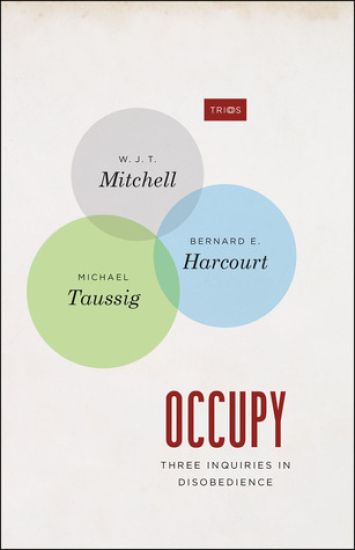
Mic check! Mic check! Lacking amplification in Zuccotti Park, Occupy Wall Street protestors addressed one another by repeating and echoing speeches throughout the crowd. In "Occupy", W. J. T. Mitchel, Bernard E. Harcourt, and Michael Taussig take the protestors' lead and perform their own resonant call-and-response, playing off of each other in three essays that engage the extraordinary Occupy movement that has swept across the world, examining everything from self-immolations in the Middle East to the G8 crackdown in Chicago to the many protest signs still visible worldwide. "You break through the screen like "Alice in Wonderland"," Taussig writes in the opening essay, "and now you can't leave or do without it." Following Taussig's artful blend of participatory ethnography and poetic meditation on Zuccotti Park, political and legal scholar Harcourt examines the crucial difference between civil and political disobedience. He shows how by effecting the latter - by rejecting the very discourse and strategy of politics - Occupy Wall Street protestors enacted a radical new form of protest. Finally, media critic and theorist Mitchell surveys the global circulation of Occupy images across mass and social media and looks at contemporary works by artists such as Antony Gormley and how they engage the body politic, ultimately examining the use of empty space itself as revolutionary monument. "Occupy" stands not as a primer on or an authoritative account of 2011's revolutions, but as a snapshot, a second draft of history, beyond journalism and the polemics of the moment - an occupation itself. Each Trios book addresses a pressing theme in critical theory, philosophy, or cultural studies through three extended essays written in close collaboration by leading scholars.
Occupy – Three Inquiries in Disobedience
W. J. T. Mitchell; Bernard Harcourt; Michael Taussig; Bernard E. Harcourt
University of Chicago Press
2013
nidottu
Mic check! Mic check! Lacking amplification in Zuccotti Park, Occupy Wall Street protestors addressed one another by repeating and echoing speeches throughout the crowd. In "Occupy", W. J. T. Mitchell, Bernard E. Harcourt, and Michael Taussig take the protestors' lead and perform their own resonant call-and-response, playing off of each other in three essays that engage the extraordinary Occupy movement that has swept across the world, examining everything from self-immolations in the Middle East to the G8 crackdown in Chicago to the many protest signs still visible worldwide. "You break through the screen like Alice in Wonderland," Taussig writes in the opening essay, "and now you can't leave or do without it." Following Taussig's artful blend of participatory ethnography and poetic meditation on Zuccotti Park, political and legal scholar Harcourt examines the crucial difference between civil and political disobedience. He shows how by effecting the latter - by rejecting the very discourse and strategy of politics - Occupy Wall Street protestors enacted a radical new form of protest. Finally, media critic and theorist Mitchell surveys the global circulation of Occupy images across mass and social media and looks at contemporary works by artists such as Antony Gormley and how they engage the body politic, ultimately examining the use of empty space itself as a revolutionary monument. "Occupy" stands not as a primer on or an authoritative account of 2011's revolutions, but as a snapshot, a second draft of history, beyond journalism and the polemics of the moment - an occupation itself. Each Trios book addresses a pressing theme in critical theory, philosophy, or cultural studies through three extended essays written in close collaboration by leading scholars.
It is widely believed today that the free market is the best mechanism ever invented to efficiently allocate resources in society. Just as fundamental as faith in the free market is the belief that government has a legitimate and competent role in policing and the punishment arena. This curious incendiary combination of free market efficiency and the Big Brother state has become seemingly obvious, but it hinges on the illusion of a supposedly natural order in the economic realm. The Illusion of Free Markets argues that our faith in “free markets” has severely distorted American politics and punishment practices. Bernard Harcourt traces the birth of the idea of natural order to eighteenth-century economic thought and reveals its gradual evolution through the Chicago School of economics and ultimately into today’s myth of the free market. The modern category of “liberty” emerged in reaction to an earlier, integrated vision of punishment and public economy, known in the eighteenth century as “police.” This development shaped the dominant belief today that competitive markets are inherently efficient and should be sharply demarcated from a government-run penal sphere. This modern vision rests on a simple but devastating illusion. Superimposing the political categories of “freedom” or “discipline” on forms of market organization has the unfortunate effect of obscuring rather than enlightening. It obscures by making both the free market and the prison system seem natural and necessary. In the process, it facilitated the birth of the penitentiary system in the nineteenth century and its ultimate culmination into mass incarceration today.
From routine security checks at airports to the use of risk assessment in sentencing, actuarial methods are being used more than ever to determine whom law enforcement officials target and punish. And with the exception of racial profiling on our highways and streets, most people favor these methods because they believe they’re a more cost-effective way to fight crime. In Against Prediction, Bernard E. Harcourt challenges this growing reliance on actuarial methods. These prediction tools, he demonstrates, may in fact increase the overall amount of crime in society, depending on the relative responsiveness of the profiled populations to heightened security. They may also aggravate the difficulties that minorities already have obtaining work, education, and a better quality of life—thus perpetuating the pattern of criminal behavior. Ultimately, Harcourt shows how the perceived success of actuarial methods has begun to distort our very conception of just punishment and to obscure alternate visions of social order. In place of the actuarial, he proposes instead a turn to randomization in punishment and policing. The presumption, Harcourt concludes, should be against prediction.
Legal and public policies concerning youth gun violence tend to rely heavily on crime reports, survey data, and statistical methods. Rarely is attention given to the young voices belonging to those who carry high-powered semiautomatic handguns. In "Language of the Gun", Bernard E. Harcourt recounts in-depth interviews with youths detained at an all-male correctional facility, exploring how they talk about guns and what meanings they ascribe to them in a broader attempt to understand some of the assumptions implicit in current handgun policies. In the process, Harcourt redraws the relationships among empirical research, law, and public policy. Home to over 150 repeat offenders ranging in age from twelve to seventeen, the Catalina Mountain School is made up of a particular stratum of boys - those who have committed the most offenses but will still be released upon reaching adulthood. In an effort to understand the symbolic and emotional language of guns and gun carrying, Harcourt interviewed dozens of these incarcerated Catalina boys. What do these youths see in guns? What draws them to handguns? Why do some of them carry and others not? For Harcourt, their often surprising answers unveil many of the presuppositions that influence our laws and policies.
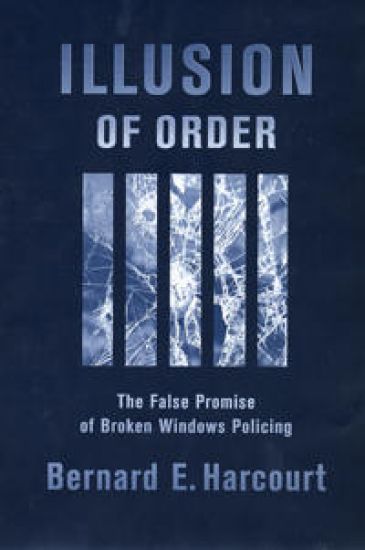
This is the first book to challenge the "broken-windows" theory of crime, which argues that permitting minor misdemeanors, such as loitering and vagrancy, to go unpunished only encourages more serious crime. The theory has revolutionized policing in the United States and abroad, with its emphasis on policies that crack down on disorderly conduct and aggressively enforce misdemeanor laws. The problem, argues Bernard Harcourt, is that although the broken-windows theory has been around for nearly thirty years, it has never been empirically verified. Indeed, existing data suggest that it is false. Conceptually, it rests on unexamined categories of "law abiders" and "disorderly people" and of "order" and "disorder," which have no intrinsic reality, independent of the techniques of punishment that we implement in our society. How did the new order-maintenance approach to criminal justice--a theory without solid empirical support, a theory that is conceptually flawed and results in aggressive detentions of tens of thousands of our fellow citizens--come to be one of the leading criminal justice theories embraced by progressive reformers, policymakers, and academics throughout the world? This book explores the reasons why. It also presents a new, more thoughtful vision of criminal justice.