Kirjojen hintavertailu – 12 903 725 kirjaa ja 27 kauppaa
Kirjailija
Bernard J. Bergen
Kirjat ja teokset yhdessä paikassa: 3 kirjaa, julkaisuja vuosilta 1984–1998, suosituimpiin kuuluu Illumination by Darkness. Vertaile teosten hintoja ja tarkista saatavuus suomalaisista kirjakaupoista.
This highly original book is the first to explore the political and philosophical consequences of Hannah Arendt's concept of 'the banality of evil,' a term she used to describe Adolph Eichmann, architect of the Nazi 'final solution.' According to Bernard J. Bergen, the questions that preoccupied Arendt were the meaning and significance of the Nazi genocide to our modern times. As Bergen describes Arendt's struggle to understand 'the banality of evil,' he shows how Arendt redefined the meaning of our most treasured political concepts and principles_freedom, society, identity, truth, equality, and reason_in light of the horrific events of the Holocaust. Arendt concluded that the banality of evil results from the failure of human beings to fully experience our common human characteristics_thought, will, and judgment_and that the exercise and expression of these attributes is the only chance we have to prevent a recurrence of the kind of terrible evil perpetrated by the Nazis.
This book presents an original and innovative reading of Freud's thought based on a single premise: Our century requires us to understand what Freud tells us about ourselves and the way we are bonded to the social world, in his own terms, rather than filtered through the screen of the revisionist history of psychoanalytic thought. Refusing all revisionist judgments, which deem Freud's work to be fragmented and lacking in narrative coherency because it does not end with a vision of human possibility, this book follows the narrative movement of the instinctual doctrine which governs his work, to an end which calls us not to love, but interpret those visions of human possibility that seek to command the world. This call is a call to take responsibility for preserving the world that we now know is in constant peril.
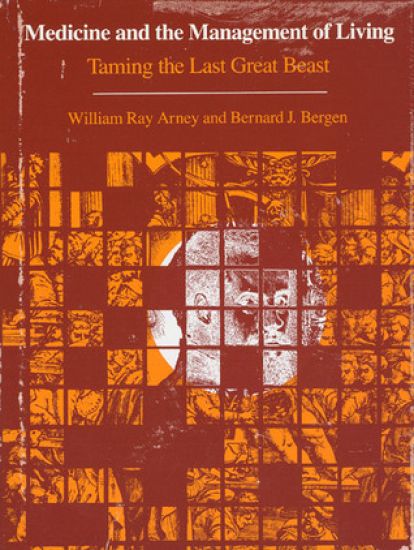
In recent years, relations between patients and physicians in America have undergone a dramatic change. The growing acceptance of natural childbirth, support groups for patients with serious illnesses, health maintenance organizations, and hospices for a "happy death" among family and friends is part of a redefinition of medical practice and reformulation of the field of medical power. No longer is medical practice confined to "taming the beast" of death and fighting the diseases observable in the human body. The modern practitioner is now a manager of the living, taking an ecological view of the patient as a "whole person" in a network of relationships. Medicine and the Management of Living questions how it has been possible for the patient to change from a silenced specimen observed in the clinic to a person whose subjective experience of illness is important to medical practice and discourse. Arney and Bergen ask, What incited the demand that medicine take the whole person, including the patient's presentation of his or her illness, into consideration? And in whose terms are patients speaking about themselves? The authors argue that the inclusion of patients' experiences in medical discourse that has come about since the 1950s is not so much a result of a "patient rebellion" as an activity preciptated by the medical establishment itself. Drawing inspiration from the work of Michel Foucault, Arney and Bergen examine the structure of medical power, contending that new social technologies like support groups make the patient's subjectivity available for medical evaluation, judgment, and manipulation. Throughout this sensitively written discussion, the authors vivify the issues they raise with excerpts from many sources—the writings of a poet dying of cancer, the comments of doctors pondering their own fatal illnesses, and excerpts from popular magazines, medical journals, and sociological studies. They examine the changing role of the medical profession through history, using a modern advertising image and woodcuts from Vesalius's Renaissance anatomy text to show the symbolic portrayal of health and medicine. Their wide-ranging concerns lead the reader through such topics as teenage pregnancy; the historical treatment of medical anomalies like hermaphrodites and the "elephant man" (John Merrick); and literary representations of illness in Sartre, Chekhov, and Brian Clark's recent Broadway drama, "Whose Life Is It Anyway?" In a provocative yet thoughtful way, Medicine and the Management of Living points the way for a radical reassessment of medical power and the medical establishment.