

Kirjailija
Bernard L. Fontana
Kirjat ja teokset yhdessä paikassa: 9 kirjaa, julkaisuja vuosilta 1977–2019, suosituimpiin kuuluu The Kiva V25, No. 3, February, 1960. Vertaile teosten hintoja ja tarkista saatavuus suomalaisista kirjakaupoista.
9 kirjaa
Kirjojen julkaisuvuodet: 1977–2019.
The Mountainway of the Navajo
Leland C. Wyman; Bernard L. Fontana
University of Arizona Press
2019
nidottu
Comprehensive examination of a Navajo song ceremonial and its various branches, phases, and ritual. Includes a myth of the female branch recorded and translated by Father Berard Haile, O. F. M., 32 illustrations of Mountainway sandpaintings, with detailed analysis of their symbols and designs.

An outstanding work crafted from the handwritten pages of translations from the Navajo of the late Father Berard Haile giving three separate versions of the Blessingway rite with each version consisting of a prose text accompanied by the ritual songs and prayers. Valuable insights into the character and use of the Blessingway rite; its ceremonial procedures, its mythology, and its drypaintings. The University of Arizona Press’s Century Collection employs the latest in digital technology to make previously out-of-print books from our notable backlist available once again. Enriching historical and cultural experiences for readers, this collection offers these volumes unaltered from their original publication and in affordable digital or paperback formats.

"The bloodsucking bat, construction of bows and arrows, the punishment for adultery among the Apaches... all was grist that dropped into the industrious mill of Father Pfefferkorn's eyes, ears, and brain."—Saturday Review "...to be read for enjoyment; nevertheless, the historian will find in it a wealth of information that has been shrewdly appraised, carefully sifted, and creditably related."—Catholic Historical Review "Of interest not only to the historian but to the geographer and anthropologist."—Pacific Historical Review
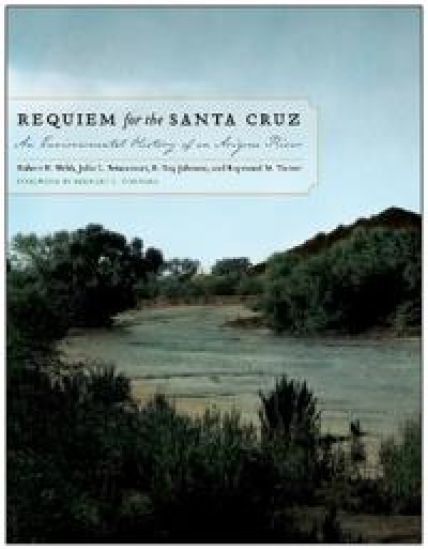
Requiem for the Santa Cruz
Robert H. Webb; Julio L. Betancourt; R. Roy Johnson; Raymond M Turner; Bernard L. Fontana
University of Arizona Press
2014
sidottu
In prehistoric times, the Santa Cruz River in what is now southern Arizona saw many ebbs, flows, and floods. It flowed on the surface, meandered across the floodplain, and occasionally carved deep channels or arroyos into valley fill. Groundwater was never far from the surface, in places outcropping to feed marshlands or cienegas. In these wet places, arroyos would heal quickly as the river channel revegetated, the thriving vegetation trapped sediment, and the channel refilled. As readers of Requiem for the Santa Cruz learn, these aridland geomorphic processes also took place in the valley as Tucson grew from mud-walled village to modern metropolis, with one exception: historical water development and channel changes proceeded hand in glove, each taking turns reacting to the other, eventually lowering the water table and killing a unique habitat that can no longer recover or be restored. Authored by an esteemed group of scientists, Requiem for the Santa Cruz thoroughly documents this river—the premier example of historic arroyo cutting during the late nineteenth and early twentieth centuries, when large floodflows cut down through unconsolidated valley fill to form deep channels in the major valleys of the American Southwest. Each chapter provides a unique opportunity to chronicle the arroyo legacy, evaluate its causes, and consider its aftermath. Using more than a century of observations and collections, the authors reconstruct the circumstances of the river's entrenchment and the groundwater mining that ultimately killed the marshlands, a veritable mesquite forest, and a birdwatcher's paradise. Today, communities everywhere face this conundrum: do we manage ephemeral rivers through urban areas for flood control, or do we attempt to restore them to some previous state of naturalness? Requiem for the Santa Cruz carefully explores the legacies of channel change, groundwater depletion, flood control, and nascent attempts at river restoration to give a long-term perspective on management of rivers in arid lands. Tied together by authors who have committed their life's work to the study of aridland rivers, this book offers a touching and scientifically grounded requiem for the Santa Cruz and every southwestern river.
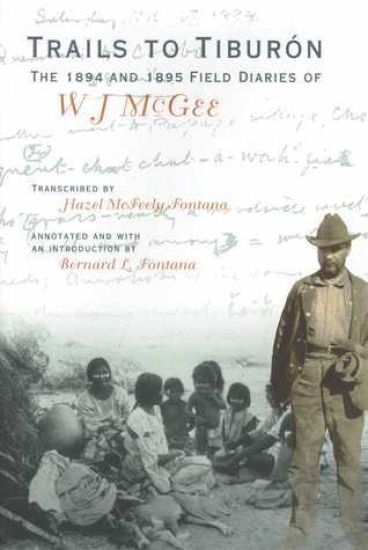
Trails to Tiburón
W. J. McGee; Hazel McFeely Fontana; Bernard L. Fontana
University of Arizona Press
2000
sidottu
When William John McGee set out from Washington, D. C., for the Sonoran Desert in 1894, he was inspired by a passion for adventure as much as a thirst for knowledge. McGee lived in an era when discovery was made through travel rather than study, and reputations were forged by going where no outsiders had gone before. A self-taught scientist in the newly forming field of anthropology, McGee led two expeditions through southern Arizona and northern Sonora for the Bureau of American Ethnology. There he conducted ethnographic research among the Papagos (Tohono O'odham) and the Seris, and his subsequent publication The Seri Indians helped secure his place in the anthropological community. McGee's complete journals of the expeditions, kept in small field notebooks and preserved in the Library of Congress, are published here for the first time. These journals contain detailed descriptions of the country and people McGee encountered and convey the adventure of traveling through wild and unfamiliar places--including a voyage to Isla Tiburon, or Shark Island, in the Gulf of California--and being plagued by foul weather, a shortage of supplies, and fear of attack from hostile Indians. Trails to Tiburon features 57 historical photographs taken on the expedition, capturing the places McGee saw and the people he encountered. Fontana's notes to the diary provide useful botanical, geological, and ethnographic information, while his introduction places McGee and his field work in the context of late-nineteenth-century anthropology and science. Trails to Tiburon reveals McGee's versatility as a field worker and shows his methods, often questioned today, to be the reasonable response of a man caught up in the intellectual fervor of his time. For anyone wanting to share in the spirit of adventure, these journals are a landmark in the annals of exploration.
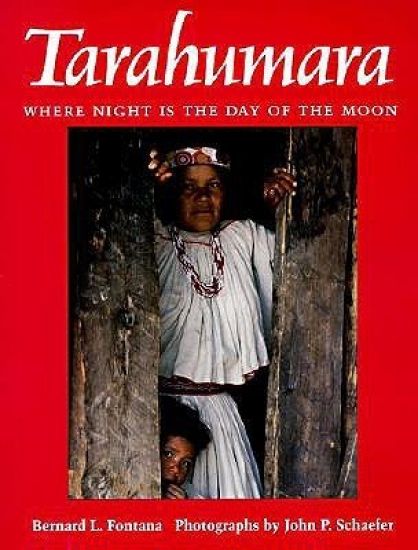
Inhabiting the Sierra Madre Occidental of southwestern Chihuahua in Mexico, the Tarahumara (or Rarámuri) are known in their language as the "foot runners" due to the way in which they must navigate their rugged terrain. This book offers an accessible ethnography of their history, customs, and current life, accompanied by photographs that offer striking images of these gentle people. The subtitle of the book derives from the Tarahumara's belief that the soul works at night while the body sleeps and that during this "day of the moon" both the spirits of the dead and the souls of the living move about in their mysterious ways. As the authors observe, the fact that "so many men, women, and children persist in distinctive, centuries-old cultural traditions in spite of their nearness to all the complexities and attractions of modern industrial society is an importatn part of the story." Their book tells that story and brings readers closer to understanding the Tarahumara world and way of life.

Massacre on the Gila
Clifton B. Kroeber; Bernard L. Fontana
University of Arizona Press
1986
sidottu

Friar Bringas Reports to the King
Daniel S. Matson; Bernard L. Fontana
University of Arizona Press
1977
sidottu