Kirjojen hintavertailu – 12 903 735 kirjaa ja 27 kauppaa

Kirjailija

Bernard Lightman

Kirjat ja teokset yhdessä paikassa: 16 kirjaa, julkaisuja vuosilta 2007–2021, suosituimpiin kuuluu Victorian Science and Literature, Part II. Vertaile teosten hintoja ja tarkista saatavuus suomalaisista kirjakaupoista.

16 kirjaa

Kirjojen julkaisuvuodet: 2007–2021.

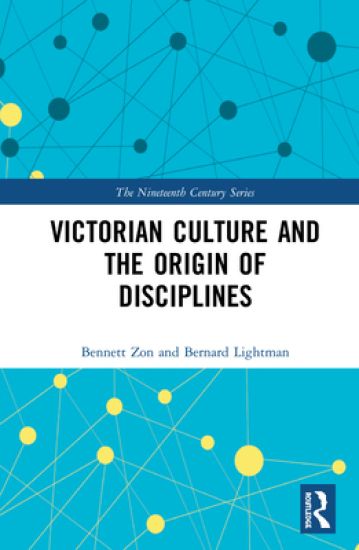
Victorian Culture and the Origin of Disciplines

Victorian Culture and the Origin of Disciplines

Bernard Lightman; Bennett Zon

TAYLOR FRANCIS LTD
2021
nidottu
Current studies in disciplinarity range widely across philosophical and literary contexts, producing heated debate and entrenched divergences. Yet, despite their manifest significance for us today seldom have those studies engaged with the Victorian origins of modern disciplinarity. Victorian Culture and the Origin of Disciplines adds a crucial missing link in that history by asking and answering a series of deceptively simple questions: how did Victorians define a discipline; what factors impinged upon that definition; and how did they respond to disciplinary understanding? Structured around sections on professionalization, university curriculums, society journals, literary genres and interdisciplinarity, Victorian Culture and the Origin of Disciplines addresses the tangled bank of disciplinarity in the arts, humanities, social sciences and natural sciences including musicology, dance, literature, and art history; classics, history, archaeology, and theology; anthropology, psychology; and biology, mathematics and physics. Chapters examine the generative forces driving disciplinary formation, and gauge its success or failure against social, cultural, political, and economic environmental pressures. No other volume has focused specifically on the origin of Victorian disciplines in order to track the birth, death, and growth of the units into which knowledge was divided in this period, and no other volume has placed such a wide array of Victorian disciplines in their cultural context.
The Origins of Agnosticism

The Origins of Agnosticism

Bernard Lightman

Johns Hopkins University Press
2020
pokkari
Originally published in 1987. The Origins of Agnosticism provides a reinterpretation of agnosticism and its relationship to science. Professor Lightman examines the epistemological basis of agnostics' learned ignorance, studying their core claim that "God is unknowable." To address this question, he reconstructs the theory of knowledge posited by Thomas Henry Huxley and his network of agnostics. In doing so, Lightman argues that agnosticism was constructed on an epistemological foundation laid by Christian thought. In addition to undermining the continuity in the intellectual history of religious thought, Lightman exposes the religious origins of agnosticism.
Evolutionary Naturalism in Victorian Britain
Scholars have tended to portray T. H. Huxley, John Tyndall, and their allies as the dominant cultural authority in the second half of the 19th century. Defenders of Darwin and his theory of evolution, these men of science are often seen as a potent force for the secularization of British intellectual and social life. In this collection of essays Bernard Lightman argues that historians have exaggerated the power of scientific naturalism to undermine the role of religion in middle and late-Victorian Britain. The essays deal with the evolutionary naturalists, especially the biologist Thomas Henry Huxley, the physicist John Tyndall, and the philosopher of evolution, Herbert Spencer. But they look also at those who criticized this influential group of elite intellectuals, including aristocratic spokesman A. J Balfour, the novelist Samuel Butler, and the popularizer of science Frank Buckland. Focusing on the theme of the limitations of the cultural power of evolutionary naturalism, the volume points to the enduring strength of religion in Britain in the latter half of the 19th century.
Victorian Culture and the Origin of Disciplines

Victorian Culture and the Origin of Disciplines

Bernard Lightman; Bennett Zon

Routledge
2019
sidottu
Current studies in disciplinarity range widely across philosophical and literary contexts, producing heated debate and entrenched divergences. Yet, despite their manifest significance for us today seldom have those studies engaged with the Victorian origins of modern disciplinarity. Victorian Culture and the Origin of Disciplines adds a crucial missing link in that history by asking and answering a series of deceptively simple questions: how did Victorians define a discipline; what factors impinged upon that definition; and how did they respond to disciplinary understanding? Structured around sections on professionalization, university curriculums, society journals, literary genres and interdisciplinarity, Victorian Culture and the Origin of Disciplines addresses the tangled bank of disciplinarity in the arts, humanities, social sciences and natural sciences including musicology, dance, literature, and art history; classics, history, archaeology, and theology; anthropology, psychology; and biology, mathematics and physics. Chapters examine the generative forces driving disciplinary formation, and gauge its success or failure against social, cultural, political, and economic environmental pressures. No other volume has focused specifically on the origin of Victorian disciplines in order to track the birth, death, and growth of the units into which knowledge was divided in this period, and no other volume has placed such a wide array of Victorian disciplines in their cultural context.
Victorian Science and Literature, Part II

Victorian Science and Literature, Part II

Bernard Lightman

Pickering Chatto (Publishers) Ltd
2012
muu
This eight-volume, reset edition in two parts collects rare primary sources on Victorian science, literature and culture. The sources cover both scientific writing that has an aesthetic component – what might be called 'the literature of science' – and more overtly literary texts that deal with scientific matters.
Victorian Science and Literature, Part II vol 7

Victorian Science and Literature, Part II vol 7

Gowan Dawson; Bernard Lightman; Claire Brock; Marwa Elshakry; Sujit Sivasundaram; Ralph O'Connor; Roger Luckhurst; Justin Sausman

Routledge
2012
sidottu
This eight-volume, reset edition in two parts collects rare primary sources on Victorian science, literature and culture. The sources cover both scientific writing that has an aesthetic component – what might be called 'the literature of science' – and more overtly literary texts that deal with scientific matters.
Victorian Science and Literature, Part II vol 6

Victorian Science and Literature, Part II vol 6

Gowan Dawson; Bernard Lightman; Claire Brock; Marwa Elshakry; Sujit Sivasundaram; Ralph O'Connor; Roger Luckhurst; Justin Sausman

Routledge
2012
sidottu
This eight-volume, reset edition in two parts collects rare primary sources on Victorian science, literature and culture. The sources cover both scientific writing that has an aesthetic component – what might be called 'the literature of science' – and more overtly literary texts that deal with scientific matters.
Victorian Science and Literature, Part II vol 5

Victorian Science and Literature, Part II vol 5

Gowan Dawson; Bernard Lightman; Claire Brock; Marwa Elshakry; Sujit Sivasundaram; Ralph O'Connor; Roger Luckhurst; Justin Sausman

Routledge
2012
sidottu
This eight-volume, reset edition in two parts collects rare primary sources on Victorian science, literature and culture. The sources cover both scientific writing that has an aesthetic component – what might be called 'the literature of science' – and more overtly literary texts that deal with scientific matters.
Victorian Science and Literature, Part II vol 8

Victorian Science and Literature, Part II vol 8

Gowan Dawson; Bernard Lightman; Claire Brock; Marwa Elshakry; Sujit Sivasundaram; Ralph O'Connor; Roger Luckhurst; Justin Sausman

Routledge
2012
sidottu
This eight-volume, reset edition in two parts collects rare primary sources on Victorian science, literature and culture. The sources cover both scientific writing that has an aesthetic component – what might be called 'the literature of science' – and more overtly literary texts that deal with scientific matters.
Victorian Science and Literature, Part I Vol 3

Victorian Science and Literature, Part I Vol 3

Gowan Dawson; Bernard Lightman; Piers J Hale; Jonathan Smith; Suzy Anger; James Paradis; Richard England; Jude V Nixon; David Amigoni; James Elwick

Routledge
2011
sidottu
This eight-volume, reset edition in two parts collects rare primary sources on Victorian science, literature and culture. The sources cover both scientific writing that has an aesthetic component – what might be called 'the literature of science' – and more overtly literary texts that deal with scientific matters.
Victorian Science and Literature, Part I Vol 4

Victorian Science and Literature, Part I Vol 4

Gowan Dawson; Bernard Lightman; Piers J Hale; Jonathan Smith; Suzy Anger; James Paradis; Richard England; Jude V Nixon; David Amigoni; James Elwick

Routledge
2011
sidottu
This eight-volume, reset edition in two parts collects rare primary sources on Victorian science, literature and culture. The sources cover both scientific writing that has an aesthetic component – what might be called 'the literature of science' – and more overtly literary texts that deal with scientific matters.
Victorian Science and Literature, Part I Vol 2

Victorian Science and Literature, Part I Vol 2

Gowan Dawson; Bernard Lightman; Piers J Hale; Jonathan Smith; Suzy Anger; James Paradis; Richard England; Jude V Nixon; David Amigoni; James Elwick

Routledge
2011
sidottu
This eight-volume, reset edition in two parts collects rare primary sources on Victorian science, literature and culture. The sources cover both scientific writing that has an aesthetic component – what might be called 'the literature of science' – and more overtly literary texts that deal with scientific matters.
Victorian Science and Literature, Part I Vol 1

Victorian Science and Literature, Part I Vol 1

Gowan Dawson; Bernard Lightman; Piers J Hale; Jonathan Smith; Suzy Anger; James Paradis; Richard England; Jude V Nixon; David Amigoni; James Elwick

Routledge
2011
sidottu
This eight-volume, reset edition in two parts collects rare primary sources on Victorian science, literature and culture. The sources cover both scientific writing that has an aesthetic component – what might be called 'the literature of science' – and more overtly literary texts that deal with scientific matters.
Victorian Popularizers of Science

Victorian Popularizers of Science

Bernard Lightman

University of Chicago Press
2010
nidottu
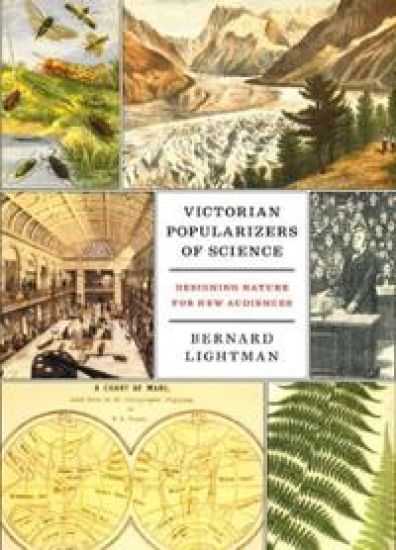
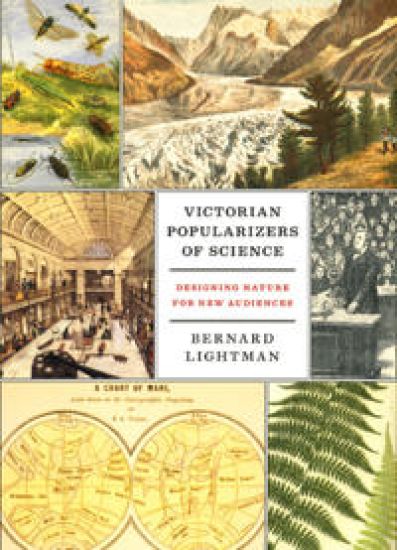
"Victorian Popularizers of Science" focuses on the journalists and writers who wrote about science for a general audience in the second half of the nineteenth century. Bernard Lightman examines more than thirty of the most prolific and influential popularizers of the day, investigating how they communicated with their audience. By focusing on a forgotten coterie of science writers, Lightman offers new insights into the role of women in scientific inquiry, the market for scientific knowledge, tensions between religion and science, and the complexities of scientific authority in nineteenth-century Britain.
Evolutionary Naturalism in Victorian Britain

Evolutionary Naturalism in Victorian Britain

Bernard Lightman

Ashgate Publishing Limited
2009
sidottu
Scholars have tended to portray T. H. Huxley, John Tyndall, and their allies as the dominant cultural authority in the second half of the 19th century. Defenders of Darwin and his theory of evolution, these men of science are often seen as a potent force for the secularization of British intellectual and social life. In this collection of essays Bernard Lightman argues that historians have exaggerated the power of scientific naturalism to undermine the role of religion in middle and late-Victorian Britain. The essays deal with the evolutionary naturalists, especially the biologist Thomas Henry Huxley, the physicist John Tyndall, and the philosopher of evolution, Herbert Spencer. But they look also at those who criticized this influential group of elite intellectuals, including aristocratic spokesman A. J Balfour, the novelist Samuel Butler, and the popularizer of science Frank Buckland. Focusing on the theme of the limitations of the cultural power of evolutionary naturalism, the volume points to the enduring strength of religion in Britain in the latter half of the 19th century.
Victorian Popularizers of Science

Victorian Popularizers of Science

Bernard Lightman

University of Chicago Press
2007
sidottu
"Victorian Popularizers of Science" focuses on the journalists and writers who wrote about science for a general audience in the second half of the nineteenth century. Bernard Lightman examines more than thirty of the most prolific and influential popularizers of the day, investigating how they communicated with their audience. By focusing on a forgotten coterie of science writers, Lightman offers new insights into the role of women in scientific inquiry, the market for scientific knowledge, tensions between religion and science, and the complexities of scientific authority in nineteenth-century Britain.